Artwork
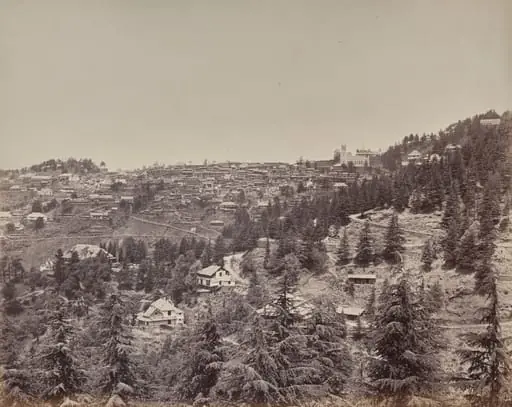
The Upper Himmalayahs. View of Valley from Fallaldasa with Srikanta Peaks in the Distance
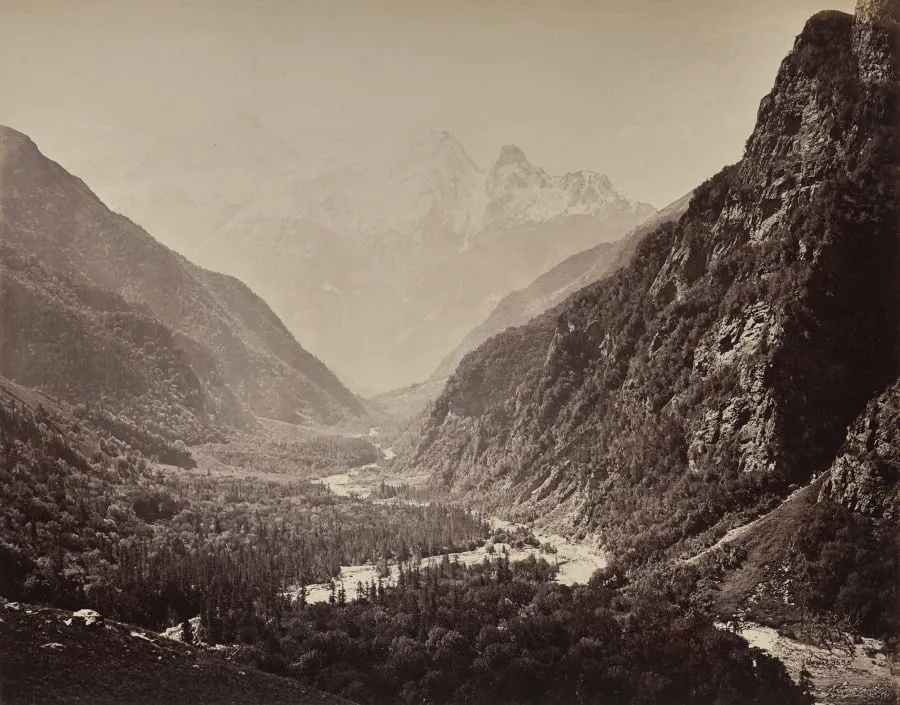
The Upper Himmalayahs. View of Valley from Fallaldasa with Srikanta Peaks in the Distance is a photography by the Impressionist artist Samuel Bourne. It dates from 1866 and is held in the collection of the Cleveland Museum of Art. This 1860s photograph presents a sweeping vista of the Himalayan highlands, framed from the vantage of Fallaldasa.
About this work
Overview
The composition juxtaposes a modest village in the foreground with the imposing, snow-capped Srikanta peaks emerging through atmospheric mist.
This 1860s photograph presents a sweeping vista of the Himalayan highlands, framed from the vantage of Fallaldasa. The composition juxtaposes a modest village in the foreground with the imposing, snow-capped Srikanta peaks emerging through atmospheric mist. Part of a larger album documenting British India, the image exemplifies early photographic expeditions into regions previously inaccessible to European observers.
Subject & Meaning
The photograph captures a moment of quiet grandeur in the Himalayas, where human settlement appears dwarfed by the scale of nature. The distant peaks and enveloping clouds evoke both the physical remoteness and the sublime beauty of the landscape. Rather than a symbolic or allegorical work, it functions as a direct record—an attempt to convey the reality of a terrain unfamiliar to its intended audience.
Technique & Style
Produced using wet-plate collodion process, the image required the photographer to transport cumbersome equipment, including glass plates and portable darkrooms, into rugged terrain. The resulting photograph exhibits the characteristic clarity and tonal range of early large-format photography, with no post-processing alterations. The composition relies on natural light and atmospheric conditions to structure the scene, emphasizing depth and scale.
History & Provenance
Created during the 1860s, this photograph belongs to a series documenting British India’s northern territories, from Himalayan hill stations to major urban centers. The album served as both a visual survey and a tool for colonial administration, preserving architectural and geographical details before later restorations. Its survival offers insight into the period’s photographic practices and the circulation of images within imperial networks.
Context
The image reflects the broader nineteenth-century European fascination with exploration and documentation, particularly in regions deemed exotic or uncharted. British photographers working in India often balanced scientific inquiry with aesthetic considerations, producing works that appealed to both scholarly and popular audiences. The Himalayas, with their dramatic topography, became a frequent subject, symbolizing both natural wonder and the challenges of colonial expansion.
Legacy
As an early photographic record, this image contributes to the historical understanding of the Himalayan landscape prior to modern development. It also illustrates the technical constraints and ambitions of mid-nineteenth-century photography, where the demands of the process shaped the representation of distant locales. The album’s broader documentation of Indian architecture and geography remains a valuable resource for studying pre-restoration sites.
Artist & collection

Artist
Samuel Bourne was a British photographer known for his prolific seven years' work in India, from 1863 to 1870.

 Ceylon Views to Adam's Tooth
 Shimla
 The Upper Himmalayahs. View on the New Road between India and China. Mt. Pangi with the Snowy Peaks of China in the Distance
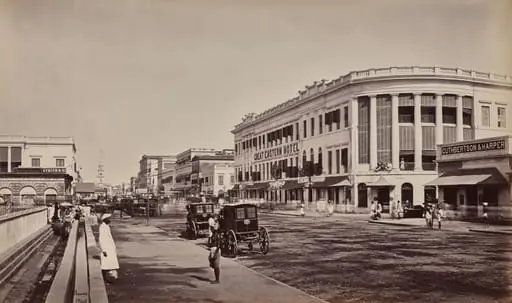 Calcutta. Old Court House Street
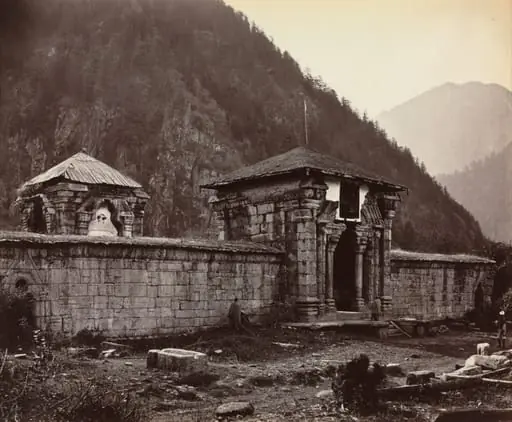 Temple at Naveshera, Kashmir, India
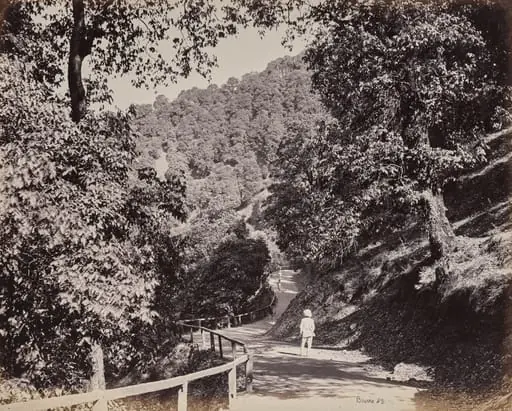 Shimla. The Mall near Rabq Lodge
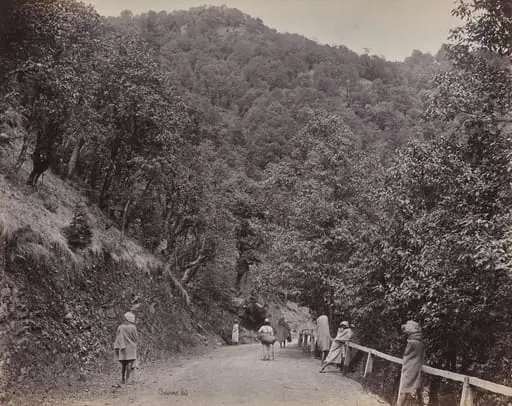 Shimla. The Mall or Principal
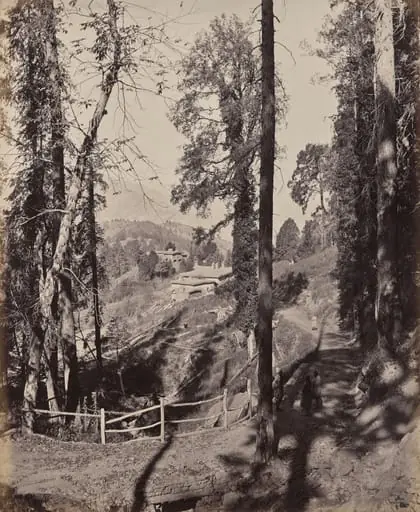 Murree. A Hill Station in the Himmalayahs, View Through the Forest
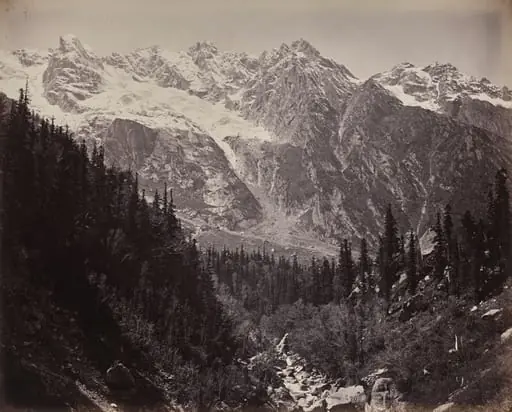 Scene in the Upper Himmalayahs. View in the Manga Valley
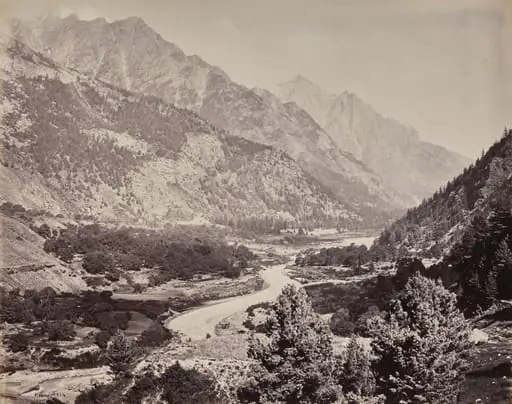 The Upper Himmalayahs. View in the Buspa Valley from Sangla
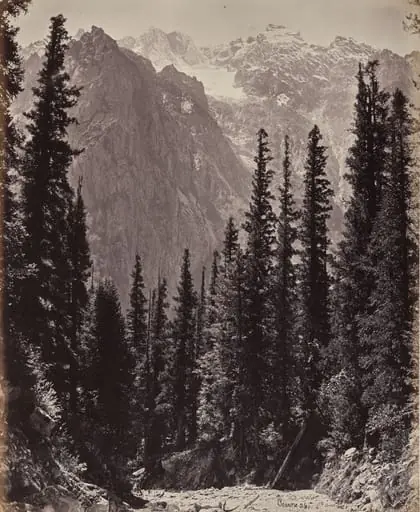 The Upper Himmalayahs. View in the Manga Valley
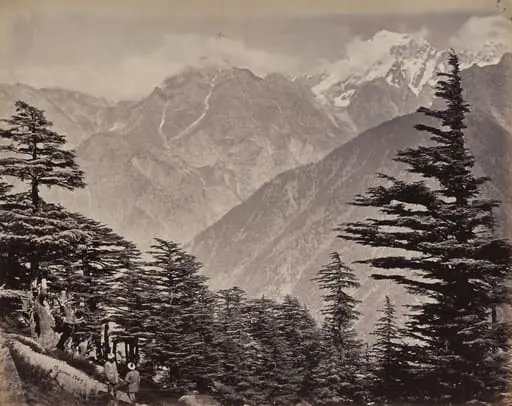 The Upper Himmalayahs. View Near China Mountains. Deoders in the Foreground
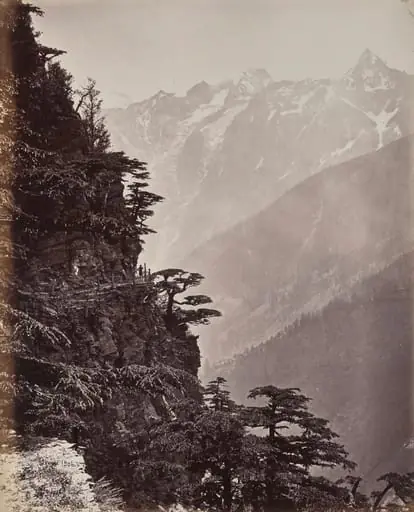 The Upper Himmalayahs. View on the New Road Near Rogi
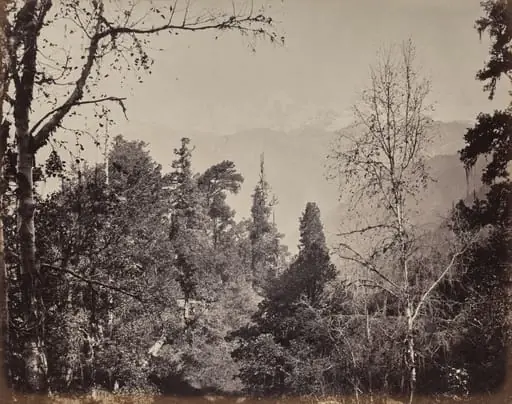 The Upper Himmalayahs. View of the Mountain of Bunderpoonch with the Jumnootri Peak, 20,458 above the Level of the Sea
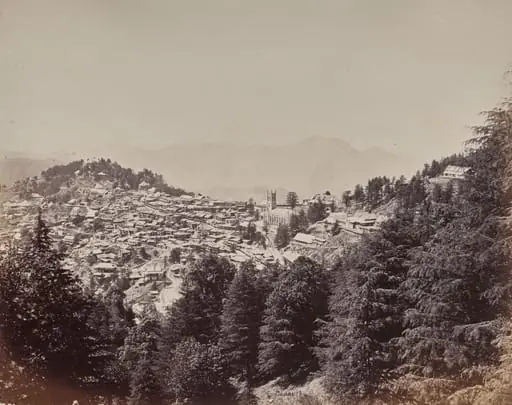 Shimla. From Mount Jakko, Looking West
 Shimla. View from Oakover House