Artwork
Cattle and Sheep in a River Landscape
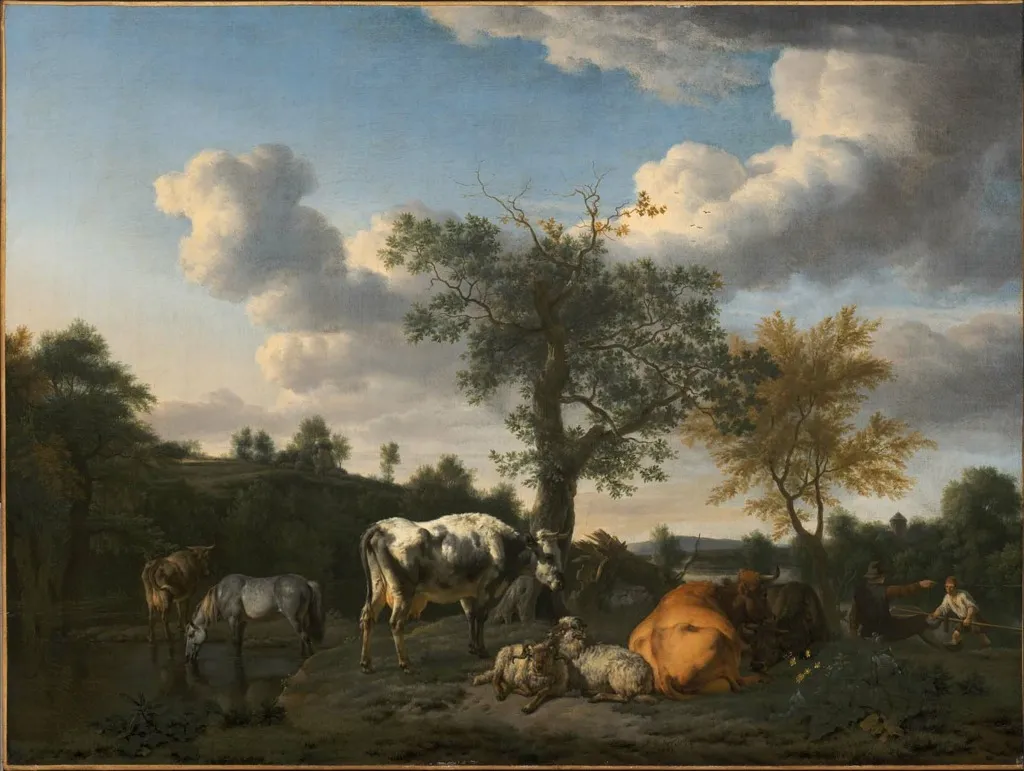
Cattle and Sheep in a River Landscape is an oil painting by the Dutch Golden Age artist Adriaen van de Velde. It dates from 1663 and is held in the collection of the Museum of Fine Arts Boston.
About this work
Overview
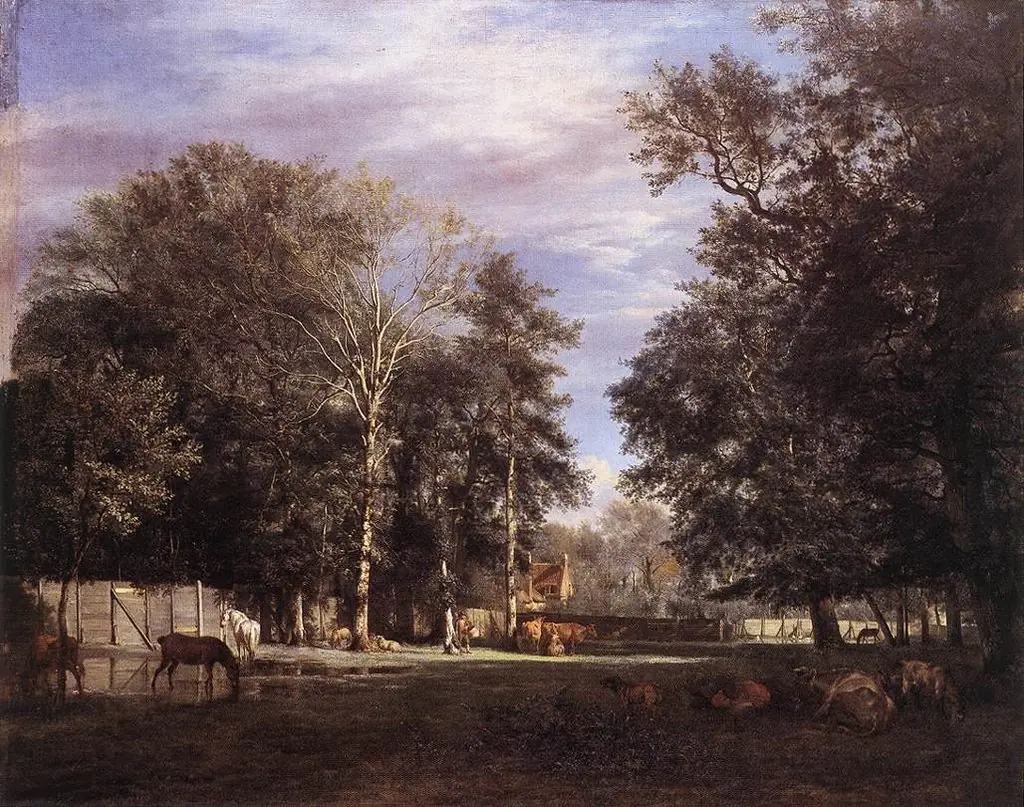
Tall trees frame the left and right edges, creating a natural archway that directs the viewer's gaze toward the expansive, cloud-filled sky.
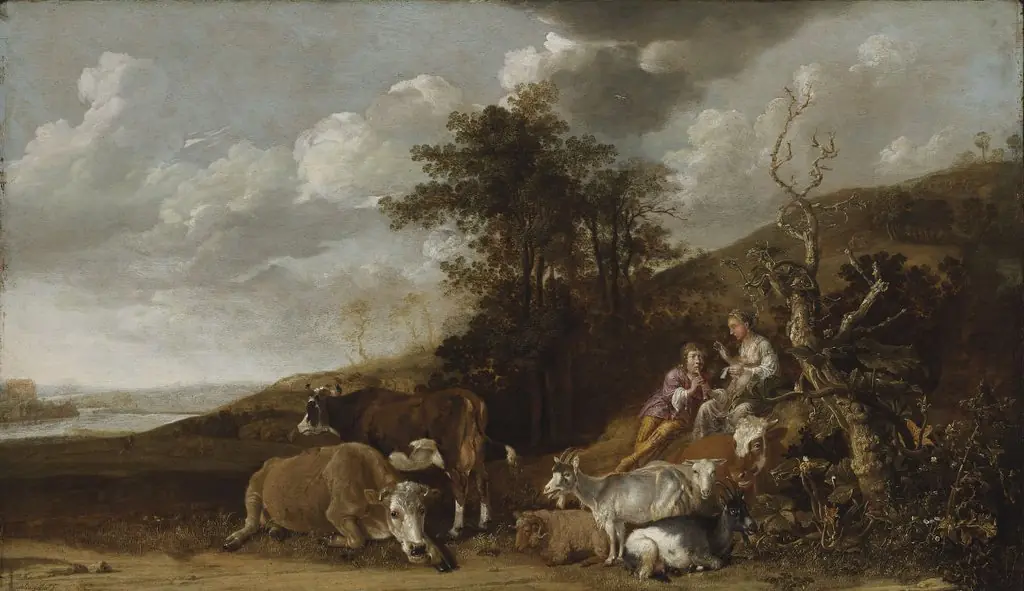
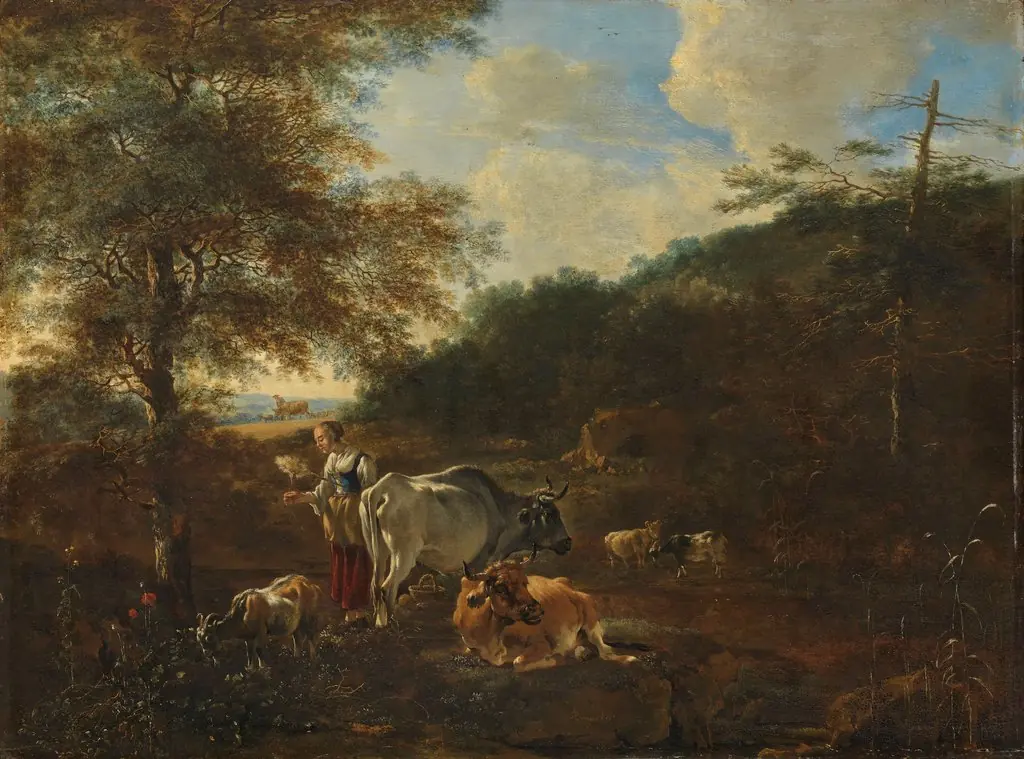
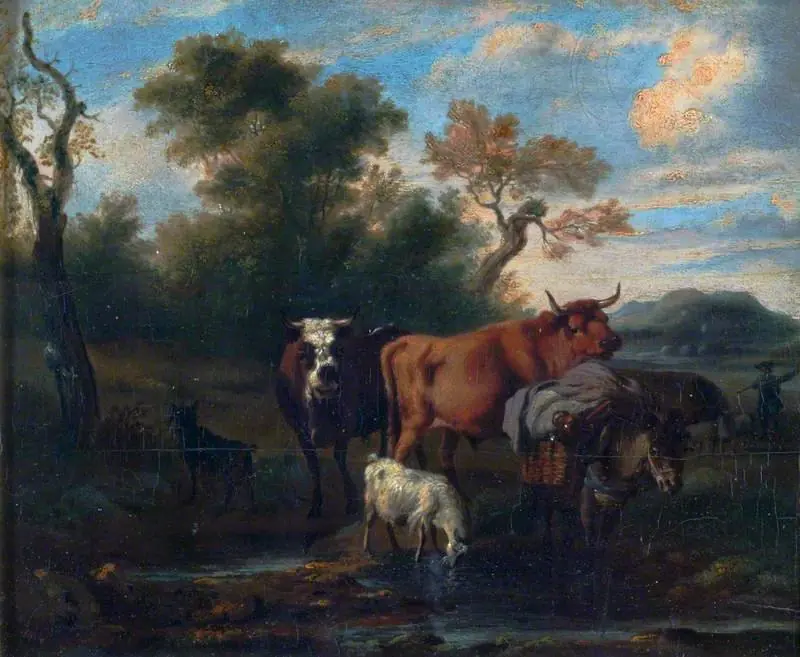
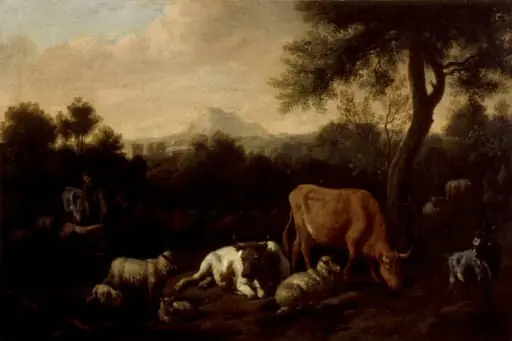
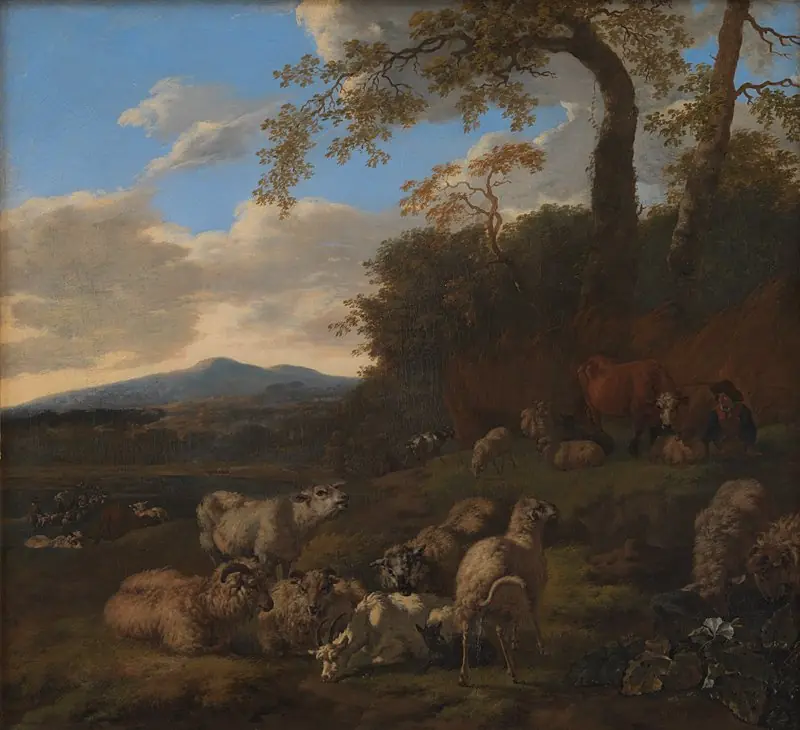
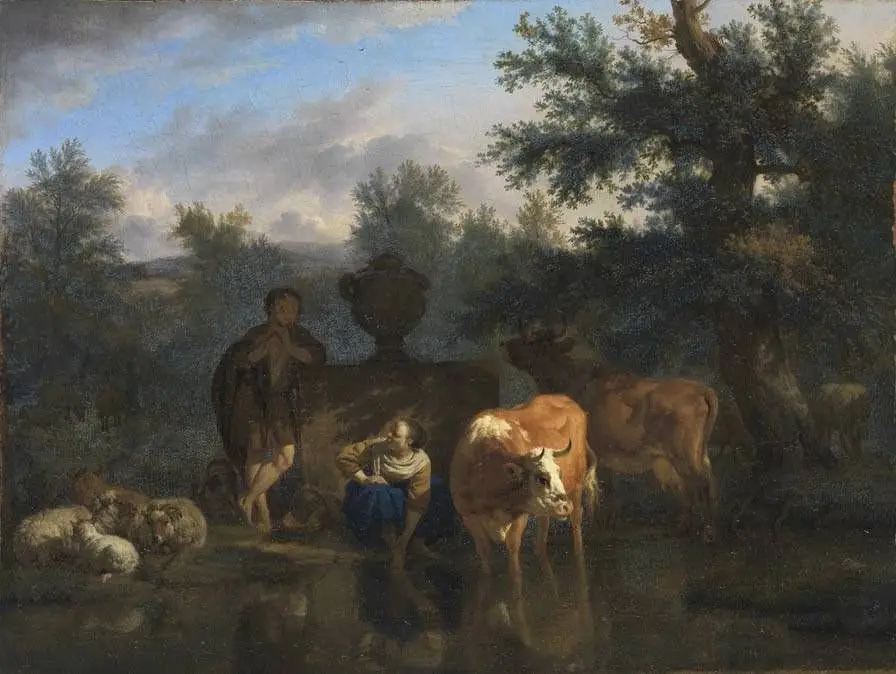
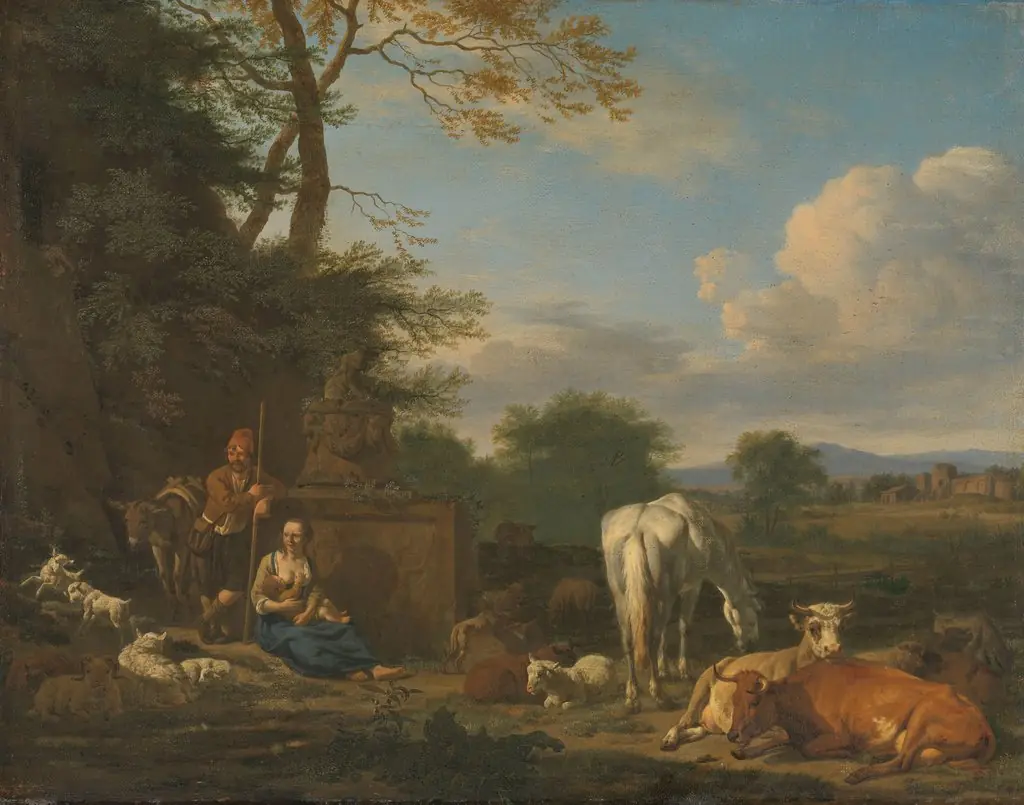
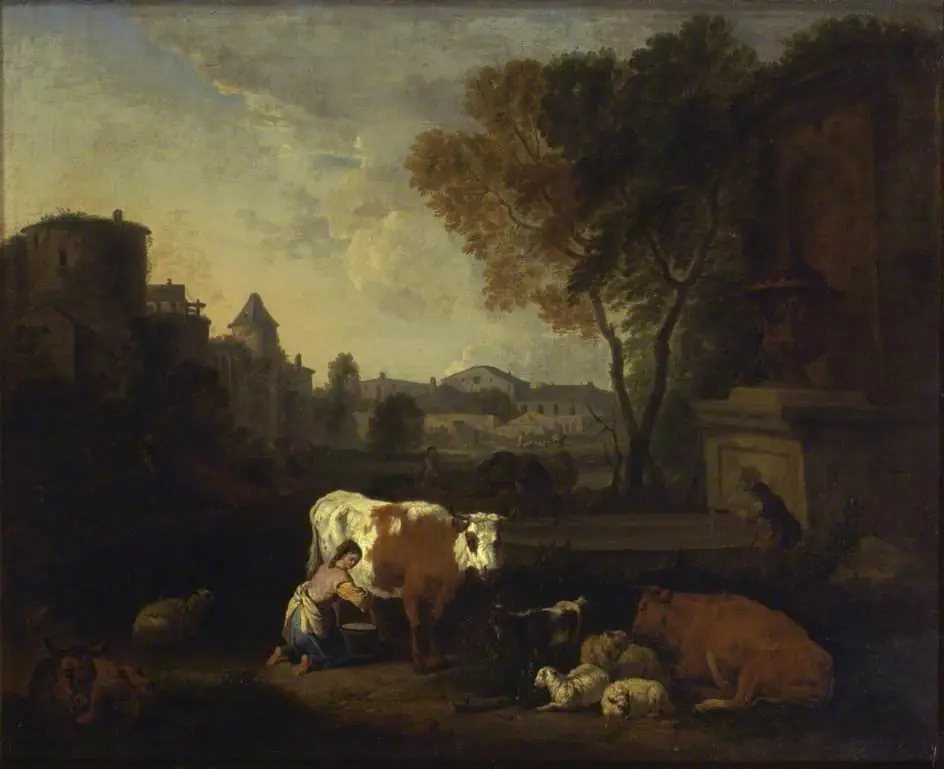
Adriaen van de Velde's Cattle and Sheep in a River Landscape, executed in 1663, exemplifies the refined pastoral idealism characteristic of the Dutch Golden Age. The composition centers on a tranquil riverbank where a mixed herd of cattle and sheep gathers; some animals drink from the shallow water while others rest in the foreground grass. A solitary figure sits near a cart in the middle distance, providing a subtle human element that does not disrupt the scene's serenity. Tall trees frame the left and right edges, creating a natural archway that directs the viewer's gaze toward the expansive, cloud-filled sky. Van de Velde employs a delicate, precise brushwork to render the varied textures of fur, foliage, and water, capturing the specific effects of soft light breaking through dramatic clouds. Painted when the artist was twenty-seven, this work demonstrates his mature command of animal anatomy and atmospheric perspective, solidifying his reputation as the preeminent specialist in animal subjects within the Dutch landscape tradition. The painting reflects the 17th-century appreciation for the ordered beauty of the rural environment, balancing naturalistic detail with a harmonious, idealized composition.
Subject & Meaning
The composition centers on a group of cows and sheep, some drinking, others resting, suggesting a moment of peaceful coexistence between humans and nature. A solitary figure, seated near a cart in the distance, hints at pastoral labor while remaining secondary to the natural scene, emphasizing the landscape’s quiet rhythm over human activity.
Technique & Style
Van de Velde employs a subtle chiaroscuro, modeling the forms of the animals and foliage with careful gradations of light and shadow that give a modest three‑dimensionality. Layered glazes and soft color transitions create a luminous atmosphere, while the handling of the sky’s clouds and the reflective water surface demonstrates his skill in rendering atmospheric effects.
History & Provenance
Executed in the mid‑seventeenth century, the painting entered the Museum of Fine Arts, Boston, through acquisition in the early twentieth century. Its provenance prior to that point is not extensively documented, but it reflects the Dutch Golden Age’s interest in bucolic scenes that were popular among collectors of the period.
Context
The work belongs to a tradition of Dutch landscape painting that celebrated everyday rural life, often featuring livestock as symbols of prosperity and the harmony of agrarian society. Van de Velde, known for his animal studies, integrates these motifs within a broader natural setting, aligning with contemporary tastes for detailed, atmospheric countryside vistas.
Artist & collection

Artist
Adriaen van de Velde, was a Dutch painter, draughtsman, and print artist. His favorite subjects were landscapes with animals and genre scenes. He also painted beaches, dunes, forests, winter scenes, portraits in…