Artwork
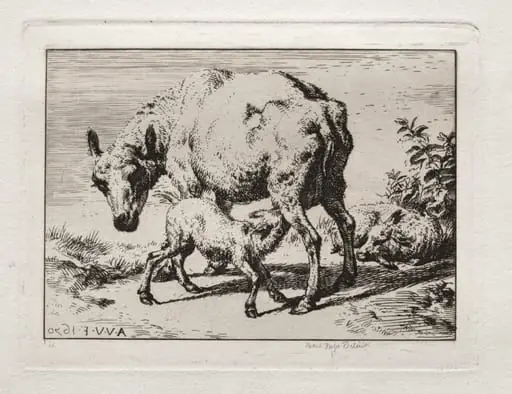
The Ewe and Two Lambs
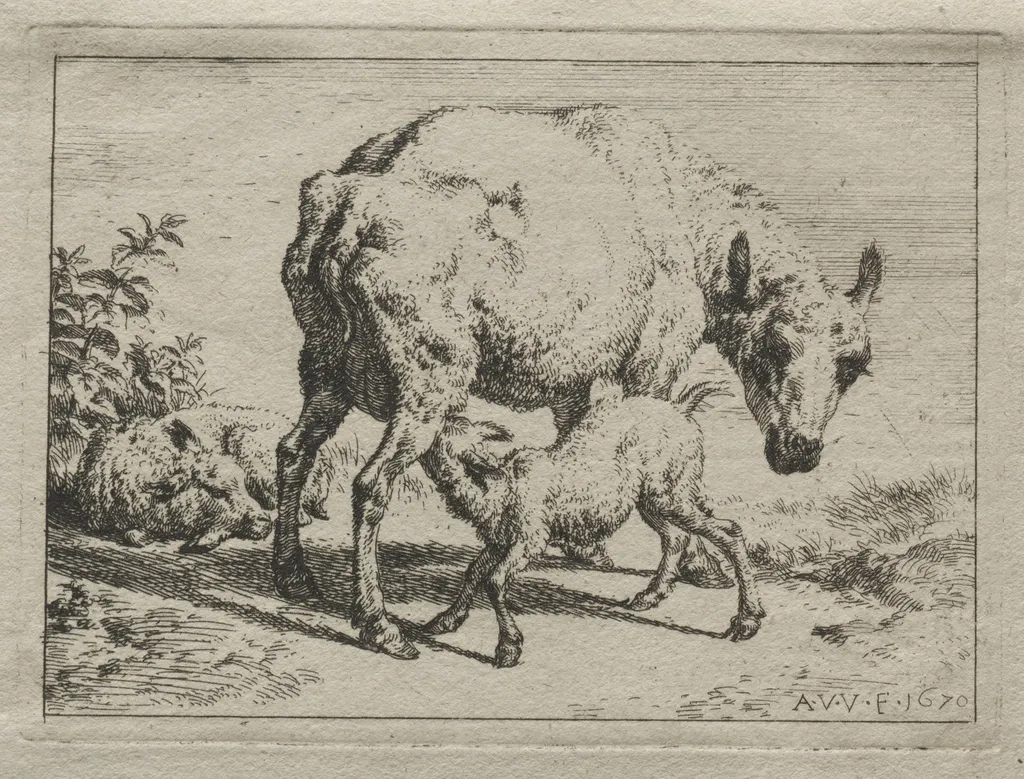
The Ewe and Two Lambs is a print by the Baroque artist Adriaen van de Velde. It dates from 1670 and is held in the collection of the Cleveland Museum of Art.
About this work
Overview
Created in 1670 by Adriaen van de Velde, this black-and-white drawing depicts a ewe and her two lambs in a quiet pastoral moment.
Created in 1670 by Adriaen van de Velde, this black-and-white drawing depicts a ewe and her two lambs in a quiet pastoral moment. Executed in ink and wash, the work is part of the Cleveland Museum of Art’s collection. It reflects van de Velde’s interest in naturalistic animal studies, rendered with minimal detail yet expressive energy. The composition centers on the maternal bond, framed by a sparse landscape.
Subject & Meaning
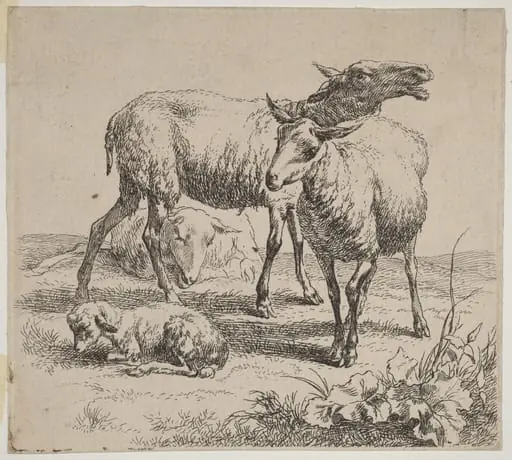
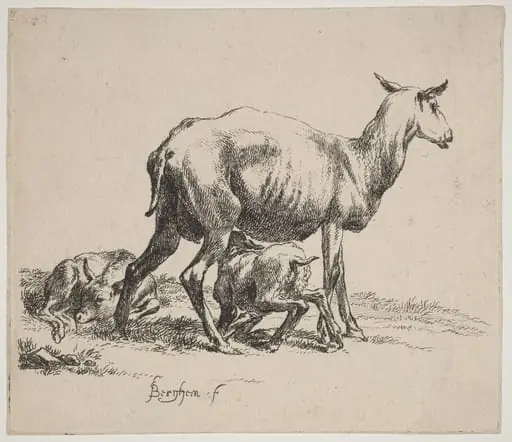
The scene captures a tender interaction between a mother sheep and her young, one lamb nuzzling her flank while the other rests nearby. There is no human presence or symbolic narrative—only the quiet intimacy of animal life. The focus on maternal care and domestic tranquility aligns with 17th-century Dutch appreciation for rural harmony, devoid of idealization or allegory.
Technique & Style
Van de Velde employed rapid, fluid ink lines to suggest texture and motion. The ewe’s wool is rendered with loose, stippled strokes that imply softness without detail, while the grass is composed of short, jagged marks. Washes add subtle tonal variation, grounding the figures in a shallow space. The sketchlike quality conveys immediacy, as if observed in passing rather than posed.
History & Provenance
The drawing entered the Cleveland Museum of Art’s collection in the 20th century, though its earlier ownership remains undocumented. It is one of several animal studies by van de Velde preserved in public institutions, reflecting his reputation as a skilled draftsman of livestock and pastoral scenes. Its survival in good condition suggests it was valued as a finished work, not merely a preparatory sketch.
Context
In 17th-century Netherlands, detailed animal studies flourished alongside landscape and genre painting. Van de Velde, trained in both, contributed to this trend by observing nature directly. His drawings, often made outdoors, contrasted with the more formalized animal depictions of earlier periods. This work exemplifies the growing interest in authentic, unembellished natural observation among Dutch artists.
Legacy
Van de Velde’s animal drawings, including this one, influenced later generations of naturalists and illustrators who sought to capture wildlife with observational accuracy. Though not widely exhibited, such works remain important for understanding the evolution of animal representation in European art—prioritizing quiet realism over theatricality or symbolism.
Artist & collection

Artist
Adriaen van de Velde, was a Dutch painter, draughtsman, and print artist. His favorite subjects were landscapes with animals and genre scenes. He also painted beaches, dunes, forests, winter scenes, portraits in…