Artwork
The Beach at Scheveningen
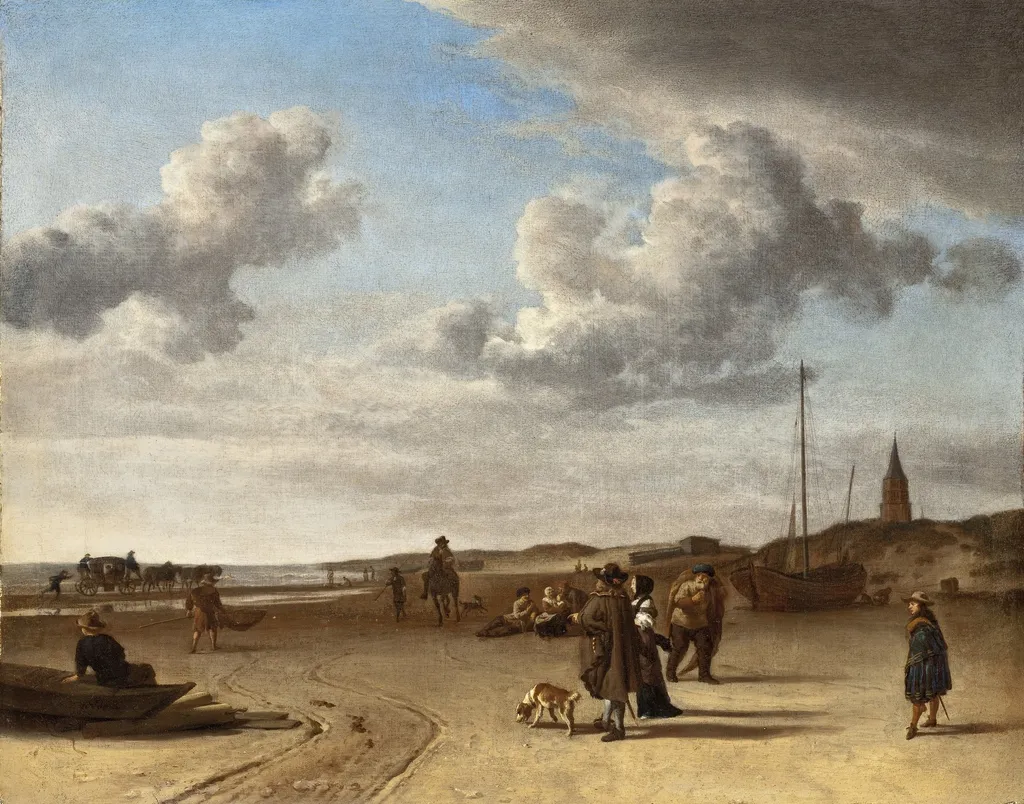
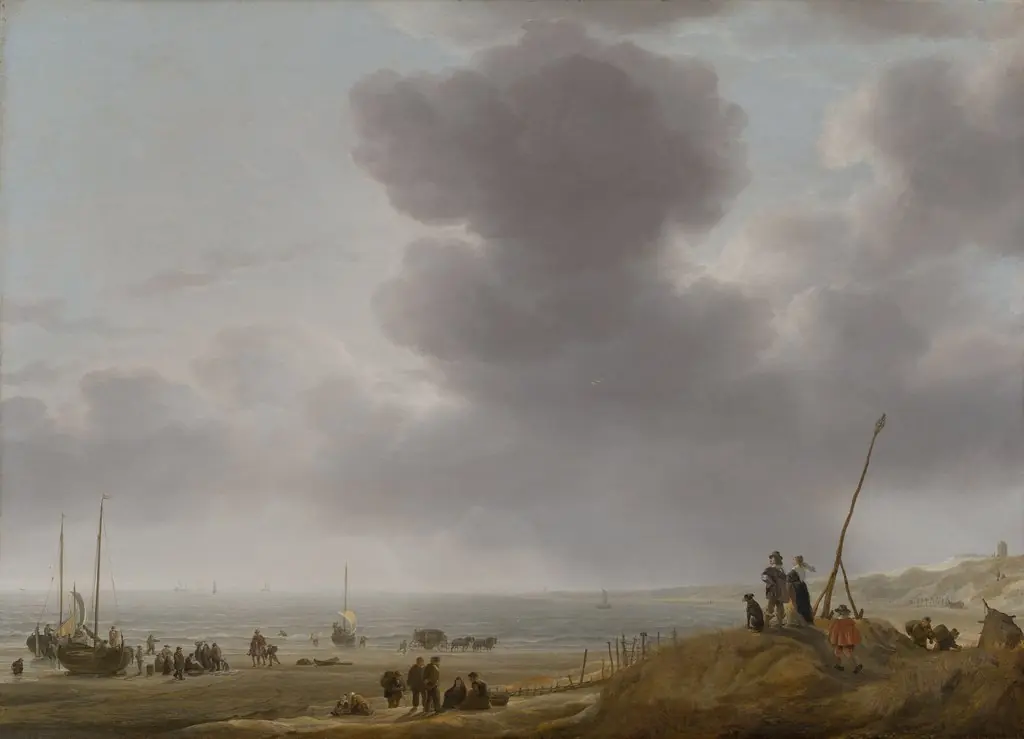
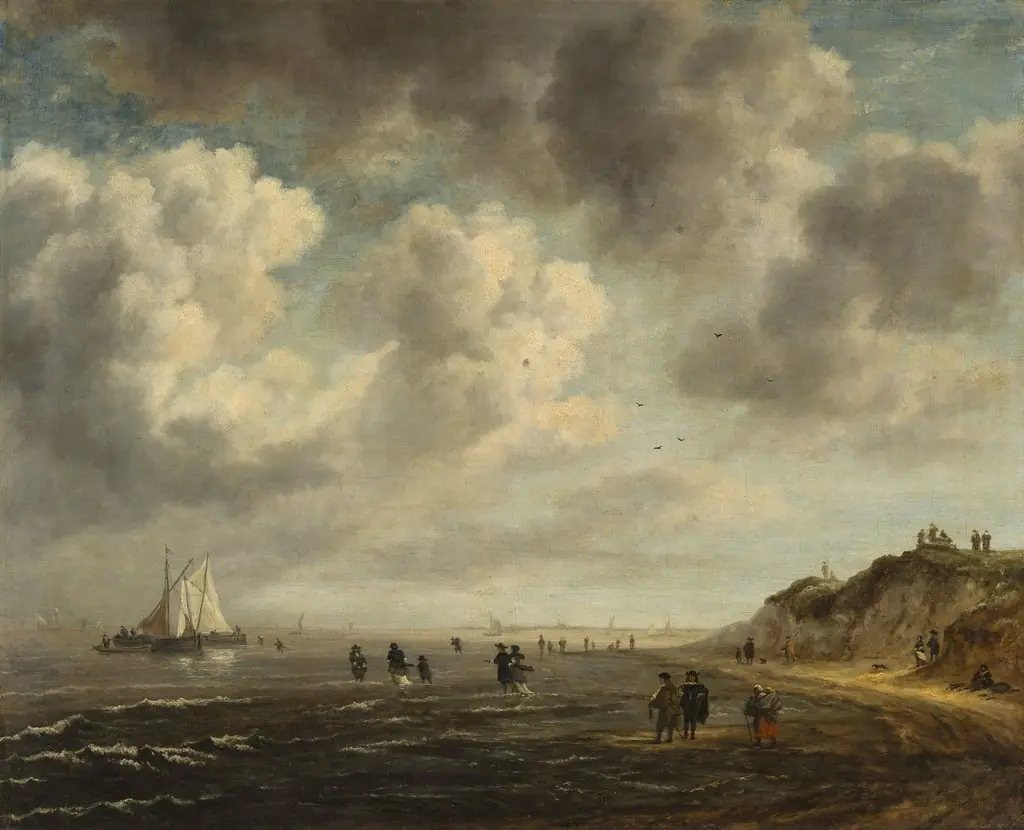
The Beach at Scheveningen is an oil painting by the Dutch Golden Age artist Adriaen van de Velde. It dates from 1670 and is held in the collection of the Los Angeles County Museum of Art.
About this work
Overview
Painted in 1670, The Beach at Scheveningen is an oil-on-canvas landscape by Dutch artist Adriaen van de Velde.
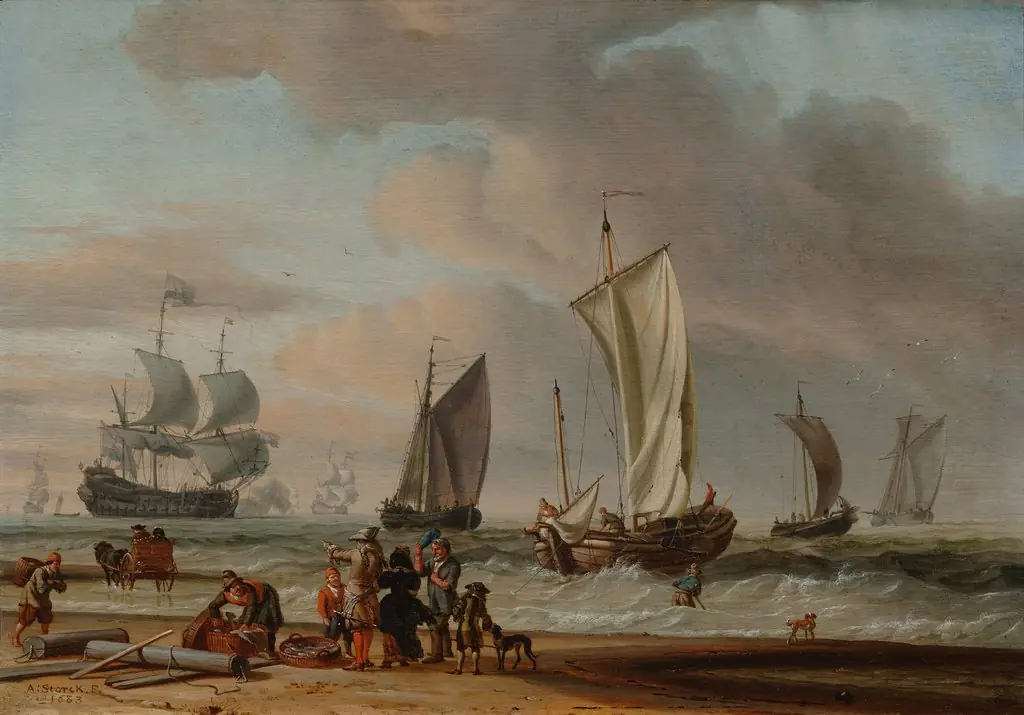
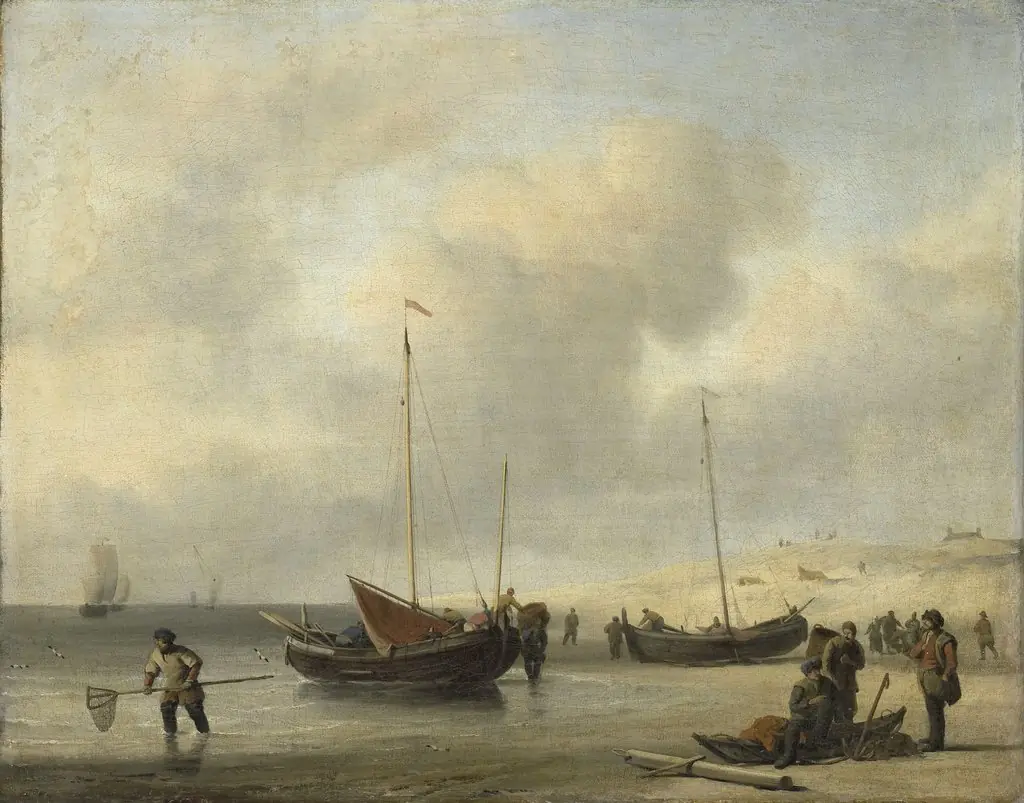
Painted in 1670, The Beach at Scheveningen is an oil-on-canvas landscape by Dutch artist Adriaen van de Velde. It depicts a coastal scene near the fishing village of Scheveningen, capturing everyday life along the shore. The work is part of the collection at the Los Angeles County Museum of Art, where it serves as an example of 17th-century Dutch genre painting focused on naturalism and quiet observation.
Subject & Meaning
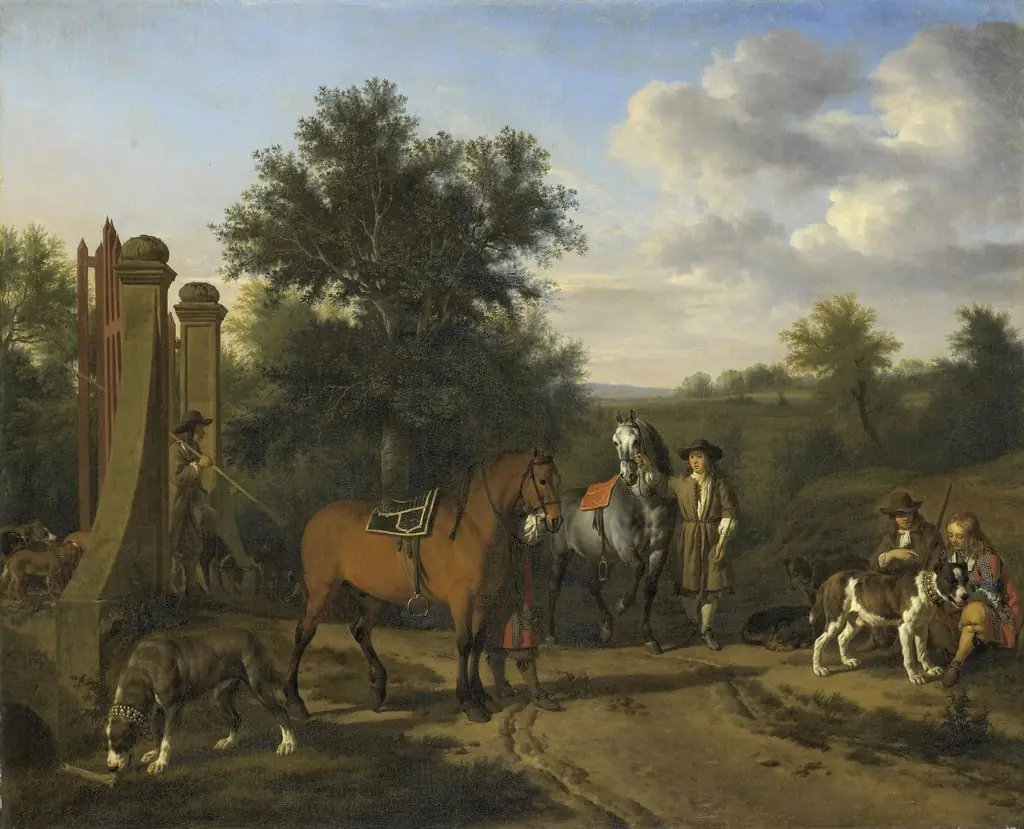
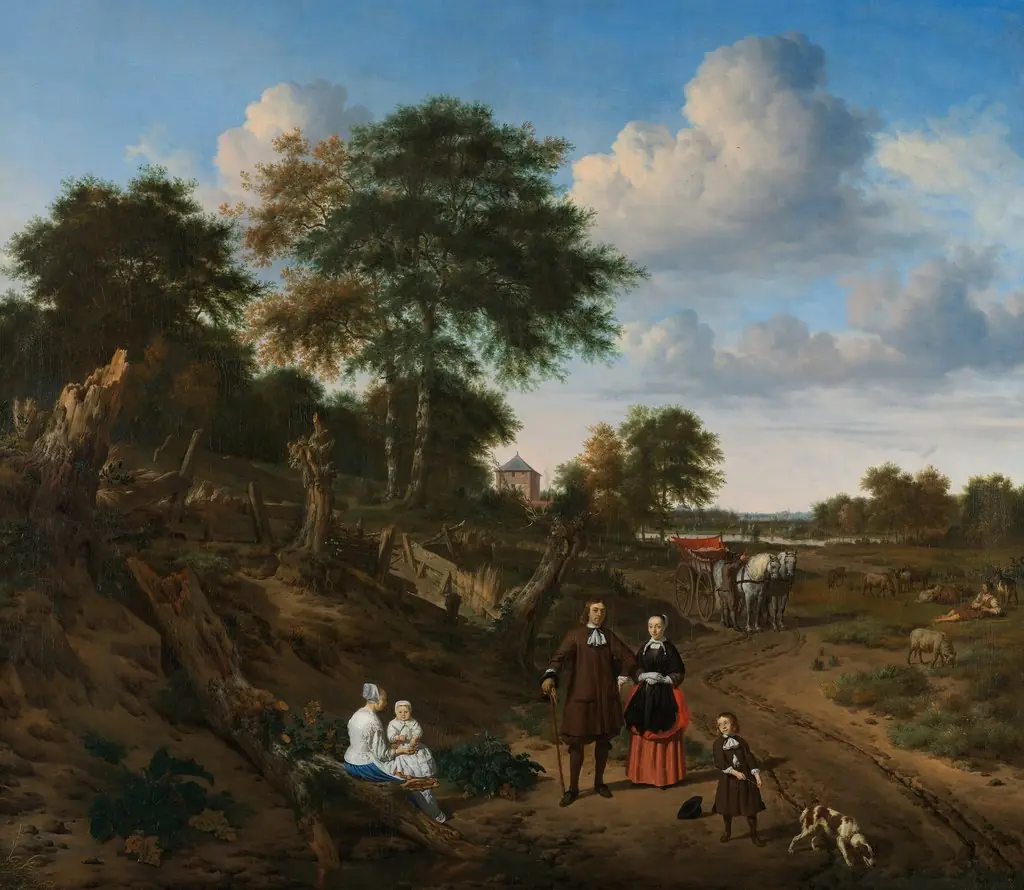
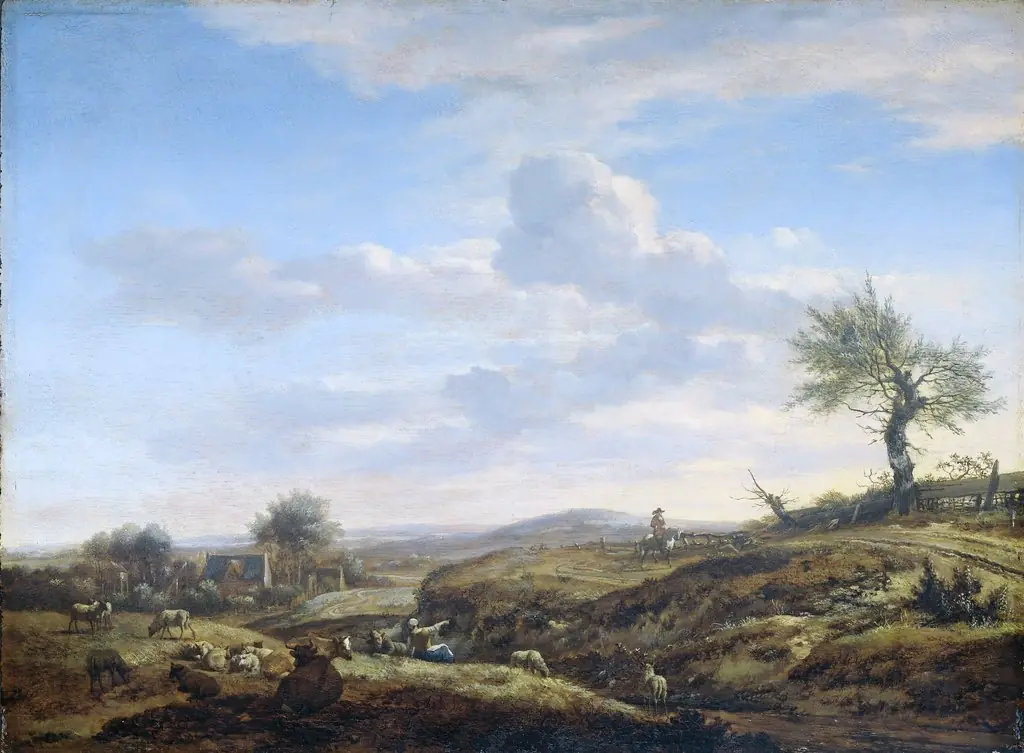
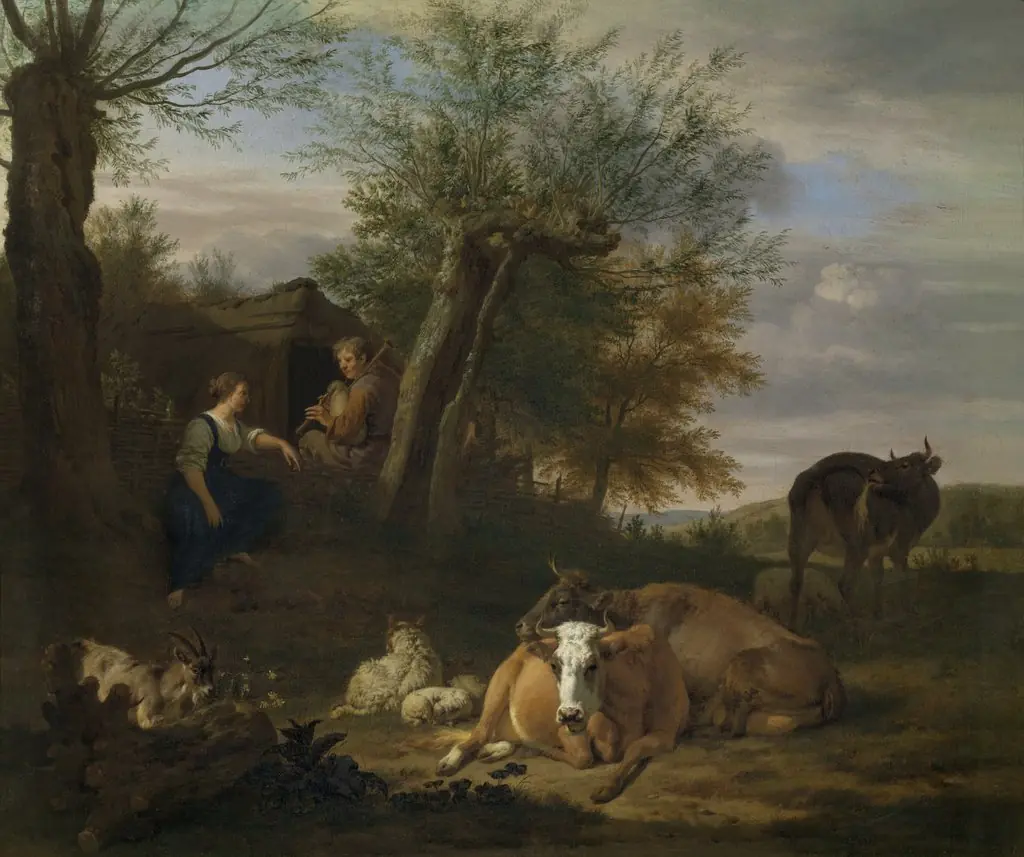
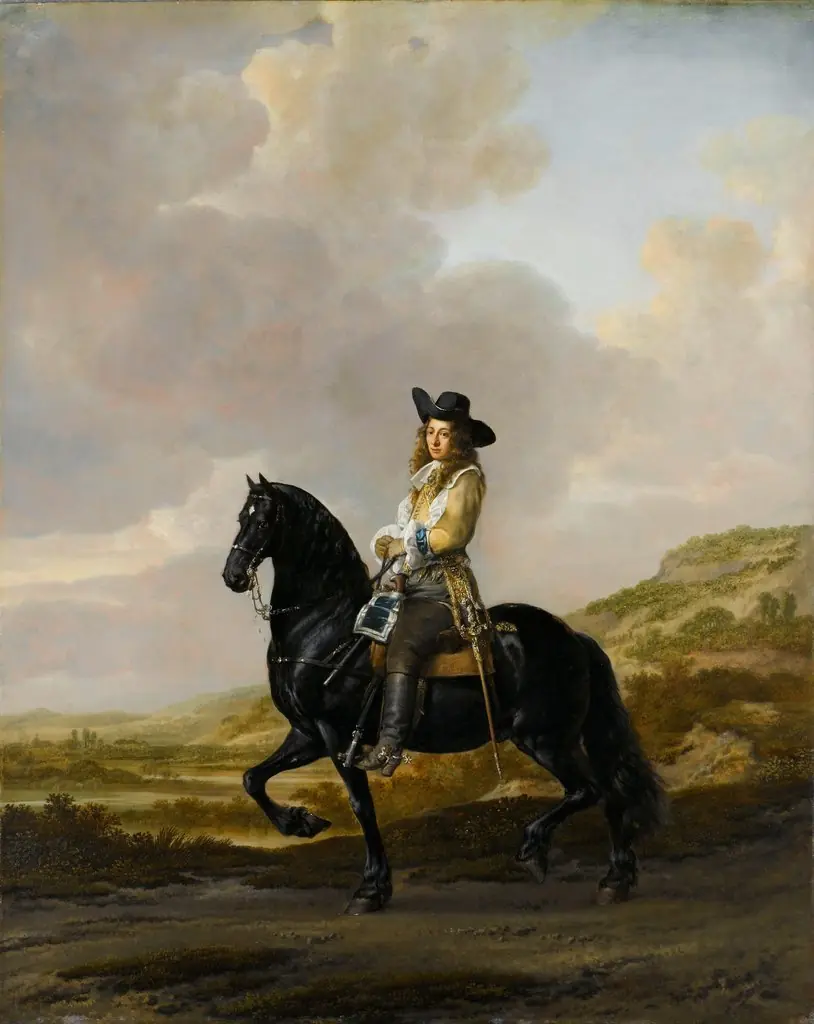
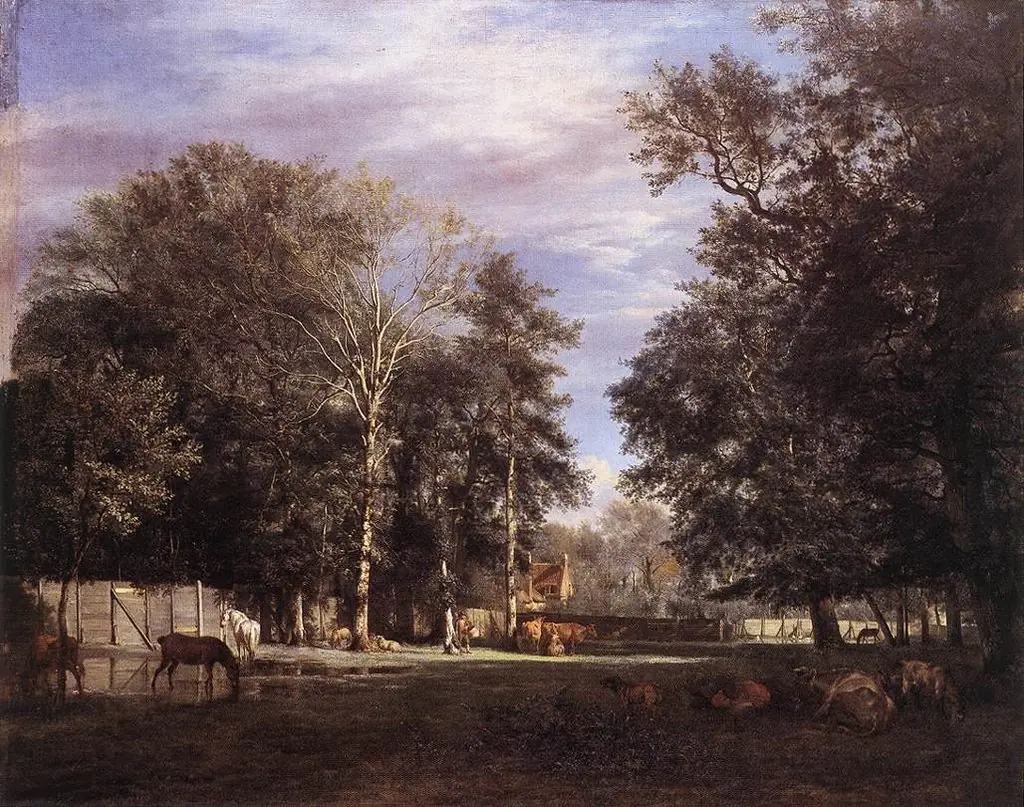
The scene portrays ordinary figures—a man in a brown coat with a dog, another walking in blue, a horse-drawn carriage—engaged in unremarkable activities. No dramatic event unfolds; instead, the painting emphasizes the rhythm of daily life by the sea. The inclusion of animals and transport suggests a working coastal community, subtly conveying the quiet dignity of common routines in the Dutch Republic.
Technique & Style
Van de Velde employed delicate brushwork to render textures—fabric, sand, fur, and cloud formations—with precision. Light filters through expansive, voluminous skies, casting soft shadows that model the figures and terrain. The composition balances foreground detail with atmospheric perspective, guiding the eye toward the horizon where sea and sky merge, enhancing the sense of open space and calm.
History & Provenance
Created during the height of Dutch Golden Age painting, the work remained in private collections for centuries before entering LACMA’s holdings. Its journey through European and American collections reflects broader trends in the appreciation of Dutch genre scenes. While its early ownership is undocumented, its attribution to van de Velde is consistent with stylistic analysis and archival records of his coastal subjects.
Context
In the 1670s, Dutch artists increasingly turned to landscapes and scenes of daily life as market demand shifted away from religious or mythological themes. Scheveningen, a popular seaside resort for Amsterdam’s elite, offered a familiar subject. Van de Velde’s focus on ordinary figures amid nature aligns with broader trends in Dutch art that valued observation over grandeur.
Legacy
Though less celebrated than some contemporaries, van de Velde’s coastal scenes influenced later landscape painters through their subtle tonal harmony and attention to atmospheric effects. The Beach at Scheveningen exemplifies how Dutch artists transformed mundane moments into enduring visual records, contributing to a tradition that prioritized quiet realism over theatricality.
Own this work as a print
Artist & collection

Artist
Adriaen van de Velde, was a Dutch painter, draughtsman, and print artist. His favorite subjects were landscapes with animals and genre scenes. He also painted beaches, dunes, forests, winter scenes, portraits in…