Artwork
The Spectacle Seller
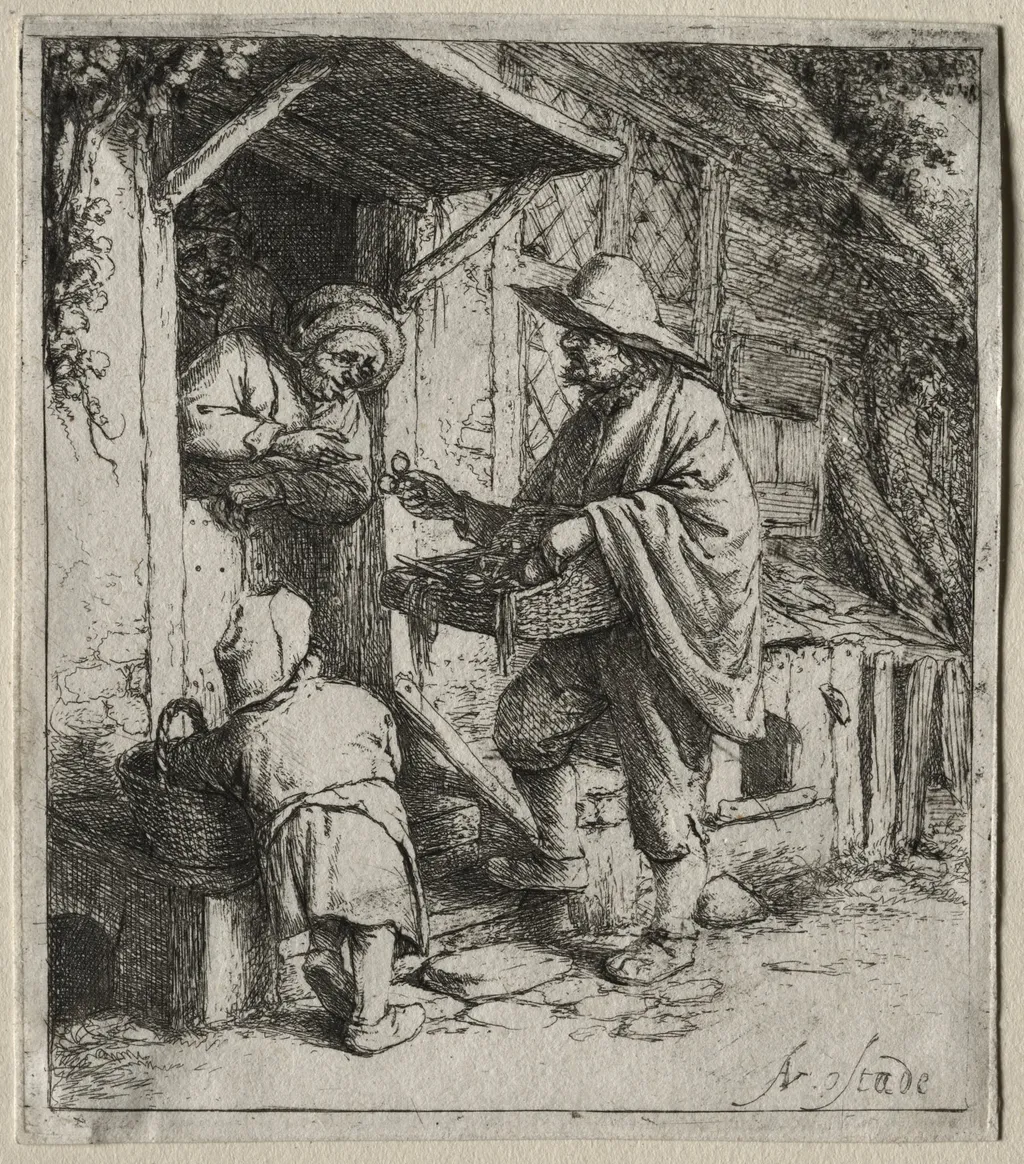
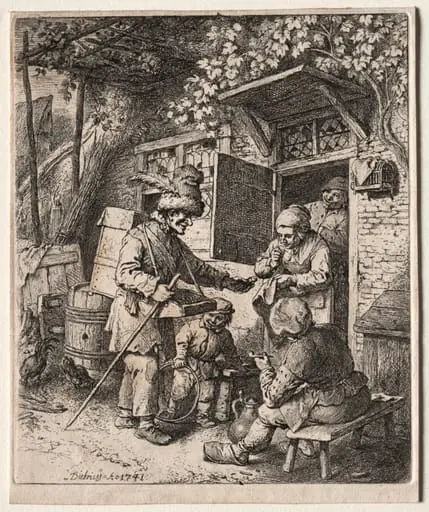
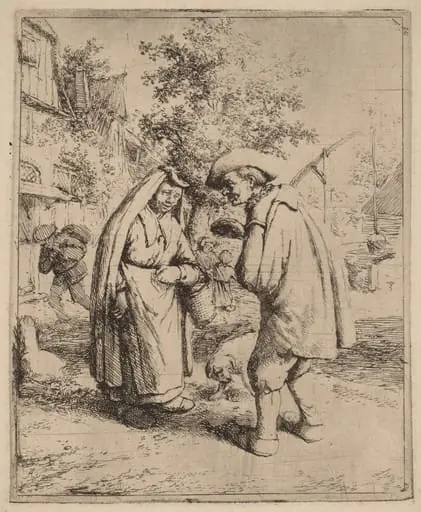
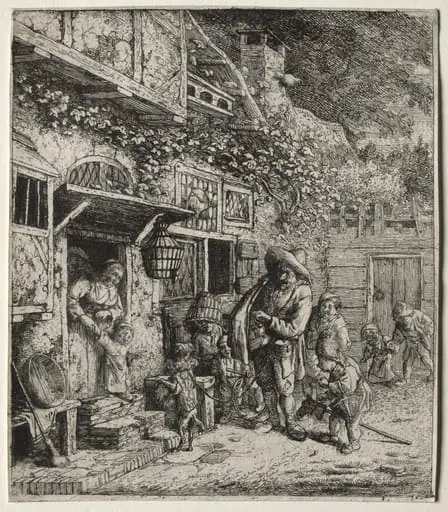
The Spectacle Seller is a print by the Baroque artist Adriaen van Ostade. It dates from 1650 and is held in the collection of the Cleveland Museum of Art.
About this work
Overview
The sketchlike quality and informal setting reflect van Ostade’s dedication to portraying the rhythms of common life during the Dutch Golden Age.
Created around 1650 by Adriaen van Ostade, this print captures a quiet moment of commerce and domestic interaction in a Dutch village. Unlike grand historical or religious subjects, it centers on an ordinary man selling spectacles or small goods to a woman and child indoors. The sketchlike quality and informal setting reflect van Ostade’s dedication to portraying the rhythms of common life during the Dutch Golden Age.
Subject & Meaning
The scene depicts a vendor, likely a peddler of optical devices or trinkets, demonstrating an object to a seated woman and child. Their quiet attention suggests curiosity or practical need rather than spectacle. The dog at their feet adds a sense of domestic familiarity. The image conveys no moralizing or allegory—instead, it honors the unremarkable exchanges that structured daily existence in 17th-century Holland.
Technique & Style
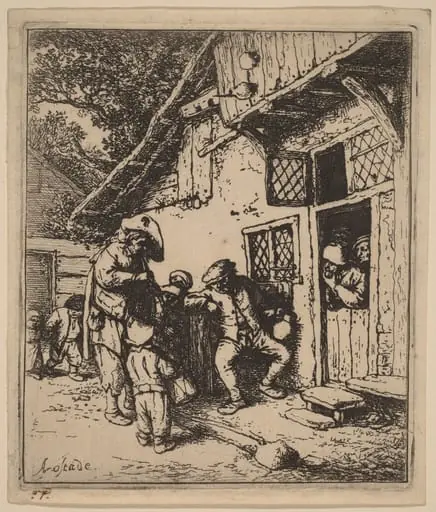
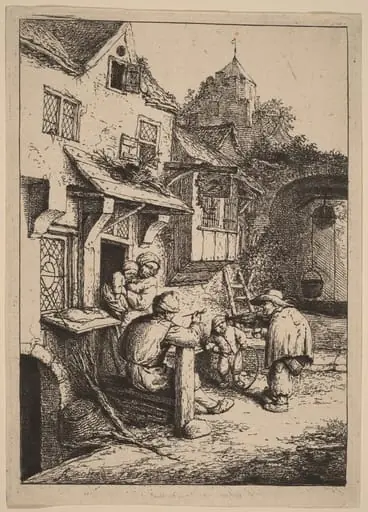
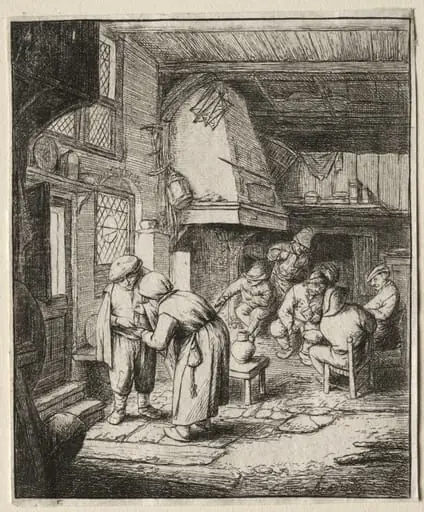
Van Ostade employs rapid, scratchy lines and dense hatching to model form and texture, giving the figures a tactile presence. Light and shadow are used to define spatial depth and isolate the figures from the shadowed interior. The rough, energetic strokes avoid polish, enhancing the immediacy of the moment. This approach aligns with his preference for naturalism over idealization, emphasizing atmosphere over detail.
History & Provenance
The print entered the collection of the Cleveland Museum of Art, where it remains part of its holdings of Dutch graphic art. While its exact provenance before the 20th century is not fully documented, its style and subject place it firmly within van Ostade’s output of the 1640s–1650s, a period when he increasingly focused on intimate genre scenes executed in ink and wash.
Context
In mid-17th-century Holland, rising urban merchant classes cultivated an appetite for art depicting everyday life. Van Ostade’s work responded to this demand, offering unidealized views of peasants and tradespeople. His prints circulated widely, making such scenes accessible beyond elite collectors. The focus on modest interiors and humble transactions reflects broader cultural values of diligence and quiet observation.
Legacy
Van Ostade’s prints helped establish genre scenes as a legitimate and enduring subject in Northern European art. His use of light, texture, and informal composition influenced later artists interested in realism. Though less celebrated than his contemporaries, his work preserved a visual record of ordinary life, contributing to a broader shift in artistic priorities during the Dutch Golden Age.
Artist & collection
Artist
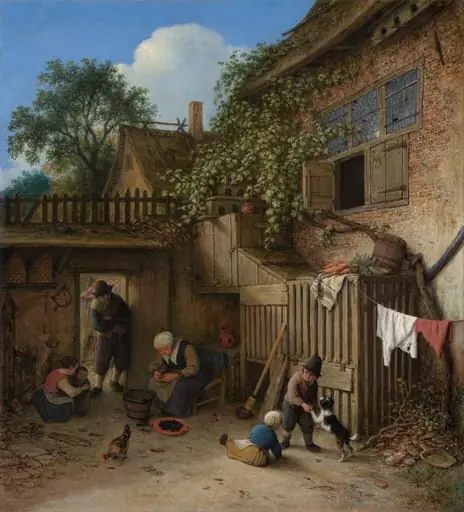
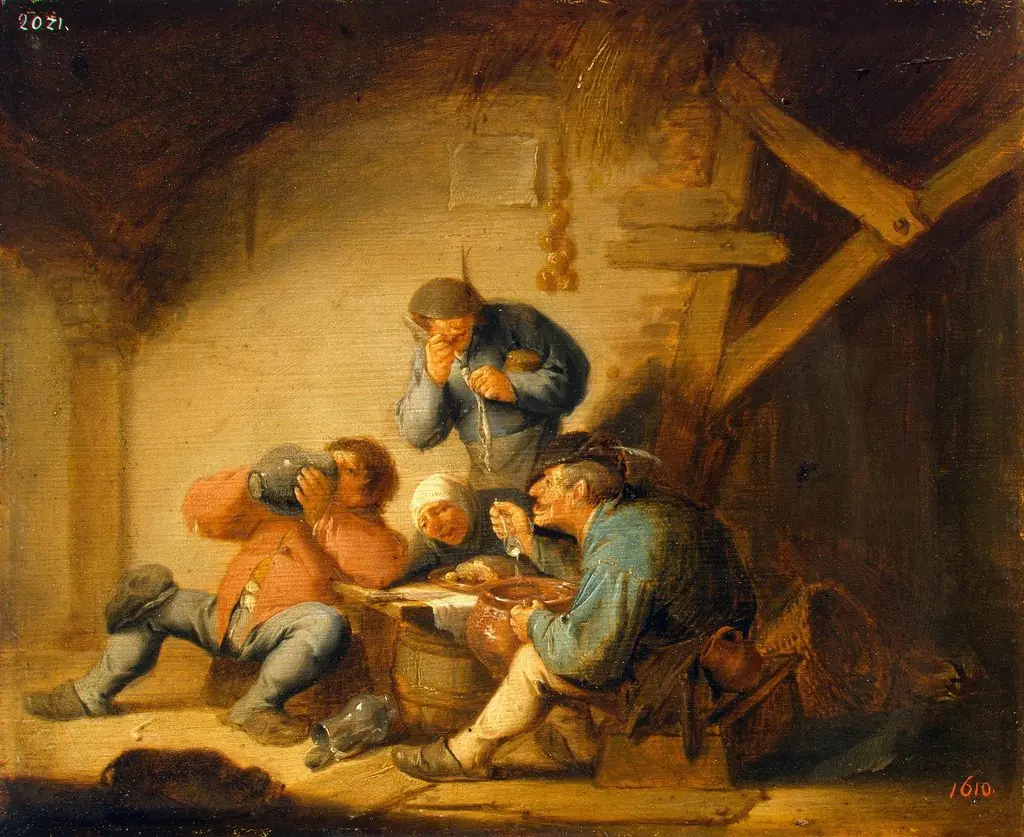
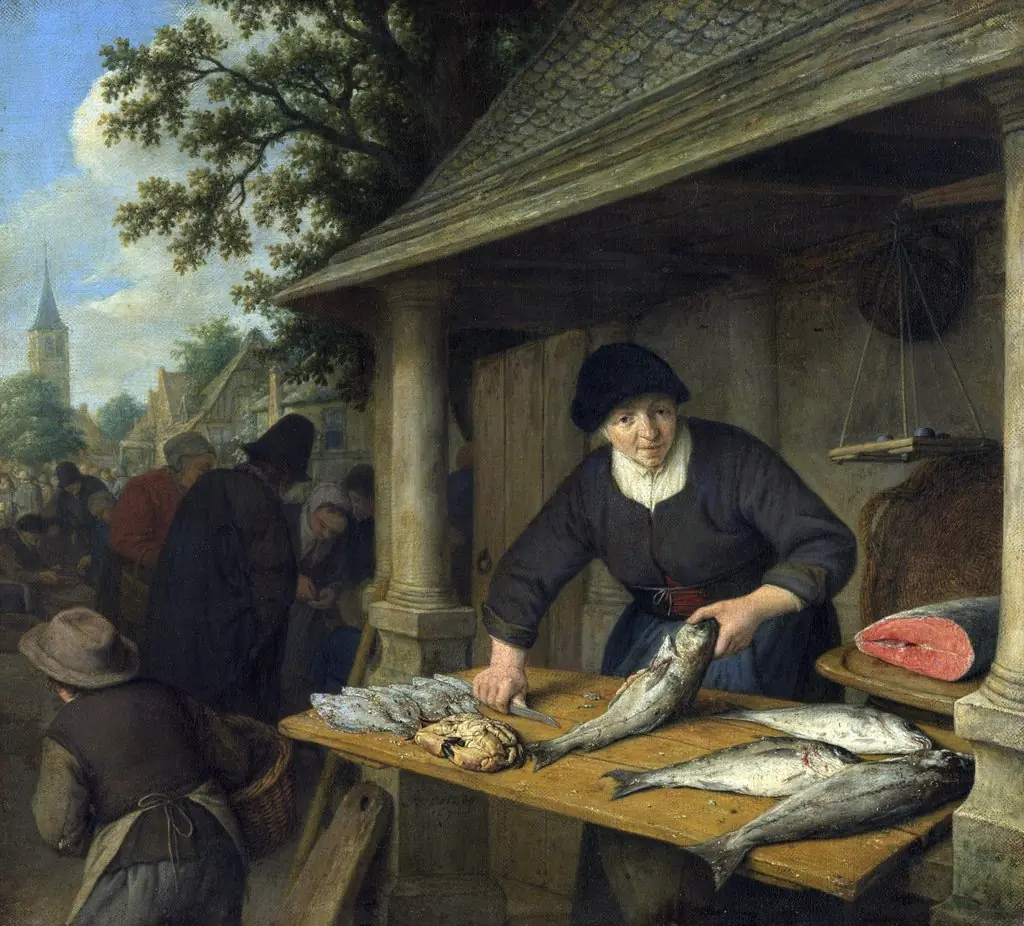
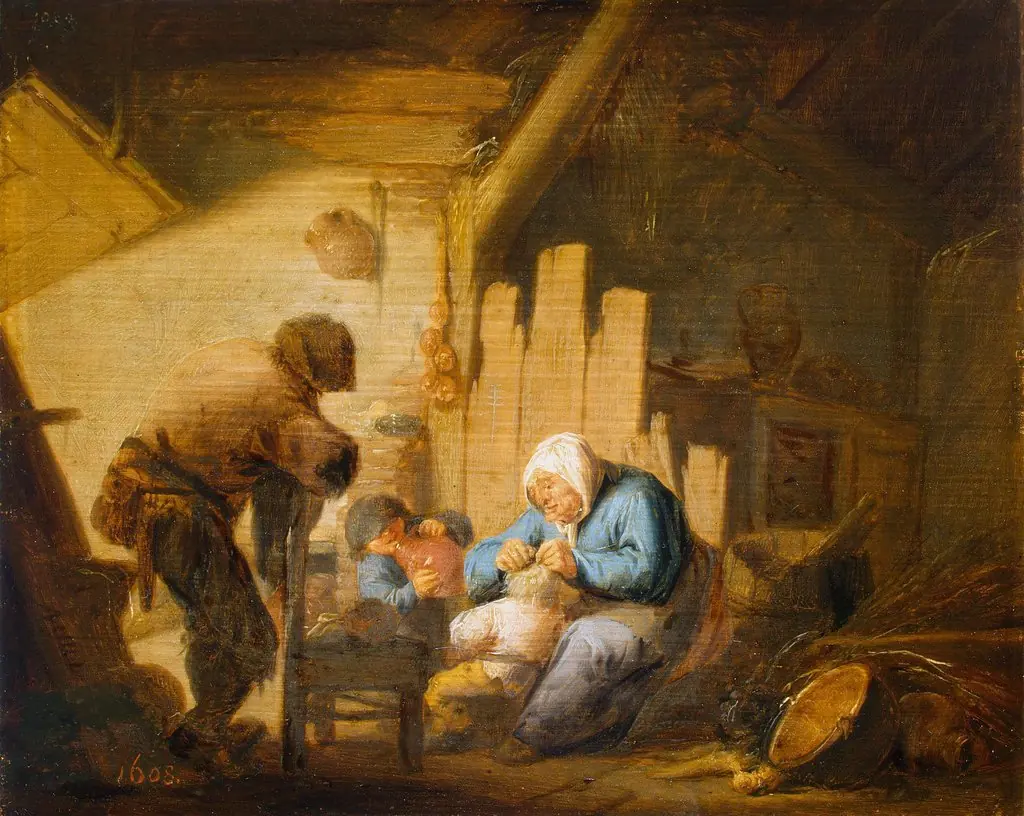
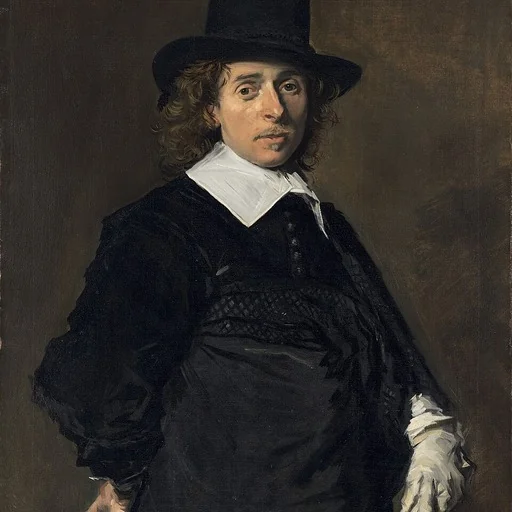
Adriaen van Ostade (baptized as Adriaen Jansz Hendricx 10 December 1610 – buried 2 May 1685) was a Dutch Golden Age painter of genre works, showing the everyday life of ordinary men and women.