Artwork
The Rat Catcher
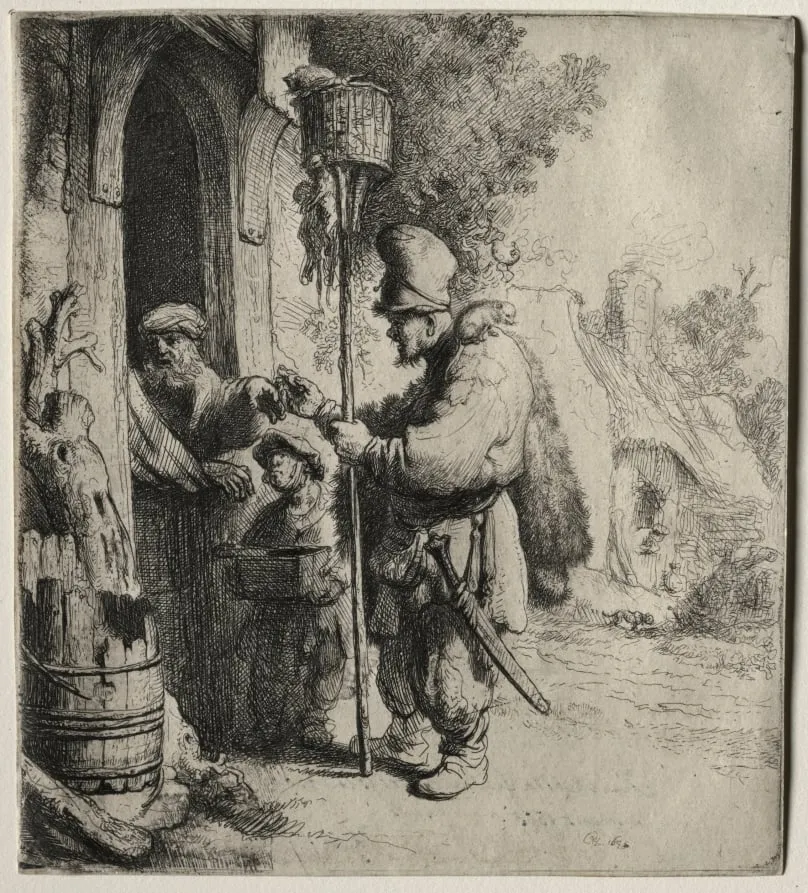
The Rat Catcher is a print by the Baroque artist Rembrandt. It dates from 1632 and is held in the collection of the Cleveland Museum of Art.
About this work
Overview
The Rat Catcher is a 1632 print by Dutch artist Rembrandt van Rijn, currently in the collection of The Cleveland Museum of Art.
Subject & Meaning
The print depicts a solemn rat catcher standing in a dimly lit alleyway, surrounded by a group of onlookers. His attire, including a hat, long coat, and bag, suggests a professional at work. The scene's somber atmosphere, conveyed through the figure's serious expression and dark shadows, may imply a sense of community concern or everyday hardship.
Technique & Style
Rembrandt employed chiaroscuro to create depth and drama, focusing attention on the central figure. The strategic use of light and shadow enhances the overall somber mood, characteristic of the artist's mastery of expressive contrasts.
History & Provenance
Created in 1632, the work's history prior to its current ownership by The Cleveland Museum of Art is not detailed here.
Context
The Rat Catcher reflects 17th-century Dutch life, possibly highlighting the ubiquity of pest control in urban settings or the social dynamics of public services.
Legacy
As part of Rembrandt's oeuvre, The Rat Catcher contributes to the artist's exploration of light, shadow, and the human condition, influencing subsequent generations of artists in capturing everyday life with depth and emotion.
Artist & collection
Artist
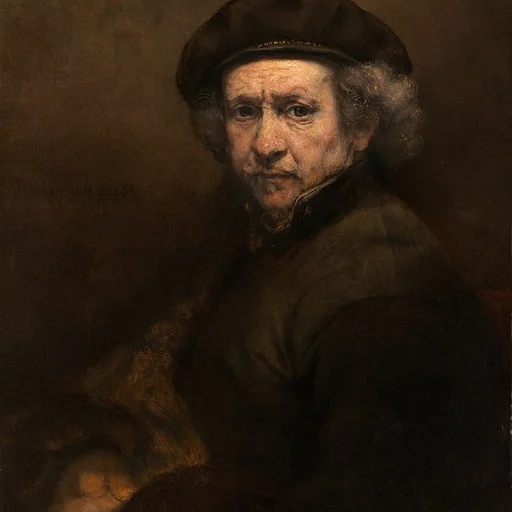
Rembrandt Harmenszoon van Rijn (15 July 1606 – 4 October 1669), known mononymously as Rembrandt, was a Dutch Golden Age painter, printmaker, and draughtsman.

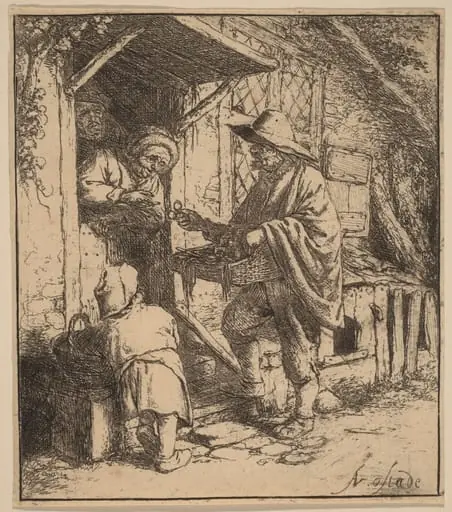 Street Vendor Selling Spectacles at the Door
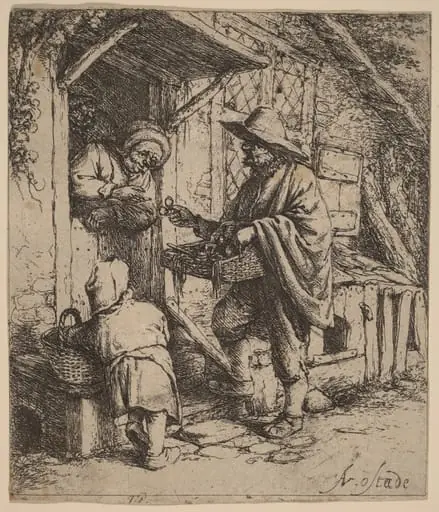 Street Vendor Selling Spectacles at the Door
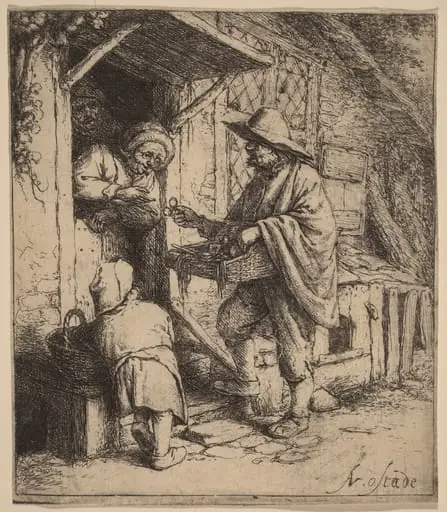 Street Vendor Selling Spectacles at the Door
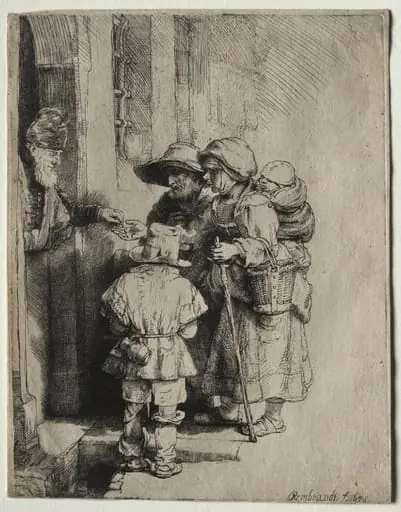 Beggars Receiving Alms at the Door of a House
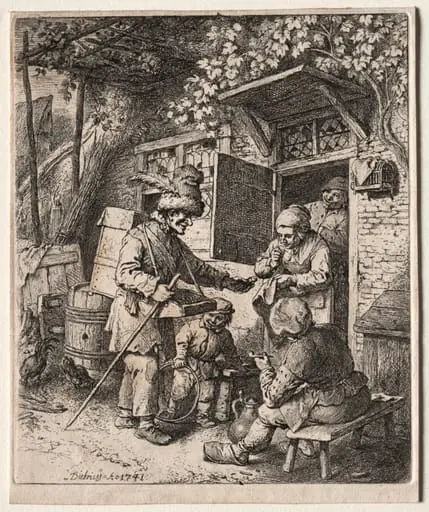 The Peddlar
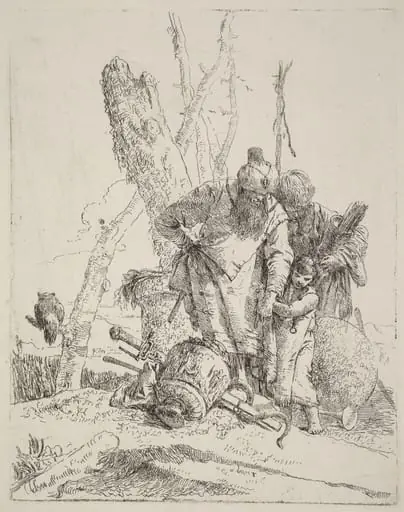 Two Turbaned Magicians and a Boy
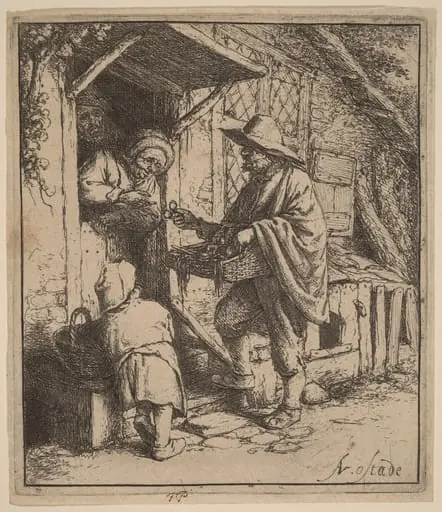 Street Vendor Selling Spectacles at the Door
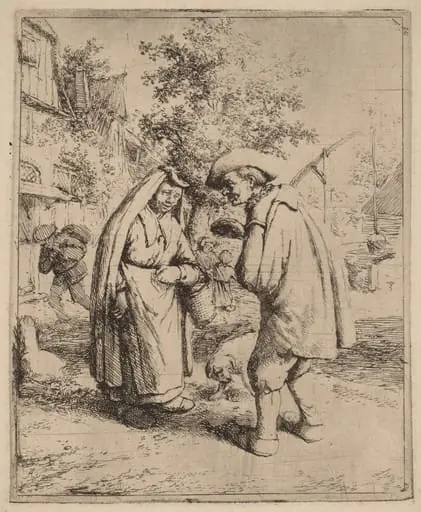 Man and Woman Conversing on a Busy Village Street
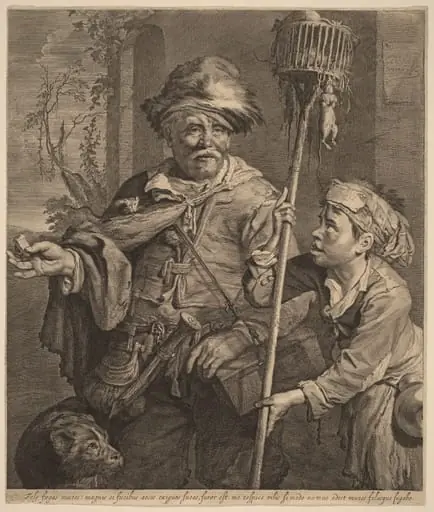 The Seller of Rat Poison