Artwork
Naval Engagement
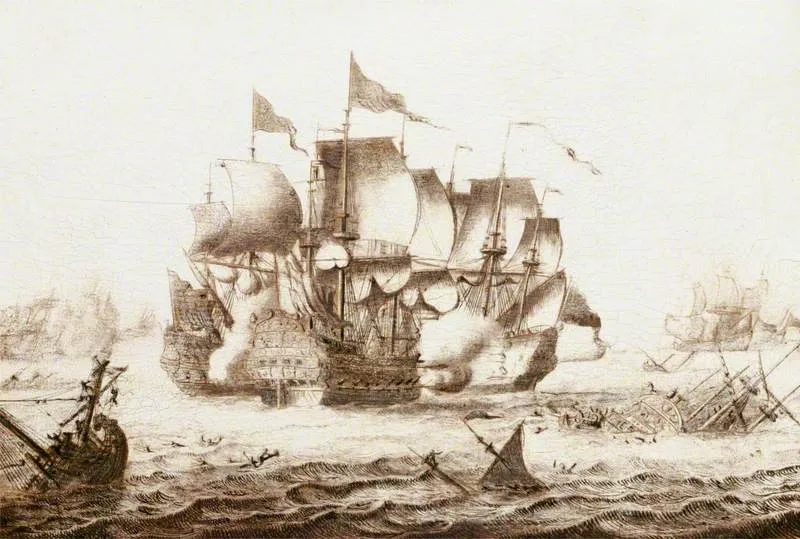
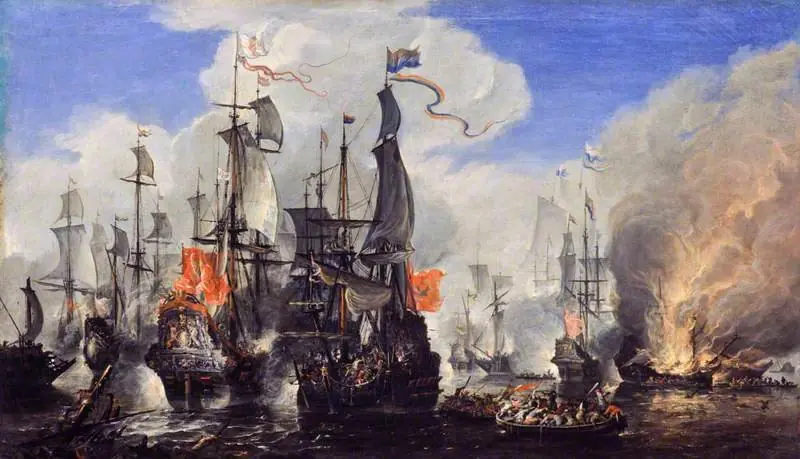
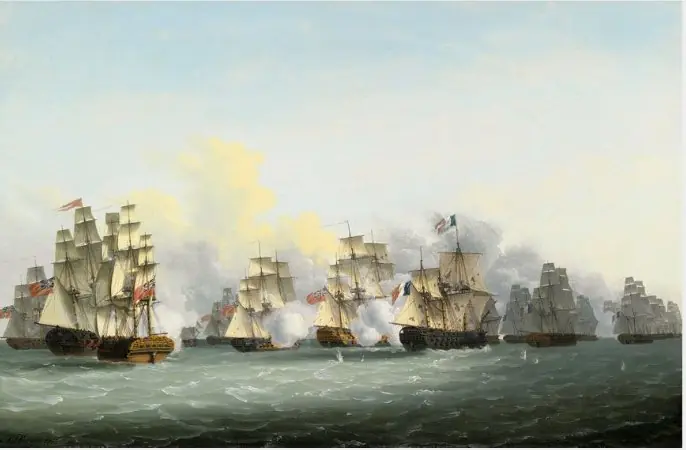
Naval Engagement is an oil painting by the Dutch Golden Age artist Adriaen van Salm. It dates from 1700 and is held in the collection of the Victoria and Albert Museum.
About this work
Overview
Adriaen van Salm, a Dutch artist active in the early 18th century, produced *Naval Engagement* as part of his focus on maritime subjects.
Adriaen van Salm, a Dutch artist active in the early 18th century, produced *Naval Engagement* as part of his focus on maritime subjects. Though trained as a draftsman and later employed as a schoolmaster and draper in Delft, he gained recognition for his marine scenes. His membership in the Guild of Saint Luke in 1706 confirms his professional standing, and he passed his technical knowledge to his son, Roelof, continuing a lineage of maritime representation in Dutch art.
Subject & Meaning
The painting portrays a chaotic naval battle, typical of Dutch maritime art during a period of intense seafaring competition. Multiple vessels, ranging from large warships to smaller, damaged craft, are locked in conflict amid turbulent waters. The scene emphasizes the peril and disorder of naval warfare, reflecting contemporary Dutch concerns with naval power and the risks faced by sailors in global trade and conflict zones.
Technique & Style
Van Salm employed oil paint to render the dynamic interplay of sea and sky, using layered glazes to achieve subtle tonal shifts in the clouds and waves. His composition directs attention to the foreground ship, surrounded by smaller, struggling vessels, while distant ships suggest extended engagement. The brushwork balances precision in rigging with looser handling of water and smoke, conveying motion without overt dramatization.
History & Provenance
The painting’s documented history is limited, but its style aligns with works produced by Dutch marine artists in the decades following the Anglo-Dutch Wars. Van Salm’s association with Delft’s Guild of Saint Luke and his role as a teacher suggest the work was likely created for local patrons or collectors interested in naval themes. No definitive record of early ownership exists, but it remains within the tradition of Dutch maritime painting from the period.
Context
During the late 17th and early 18th centuries, the Dutch Republic maintained a powerful navy to protect its global trade networks. Naval battles were frequent and widely reported, making them compelling subjects for artists. Van Salm’s focus on such scenes reflects both public interest and the cultural importance of maritime strength, even as the Republic’s dominance began to wane relative to Britain and France.
Legacy
Van Salm’s contribution lies in his quiet, observational approach to marine combat, distinct from the more theatrical styles of contemporaries. While not widely celebrated in major collections, his works, including *Naval Engagement*, preserve a record of naval tactics and ship design from the era. His role as a teacher ensured that his techniques influenced a small but continuous line of regional marine artists in the Low Countries.
Artist & collection
Artist
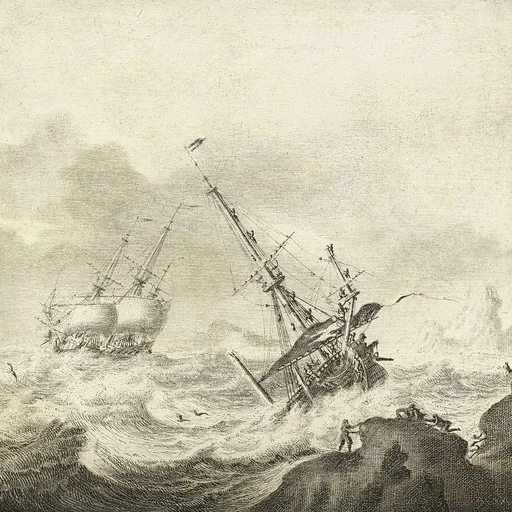
Adam, Abraham, or Adriaen van Salm, also van (der) Salm (c.1660–1720), was a Dutch draftsman and painter.

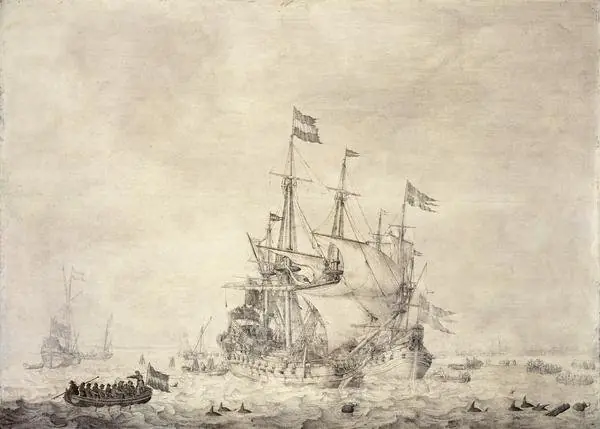 A Sea-piece with a Dutch Merchant Ship and a Swedish Flute
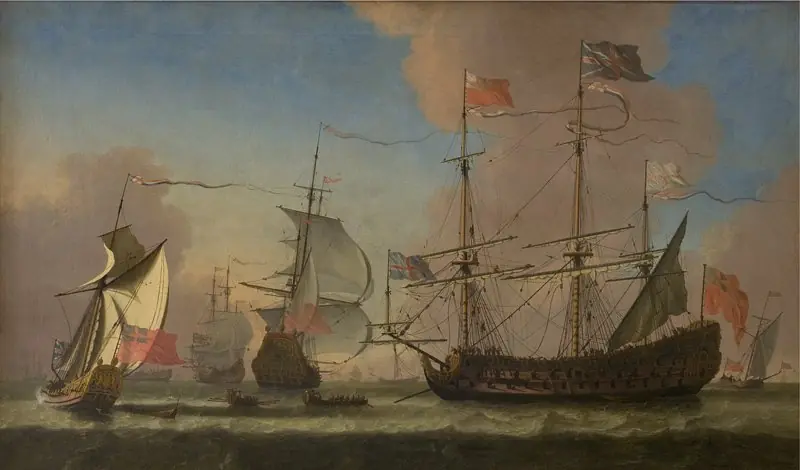 English Warships at Sea in a Fresh Breeze
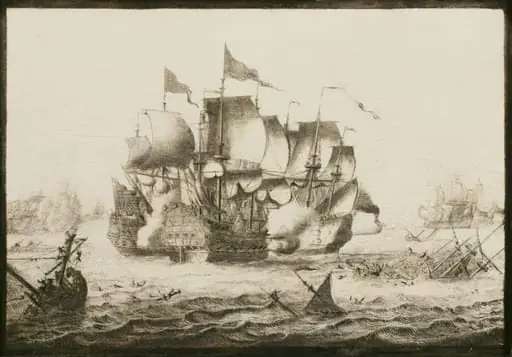 Naval Engagement
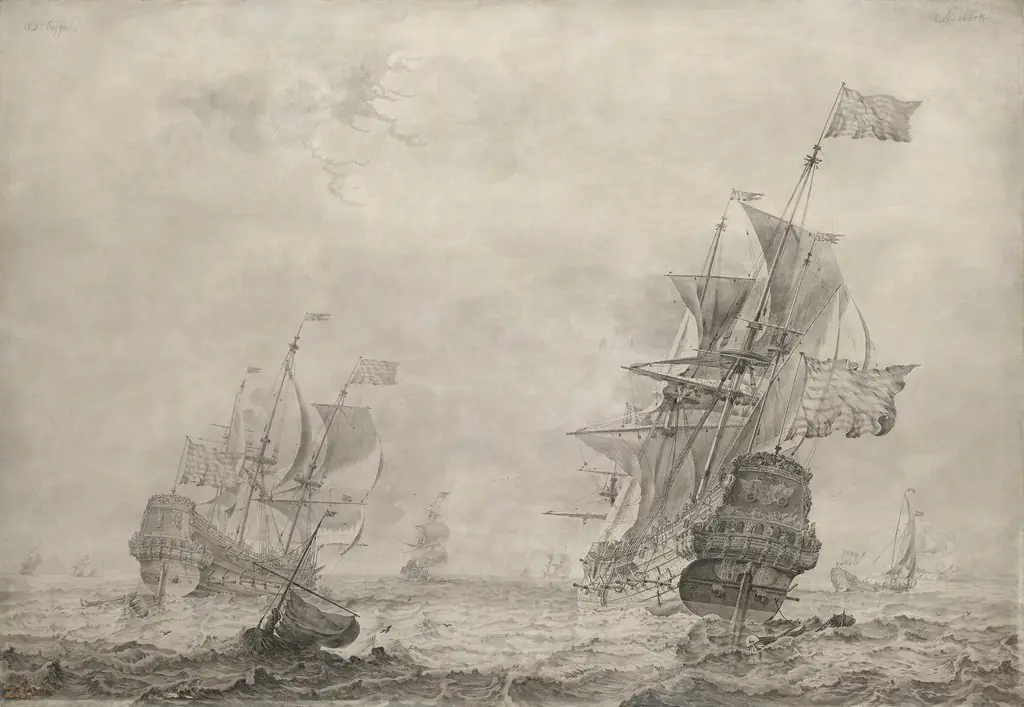 Three-Masted Sailing Boat on Gently Moving Water
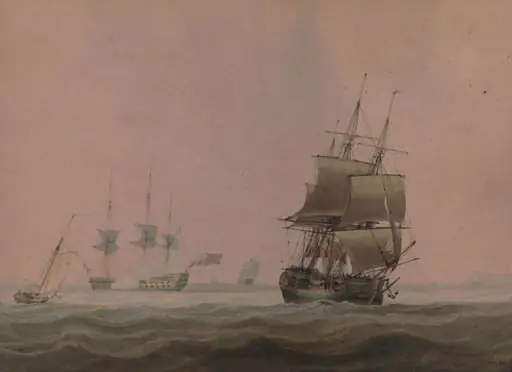 Shipping off the north foreland
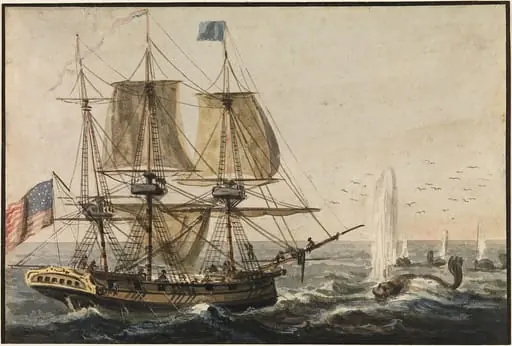 Replenishing the Ship's Larder with Codfish off the Newfoundland Coast
 'The Robust' Engaging 'The Hoche' off Tory Island, 12th October 1798
 English Warships in a Roadstead in Calm Weather