Artwork
Naval Engagement
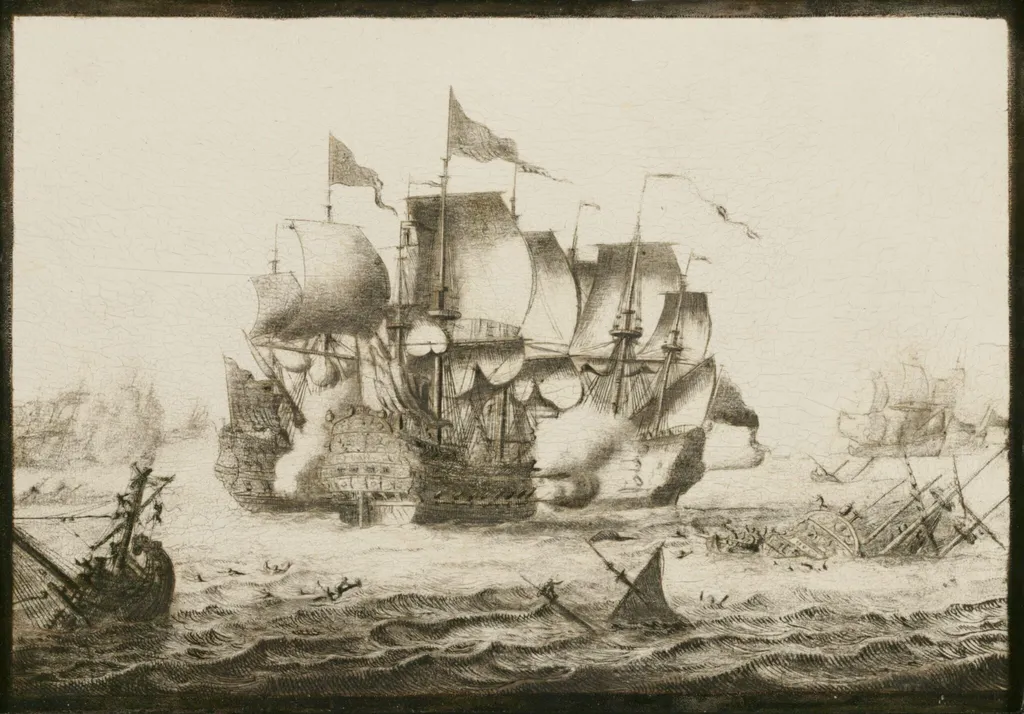
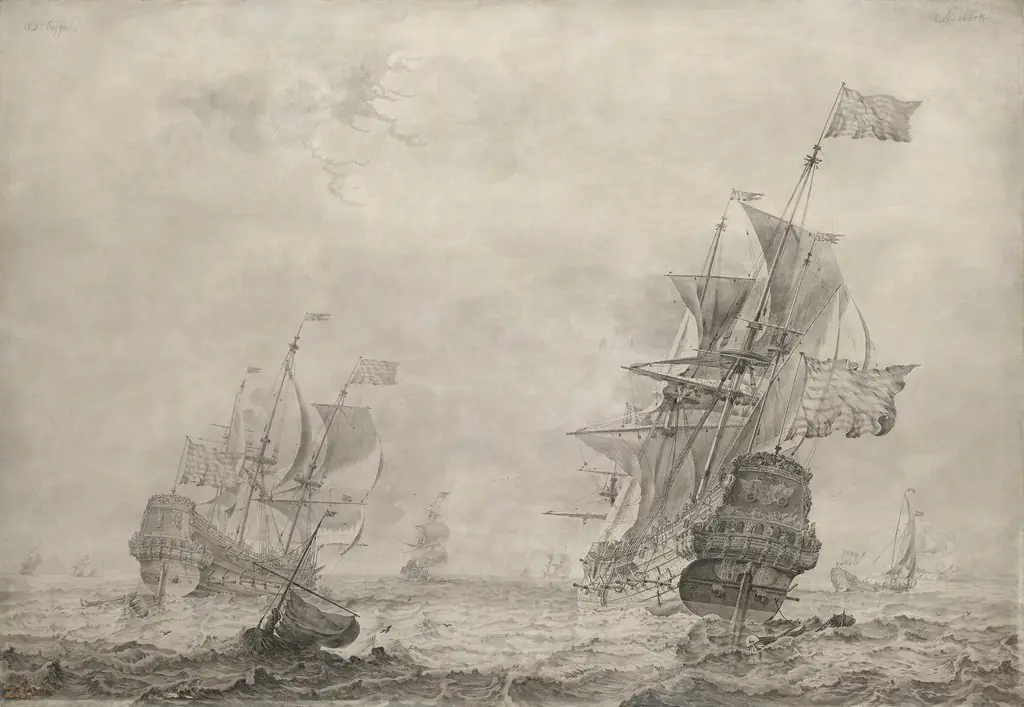
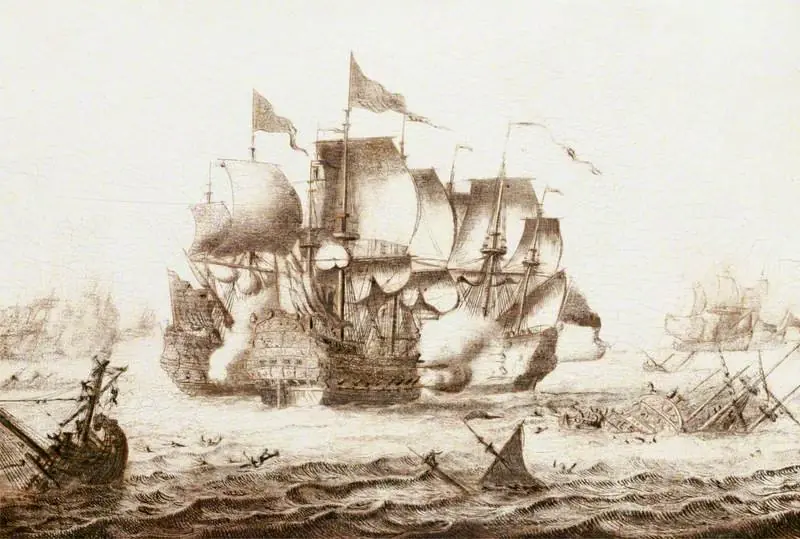
Naval Engagement is an oil painting by the Baroque artist Adriaen van der Salm. It dates from 1692 and is held in the collection of the Victoria and Albert Museum.
About this work
Overview
Its stark tonal range mimics the precision of penwork while retaining the material presence of oil, distinguishing it from conventional colored seascapes.
This oil painting on oak panel depicts a naval battle between English and French forces, rendered entirely in grisaille—a monochromatic technique using black ink on a prepared oil ground. Created by Adriaen van Salm, a Delfshaven schoolmaster and textile merchant, the work exemplifies penschilderij, a Dutch 17th-century practice blending drawing and painting. Its stark tonal range mimics the precision of penwork while retaining the material presence of oil, distinguishing it from conventional colored seascapes.
Subject & Meaning
The scene captures a chaotic maritime clash under a clear sky, with ships tilting in turbulent waves, cannons belching smoke, and masts piercing the upper register. No specific historical engagement is identified, but the composition emphasizes the violence and instability of naval warfare. The absence of color strips the scene of romanticism, focusing attention on motion, structure, and the physicality of conflict rather than national glorification.
Technique & Style
Van Salm employed a reed pen and Indian ink on an oil-primed surface, using parallel hatching to modulate tone and suggest depth. Lines grow lighter and sparser toward the horizon, while the foreground remains densely shaded, enhancing spatial recession. The technique blurs the line between graphic drawing and painted surface, a hallmark of penschilderij. This method, likely pioneered by Willem van de Velde the Elder, was refined here with meticulous control over contrast and rhythm.
History & Provenance
Adriaen van Salm (1657–1720) was not a professional artist but a civic figure who practiced maritime painting as a sideline. His works, including this one, were likely produced for private collectors in the Dutch Republic who valued technical innovation over grand narrative. The painting’s survival suggests it was preserved within regional collections, though its early ownership remains undocumented. It entered institutional care in the 19th century, possibly through a bequest or acquisition by a museum with a focus on graphic arts.
Context
In 17th-century Holland, maritime themes dominated painting, but most artists used color to convey atmosphere and light. Van Salm’s grisaille approach aligned with a niche tradition that explored the expressive potential of line and tone, influenced by printmaking and draftsmanship. His work reflects a broader interest in the material boundaries of art—where drawing becomes painting, and vice versa—challenging the hierarchy of media in Dutch visual culture.
Legacy
Van Salm’s technique, though not widely adopted, contributed to the evolving discourse on medium specificity in Dutch art. His integration of penwork into oil painting prefigured later experiments in tonal realism and graphic abstraction. While overshadowed by contemporaries like the van de Veldes, his work remains a rare example of a non-professional artist pushing technical boundaries, offering insight into the diverse practices beyond the major artistic centers of the time.
Artist & collection
Artist
Adriaen van der Salm painted ships and sea battles in oil during the late 1600s and early 1700s.

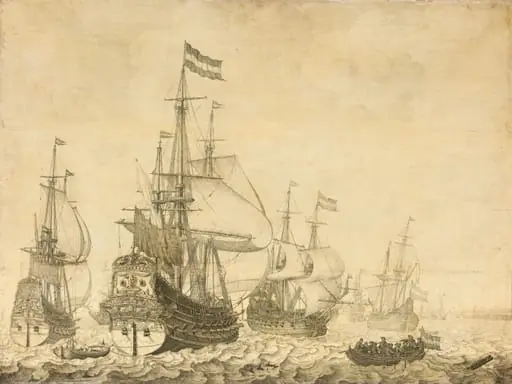 "Seascape with the Dutch Men-of-War including the "Drenthe" and the "Prince Frederick-Henry""
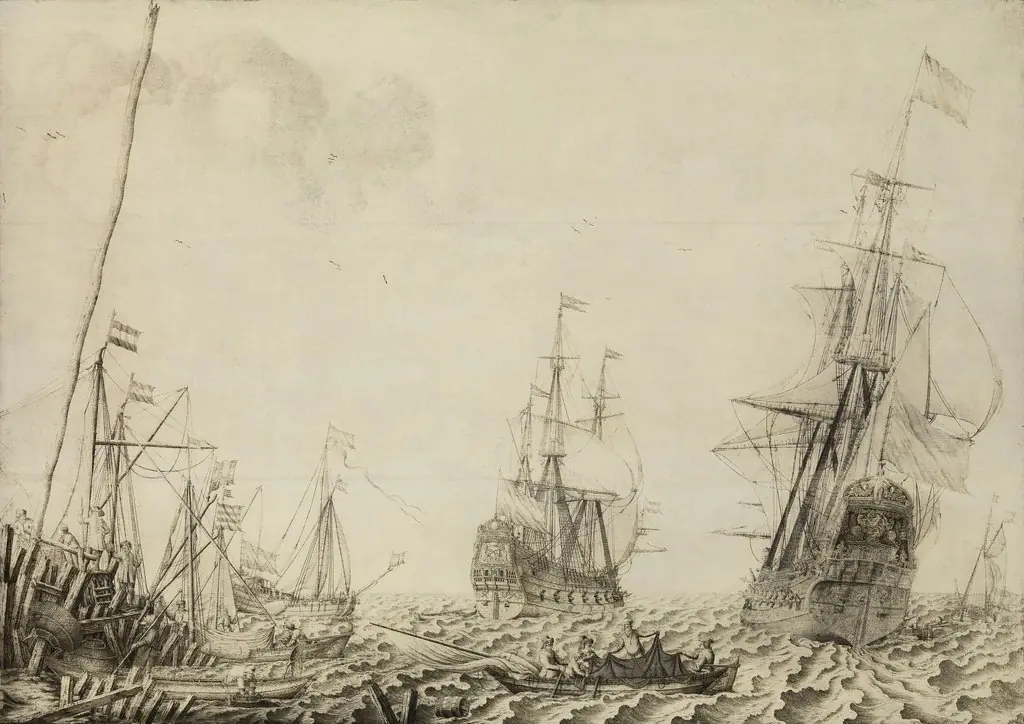 Ships near a Harbor
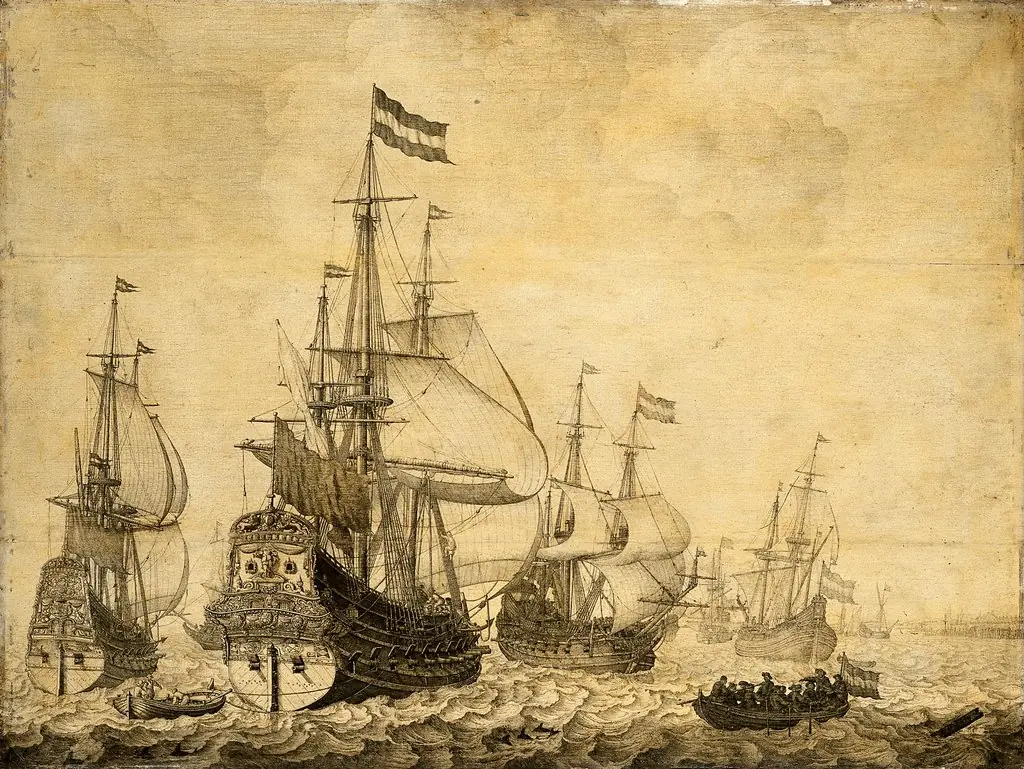 Seascape with Dutch men-of-war
 Three-Masted Sailing Boat on Gently Moving Water
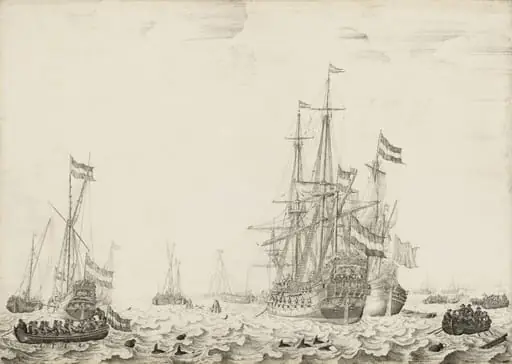 Dutch Ships near the Coast
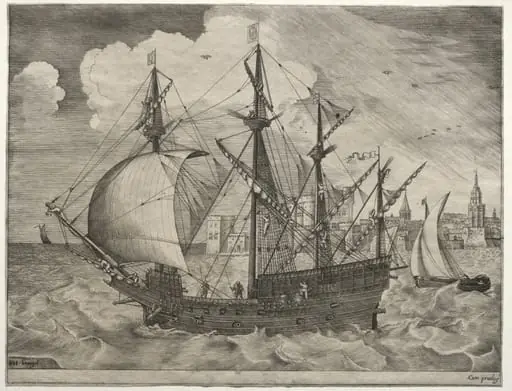 Sailing Vessels: Armed Four-Master Putting Out to Sea
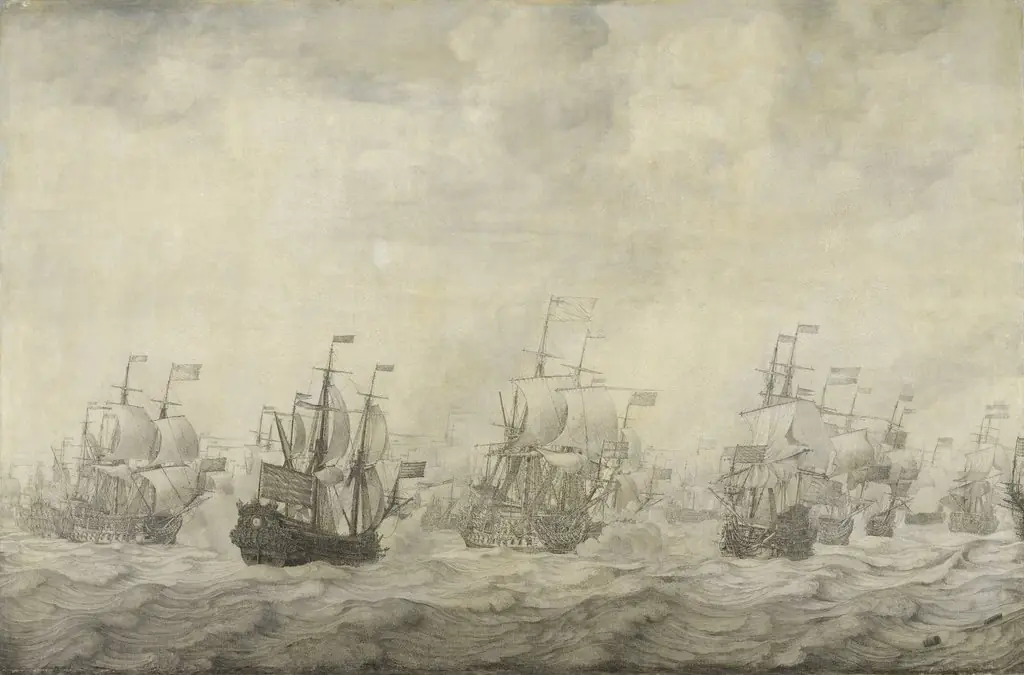 Episode from the Four Days Battle at Sea, 11-14 June 1666, in the Second Anglo-Dutch War (1665-67)
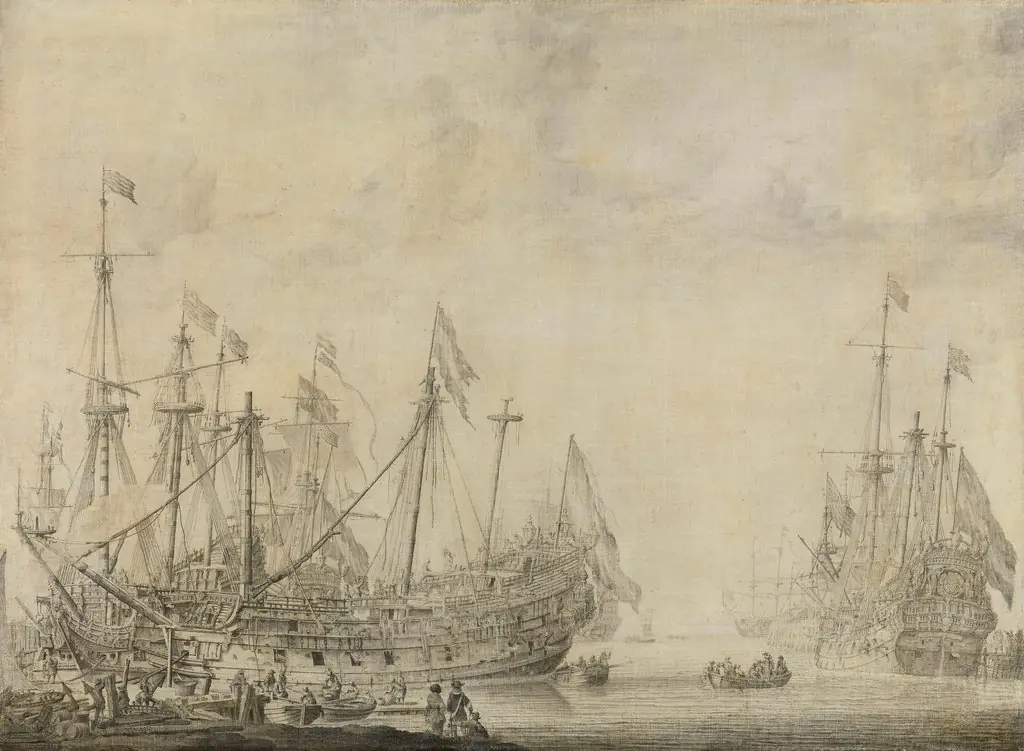 Ships after a battle
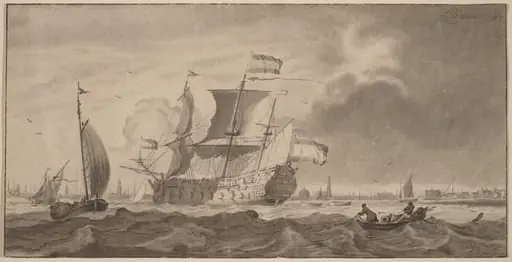 War Vessel in the Y
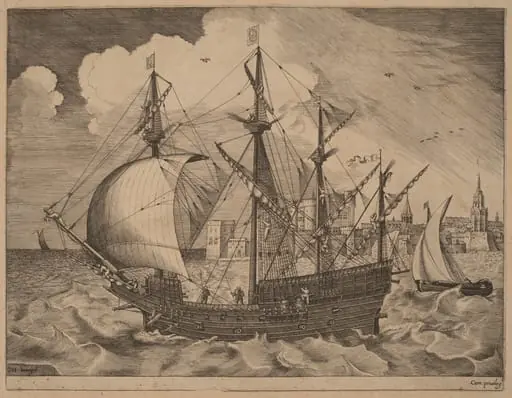 Armed Four-Master Putting Out to Sea
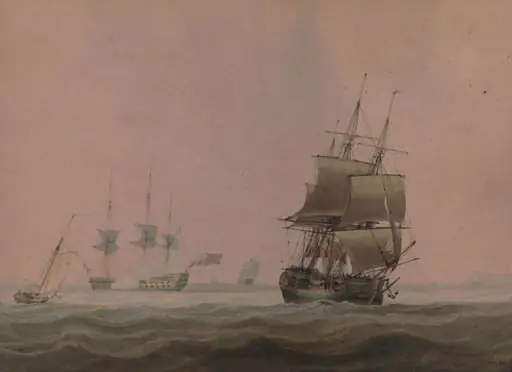 Shipping off the north foreland
 Naval Engagement