Artwork
Hahn und Henne (?)
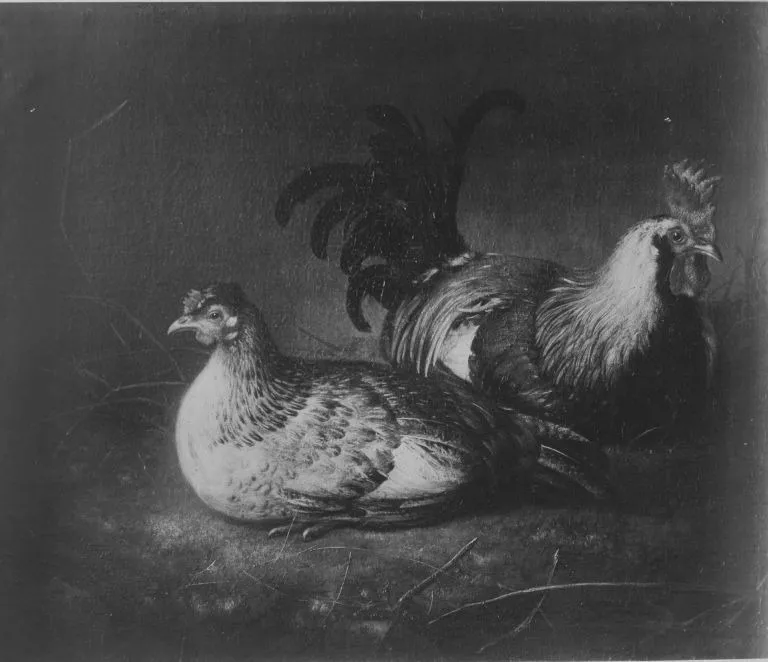
Hahn und Henne (?) is an unspecified painting by the Dutch Golden Age artist Aelbert Cuyp. It dates from 1655 and is held in the collection of the Bavarian State Painting Collections.
About this work
Overview
Hahn und Henne, created in 1655 by Aelbert Cuyp, is a characteristic example of Dutch Golden Age painting, deviating from Cuyp's typical riverside landscapes to focus on a pair of domestic birds in a serene setting.
Subject & Meaning
Both birds gaze to the left, set against a dark, muted background adorned with twigs and leaves, which serves to highlight the subjects.
The painting depicts a rooster and a hen in a pastoral context, emphasizing tranquility. The rooster, with its dark body and white neck feathers, and the mostly white hen with dark back feathers, are portrayed in a realistic manner, their faces and feathers detailed. Both birds gaze to the left, set against a dark, muted background adorned with twigs and leaves, which serves to highlight the subjects.
Technique & Style
Cuyp employs a realistic style, evident in the meticulous rendering of the birds' plumage and facial expressions. The contrast between the detailed, light-toned birds and the dark, less detailed background is a deliberate compositional choice, drawing the viewer's attention to the subjects.
History & Provenance
Aelbert Cuyp, born in 1620 in Dordrecht to an artistic family, trained under his father Jacob Gerritszoon Cuyp. *Hahn und Henne* is now part of the Alte Pinakothek's collection.
Artist & collection
Artist
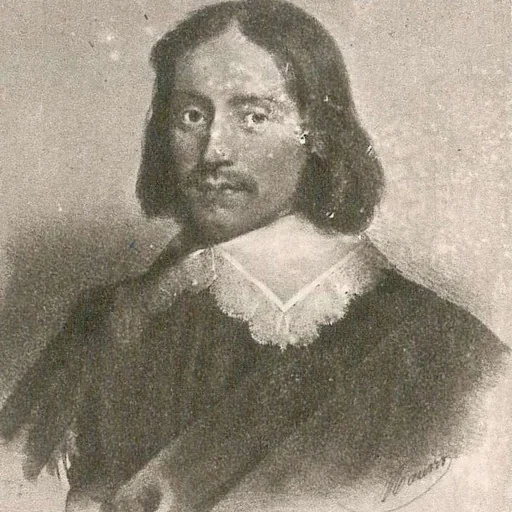
Aelbert Jacobszoon Cuyp or Cuijp (Dutch pronunciation: ; 20 October 1620 – 15 November 1691) was one of the leading Dutch Golden Age painters, producing mainly landscapes.

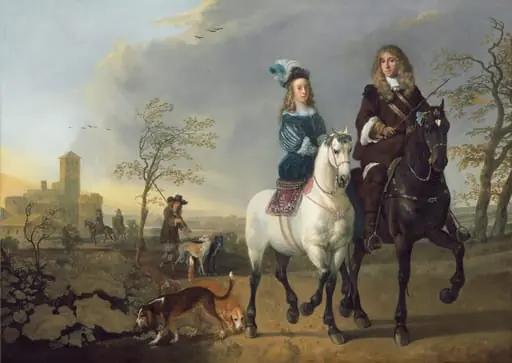 Lady and Gentleman on Horseback
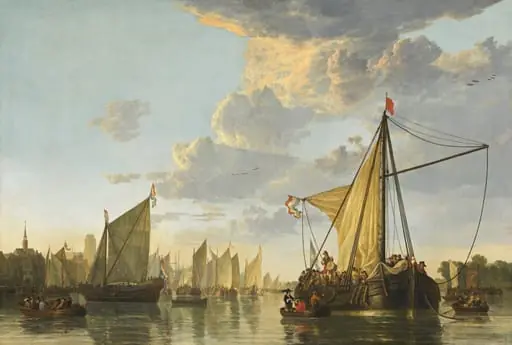 The Maas at Dordrecht
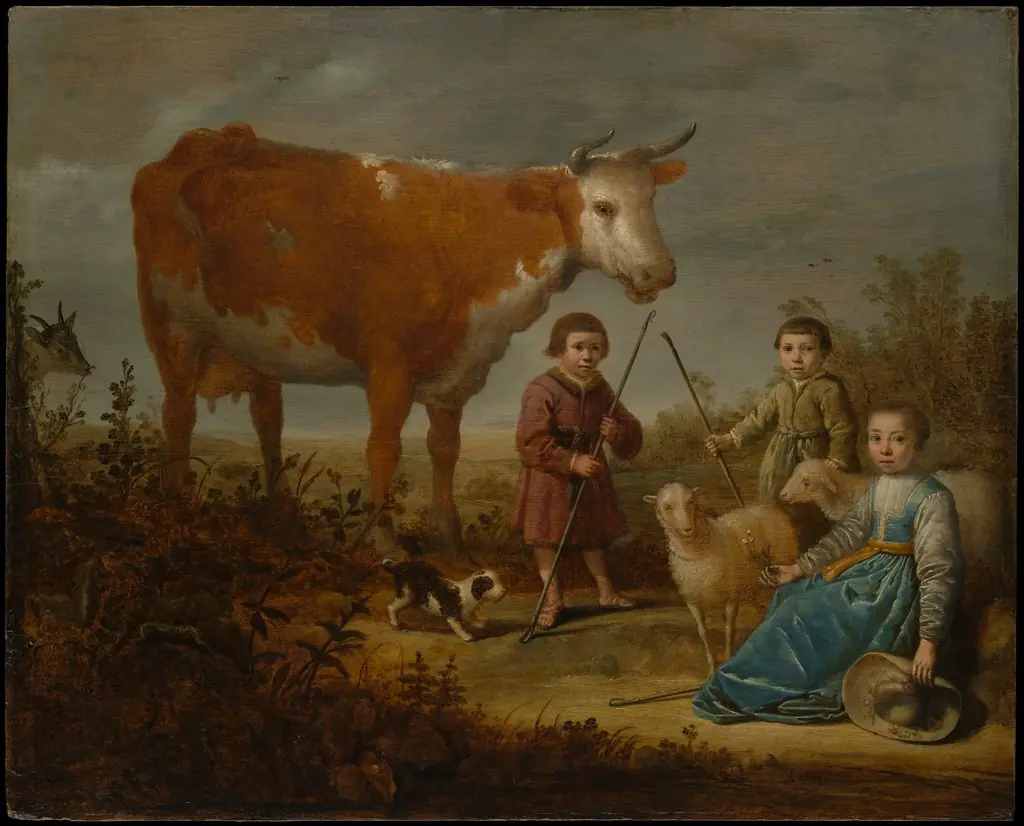 Children and a Cow
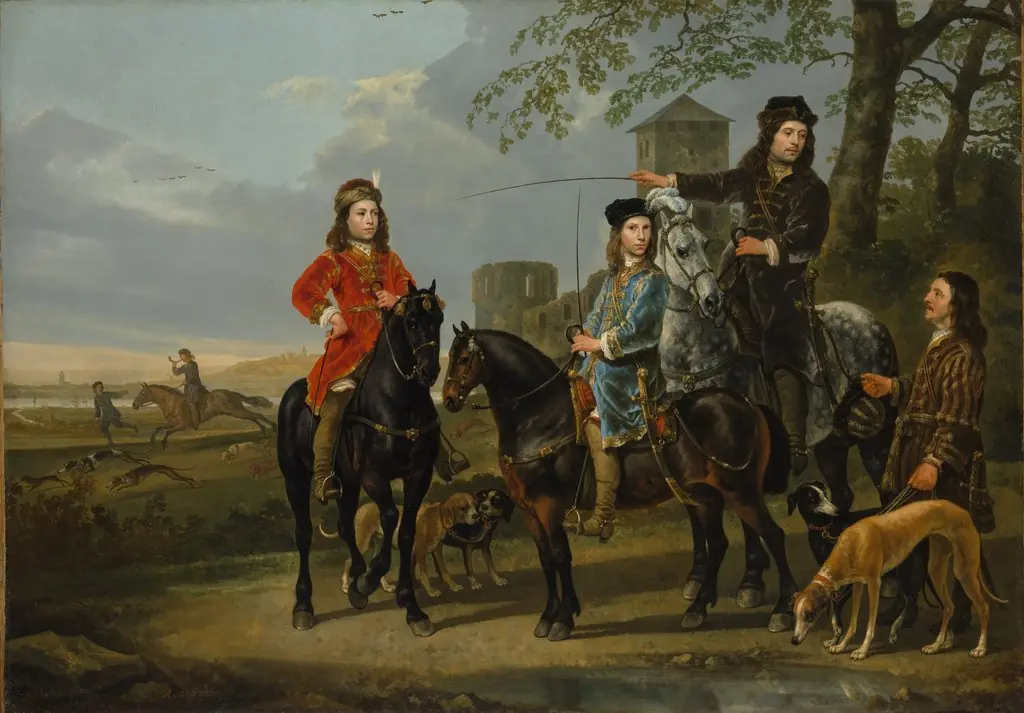 Equestrian Portrait of Cornelis (1639–1680) and Michiel Pompe van Meerdervoort (1638–1653) with Their Tutor and Coachman ("Starting for the Hunt")
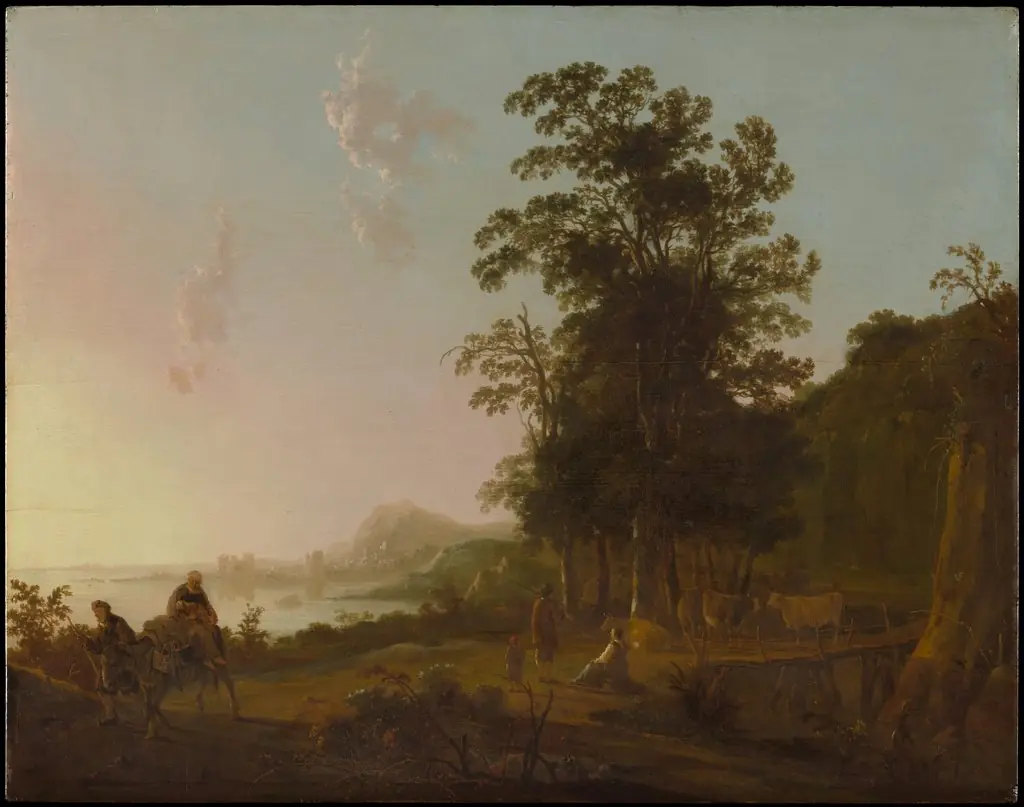 Landscape with the Flight into Egypt
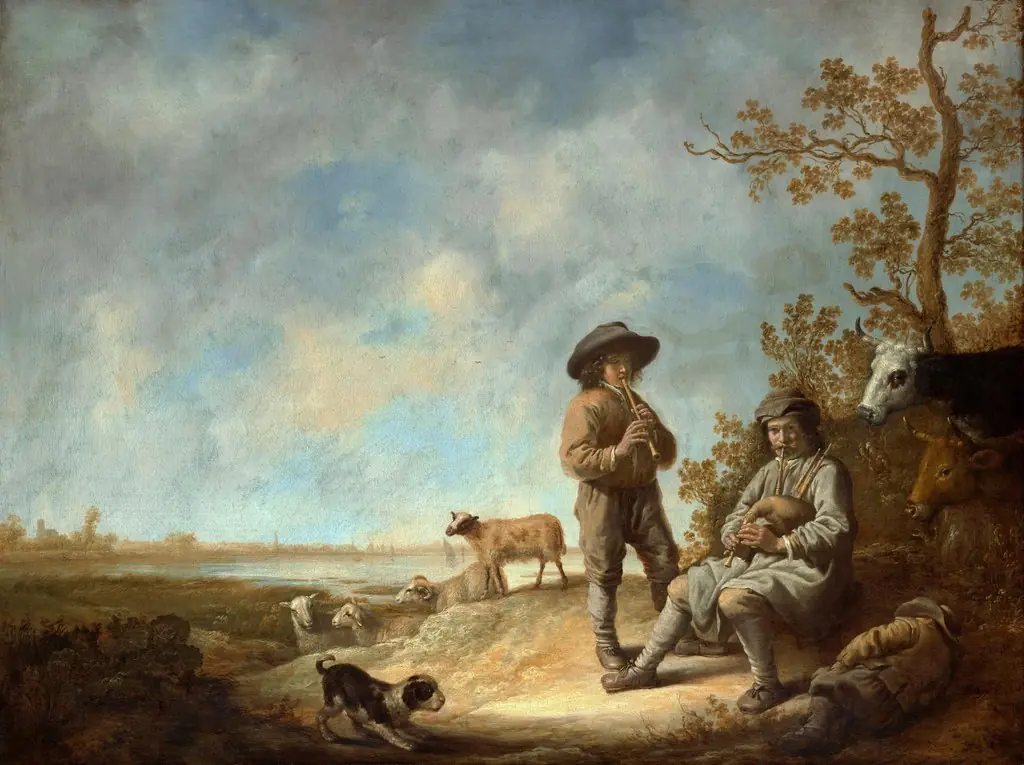 Piping Shepherds
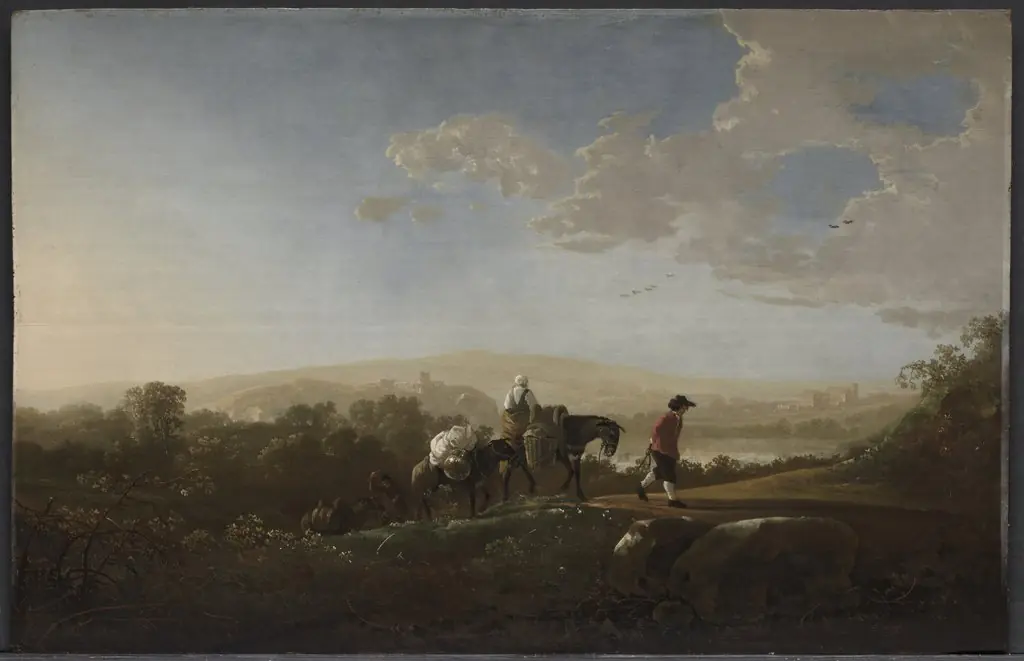 Travellers in Hilly Countryside
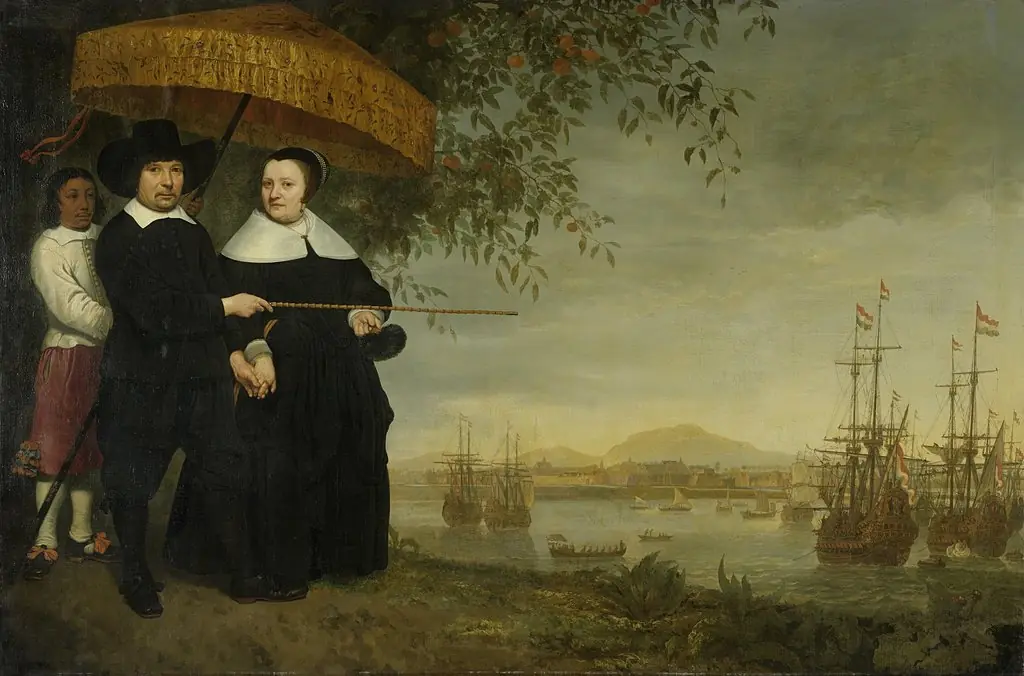 A Chief Merchant of the VOC with his Wife and an Enslaved Servant
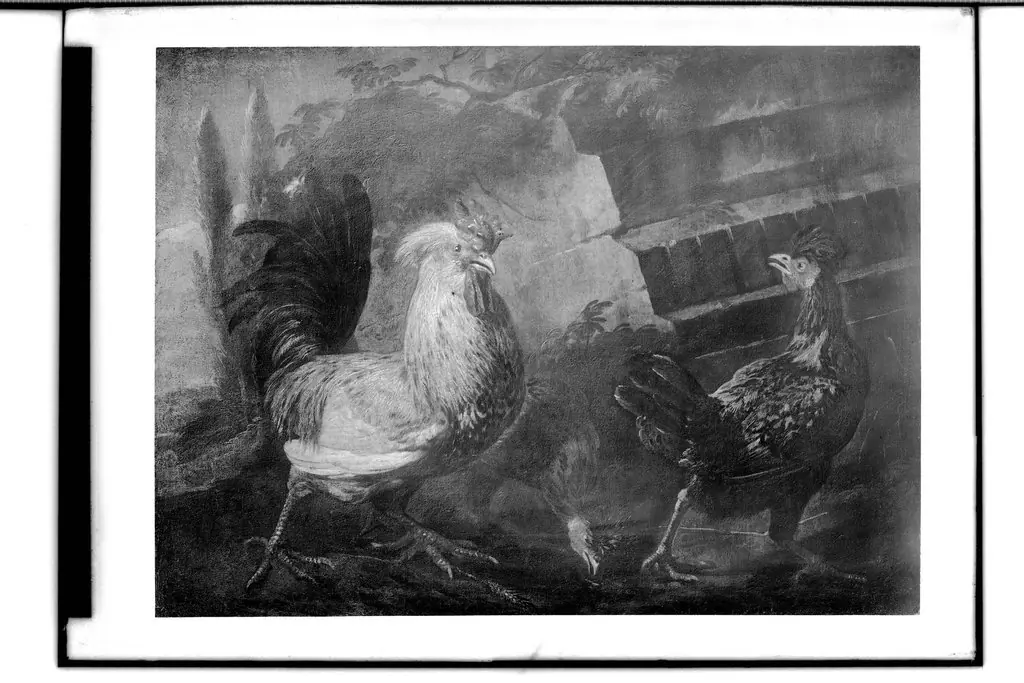 Rooster and hens
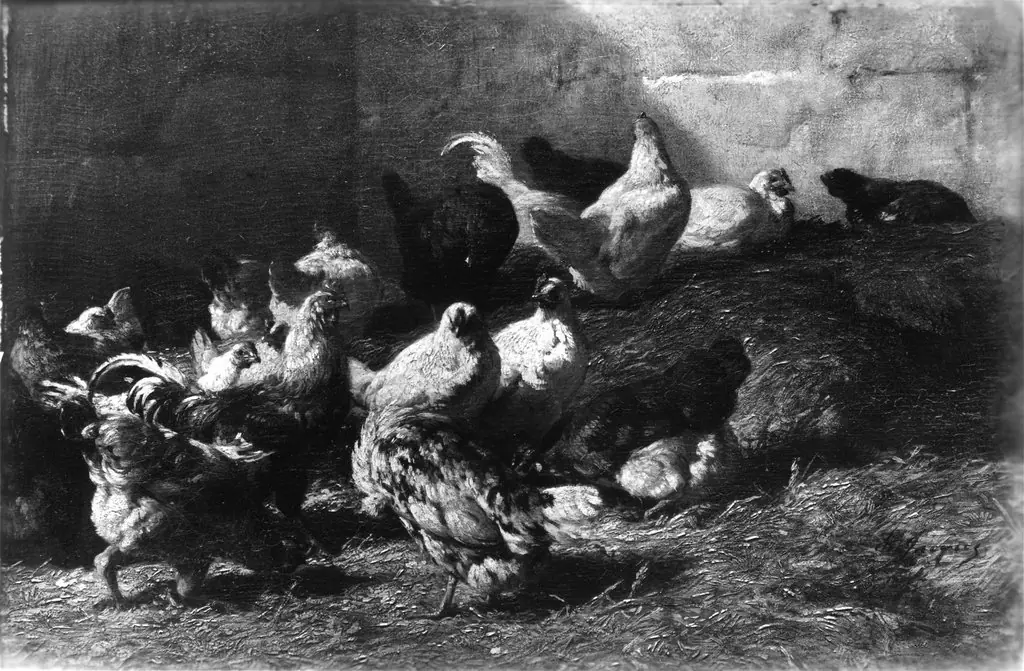 Chickens
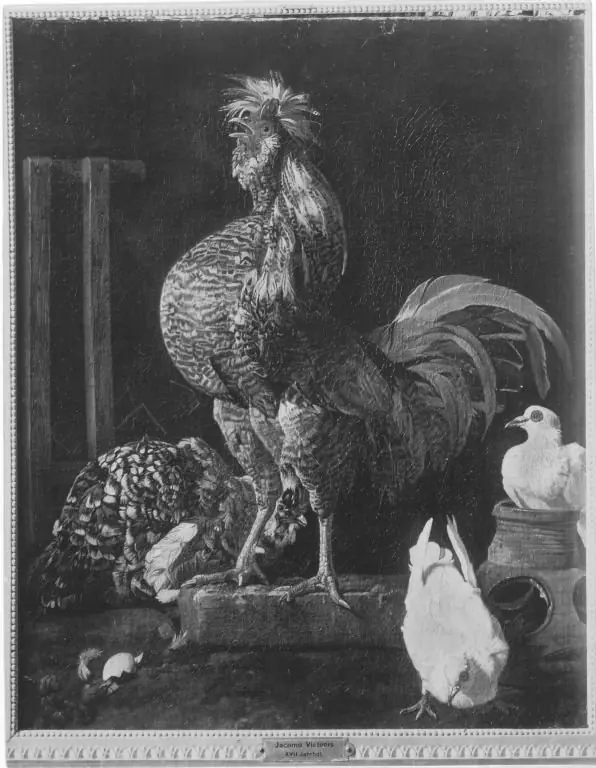 Rooster, Hen and Pigeons
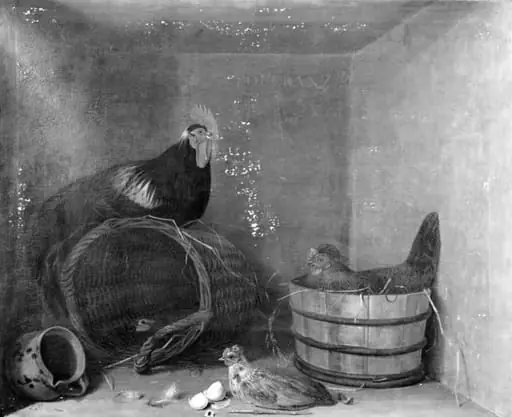 En hønsegård. Allegori på tålsomheden
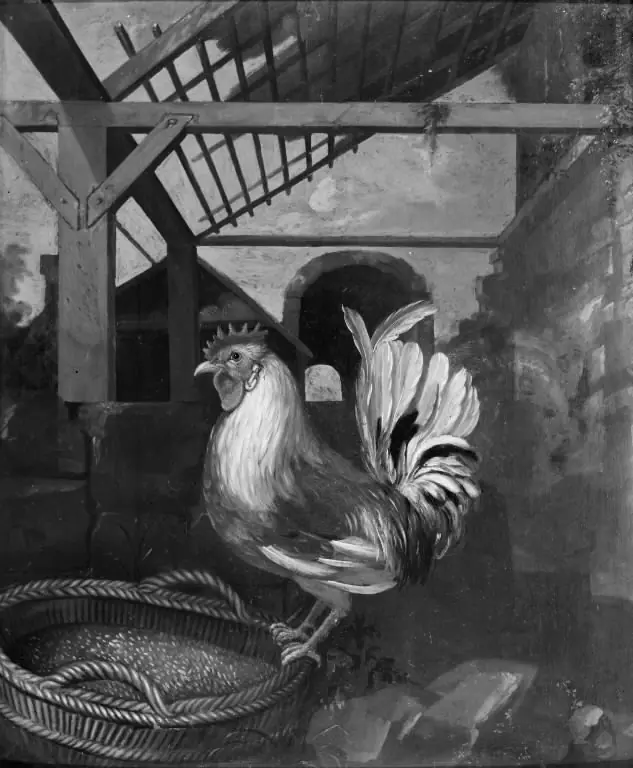 En hane sidder på en kurv fyldt med korn i stald, bag ved blå himmel
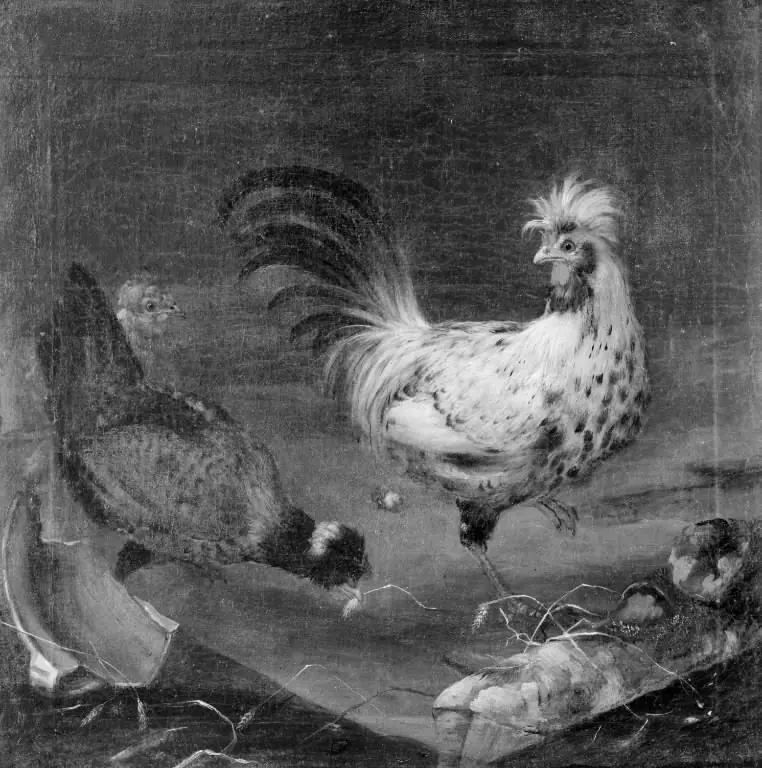 Two Hens and a Cock
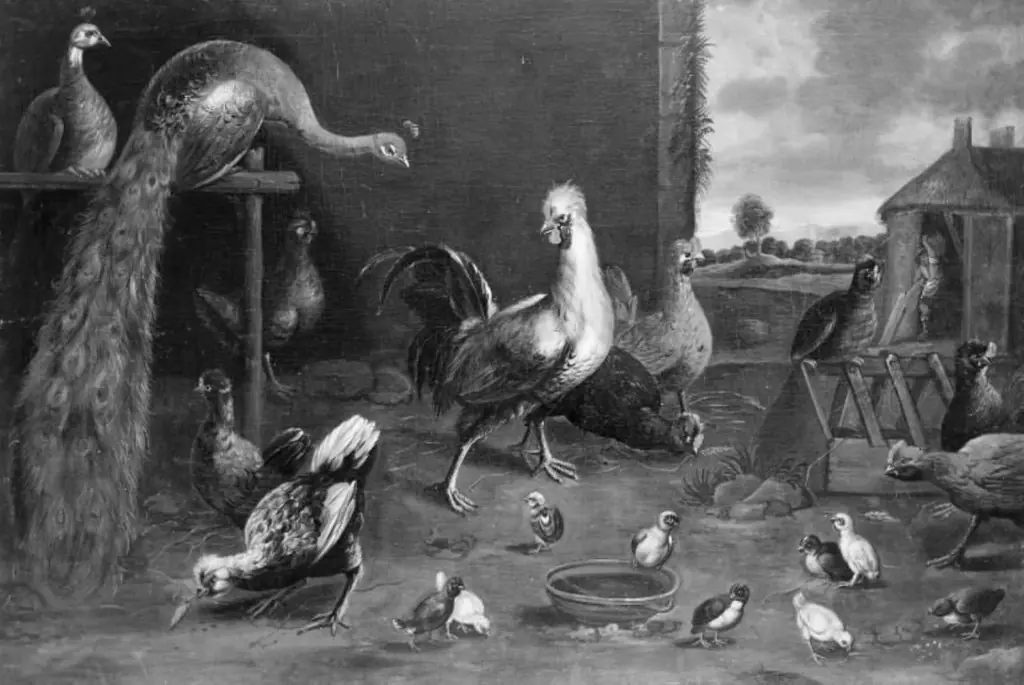 Mellem høns, haner og kyllinger, ses et par påfugle
 Mellem høns, haner og kyllinger, ses et par påfugle
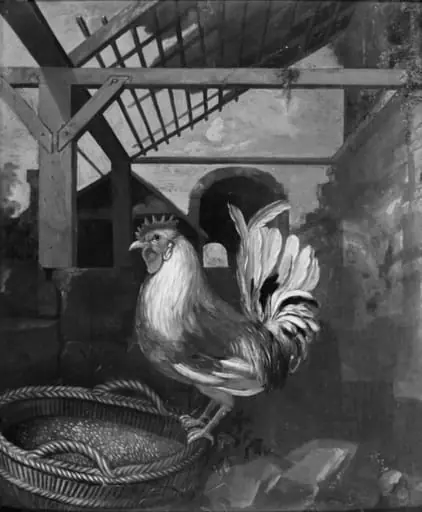 En hane sidder på en kurv fyldt med korn i stald, bag ved blå himmel
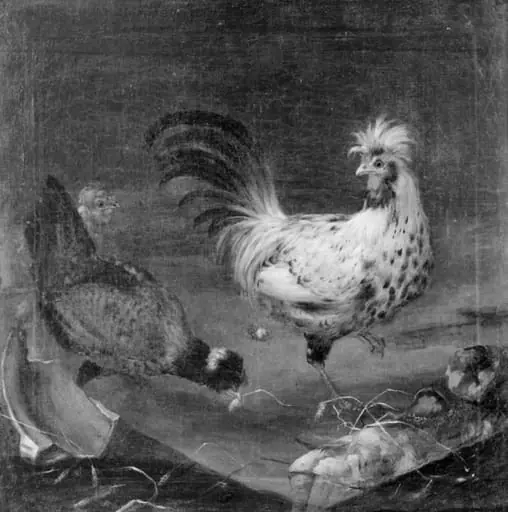 Two Hens and a Cock
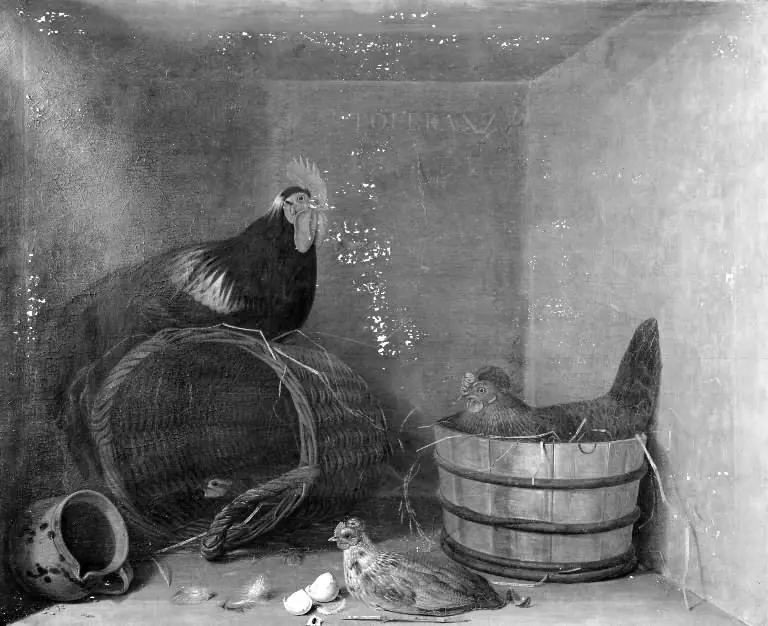 En hønsegård. Allegori på tålsomheden
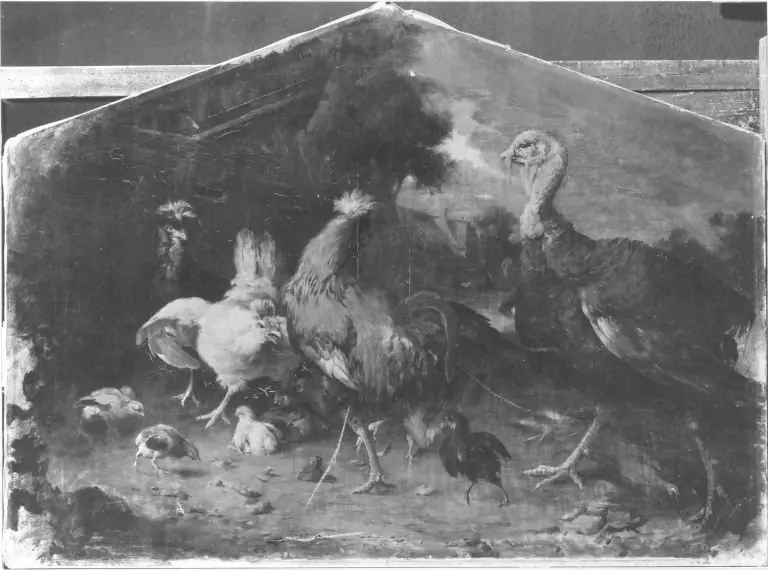 Hühnerhof