Artwork
Turnul Bărboi
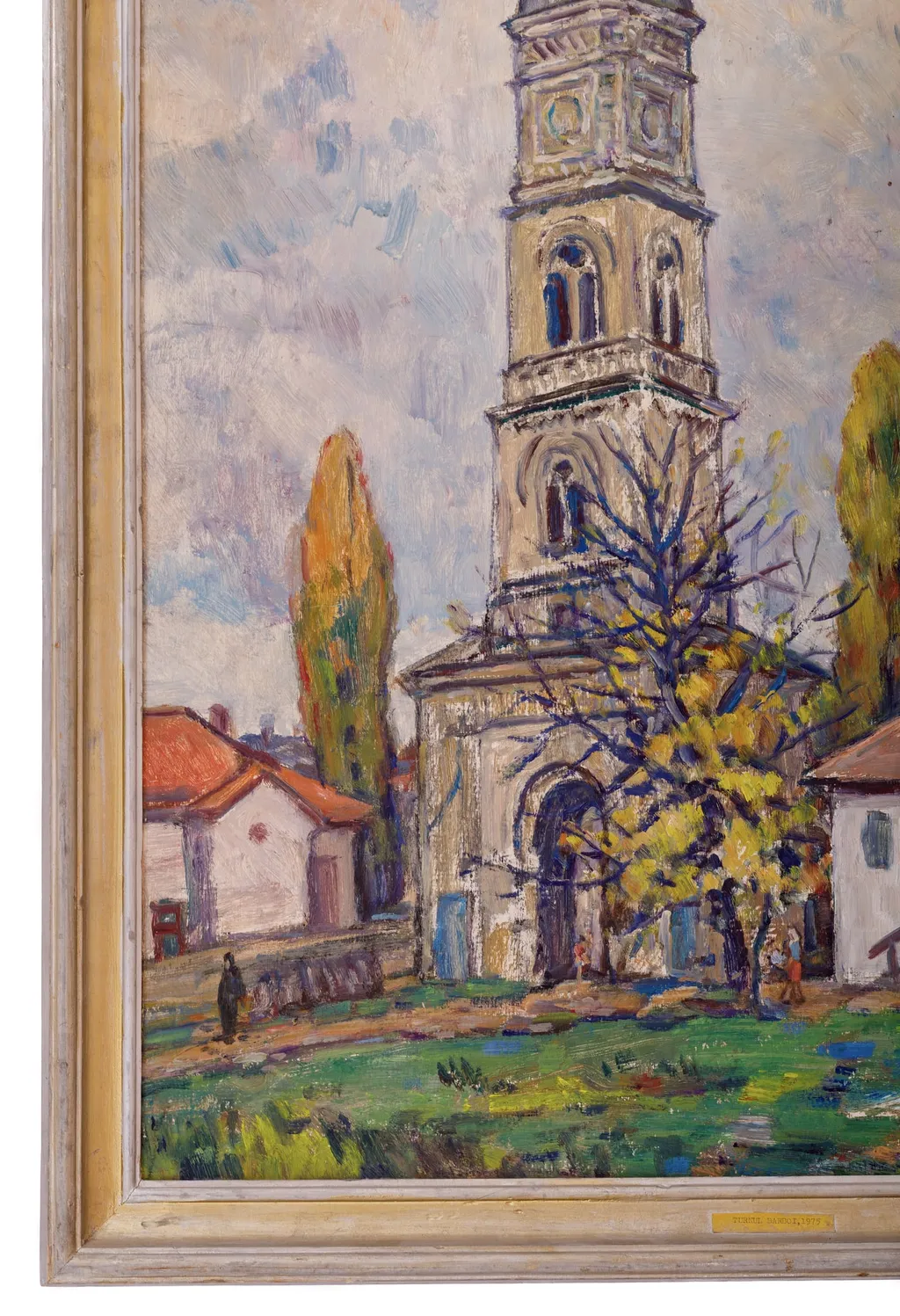
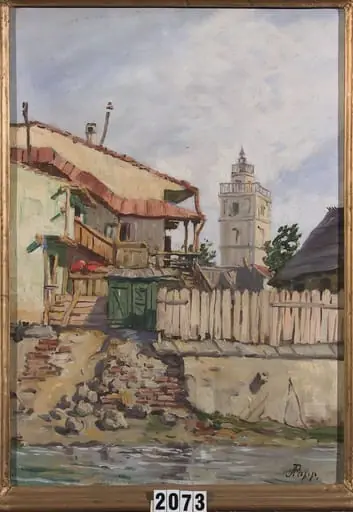
Turnul Bărboi is a print by Agafiței Costache. It dates from 1955 and is held in the collection of the Moldova National Museum Complex.
About this work
Overview
The composition emphasizes texture and movement over precision, with loose brushwork defining forms rather than outlining them.
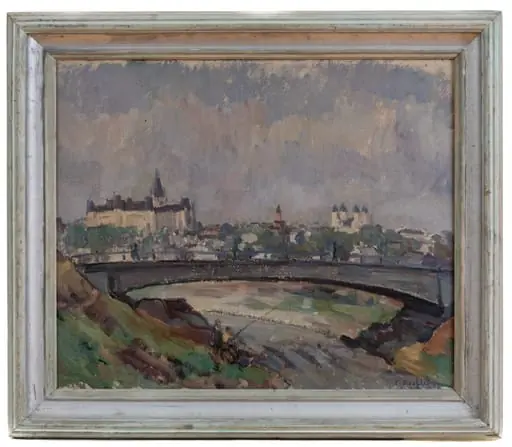
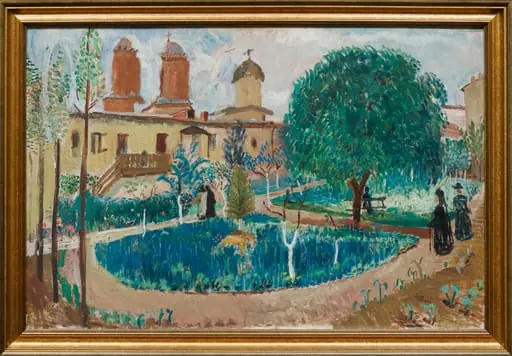
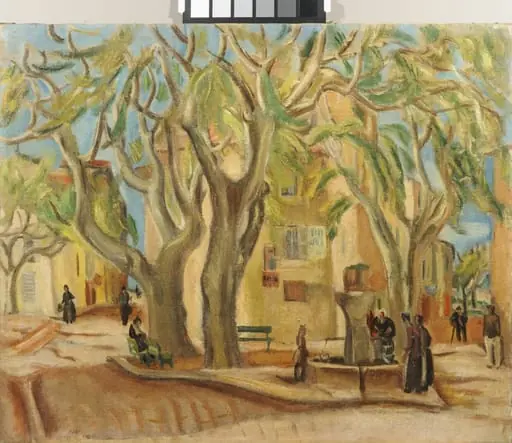
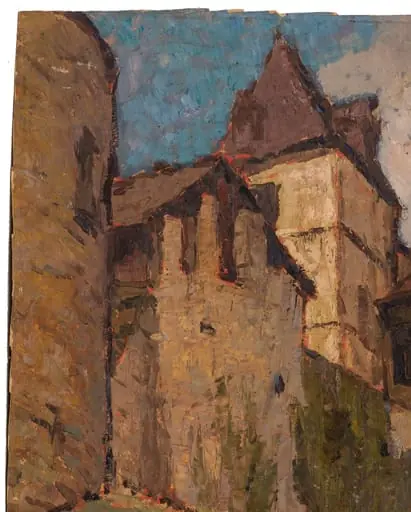
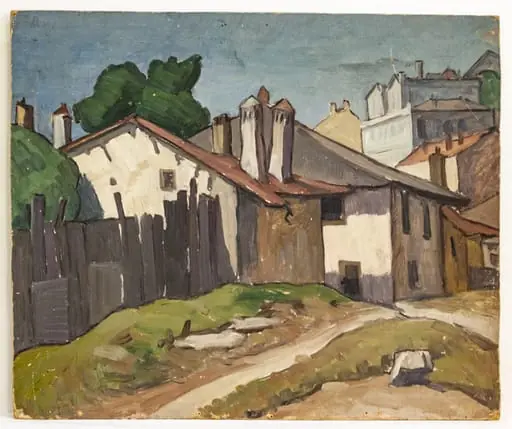
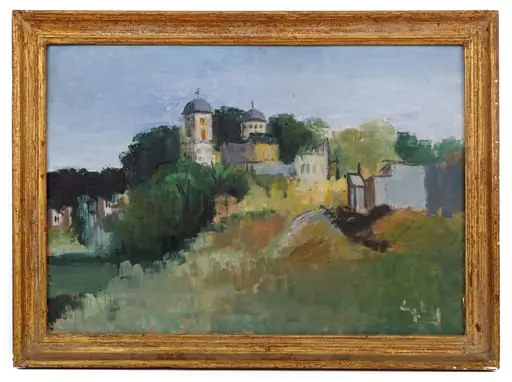
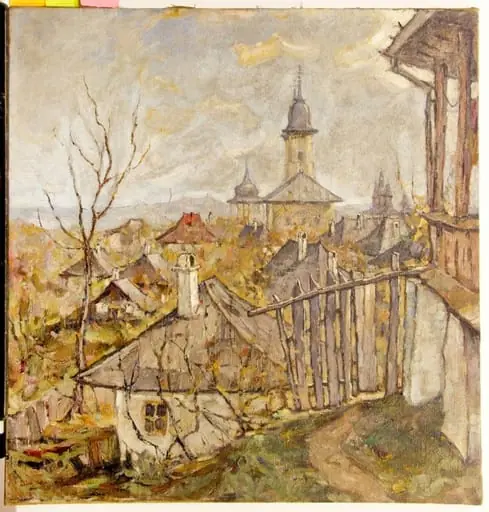
Turnul Bărboi is a mid-20th-century oil painting by Romanian artist Agafiței Costache, dated around 1955. It depicts a modest ecclesiastical tower rising above a quiet urban scene. The composition emphasizes texture and movement over precision, with loose brushwork defining forms rather than outlining them. The work conveys a sense of immediacy, as if the scene was observed and rendered in a single sitting.
Subject & Meaning
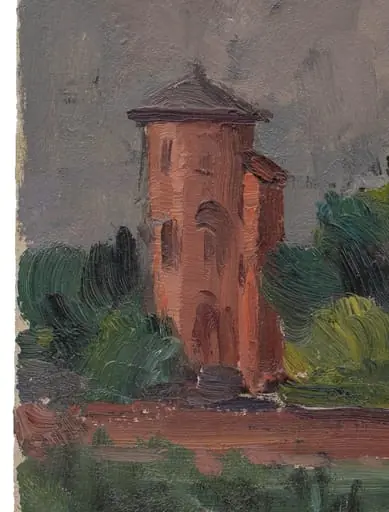
The painting centers on a white church tower, a common architectural feature in Romanian towns, flanked by a small red-roofed structure and a tree with sparse foliage. Figures in the foreground are indistinct, suggesting quiet daily life rather than a specific event. The tower, elevated and solitary, may imply spiritual or cultural continuity, but the work avoids overt symbolism, favoring a quiet observation of place.
Technique & Style
Costache employs thick, textured brushstrokes, particularly on the tower and tree, creating a tactile surface that echoes impasto methods. The sky and grass are rendered with rapid, directional strokes, suggesting wind and light rather than detail. Colors are saturated but applied with minimal blending, emphasizing the artist’s direct response to the scene. The overall effect is spontaneous, with form emerging from gesture rather than refinement.
History & Provenance
The painting was created in the mid-1950s during a period of state-regulated artistic production in Romania. While official aesthetics often favored socialist realism, Costache’s work retains a personal, expressive quality. Its provenance is not widely documented, but it remains within Romanian collections, reflecting its regional significance rather than international recognition.
Context
In postwar Romania, artists navigated constraints on subject and style, yet many retained individual approaches. Turnul Bărboi reflects this tension: its subject is unremarkable, its technique unorthodox for the era. The painting aligns with quieter, regional traditions of landscape and architecture, resisting both academic rigidity and ideological grandeur in favor of intimate, sensory observation.
Legacy
Though not widely exhibited beyond Romania, Turnul Bărboi stands as an example of an understated, personal response to modernist tendencies within a restrictive cultural climate. It contributes to a broader understanding of Romanian art that values emotional resonance over political messaging, preserving a quiet, painterly voice from a period often dominated by official narratives.
Artist & collection
Artist
Agafiței Costache made prints and paintings of everyday Romanian life in the mid-20th century.