Artwork
Peisaj citadin
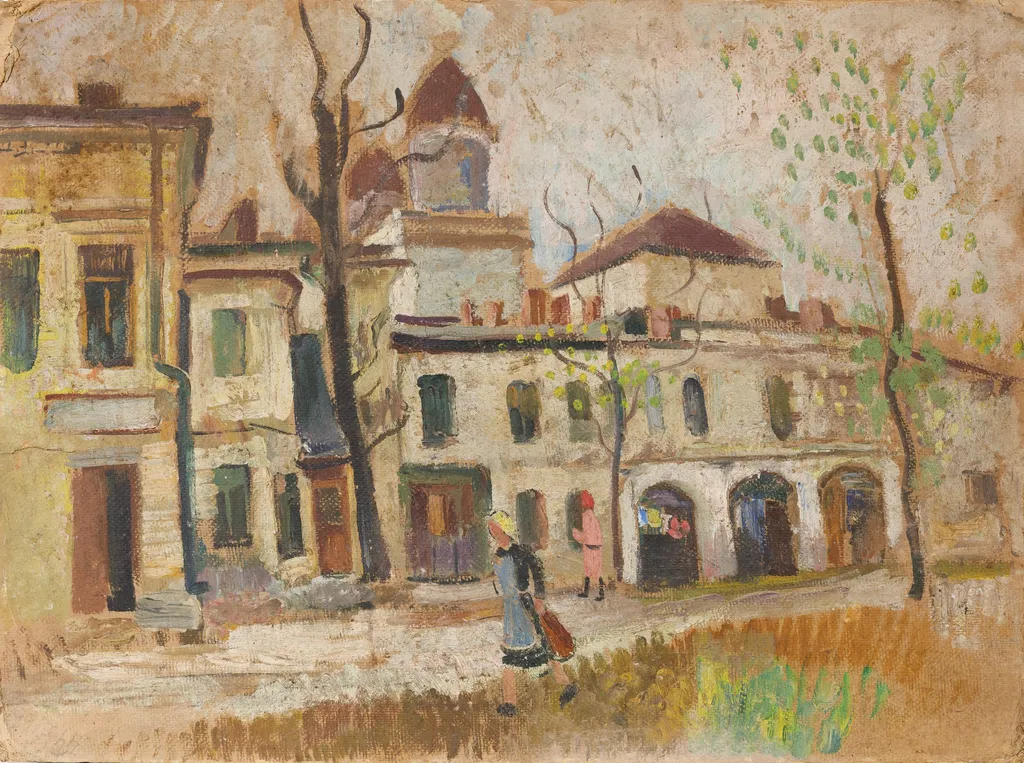
Peisaj citadin is a print by Lucia Dem-Bălăcescu. It dates from 1850 and is held in the collection of the National Museum of Art of Romania.
About this work
Overview
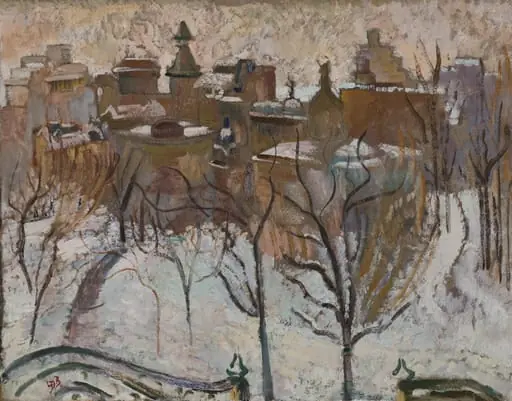
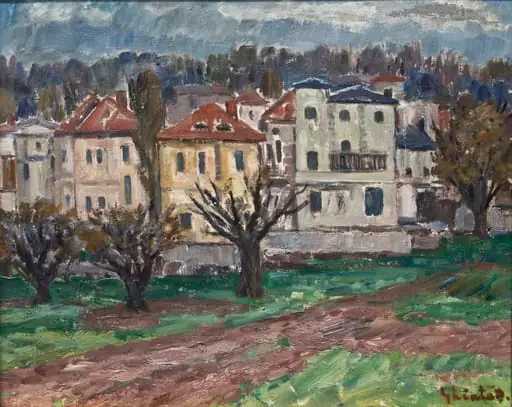
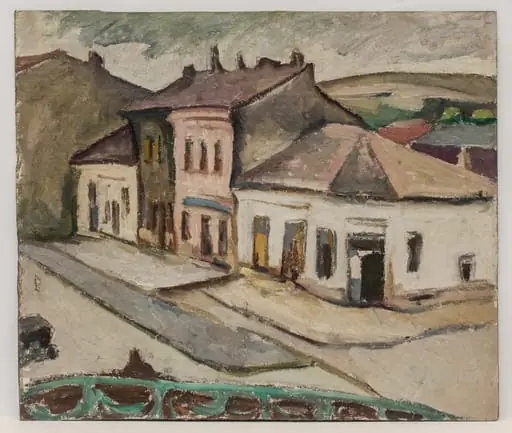
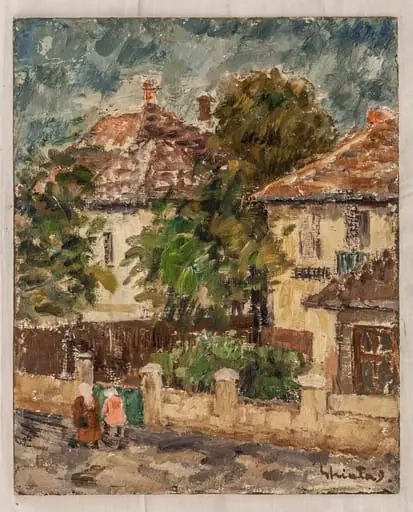
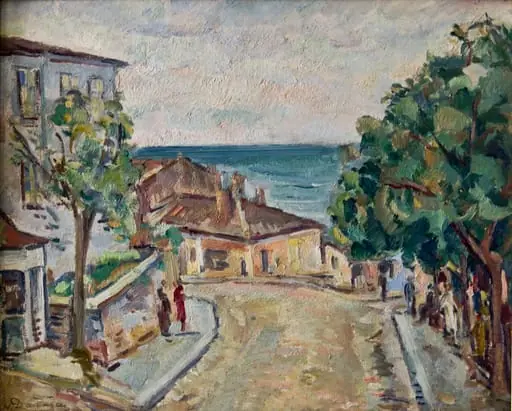
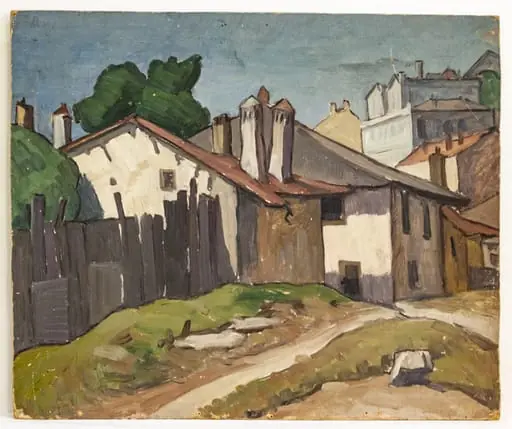
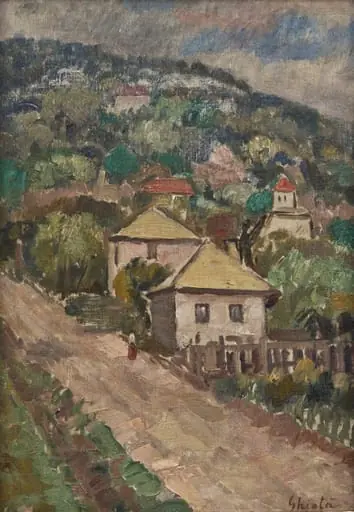
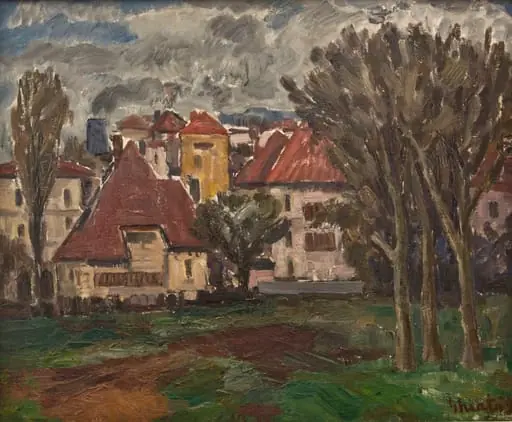
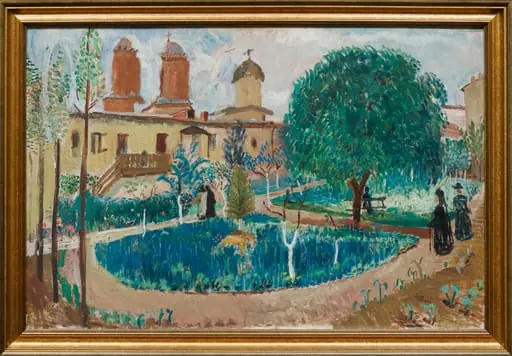
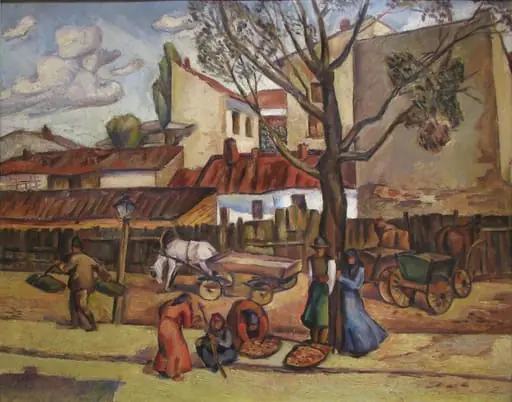
The composition centers on modest stone buildings with light façades and subtle decorative elements, framed by sparse trees and patches of green.
Painted around 1850 by Lucia Dem-Bălăcescu, Peisaj citadin is a quiet depiction of an urban streetscape in the mid-nineteenth century. The composition centers on modest stone buildings with light façades and subtle decorative elements, framed by sparse trees and patches of green. A handful of figures move slowly through the scene, reinforcing a sense of stillness and routine. The work captures a moment of everyday life without dramatic action or idealization.
Subject & Meaning
The painting presents an unembellished view of urban life, focusing on ordinary architecture and pedestrian movement. There is no clear narrative or symbolic intent; instead, the subject is the atmosphere of a quiet street at a transitional moment in urban development. The absence of crowds or activity suggests a pause in the rhythm of city life, offering a contemplative rather than celebratory vision of the built environment.
Technique & Style
Dem-Bălăcescu employs a restrained palette of soft whites, grays, and muted greens, with minimal contrast to sustain the calm tone. Brushwork is delicate, with attention to the texture of weathered stone and the soft outlines of foliage. Perspective is shallow but coherent, guiding the eye along the street without dramatic depth. The style reflects a regional realism, avoiding theatricality in favor of observed detail.
History & Provenance
The painting’s early history is undocumented, and no exhibition or ownership records from the mid-1800s are known. It survives as a private collection piece, with no public display history prior to the late twentieth century. Its attribution to Dem-Bălăcescu is based on stylistic comparison and limited archival references, as her oeuvre remains incompletely cataloged.
Context
Created during a period of gradual urban modernization in Eastern Europe, the work contrasts with grander civic paintings of the era. While other artists emphasized progress and monumentality, Dem-Bălăcescu focused on the quiet persistence of older neighborhoods. Her choice of subject reflects a personal, perhaps local, interest in the everyday spaces that persisted amid broader societal change.
Legacy
Though not widely known outside regional art circles, Peisaj citadin contributes to a quieter strand of nineteenth-century Romanian painting that valued observation over spectacle. It stands as a rare example of urban domesticity in the work of a female artist of the period, offering insight into overlooked perspectives in the visual culture of the time.
Artist & collection