Artwork
View of Orford
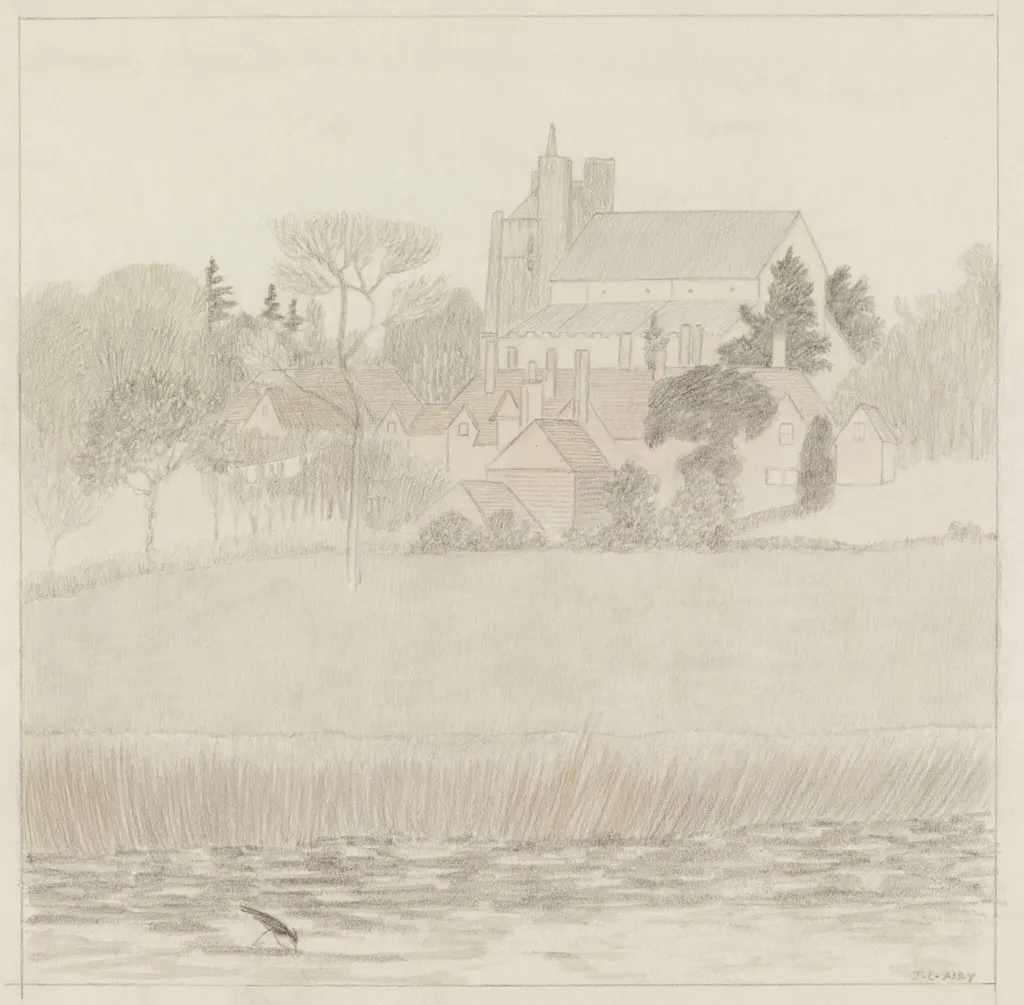
View of Orford is a watercolor work on paper by the Impressionist artist Airy. It dates from 1940 and is held in the collection of the Victoria and Albert Museum.
About this work
Overview
Part of the 'Recording Britain' initiative, the work was produced during World War II to preserve visual records of the British countryside.
This 1940 watercolour by Airy captures a quiet stretch of the Suffolk village of Orford, rendered in muted tones of gray and brown. Part of the 'Recording Britain' initiative, the work was produced during World War II to preserve visual records of the British countryside. The piece belongs to a larger collection of over 1,500 drawings and paintings commissioned by the Pilgrim Trust under the direction of Sir Kenneth Clark, aiming to document landscapes at risk from wartime disruption and modernization.
Subject & Meaning
The scene presents a tranquil riverside view with modest dwellings and a prominent church rising behind them, framed by leaning trees that mirror their reflection in still water. A single bird near the river’s edge adds subtle life without disrupting the quietude. The composition emphasizes ordinariness—no grand events or dramatic elements—underscoring the project’s goal to honor everyday rural England as a cultural anchor during uncertain times.
Technique & Style
Airy employed delicate, light washes and fine linear details to suggest form without bold outlines or vivid color. The watercolour technique allows subtle gradations of tone, capturing the softness of foliage and the hazy atmosphere of the riverbank. Attention to small natural gestures—such as the angle of branches over water or the texture of weathered rooftops—reveals a patient, observational approach aligned with the project’s documentary ethos.
History & Provenance
Created in 1940 as part of the 'Recording Britain' project, this watercolour was commissioned by the Pilgrim Trust and curated by Sir Kenneth Clark. The initiative sought to archive vulnerable landscapes before they disappeared due to war, development, or societal change. The work entered the Victoria and Albert Museum’s collection alongside hundreds of other contributions, forming a significant visual archive of mid-20th-century British rural life.
Context
During World War II, British cultural institutions feared the loss of historic landscapes to bombing and urban sprawl. 'Recording Britain' mobilized artists to record scenes deemed emblematic of national identity. Airy’s depiction of Orford reflects this mission: a place of quiet continuity, where architecture and nature coexist without disruption. The project’s focus on unassuming locales contrasted with wartime propaganda, offering instead a contemplative record of endurance.
Legacy
The 'Recording Britain' collection remains a vital historical resource, preserving the visual character of rural England at a moment of transition. Airy’s watercolour, like others in the series, continues to inform studies of wartime cultural preservation and regional identity. Its restrained aesthetic and attention to detail have influenced later documentary art practices, ensuring its place as a quiet but enduring testament to a vanishing way of life.
Artist & collection
Artist
This artist painted quiet English village scenes in watercolor around 1940, focusing on old cottages, churches, and landmarks.

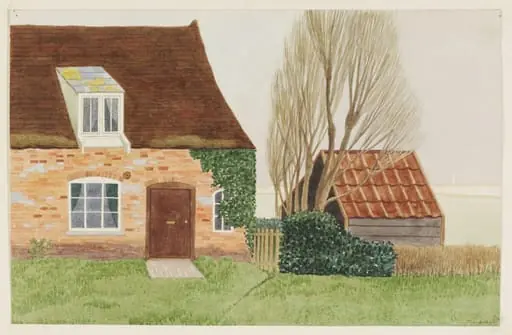
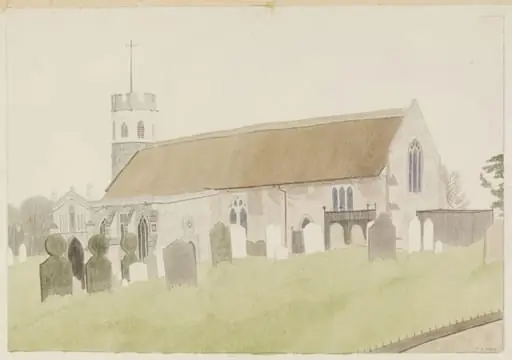
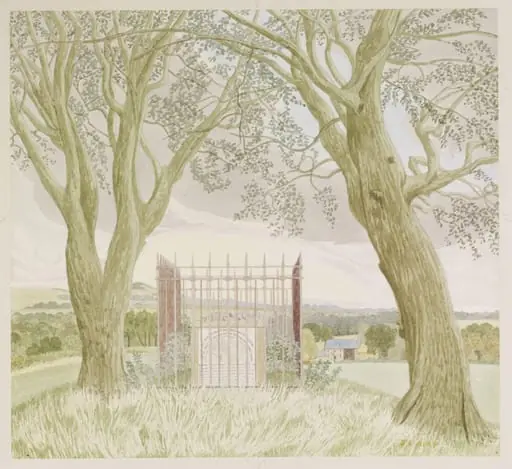
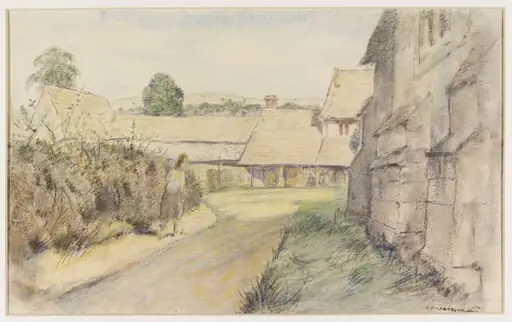 The Priory Farm and 13th century Chapel, Southam de la Bere, Nr. Cheltenham
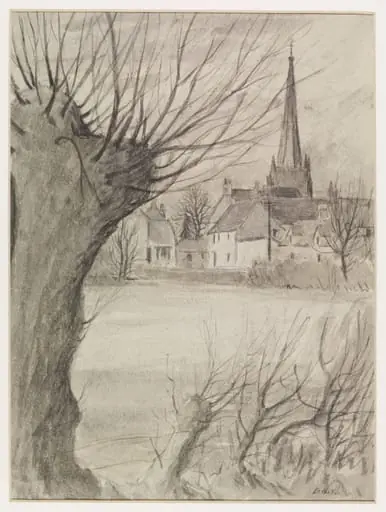 Lechlade
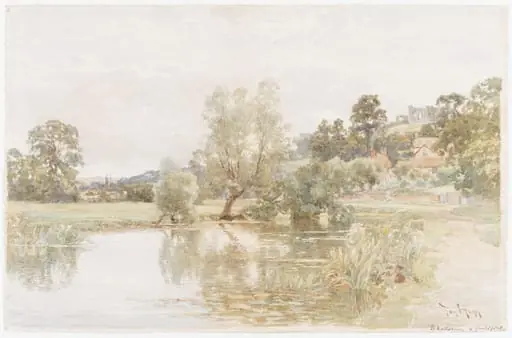 St. Catherine's Chapel, above Artington and the River Wey
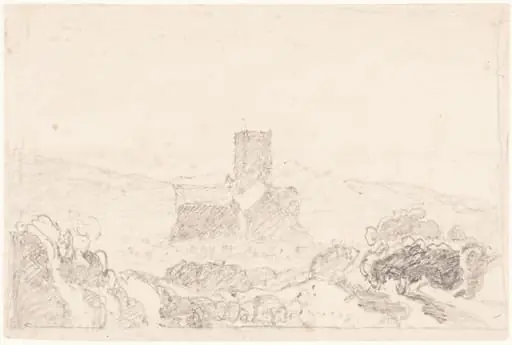 Landscape with Church
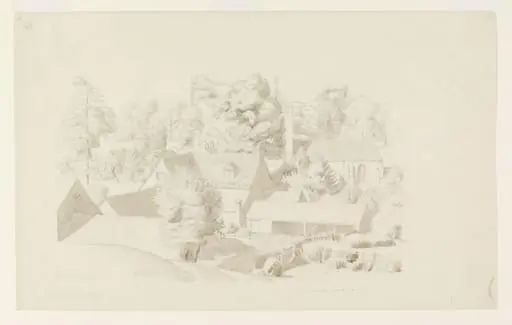 Leckhampstead
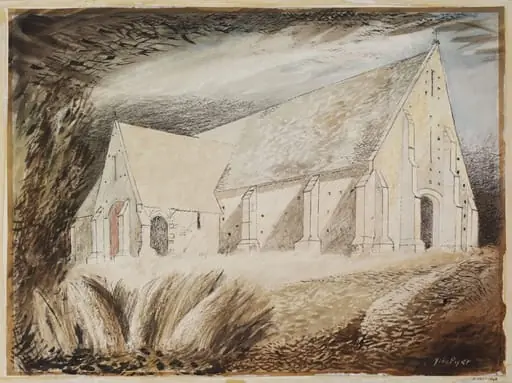 The Tithe Barn, Great Coxwell
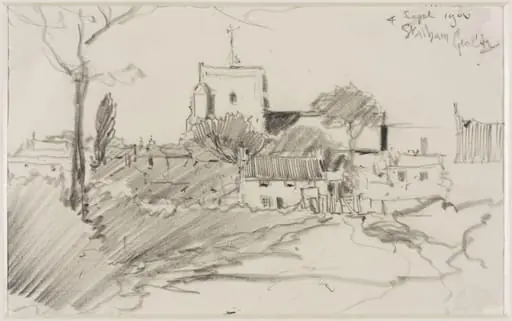 Stalham Church.
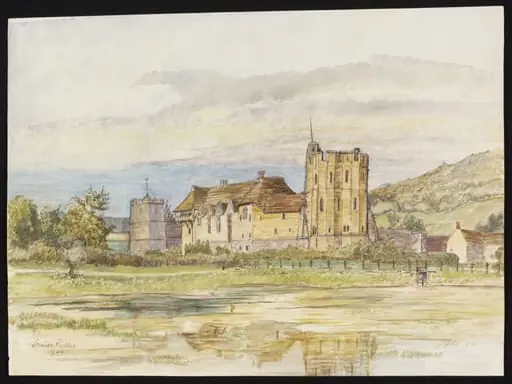 Stokesay Castle
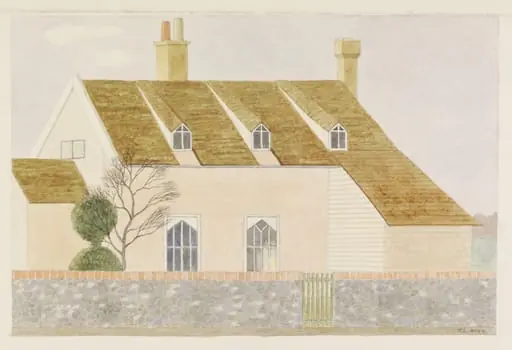 A Cottage at Easton
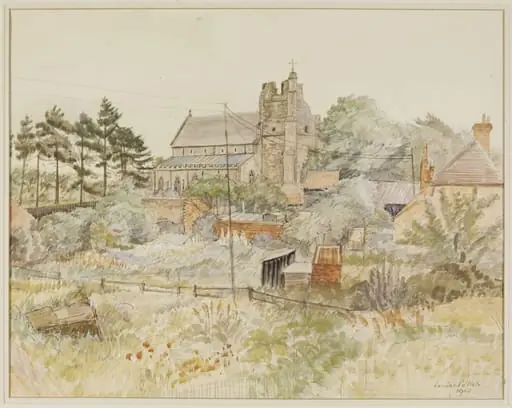 St. Bartholomew's Church, Orford, from the North-West
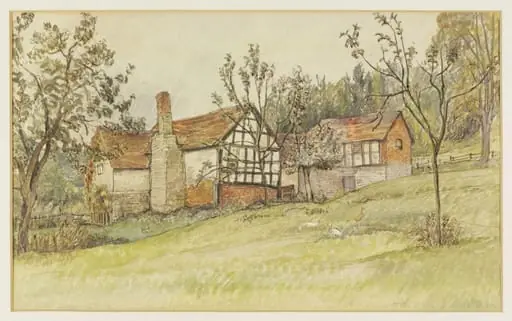 Oldfield Farm, between Leinthall Earls and Richard's Castle
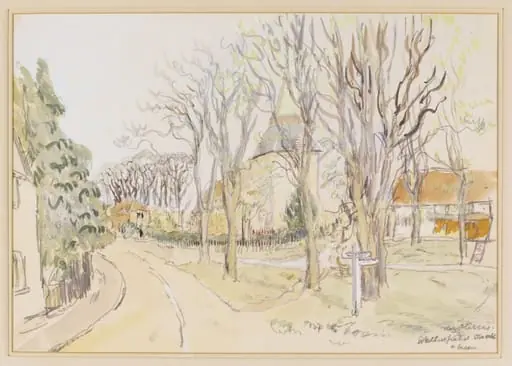 Church and Green, Wethersfield