Artwork
St. Peter's Church, Theberton
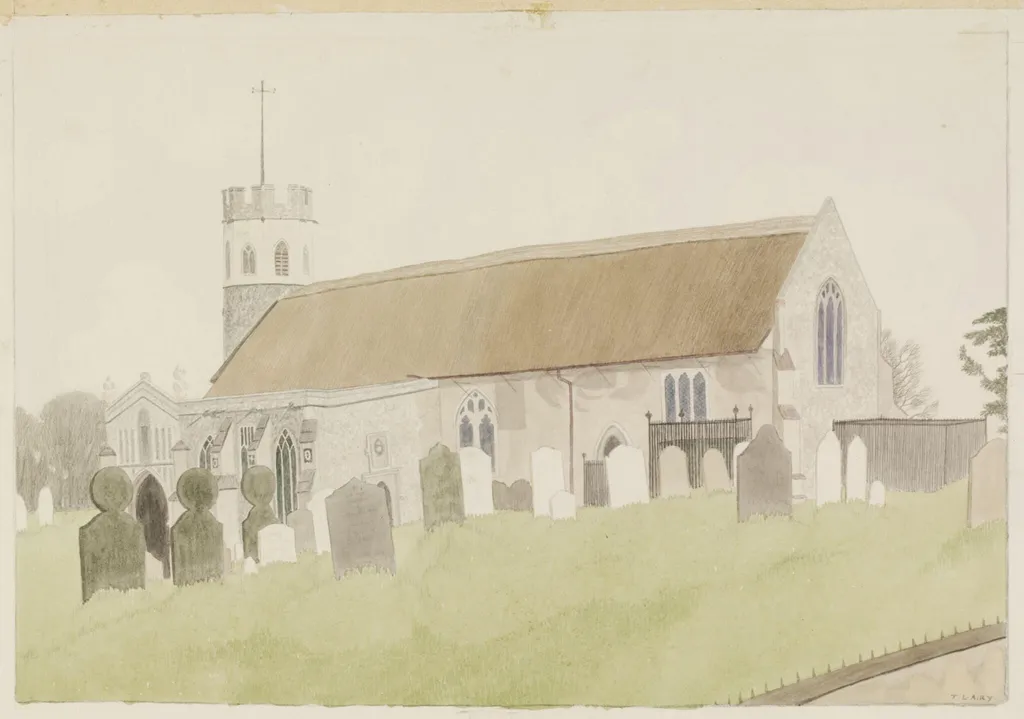
St. Peter's Church, Theberton is a watercolor work on paper by Airy. It dates from 1940 and is held in the collection of the Victoria and Albert Museum.
About this work
Overview
Created during wartime, the project sought to visually archive rural and architectural scenes at risk of loss.
This 1940 watercolour by Airy captures St. Peter’s Church in Theberton, Suffolk, as part of the *Recording Britain* initiative. Created during wartime, the project sought to visually archive rural and architectural scenes at risk of loss. The work is one of over 1,500 pieces produced by 97 artists under the auspices of the Pilgrim Trust and the Ministry of Labour, reflecting a national effort to preserve cultural memory through art.
Subject & Meaning
The painting presents a quiet, contemplative view of the church and its surrounding graveyard. The tilted gravestones and modest architecture suggest a place shaped by time and local tradition. The absence of figures and the stillness of the scene evoke a sense of quiet endurance, reinforcing the project’s aim to document vanishing rural life before it was altered by conflict or modernization.
Technique & Style
Airy employed delicate watercolour washes and light, restrained brushwork to convey atmosphere rather than detail. Muted tones dominate the stone walls and weathered headstones, while the thatched roof and sky remain pale, enhancing the sense of serenity. The soft edges and minimal contrast create a hushed, almost ethereal quality, aligning with the project’s emphasis on emotional resonance over precision.
History & Provenance
Commissioned by the Committee for the Employment of Artists in Wartime, the work was funded by the Pilgrim Trust and overseen by Sir Kenneth Clark. It entered the collection of the Victoria and Albert Museum alongside other *Recording Britain* pieces, where it remains part of a curated archive intended to safeguard visual records of Britain’s heritage during a period of national uncertainty.
Context
The *Recording Britain* project emerged in response to fears of wartime destruction and the erosion of traditional rural landscapes. Artists were sent across the country to record churches, cottages, and village greens—subjects seen as emblematic of English identity. St. Peter’s, with its thatched roof and ancient graveyard, represented a fading way of life, making it a fitting subject for preservation.
Legacy
The painting endures as a quiet testament to a wartime cultural preservation effort. Alongside hundreds of other works, it offers a documentary record of England’s architectural and social landscape at a pivotal moment. Today, it contributes to ongoing scholarly and public engagement with how art can serve as a historical witness to place and memory.
Artist & collection
Artist
This artist painted quiet English village scenes in watercolor around 1940, focusing on old cottages, churches, and landmarks.

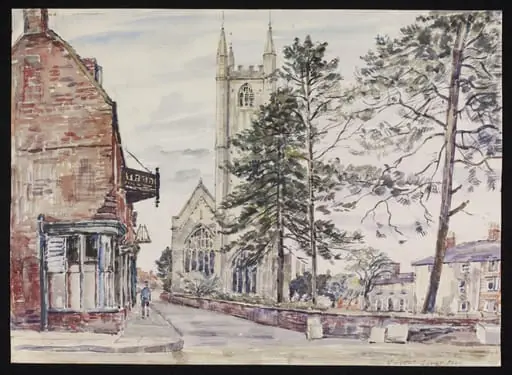 St. Peter's, Marlborough
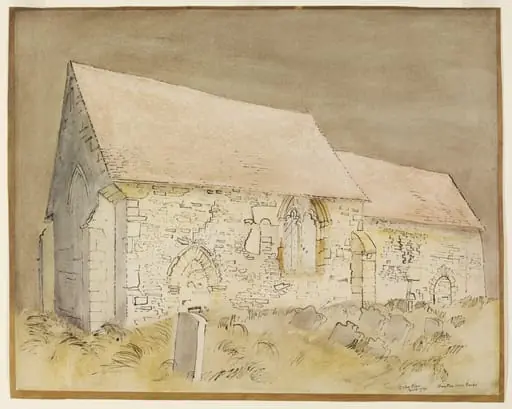 St.Peter's Church, Stanton Low
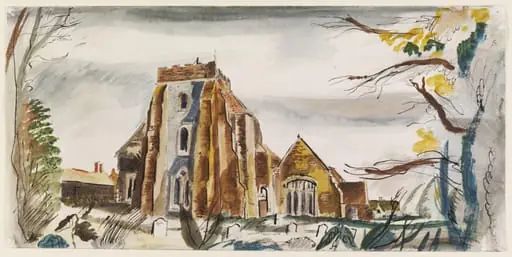 St. Osyth's Church
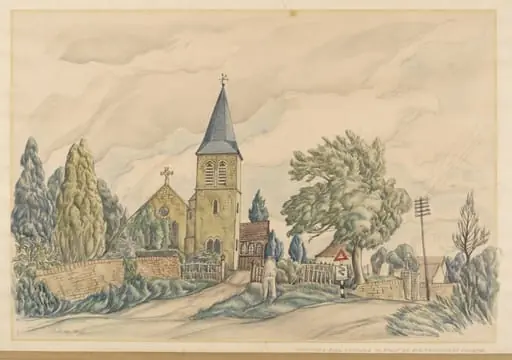 Old Fernhurst Church
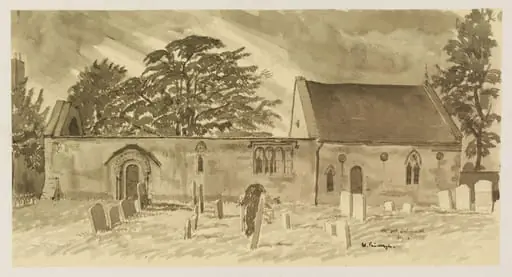 St.George's Church, Hatford
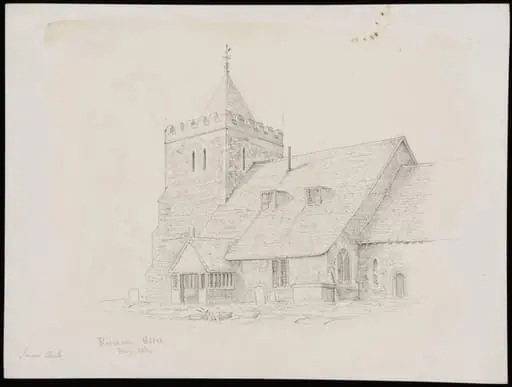 Untitled
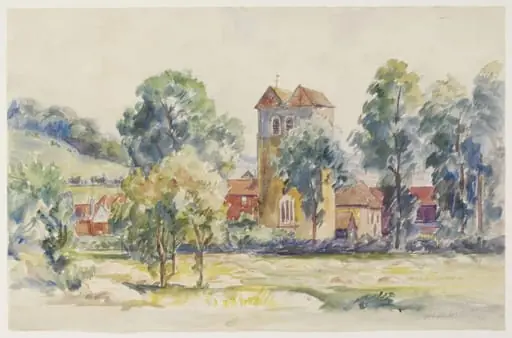 St. Bartholomew's Church, Fingest
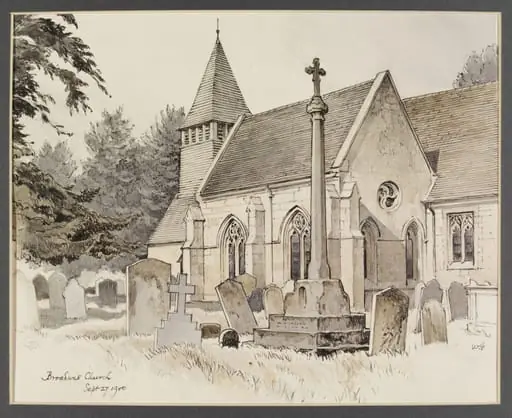 Broadwas Church
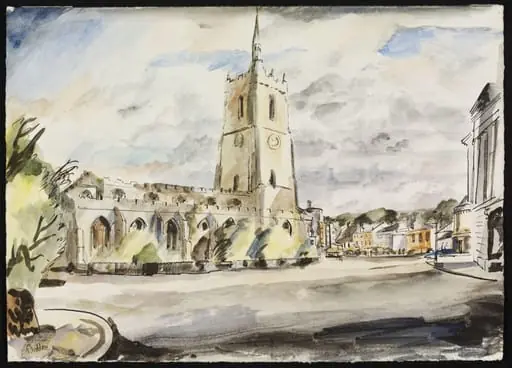 St. Peter's Church and Market Hill, Sudbury
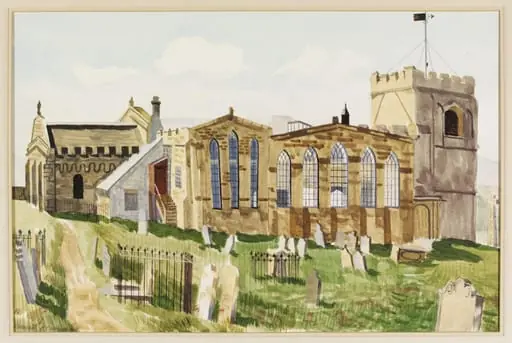 St. Mary's, Whitby - Exterior
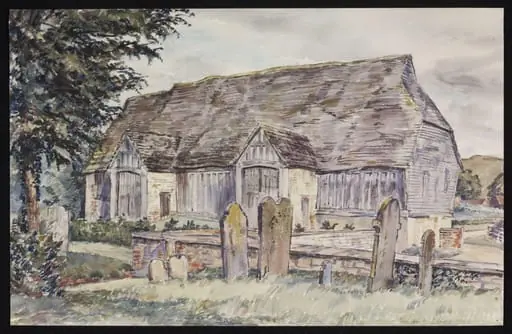 The Tithe Barn, Cherhill
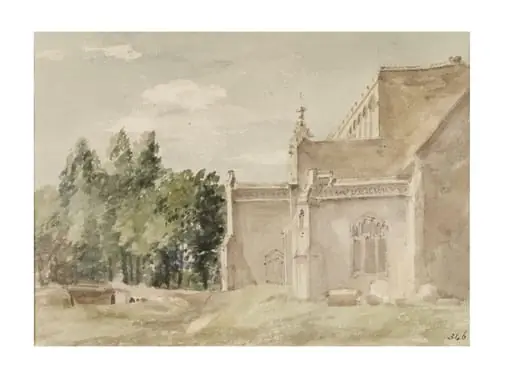 East Bergholt Church: view from the east