Artwork
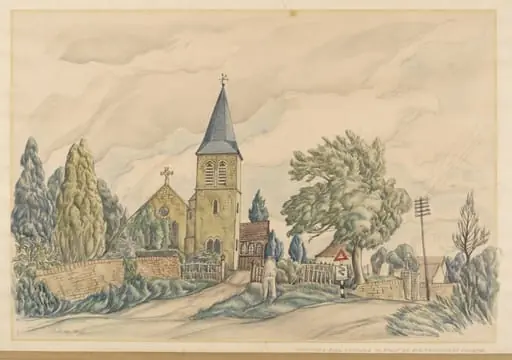
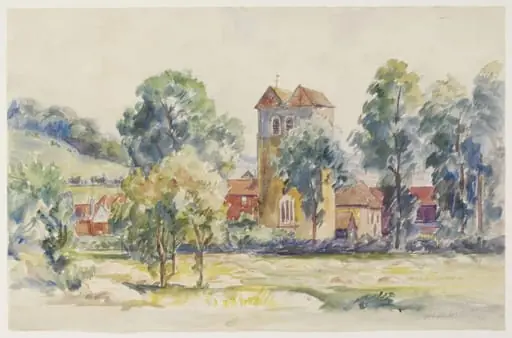
St. Bartholomew's Church, Orford, from the North-West
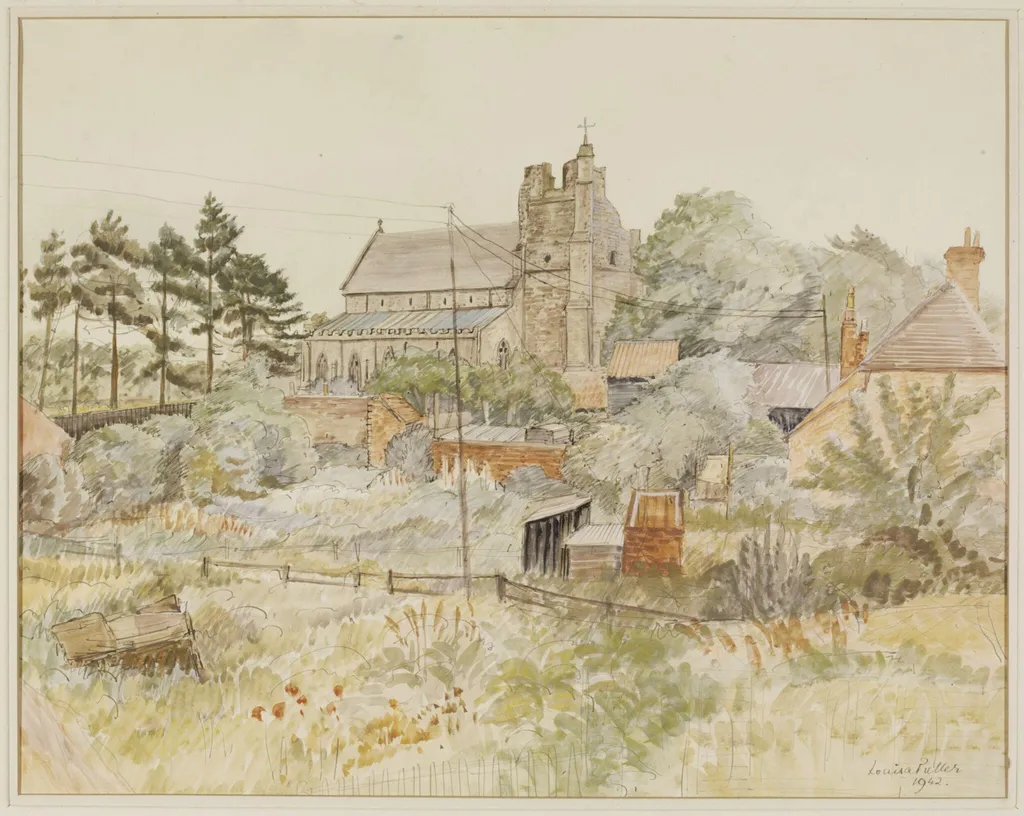
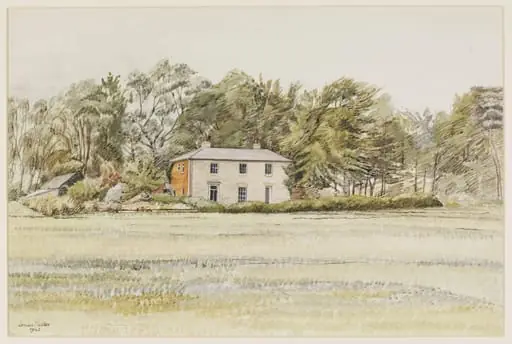
St. Bartholomew's Church, Orford, from the North-West is a watercolor work on paper by Louisa Puller. It dates from 1942 and is held in the collection of the Victoria and Albert Museum. St.
About this work
Two versions of this church exist in the same project, one snow-covered, the other bright and green.
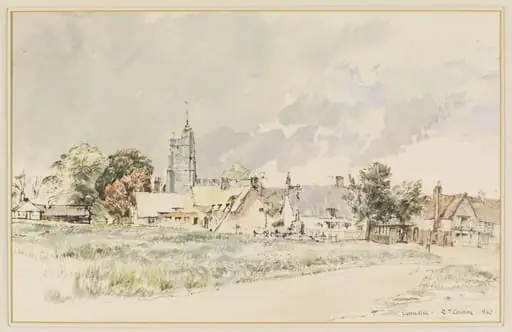
Louisa Puller shows St. Bartholomew’s Church in Orford in a quiet watercolour from 1942. The view looks northwest across rooftops and back gardens in high summer. Two versions of this church exist in the same project, one snow-covered, the other bright and green.
This church tower had already lost its top long before Puller painted it. She was an amateur who joined a national effort to record Britain’s changing landscapes.
Next time you’re in London, look for the Victoria and Albert Museum.
Overview
St. Bartholomew's Church, Orford, from the North-West is a 1942 watercolour by Louisa Puller, depicting the church in high summer from a northwest perspective, capturing rooftops, back gardens, and adjacent cottages.
Subject & Meaning
The subject is St. Bartholomew's Church in Orford, shown in a serene summer setting. The artwork's dual purpose was to contribute to the Recording Britain project, documenting the nation's changing landscapes, and to provide a contrasting view to a complementary piece by Jack L. Airy, which depicts the church in snow.
Technique & Style
Executed in watercolour, Puller's piece adopts a conventional approach, characterized by a focus on capturing the scene's natural beauty in a warm, high-summer light, reflecting her amateur yet skilled hand.
History & Provenance
Created in 1942 as part of the Recording Britain project, this watercolour is one of two contrasting views of the church in the collection. The church's tower, already damaged before the painting, adds a layer of historical context.
Context
Part of a national effort to record Britain's landscapes during a time of change, this piece is now housed at the Victoria and Albert Museum in London, alongside its contrasting counterpart.
Legacy
While not individually renowned, the piece contributes to the broader significance of the Recording Britain project, preserving a moment in Britain's architectural and natural history.
Artist & collection
Artist
Louisa Puller painted quiet, detailed watercolors of English buildings in the 1940s.