Artwork
Autumn, the five crosses
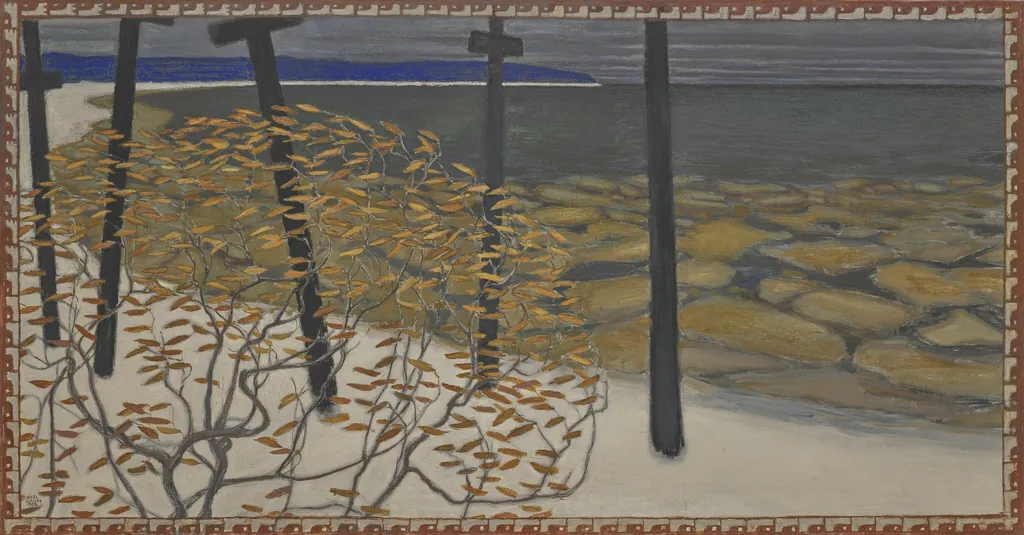
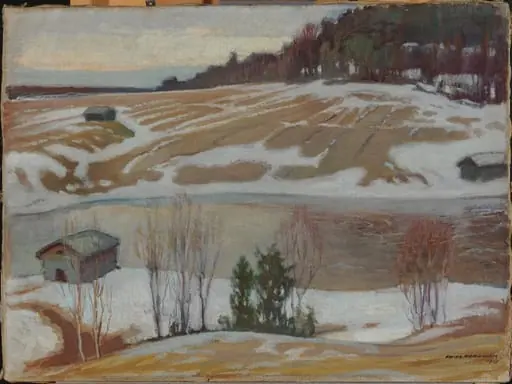
Autumn, the five crosses is an oil painting by the Post-Impressionist artist Akseli Gallen-Kallela. It dates from 1902 and is held in the collection of the Sparebankstiftelsen DNB’s collection.
About this work
Overview
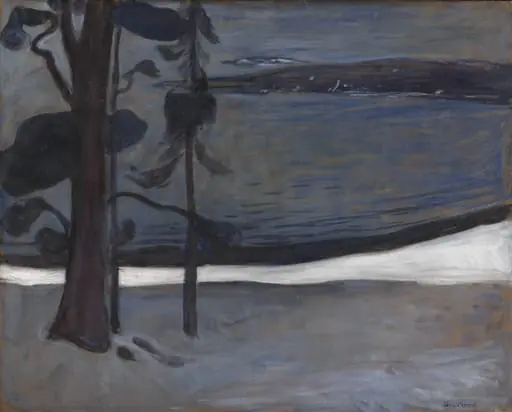
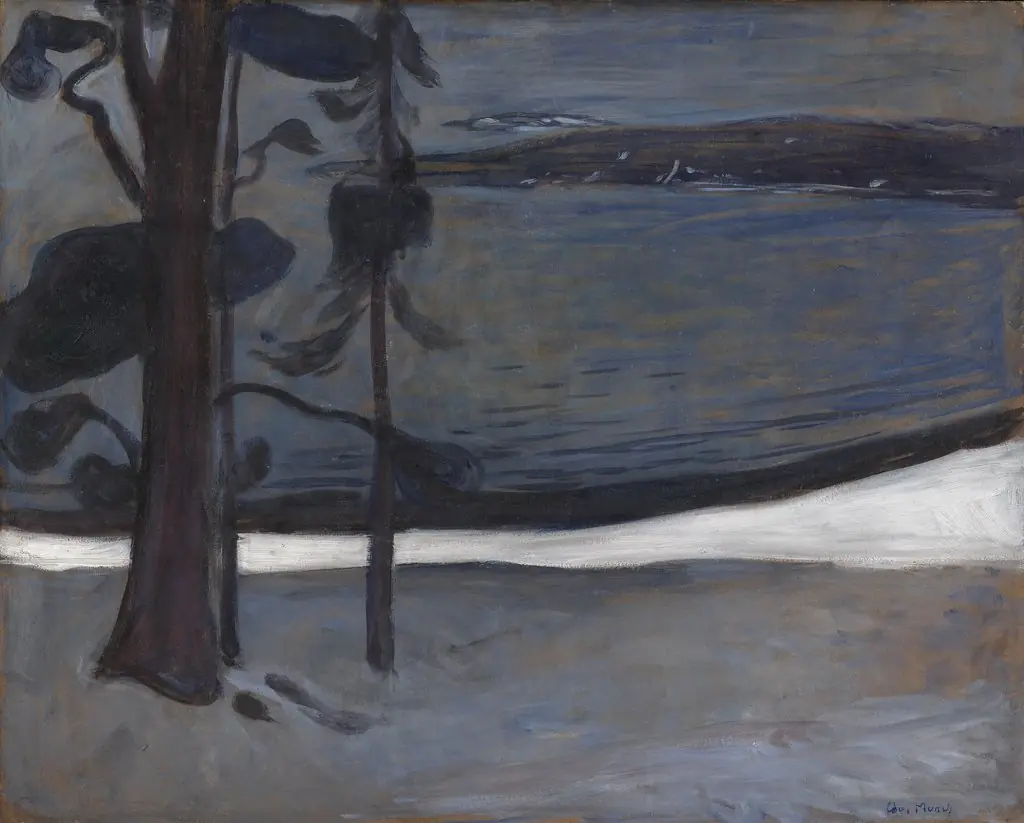
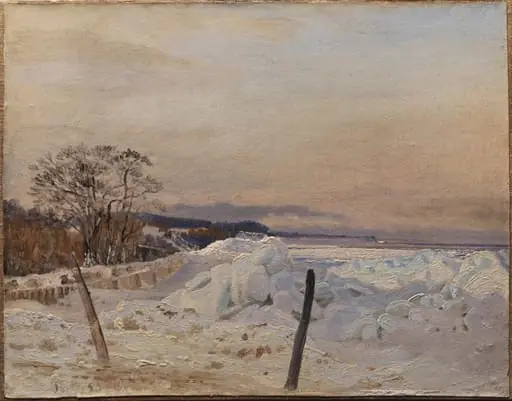
Created in 1902, this tempera work by Finnish artist Akseli Gallen‑Kallela depicts five wooden crosses perched on a hill against a muted autumnal landscape. The composition is dominated by subdued greys, browns and yellows, and the sky is overcast, while a thin veil of snow covers the ground and a distant waterline meets the horizon.
Subject & Meaning
The solitary crosses, set among a few trees shedding yellow foliage, evoke themes of memory and loss within a Finnish setting. Their stark presence against the bleak sky suggests a contemplative reflection on mortality and the passage of seasons, resonating with the artist’s interest in national folklore and symbolic narratives.
Technique & Style
Gallen‑Kallela employed tempera, a medium that yields a matte surface and fine, layered texture. The painting’s restrained palette and simplified forms align with his turn toward symbolism and a national‑romantic aesthetic, moving away from earlier realist approaches toward a more stylized, post‑impressionist expression.
History & Provenance
The piece is part of the collection of the Munch Museum in Oslo. It reflects the period when Gallen‑Kallela was establishing a distinctly Finnish visual language, drawing on the epic Kalevala and contributing to the broader currents of early twentieth‑century European art.
Artist & collection
Artist
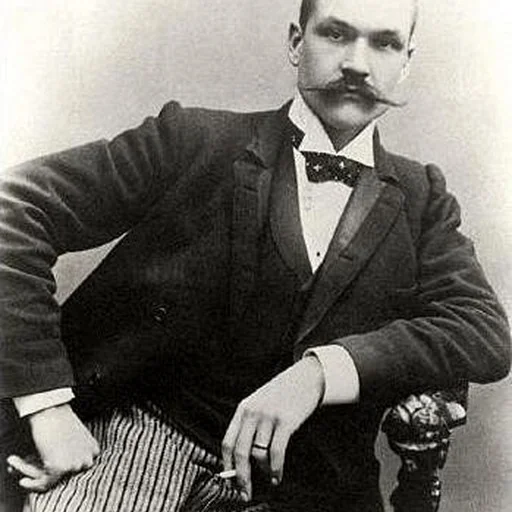
Akseli Gallen-Kallela (born Axel Waldemar Gallén; 26 April 1865 – 7 March 1931) was a Finnish painter and a leading figure of Finnish romantic nationalism around the turn of the 20th century.