Artwork
The Forging of the Sampo
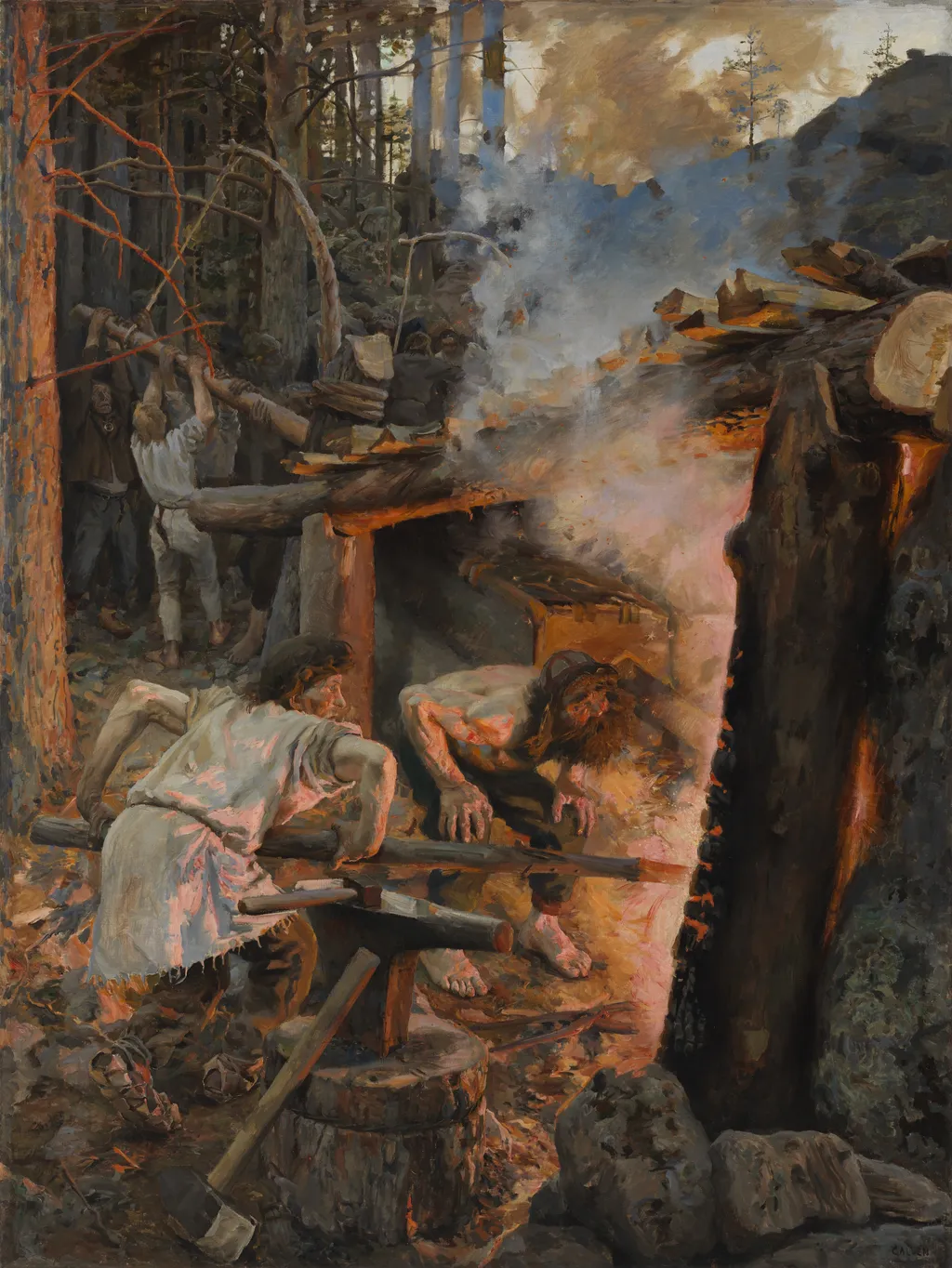
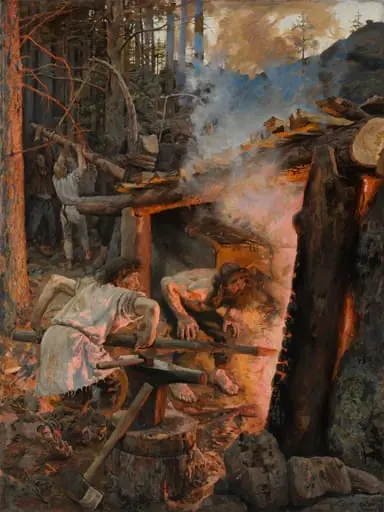
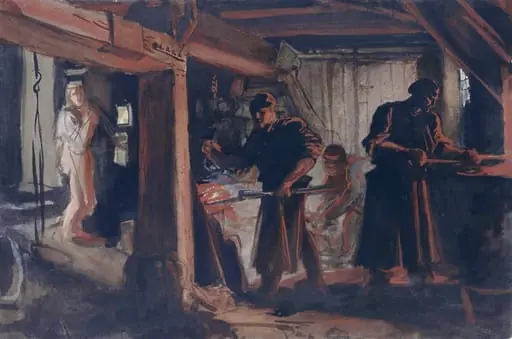
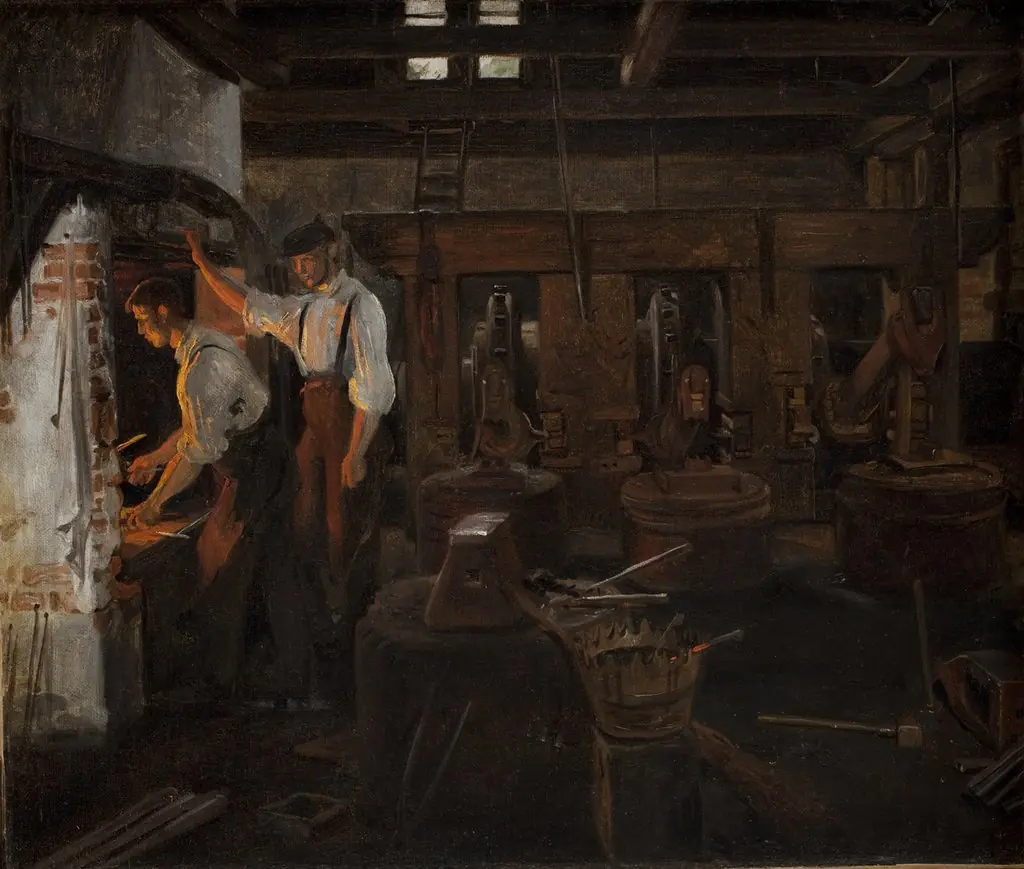
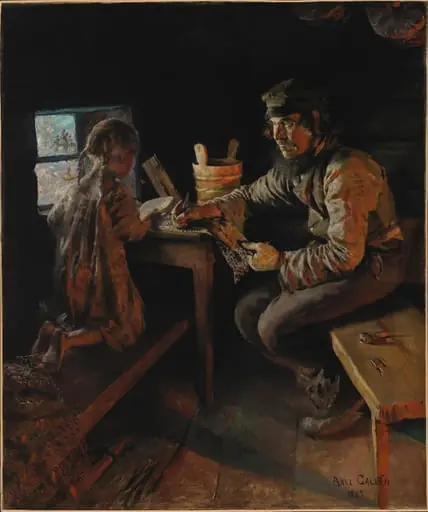
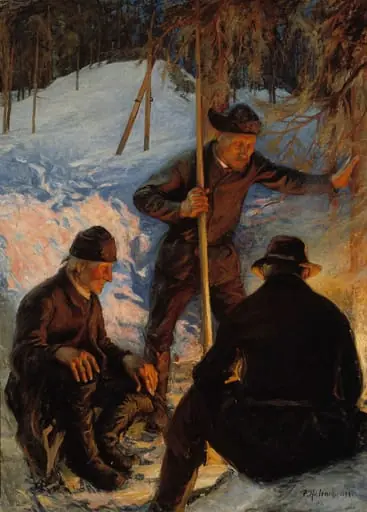
The Forging of the Sampo is an oil painting by the Symbolist artist Akseli Gallen-Kallela. It dates from 1897 and is held in the collection of the Finnish National Gallery.
About this work
Overview
Painted in 1897 by Akseli Gallen-Kallela, this oil on canvas work illustrates a moment from the Kalevala, Finland’s foundational mythic poem.
Painted in 1897 by Akseli Gallen-Kallela, this oil on canvas work illustrates a moment from the Kalevala, Finland’s foundational mythic poem. Though often associated with the forging of the Sampo, the scene captures a quieter, more somber episode: the aftermath of a ritual labor. The painting reflects Gallen-Kallela’s move away from realism toward symbolic, nationally inflected imagery, aligning with broader Finnish cultural movements of the era.
Subject & Meaning
The scene depicts a moment of crisis during the creation of the Sampo, a mystical object whose forging required sacrifice. One figure lies collapsed, possibly wounded or spent, while another stands over him, axe in hand, conveying tension and uncertainty. The narrative draws from the Kalevala’s themes of communal effort, spiritual cost, and the blurred line between craftsmanship and ritual. The absence of divine intervention emphasizes human endurance amid mythic endeavor.
Technique & Style
Gallen-Kallela employs muted earth tones—browns, greens, and grays—to ground the scene in a primal, forested landscape. Chiaroscuro defines the figures’ forms, lending weight and volume without theatricality. Brushwork is deliberate but not polished, favoring texture over refinement. The composition directs attention to the central figures through diagonal lines and spatial compression, reinforcing the gravity of the moment without overt symbolism.
History & Provenance
Completed in 1897, the painting entered the collection of the Ateneum Art Museum in Helsinki, where it remains today. It was produced during a period when Gallen-Kallela was deeply engaged with Finnish national identity, following his earlier travels to Karelia to document oral traditions. The work was exhibited in Finland and abroad, contributing to the international recognition of Finnish art in the late 19th century.
Context
In the 1890s, Finland was part of the Russian Empire but nurturing a distinct cultural identity. Artists and intellectuals turned to the Kalevala as a source of indigenous heritage, countering imperial narratives. Gallen-Kallela’s work, including this painting, helped visualize a mythic past that resonated with rising nationalist sentiment, positioning folklore as a foundation for modern Finnish self-conception.
Legacy
Though less widely known than some of his other Kalevala illustrations, this painting exemplifies Gallen-Kallela’s commitment to translating epic poetry into visual form with emotional restraint. It influenced later Finnish artists seeking to express national character through myth and landscape, and remains a quiet but significant reference in the development of Finland’s artistic identity beyond romanticized spectacle.
Own this work as a print
Artist & collection
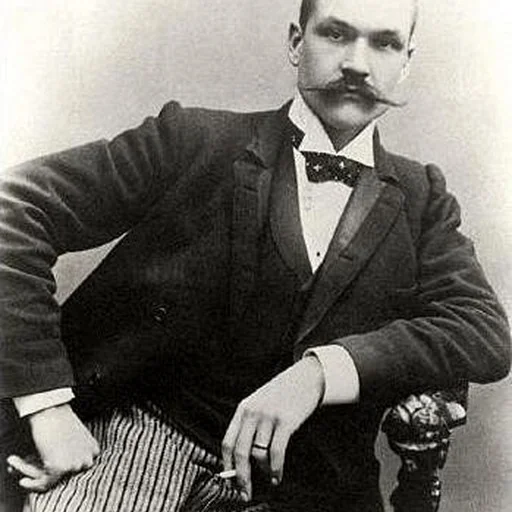
Artist
Akseli Gallen-Kallela (born Axel Waldemar Gallén; 26 April 1865 – 7 March 1931) was a Finnish painter and a leading figure of Finnish romantic nationalism around the turn of the 20th century.