Artwork
Raatajat rahanalaiset
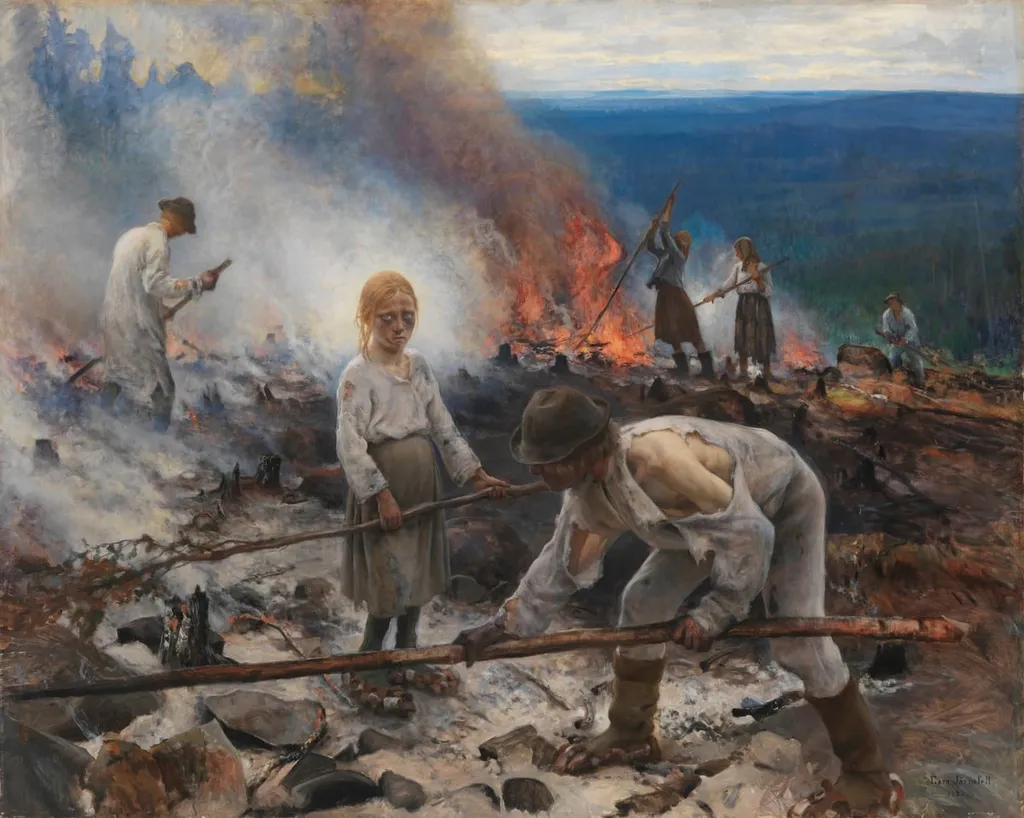
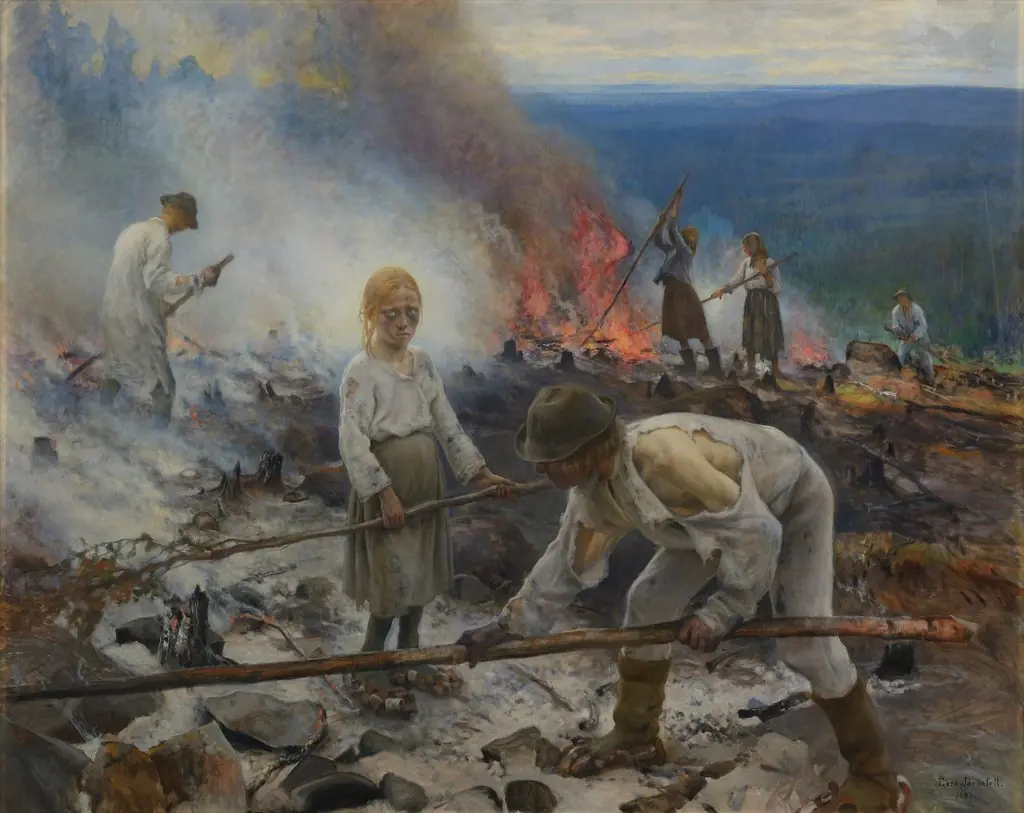
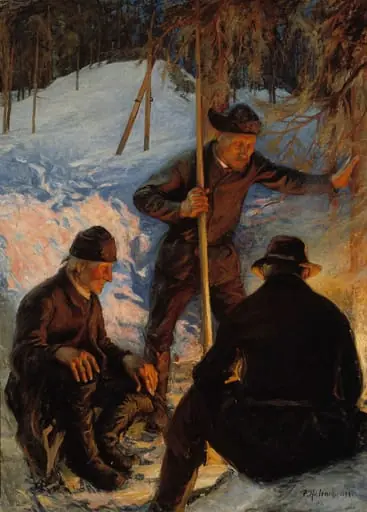
Raatajat rahanalaiset is an unspecified painting by the Realist artist Eero Järnefelt. It dates from 1910 and is held in the collection of the Finnish National Gallery.
About this work
If you're interested in learning more about his style and technique, check out his other paintings, such as "Under the Yoke" (1893).
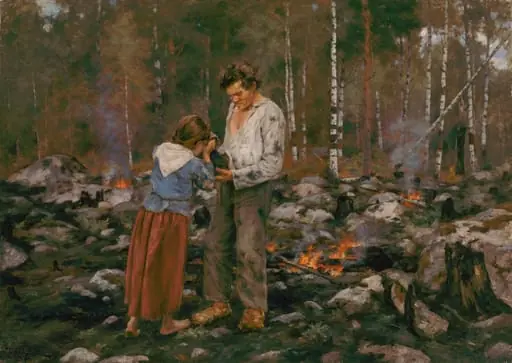
This painting shows a group of people working together in a rugged landscape. They're dressed in simple, worn clothing and are using tools to clear the land. In the background, there's a fire burning, and the sky is filled with smoke.
The scene is depicted in muted colors, with earthy tones dominating the palette. The brushstrokes are bold and expressive, giving the painting a sense of energy and movement.
The painting is held at the Museum of Ethnography, and it's a great example of Eero Järnefelt's work. If you're interested in learning more about his style and technique, check out his other paintings, such as "Under the Yoke" (1893).
Overview
Created around 1910, this genre painting by Finnish artist Eero Järnefelt portrays a collective labor scene set in a stark, untamed landscape. The work is part of the collection of the Museum of Ethnography, where it exemplifies the artist’s interest in rural life and communal effort.
Subject & Meaning
A group of figures, dressed in modest, weather‑worn garments, are shown clearing the ground with simple tools. A fire smolders nearby, sending up a plume of smoke that merges with the overcast sky, suggesting both the hardship and the perseverance of the community engaged in land‑making.
Technique & Style
Järnefelt employs a muted, earth‑toned palette dominated by browns, ochres, and subdued greens. Broad, confident brushstrokes convey a sense of movement and physical exertion, while the limited color range emphasizes the harshness of the environment and the solidarity of the workers.
History & Provenance
The painting entered the Museum of Ethnography’s holdings after being acquired in the early twentieth century, reflecting the institution’s focus on documenting Finnish cultural practices. Its provenance traces back to the artist’s own studio, where it was likely produced shortly after his earlier socially themed works.
Context
Produced during a period when Finnish artists were increasingly attentive to national identity and agrarian life, the work aligns with Järnefelt’s broader oeuvre that includes socially conscious pieces such as "Under the Yoke" (1893). It offers visual insight into the everyday labor that shaped rural Finland in the early 1900s.
Artist & collection

Artist
Erik "Eero" Nikolai Järnefelt was a Finnish painter and art professor. He is best known for his portraits and landscapes of the area around Koli National Park, in the North Karelia region of Finland. He was a medal…