Artwork
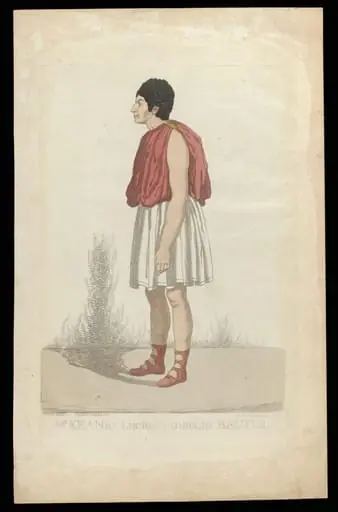
Mr. Kean as Macbeth
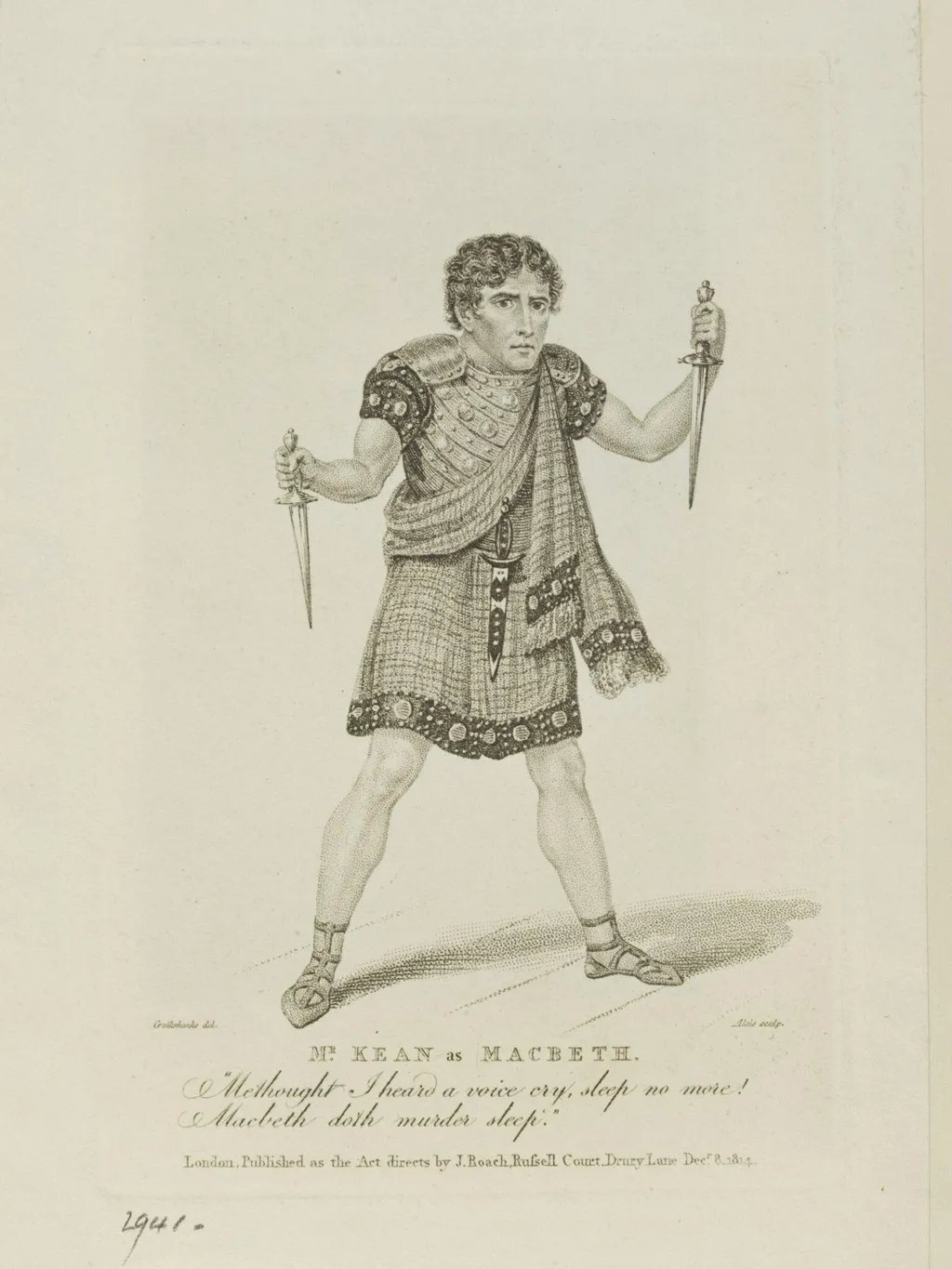
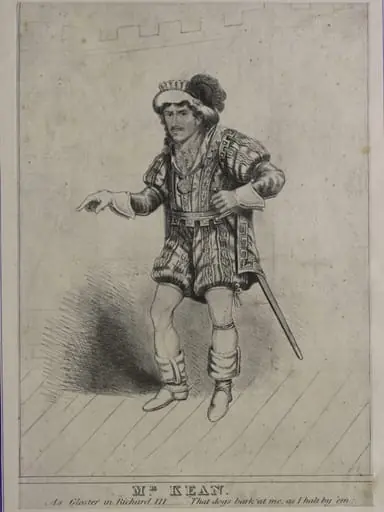
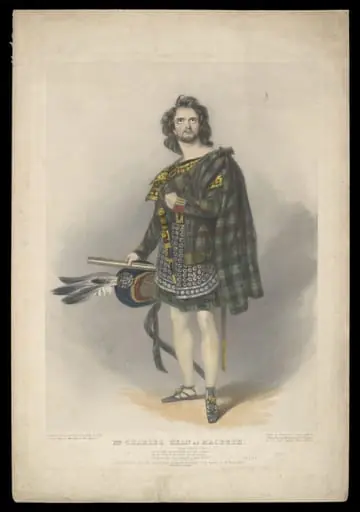
Mr. Kean as Macbeth is a print by the Romanticist artist J. Alais. It dates from 1814 and is held in the collection of the Victoria and Albert Museum. This 1814 print captures Edmund Kean in character as Macbeth, rendered in a small, full-length format on paper.
About this work
The print was made in 1814, showing how actors dressed up for theater back then.
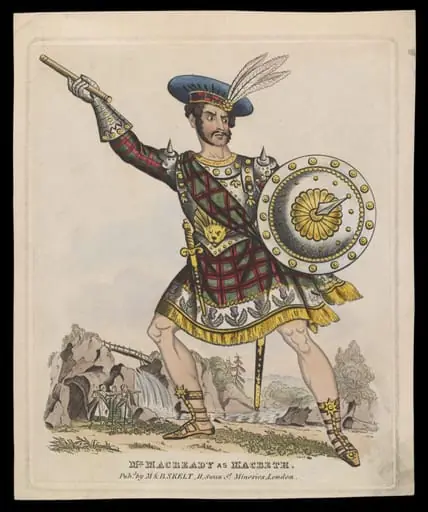
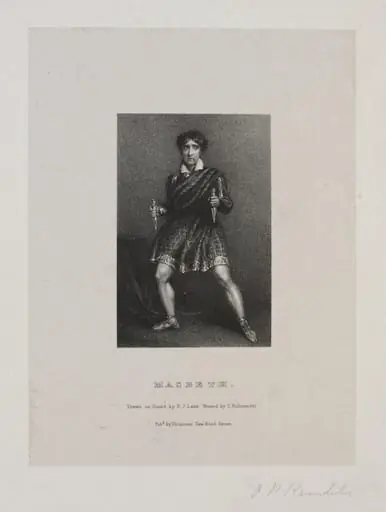
This print shows a man dressed as a warrior, holding two daggers. His outfit has a mix of armor and a draped cloth over his shoulder. The background is plain, so all focus stays on him.
The text below says this is Mr. Kean playing *Macbeth*, quoting a famous line about sleep. The print was made in 1814, showing how actors dressed up for theater back then.
Look up Victoria and Albert Museum to see more prints like this.
Overview
This 1814 print captures Edmund Kean in character as Macbeth, rendered in a small, full-length format on paper. The image was produced by J. Alais and intended as a theatrical portrait, documenting a specific performance moment. The composition isolates the actor against a neutral background, emphasizing costume and posture over setting. Text beneath the image cites Macbeth’s famous line on sleep, anchoring the visual to the play’s psychological themes.
Subject & Meaning
Edmund Kean portrays Macbeth at a moment of inner turmoil, gripping two daggers as if still haunted by regicide. His attire blends partial armor with a draped fabric, suggesting both warrior status and moral disarray. The inclusion of the sleep quote underscores the character’s guilt and fractured psyche. The image does not depict a scene but rather a psychological state, transforming costume into symbolic language.
Technique & Style
The print employs fine line work to define texture in fabric and metal, with minimal shading to maintain clarity. The background is left unmodeled, directing attention entirely to the figure. The style is documentary rather than dramatic, prioritizing accurate representation of stage costume over theatrical lighting or emotion. This approach reflects early 19th-century practices in theatrical portraiture, where fidelity to appearance mattered more than artistic embellishment.
History & Provenance
Created in 1814, the print emerged during Kean’s rise to fame as a Shakespearean actor known for intense, emotionally charged performances. It was likely produced for public consumption, serving as both souvenir and promotional material. The Victoria and Albert Museum holds similar prints from this era, indicating a broader cultural interest in documenting actors in iconic roles during the Romantic period.
Context
In early 19th-century Britain, theatrical prints were widely circulated, offering the public access to performances they could not attend. Kean’s portrayal of Macbeth was particularly noted for its raw intensity, breaking from more restrained earlier interpretations. This print reflects a shift toward realism in stage representation and the growing commercialization of celebrity culture within the theater.
Legacy
The print endures as a record of Kean’s influential interpretation of Macbeth, preserving details of Regency-era stage costume and performance style. While not an artistic innovation in technique, it contributes to the historical archive of British theater, offering insight into how actors were visualized and remembered by audiences beyond the stage.
Artist & collection
Artist
J. Alais made hand-colored prints of actors on stage in early 1800s London. Their prints capture star turns like “Mr. Kean as Macbeth” in 1814 and “Mr. Lewis as the Copper Captain” from 5 February 1808. These crisp…