Artwork
H Beard Print Collection
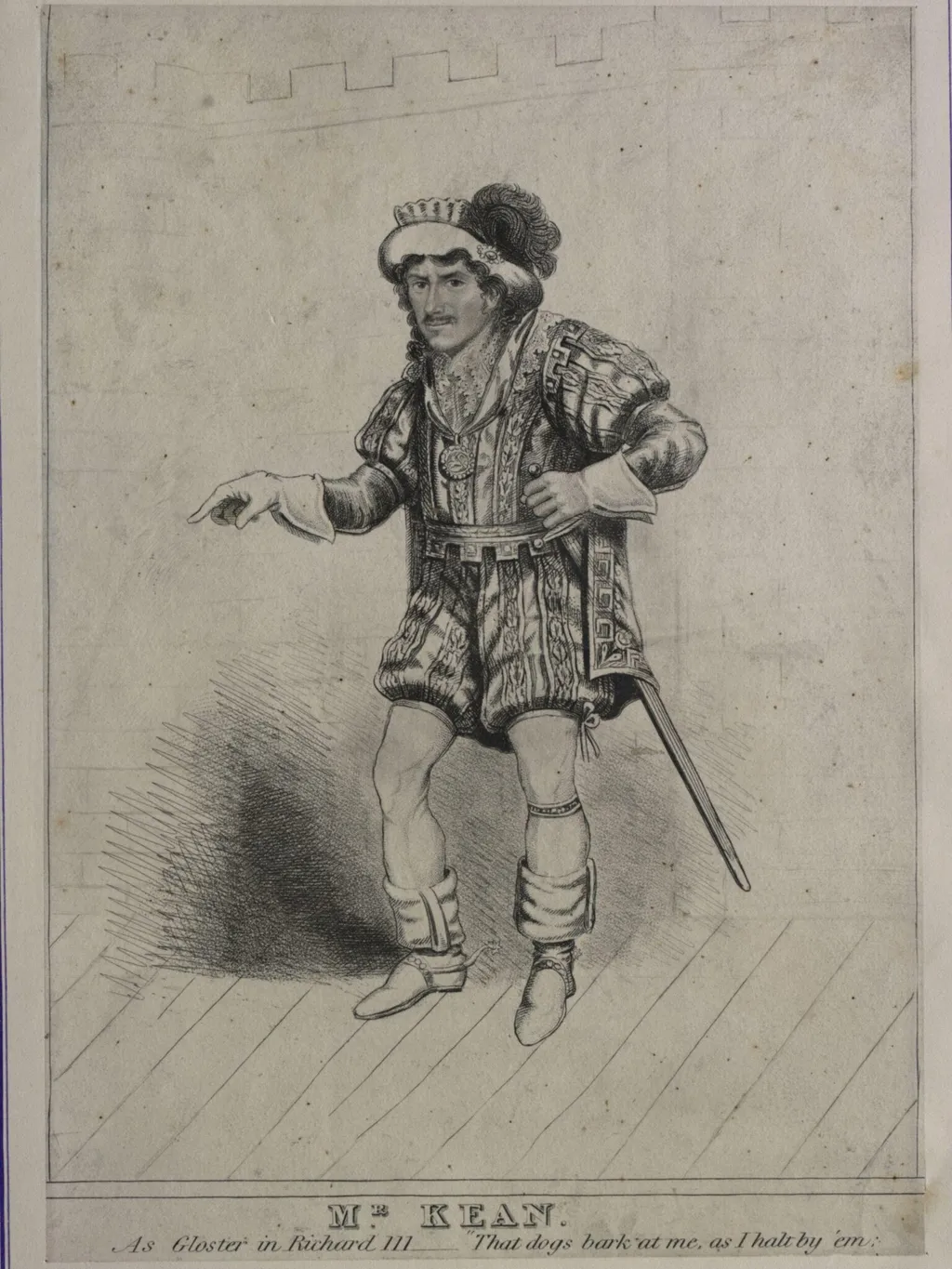
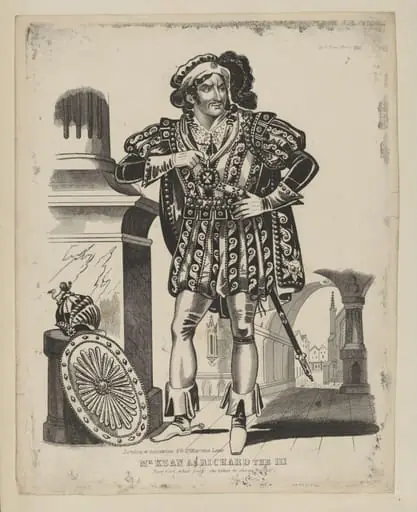
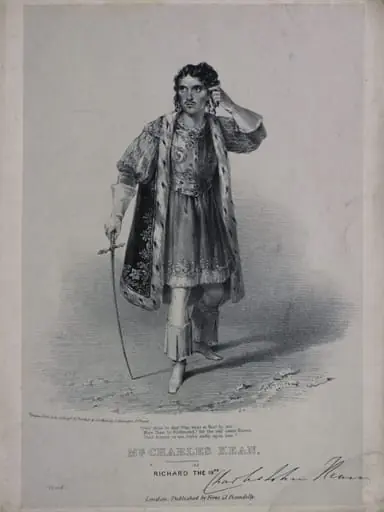
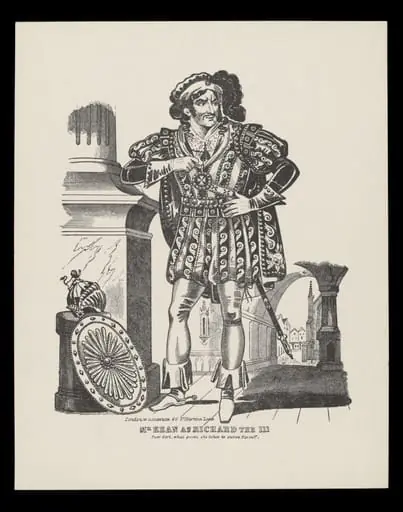
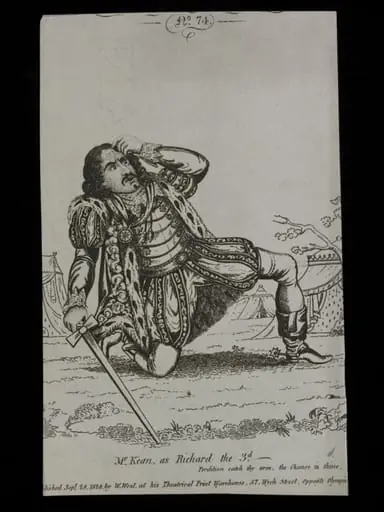
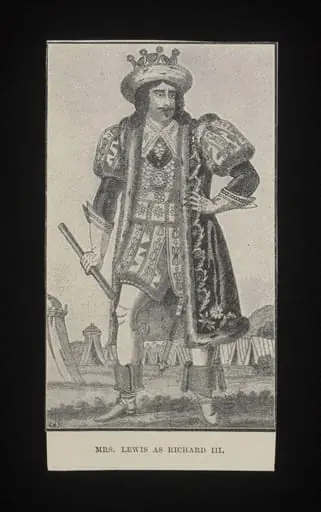
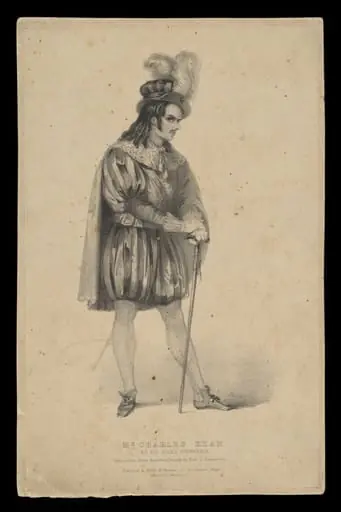
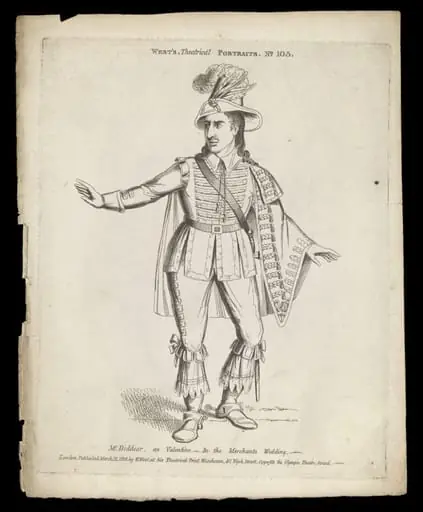
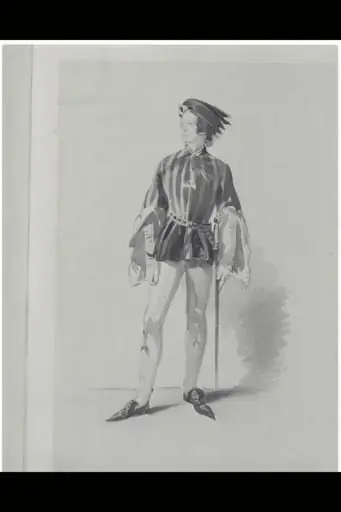
H Beard Print Collection is a print by J. Prynn. It dates from 1850 and is held in the collection of the Victoria and Albert Museum. This print, part of the H Beard Collection, captures actor Edmund Kean in the role of Gloucester from Shakespeare’s Richard III.
About this work
This scene is accompanied by a quote, "That dogs bark at me, as I halt by 'em", which suggests the print is illustrating a dramatic moment.
This print is from the H Beard Print Collection by J. Prynn, created in the early 19th century.
The print depicts a scene from a play, specifically Edmund Kean as Gloster in Richard III. This scene is accompanied by a quote, "That dogs bark at me, as I halt by 'em", which suggests the print is illustrating a dramatic moment.
You can learn more about this style of printmaking by looking into the technique of chiaroscuro.
Overview
This print, part of the H Beard Collection, captures actor Edmund Kean in the role of Gloucester from Shakespeare’s Richard III. Created by J. Prynn in the early 1800s, it is a theatrical portrait meant for public consumption, reflecting the era’s fascination with stage performance. The image is accompanied by a line of dialogue, anchoring it to a specific moment in the play and emphasizing its narrative intent.
Subject & Meaning
The print portrays Gloucester at a moment of vulnerability, as he laments being scorned by those around him. The quoted line—'That dogs bark at me, as I halt by 'em'—conveys his physical and social isolation, a theme central to his character. Kean’s expressive posture and facial tension translate the character’s inner torment, transforming the print into a psychological portrait rather than a mere costume study.
Technique & Style
Executed in the tradition of theatrical portraiture, the print uses strong contrasts of light and shadow to heighten emotional impact. While not strictly chiaroscuro in the Renaissance sense, its tonal modeling draws from that tradition to sculpt the figure and focus attention on the actor’s face and gesture. Line work is precise, typical of engraved theatrical prints of the period, designed for clarity and dramatic effect in reproduction.
History & Provenance
The print originates from the H Beard Print Collection, assembled in the 19th century to document British stage history. J. Prynn, a known engraver of theatrical subjects, produced it during the peak of Kean’s fame. Its survival in a private collection suggests it was valued as both cultural artifact and commemorative object, preserving the memory of a celebrated performance for later audiences.
Context
In the early 1800s, public interest in Shakespearean theater surged, and actors like Kean became cultural figures. Prints such as this one circulated widely, allowing those who couldn’t attend performances to engage with the drama. They bridged the gap between live theater and domestic culture, reinforcing the actor’s persona and the play’s emotional weight through accessible imagery.
Legacy
This print contributes to the historical record of 19th-century British theater, preserving the visual interpretation of a landmark performance. Though Kean’s stage presence is now known only through written accounts and such images, this work remains a tangible link to a time when acting was celebrated as a public art. It reflects how performance was documented, remembered, and disseminated before photography.
Artist & collection
Artist
J. Prynn had a habit of eavesdropping on sailors at the docks, sketching their tattoos in the margins of his grocery lists. He turned those quick jottings into intricate woodblock prints of nautical emblems—anchors,…