Artwork
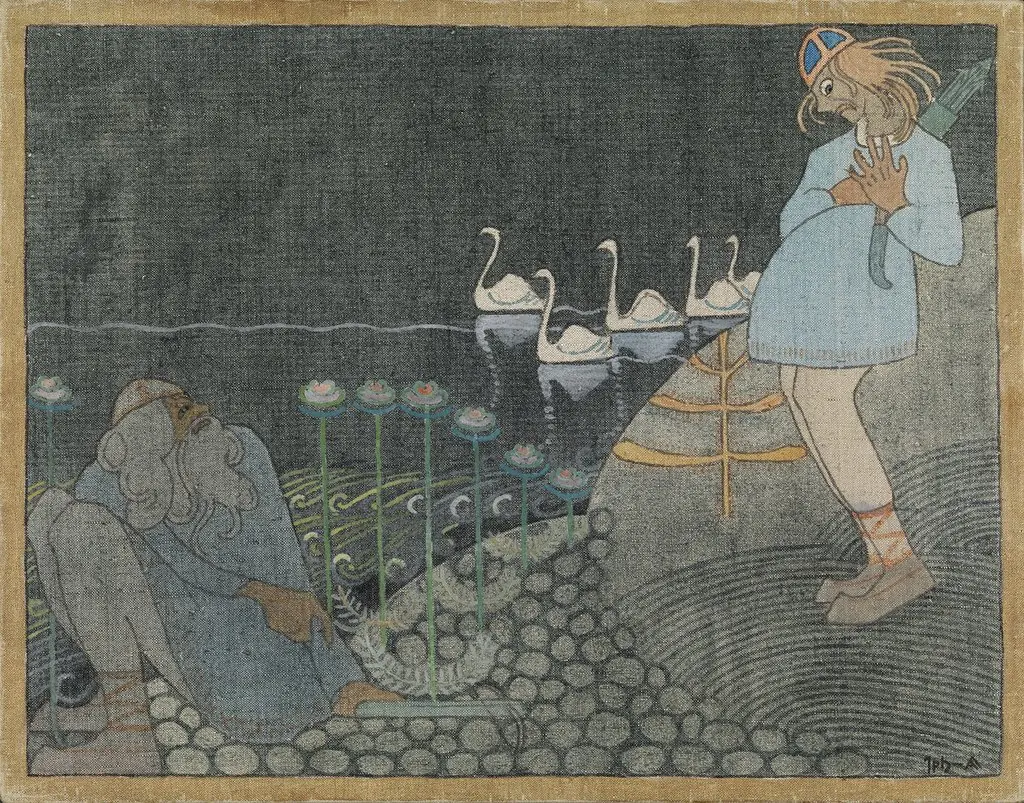
Lemminkäinen ja karjapaimen
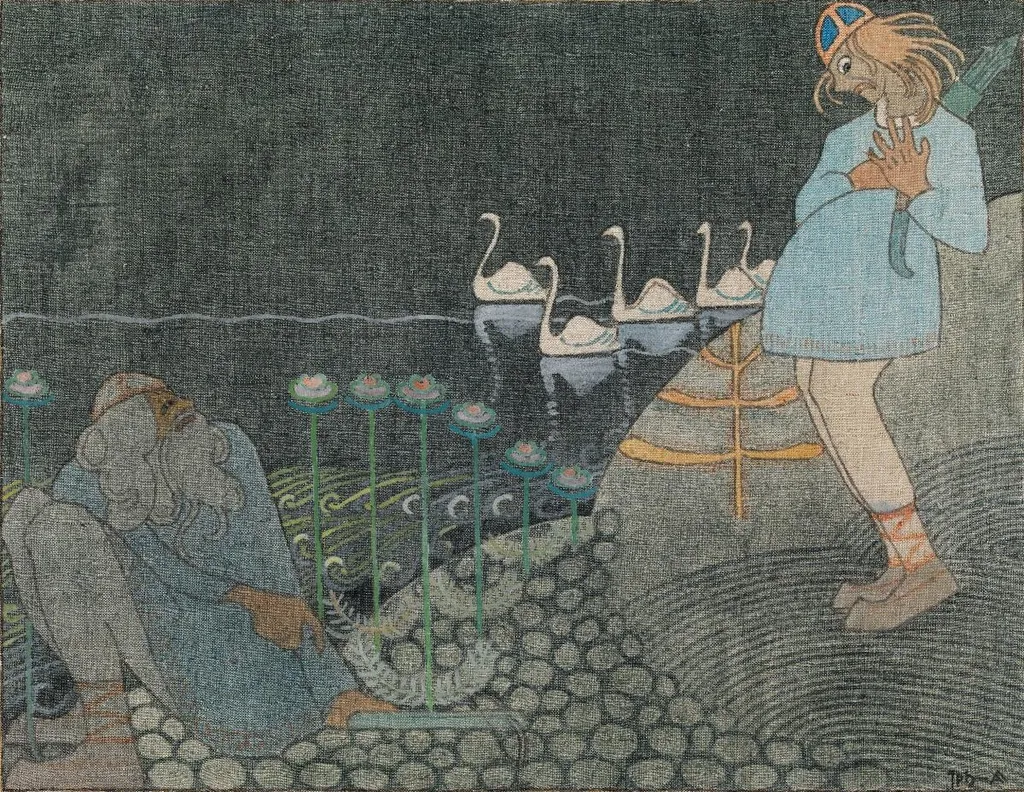
Lemminkäinen ja karjapaimen is an unspecified painting by Joseph Alanen. It is held in the collection of the Finnish National Gallery.
About this work
Overview
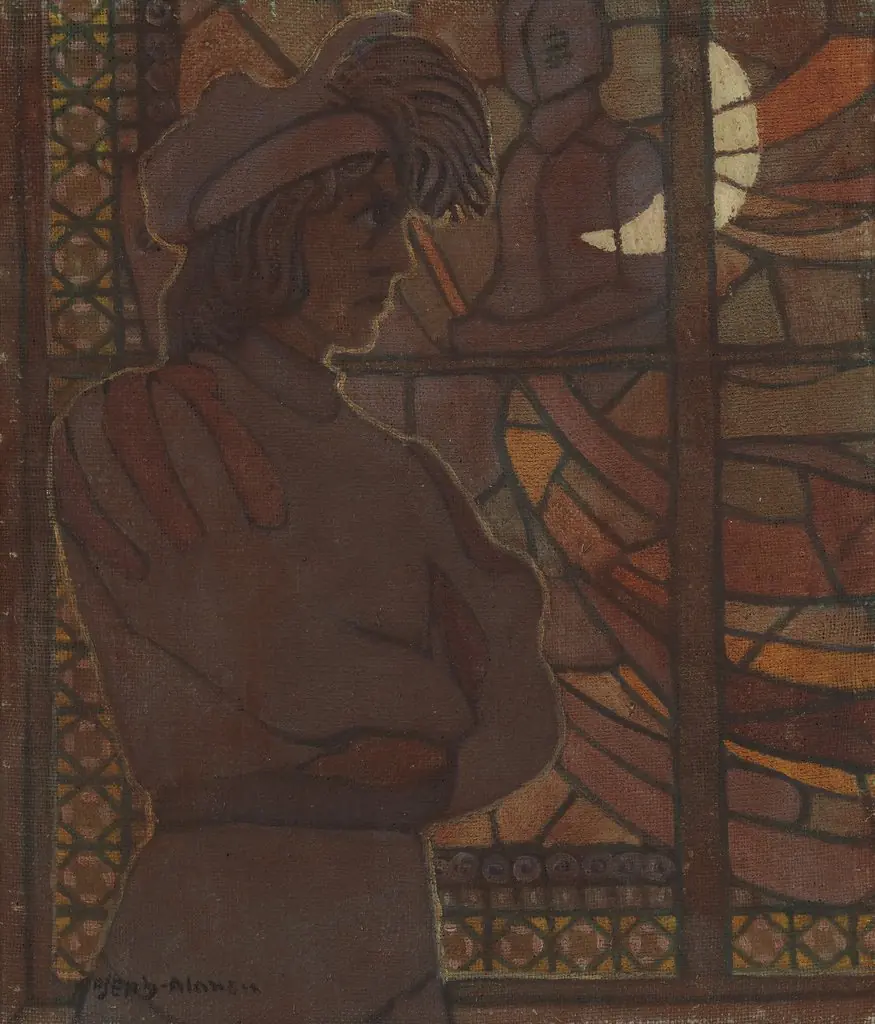
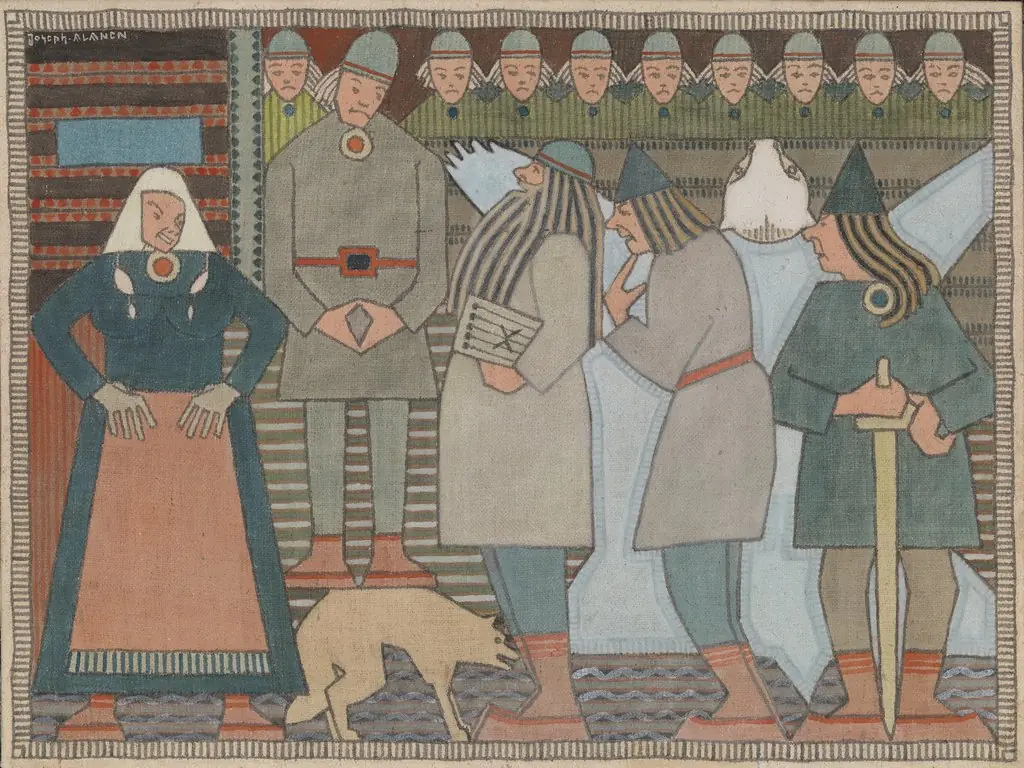
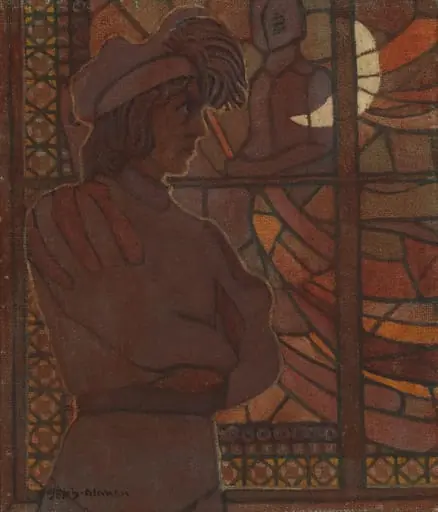
This tempera painting on canvas depicts a solitary figure in a red coat standing beside a black cow, rendered with soft edges and muted, rich tones.
This tempera painting on canvas depicts a solitary figure in a red coat standing beside a black cow, rendered with soft edges and muted, rich tones. The work employs the traditional tempera technique, where pigments are bound with egg yolk, producing a matte, warm surface characteristic of pre-oil painting methods. Its quiet composition and stylized forms evoke a narrative atmosphere, aligning with early 20th-century Finnish interest in folklore and rural life.
Subject & Meaning
The figure, likely Lemminkäinen—a hero from the Finnish epic Kalevala—is shown in a pastoral moment with a cow, symbolizing connection to land and tradition. The scene draws from mythic lore, transforming a simple encounter into a symbolic act of guardianship or trial. The cow, a common motif in Finnish agrarian culture, reinforces themes of sustenance and endurance within the mythic framework.
Technique & Style
Tempera paint, made from pigment and egg yolk, gives the work a flat, luminous quality without the gloss of oil. The artist favors smooth, even brushwork and rounded contours, avoiding sharp detail in favor of a dreamlike clarity. Colors are subdued yet deep, enhancing the timeless, storybook tone. The technique reflects a deliberate return to pre-modern methods, emphasizing craftsmanship over realism.
History & Provenance
The painting is held in the collection of the Museum of Ethnography in Helsinki, where it is contextualized among Finnish folk-inspired artworks from the early 1900s. It was likely created during a period of national cultural revival, when artists sought to visually articulate indigenous myths and rural identities. Its preservation reflects institutional efforts to document and safeguard Finland’s artistic heritage.
Context
Created during Finland’s national awakening, the work responds to a broader movement to define cultural identity through folklore. Artists turned to the Kalevala and rural life as sources of authenticity, distancing themselves from foreign artistic norms. Tempera, once dominant in medieval Europe, was revived as a symbol of continuity with a pre-industrial past, aligning with nationalist ideals.
Legacy
The painting contributes to a body of work that helped shape modern Finnish visual culture by linking myth with everyday rural scenes. While not widely known outside Finland, it remains a reference point in discussions of national art and the use of traditional media. Its quiet dignity continues to inform contemporary artists exploring heritage through material and narrative.
Artist & collection