Artwork
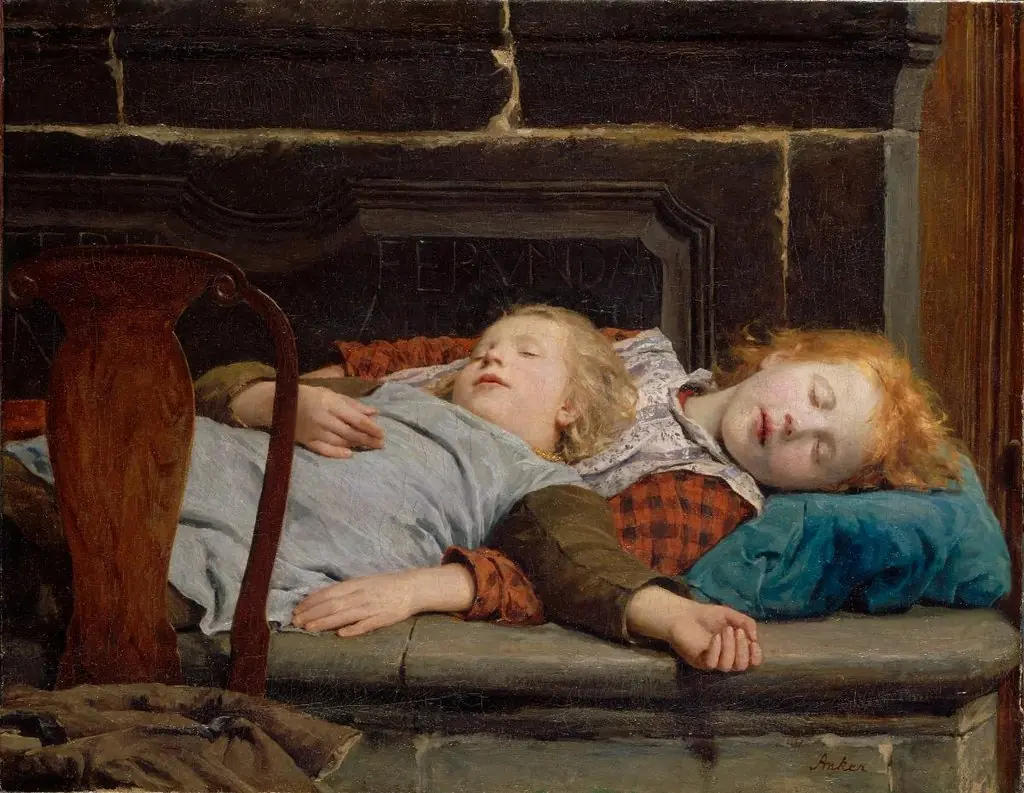
Two sleeping girls on the stove bench
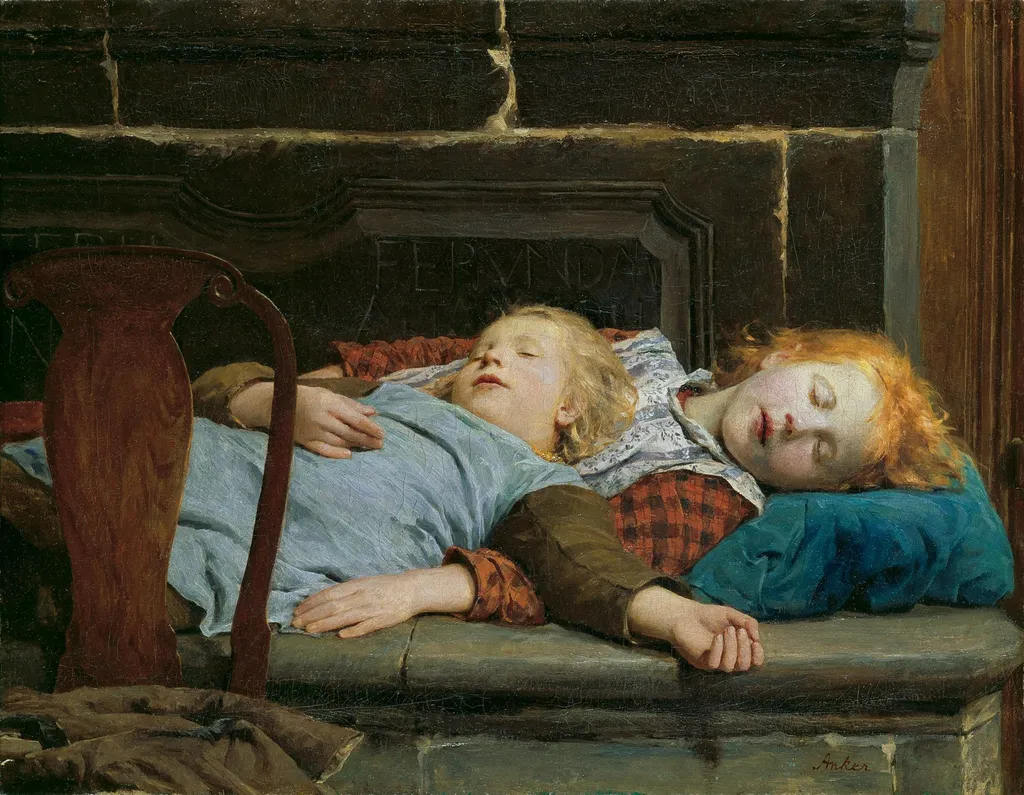
Two sleeping girls on the stove bench is an oil painting by the Impressionist artist Albert Anker. It dates from 1898 and is held in the collection of the Kunsthaus Zürich.
About this work
Overview
Albert Anker’s oil painting *Two sleeping girls on the stove bench* (1898) depicts a quiet domestic scene in a rural Swiss interior. The work measures a modest size and is held in the collection of the Kunsthaus Zürich. It presents a moment of repose, focusing on two young girls asleep on a stone bench beside a stove, rendered with subdued lighting.
Subject & Meaning
The composition centers on two children lying on their backs, each supported by a blue pillow. The girl on the left, with light hair, wears a pale blue dress, while the red‑haired girl on the right is dressed in a red and black checked garment. Their tranquil posture and the dim surroundings suggest a simple, intimate glimpse of everyday life, emphasizing rest and domestic comfort.
Technique & Style
Anker employs a restrained palette and chiaroscuro to model the figures against a darkened background, creating depth and a sense of volume. The brushwork reflects an Impressionist influence, softening details while capturing the subtle play of light on stone and fabric. The muted tones and careful handling of texture convey the quiet atmosphere of the interior.
History & Provenance
Painted toward the end of the 19th century, the work belongs to Anker’s broader series of genre scenes that document Swiss rural existence. After its creation, the painting entered the holdings of the Kunsthaus Zürich, where it remains on display as part of the museum’s representation of Swiss art from the period.
Own this work as a print
Artist & collection
Artist
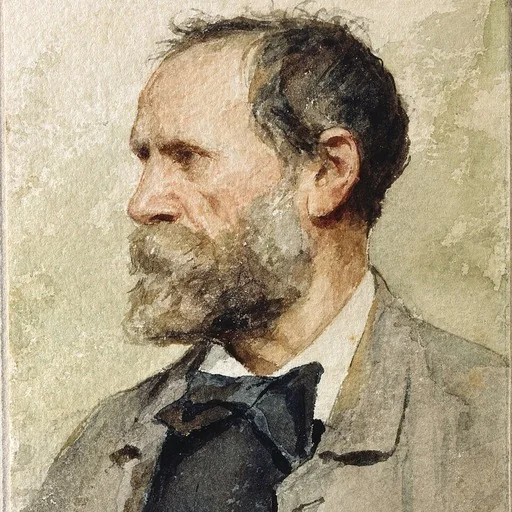
Albert Anker (1 April 1831 – 16 July 1910) was a Swiss painter and illustrator who has been called the "national painter" of Switzerland because of his enduringly popular depictions of 19th-century Swiss rural life.