Artwork
A Miller's Carriage
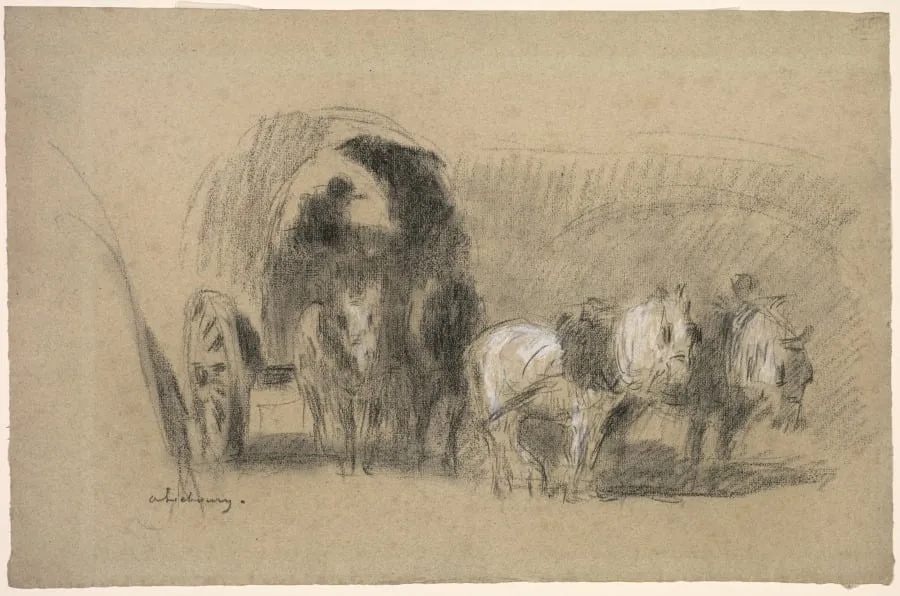
A Miller's Carriage is a drawing by the Impressionist artist Albert Lebourg. It dates from 1895 and is held in the collection of the Cleveland Museum of Art. This charcoal drawing by Albert Rouen captures a quiet moment in the provincial landscape of northern France.
About this work
Overview
The soft, smudged tonalities suggest early morning or overcast light, evoking the atmospheric conditions of Rouen’s riverside environs.
This charcoal drawing by Albert Rouen captures a quiet moment in the provincial landscape of northern France. Rendered in the medium he favored, the work portrays a heavy carriage drawn by four horses crossing a stone bridge. The soft, smudged tonalities suggest early morning or overcast light, evoking the atmospheric conditions of Rouen’s riverside environs. The absence of sharp detail reinforces a contemplative mood, typical of Rouen’s approach to everyday scenes.
Subject & Meaning
The scene likely depicts a working-class transport moment along the Seine, a vital artery for Rouen’s commerce and daily life. The carriage, pulled by horses, implies local labor and rural-urban exchange. No figures are prominent, emphasizing the quiet rhythm of routine rather than narrative drama. The composition suggests a personal, almost nostalgic observation—more a memory than a documentary record of the city’s activity.
Technique & Style
Rouen employed charcoal for its capacity to create subtle gradations and blurred edges, mimicking the misty air of the Seine valley. The medium’s smudgability allows forms to dissolve into atmosphere, particularly in the rendering of horse breath and water vapor. This approach echoes the optical softness of sfumato, though adapted to drawing rather than painting. The lack of outline and emphasis on tone unify the bridge, horses, and river into a single hazy plane.
History & Provenance
The drawing originates from Rouen’s own observations of his hometown, where he lived and worked during the late 19th and early 20th centuries. While specific provenance details are not widely documented, the work aligns with his broader practice of recording provincial life through intimate, unidealized sketches. It was likely created in his studio from on-site studies, consistent with the method of regional artists of the period.
Context
Rouen’s focus on local scenes reflected a broader trend among French artists who turned away from grand historical subjects toward the dignity of ordinary life. His drawings contributed to a regionalist current that valued authenticity over spectacle. The Seine, as both a physical and symbolic presence, anchored his visual language—linking industrial activity with natural quietude in a way that resonated with contemporaries like Corot and Daubigny.
Legacy
Though not widely exhibited outside regional collections, Rouen’s charcoal drawings remain significant for their quiet precision and emotional restraint. His use of charcoal to convey atmosphere influenced later generations of French draftsmen interested in tonal harmony over line. The work endures as a quiet testament to the overlooked rhythms of provincial France, preserved not through grandeur but through sensitivity to light and texture.
Artist & collection
Artist
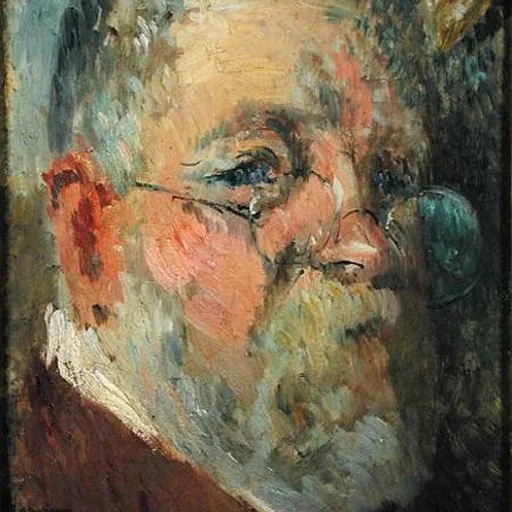
Albert Lebourg (1 February 1849, in Montfort-sur-Risle – 6 January 1928, in Rouen), birth name Albert-Marie Lebourg, also called Albert-Charles Lebourg and Charles Albert Lebourg, was a French Impressionist and…

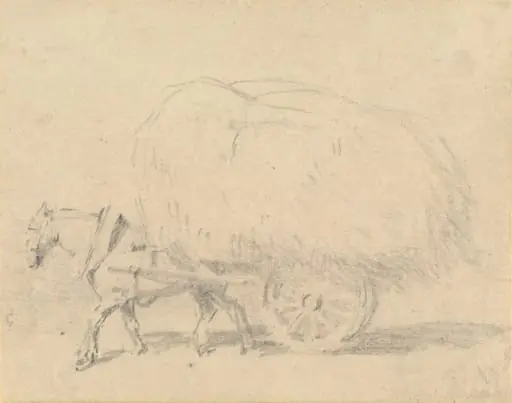 A Horse Pulling a Load of Hay
 Oxen and Dump Cart
 Rider in the Countryside
 Team of Oxen in Harness
 Two Draft Horses
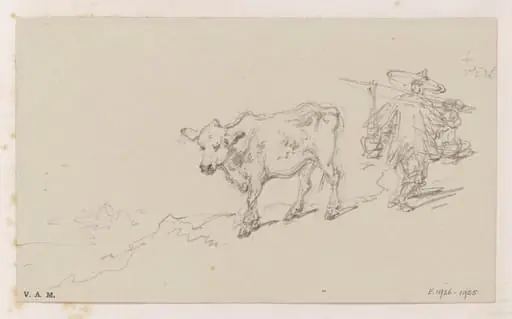 A Chinese porter and a cow
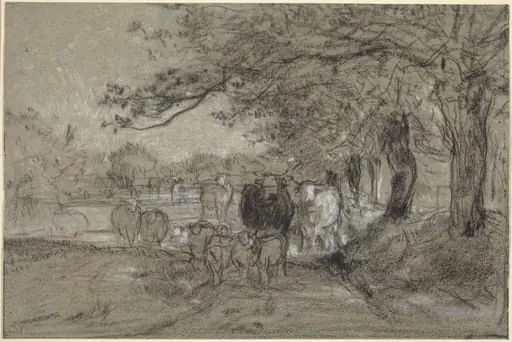 Cows and Sheep under Trees
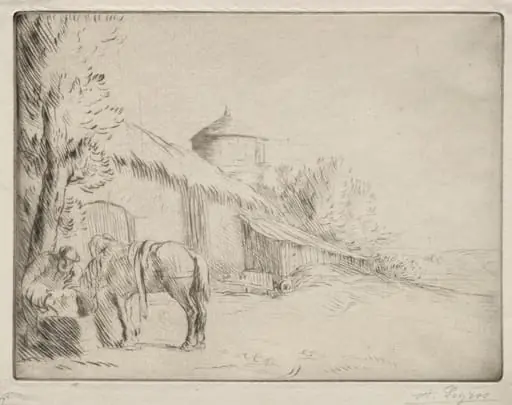 The Watering Place (2nd Plate)
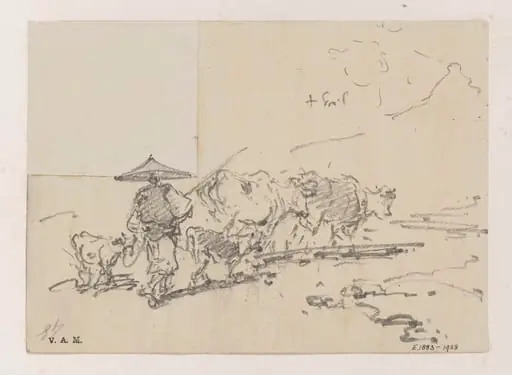 A Chinese cowherd driving cattle
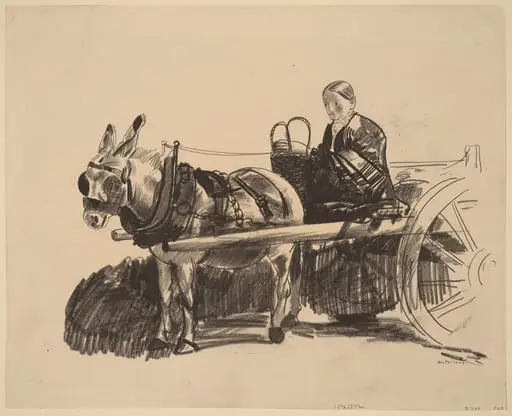 The Donkey Cart
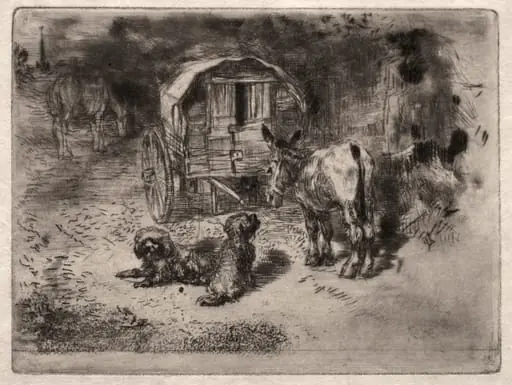 The Guardians of the House, or the Friends of the Saltimbanque
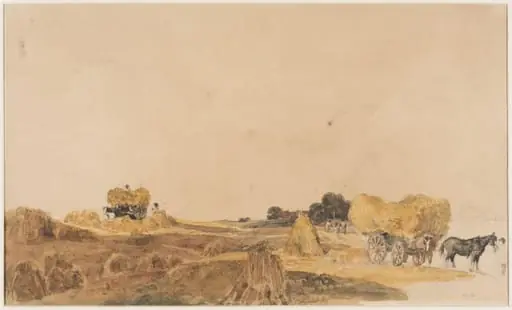 Cornfield with loaded wagons, near Lincoln