Artwork
Two Draft Horses
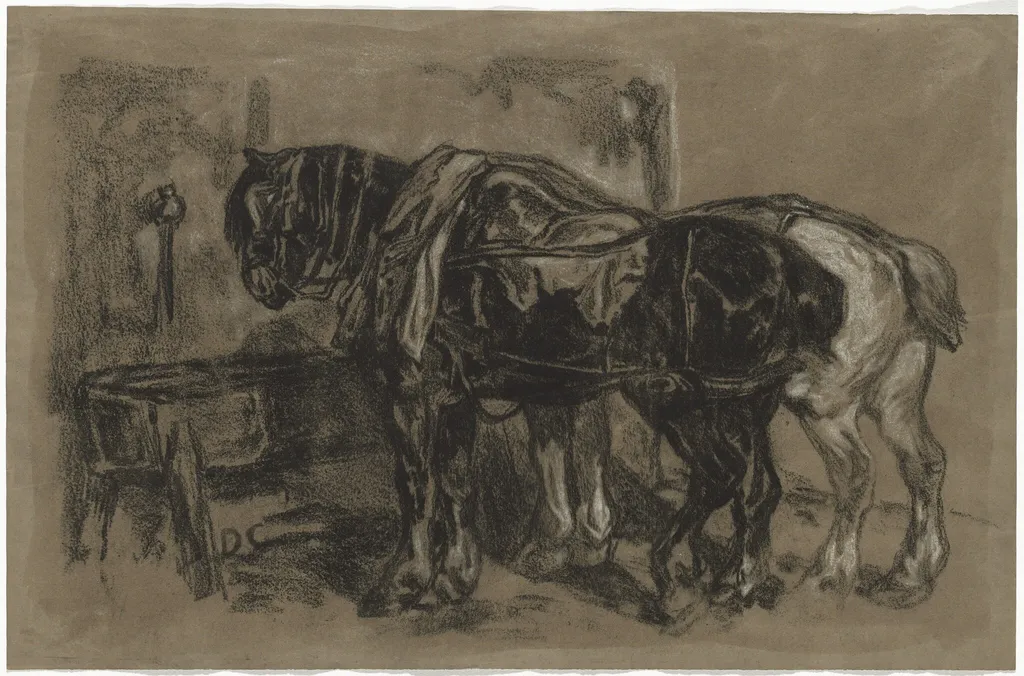
Two Draft Horses is a chalk drawing by the Romanticist artist Alexandre Gabriel Decamps. It dates from 1830 and is held in the collection of the National Gallery of Art.
About this work
Overview
Created in 1830 by Alexandre-Gabriel Decamps, this drawing depicts two draft horses in a quiet, resting posture. Executed in black and white chalk on gray-green wove paper, the work is a study in form and atmosphere rather than a finished composition. The medium’s tonal range allows for subtle contrasts, while the paper’s hue contributes to the somber, enclosed mood of the scene.
Subject & Meaning
The two horses, harnessed and heads lowered, suggest a moment of repose after labor. Their stillness conveys endurance rather than grandeur, reflecting an interest in the quiet dignity of working animals. Decamps avoids idealization; instead, he presents them as tangible, grounded beings, aligning with Romanticism’s focus on authentic, emotional observation over classical perfection.
Technique & Style
Decamps employed swift, fluid chalk strokes to suggest muscle, fur, and weight without detailed rendering. The contrast between dark and light chalk enhances volume, while the gray-green paper acts as a mid-tone ground, unifying the composition. Minimal background lines imply architectural space without distraction, directing attention to the animals’ physical presence and texture.
History & Provenance
The drawing originates from Decamps’s early period, when he traveled through rural France and the Low Countries, sketching animals and rural life. It likely served as preparatory material for larger works or as an independent study. Its survival suggests it was valued by the artist or his circle for its directness and observational power.
Context
In the 1830s, French artists increasingly turned to everyday subjects, moving away from historical or mythological themes. Decamps, influenced by Dutch and Flemish animal painters, contributed to this shift by elevating livestock as worthy subjects. His sketches like this one reflect a broader cultural interest in nature, labor, and the emotional resonance of the commonplace.
Legacy
This drawing exemplifies Decamps’s role in bridging academic tradition and emerging realist tendencies. His expressive handling of animals influenced later artists, including those of the Barbizon School, who sought truth in natural observation. Though not widely exhibited, such works remain key to understanding his contribution to 19th-century French drawing practices.
Own this work as a print
Artist & collection
Artist
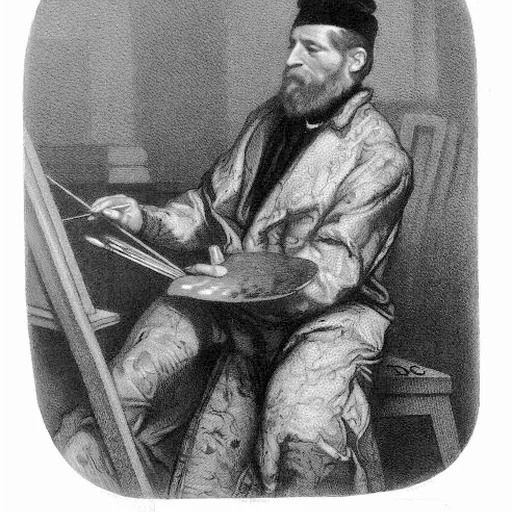
Alexandre-Gabriel Decamps was a French painter noted for his Orientalist works.

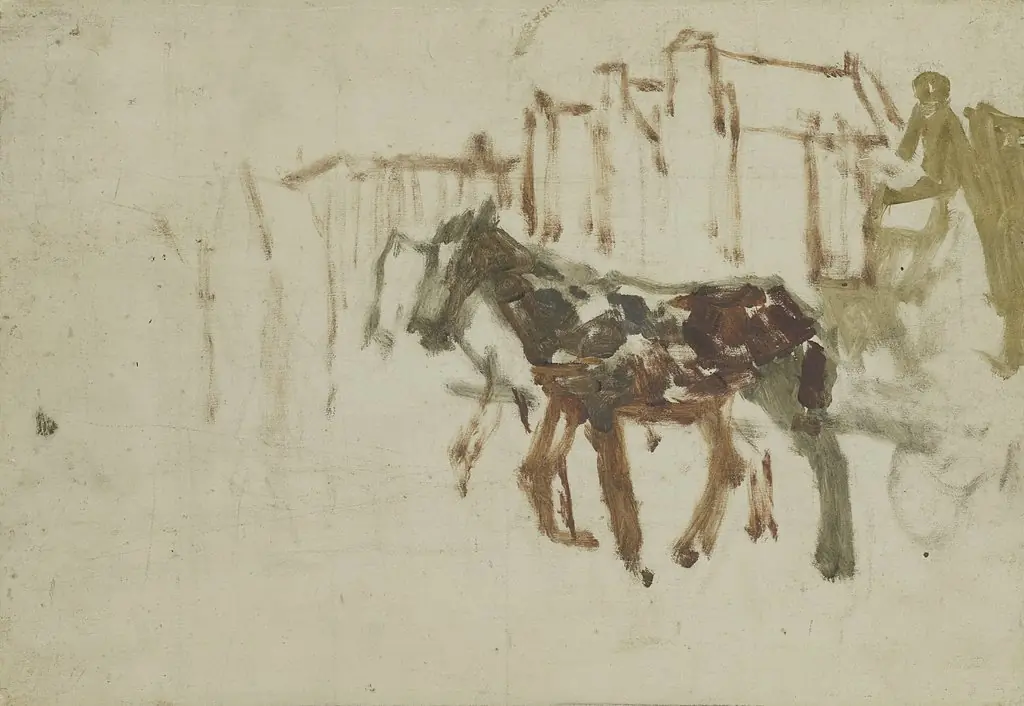 View of Rokin, Amsterdam
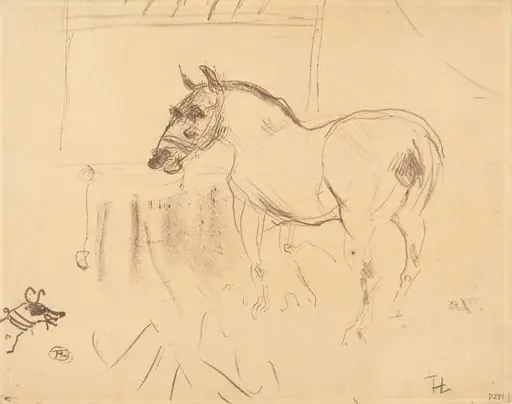 The Small Pony from Calmese (Le petit poney de Calmèse)
 The Guardians of the House, or the Friends of the Saltimbanque
 The Donkey Cart
 Reitpferd (Riding-Horse)
 Pony (Le poney)
 A Miller's Carriage
 The Smith's Yard
 A Donkey in the Field
 Interior of a Stable with Horses (Interno di stalla con cavalli)