Artwork
The Watering Place (2nd Plate)
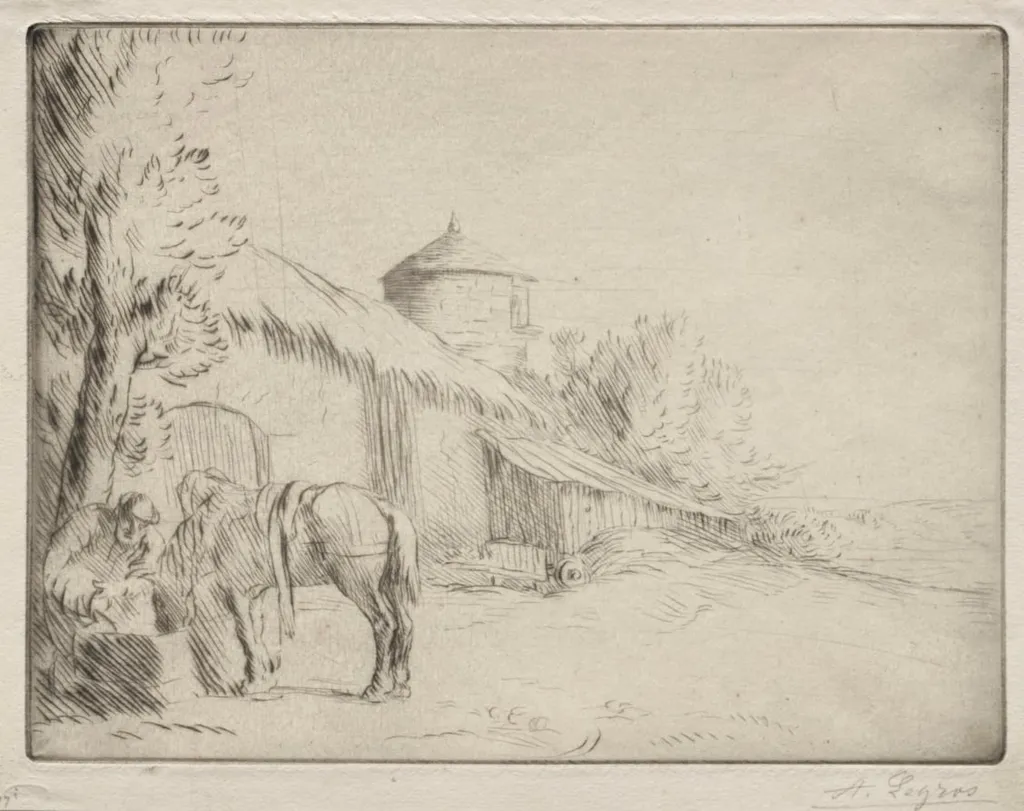
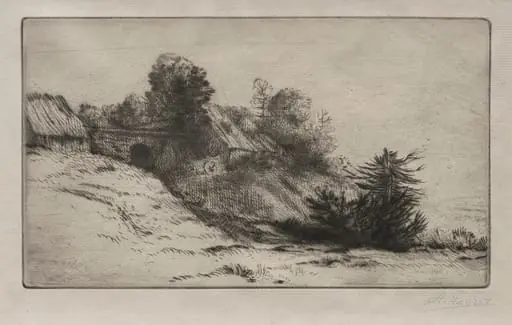
The Watering Place (2nd Plate) is a print by the Impressionist artist Alphonse Legros. It dates from 1884 and is held in the collection of the Cleveland Museum of Art.
About this work
Overview
Created in 1884 by Alphonse Legros, this print is the second plate in a series depicting rural scenes. It is part of the collection at The Cleveland Museum of Art. The work captures a quiet moment in the countryside, rendered with minimal detail and an emphasis on atmosphere rather than finish. Its sketch-like quality reflects Legros’s interest in transient, unposed moments of daily life.
Subject & Meaning
The scene portrays a horse drinking from a shallow pool, flanked by two sheep, with a modest thatched hut visible in the distance. No human figures are present, yet the presence of domestic animals and shelter suggests quiet human activity nearby. The composition avoids narrative drama, instead conveying the stillness and routine of rural existence through subtle observation.
Technique & Style
Legros employed loose, rapid linework and tonal shading to suggest form and light without precise definition. The ink lines are uneven and expressive, capturing the texture of fur, water, and foliage with economy. Darker areas define shadow and volume, while untouched paper implies brightness. The technique prioritizes immediacy and emotional tone over polished finish.
History & Provenance
It was likely made as part of a series exploring rural life, reflecting his interest in naturalistic subjects.
This print was produced in 1884 during Legros’s time in England, where he taught at the Slade School. It was likely made as part of a series exploring rural life, reflecting his interest in naturalistic subjects. The work entered The Cleveland Museum of Art’s collection through established acquisition channels, though specific provenance details prior to its museum ownership are not widely documented.
Context
Legros worked within the Realist tradition, rejecting romanticized depictions of the countryside in favor of unembellished observation. His prints and drawings aligned with broader 19th-century movements that valued authenticity over idealization. This piece reflects a shift in artistic focus toward everyday rural labor and quiet environments, paralleling literary and social trends of the era.
Legacy
Legros’s approach influenced students at the Slade School and contributed to the acceptance of sketch-like forms in printmaking. His emphasis on mood over detail helped broaden the definition of finished works in the medium. While not widely exhibited today, this print remains a quiet example of how modest subjects could carry artistic weight through restrained execution.
Artist & collection

Artist
Alphonse Legros (French pronunciation: ; 8 May 1837 – 8 December 1911) was a French, later British, painter, etcher, sculptor, and medallist.

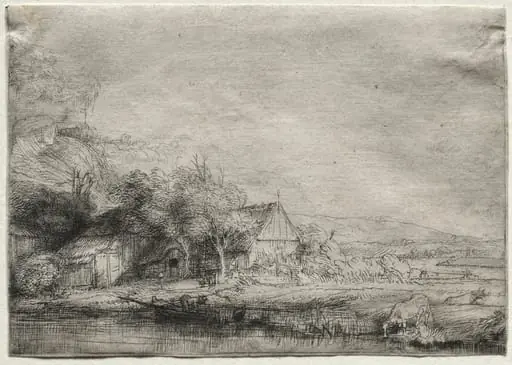 Landscape with a Cow
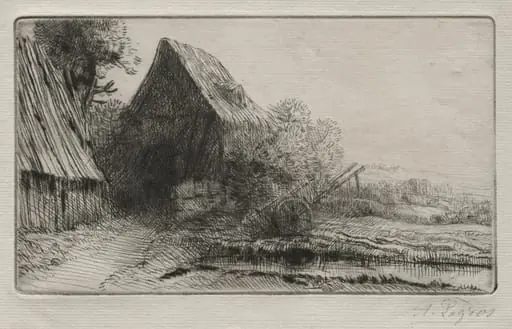 Le Maison du charron
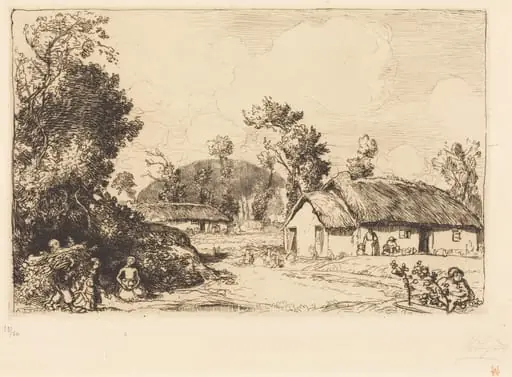 Pastime of Rest, Vendee (Le jeu du reposoir, Vendee)
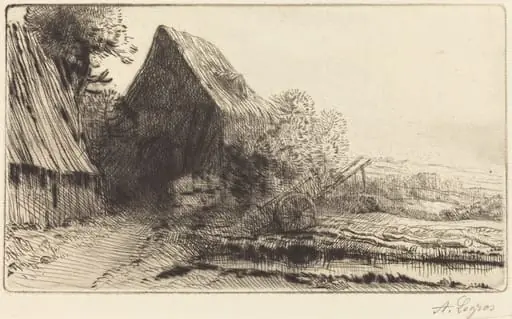 Wheelwright's Home (La maison du charron)
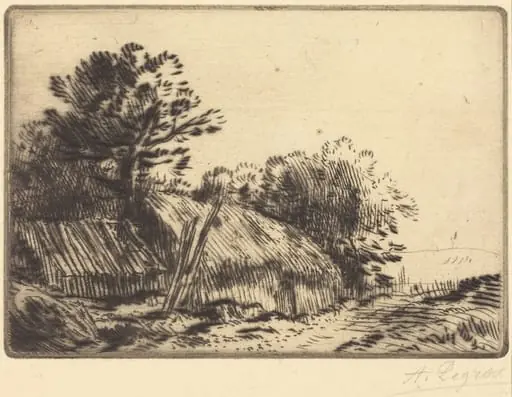 Rustic Scene (Scene rustique)
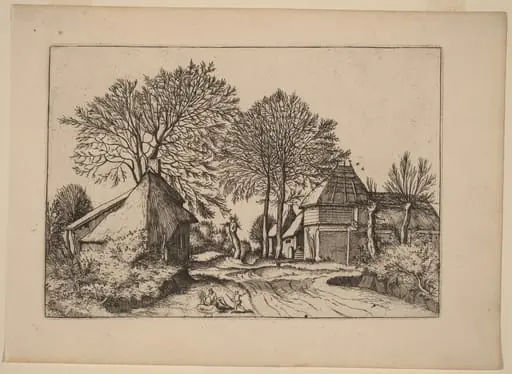 Road with Barn and Cottages
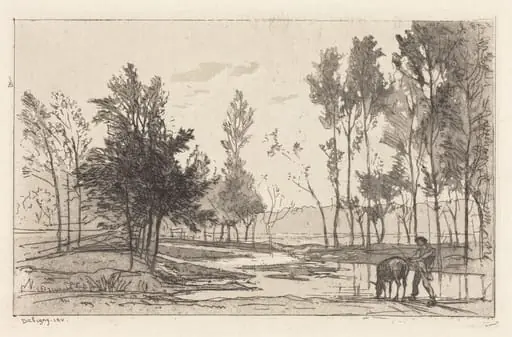 Donkey at a Watering Place (L'Ane a l'abreuvoir)
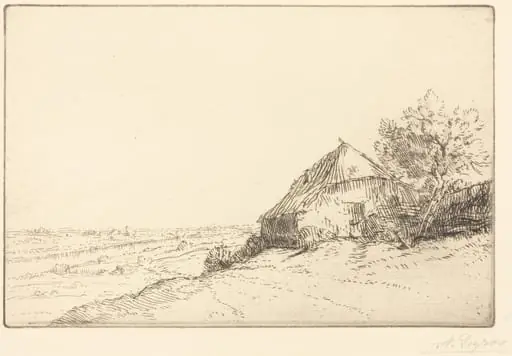 Hovel on a Hillside (Masure sur la colline)
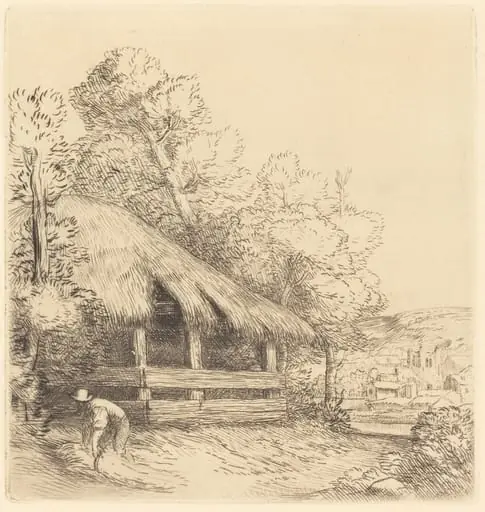 Little Shelter (Le petit hangar)
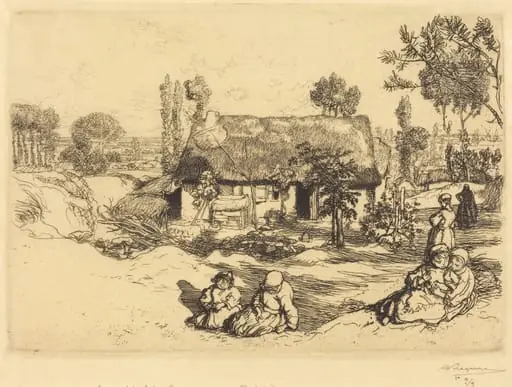 Shelter for the Poor, Vendee (Le nid de pauvres, Vendee)
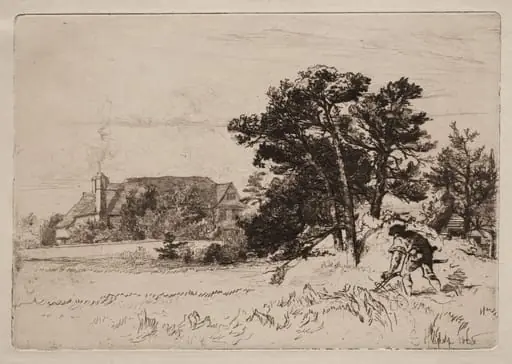 Old Willesley House
 La ferme de Bienheureux (2nd Plate)