Artwork
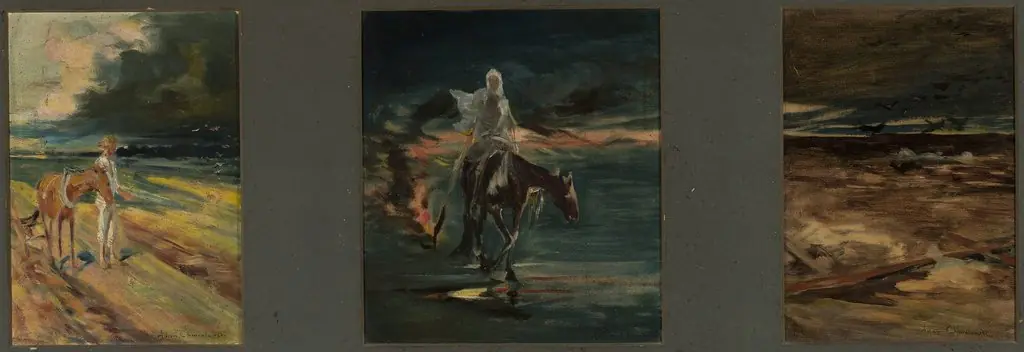
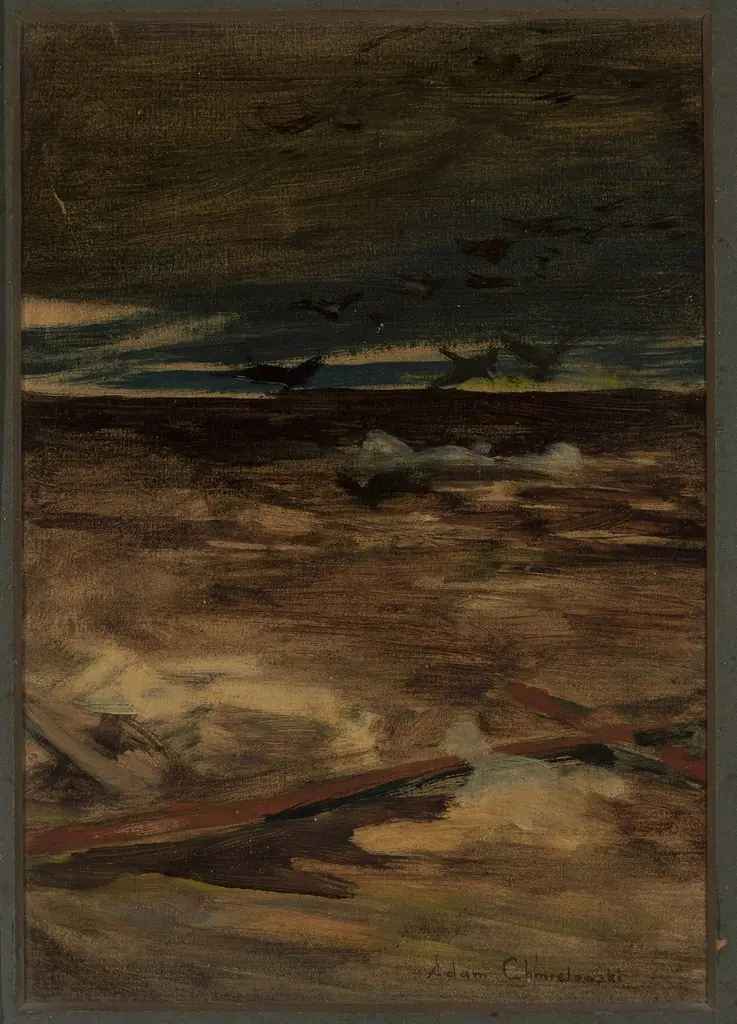
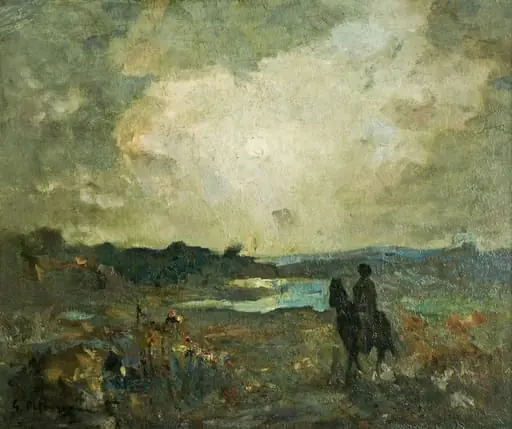
Black clouds, section of the triptych “Disaster”, sketch
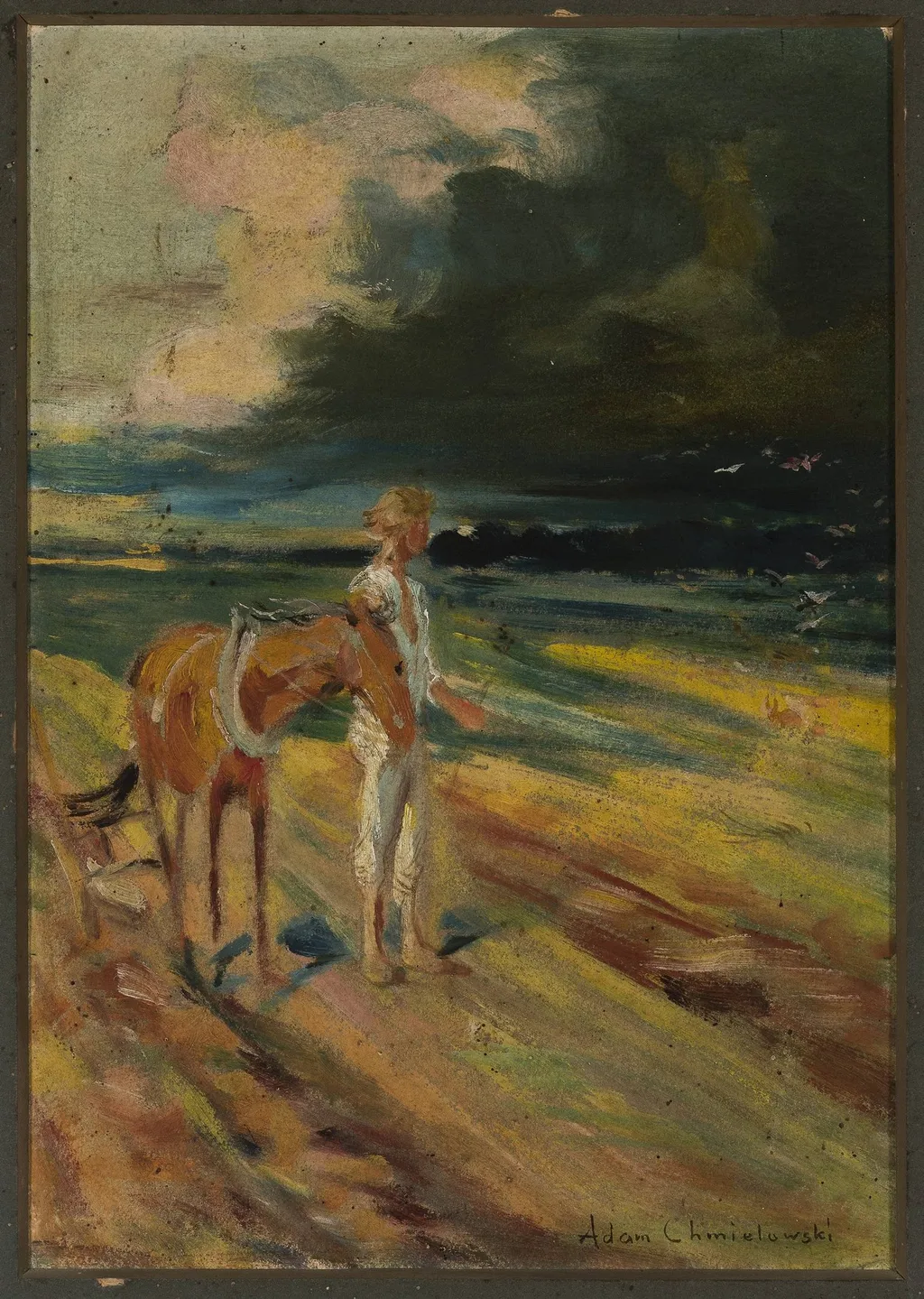
Black clouds, section of the triptych “Disaster”, sketch is an oil painting by the Realist artist Albert Chmielowski. It dates from 1870 and is held in the collection of the National Museum in Warsaw.
About this work
Overview
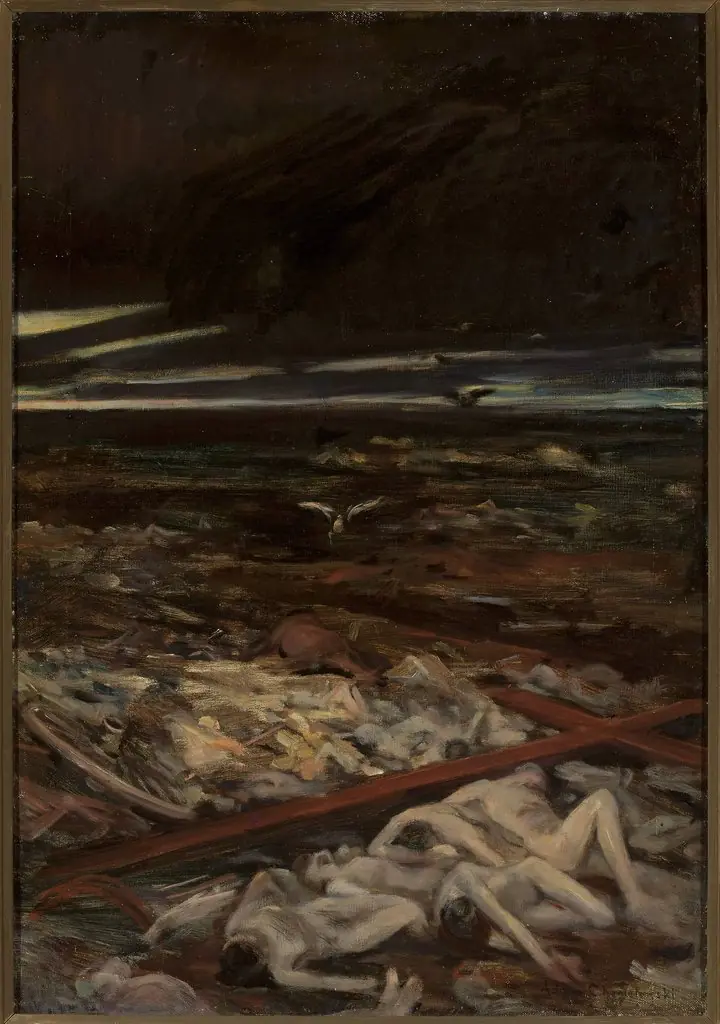
Painted in 1870 by Albert Chmielowski, this oil sketch forms part of a triptych titled 'Disaster.' Though labeled a sketch, it exhibits refined execution and deliberate composition. It resides in the National Museum in Warsaw, where it is recognized as a transitional work reflecting the artist’s early engagement with landscape and emotional atmosphere before his later religious focus.
Subject & Meaning
The scene suggests isolation or quiet anticipation, aligning with the triptych’s broader theme of impending calamity, rendered with restraint rather than drama.
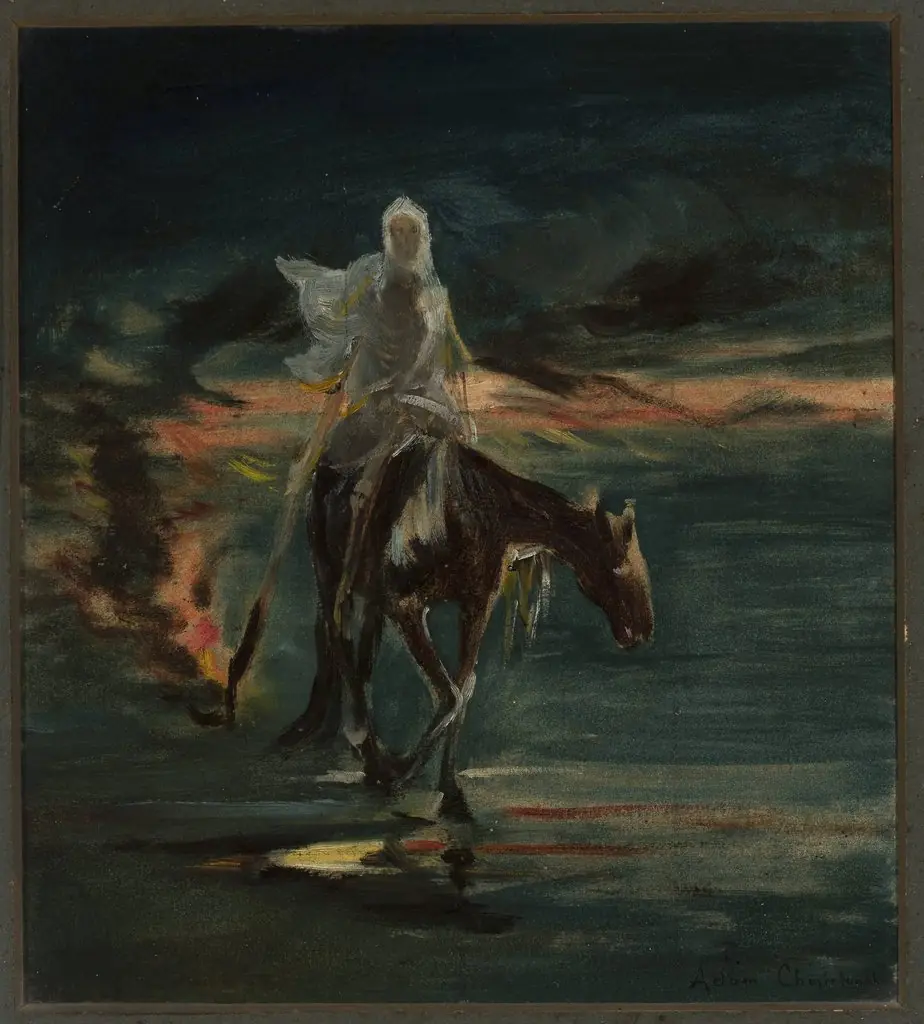
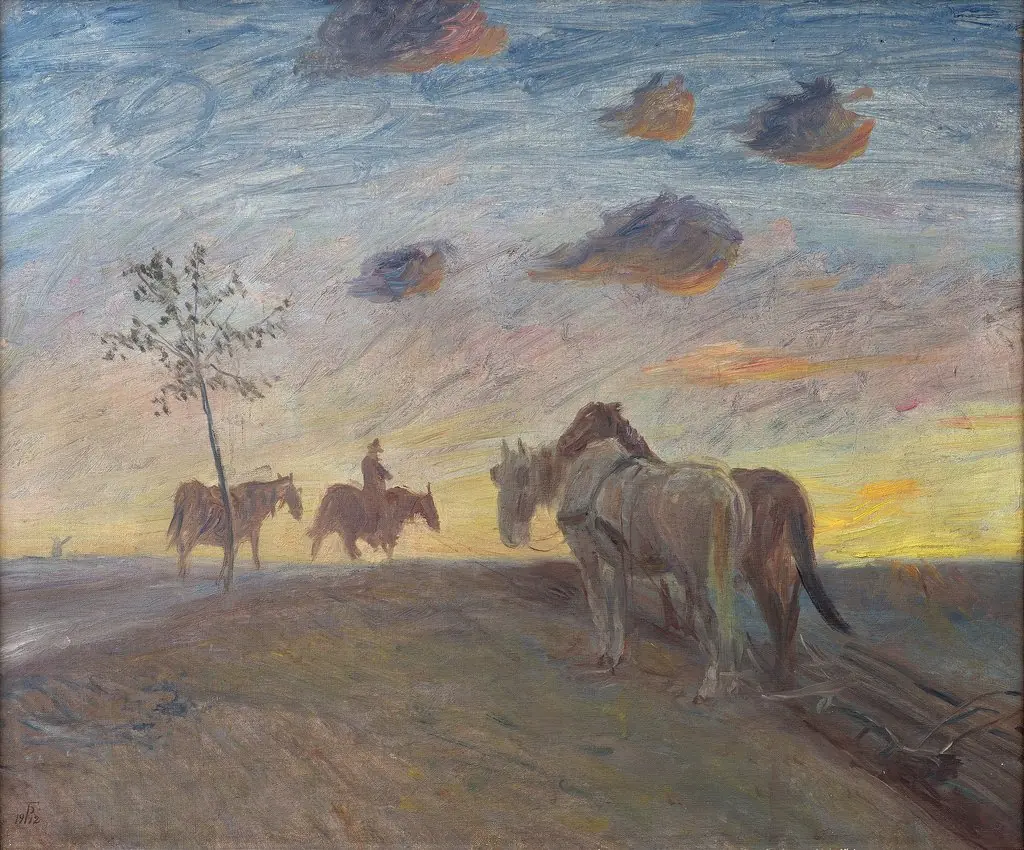
A solitary figure in white clothing stands on a shoreline, back turned, beside a motionless horse. Both face the sea, their stillness contrasting with the turbulent sky above. The absence of facial expression and direct narrative invites contemplation rather than storytelling. The scene suggests isolation or quiet anticipation, aligning with the triptych’s broader theme of impending calamity, rendered with restraint rather than drama.
Technique & Style
Chmielowski employs a muted palette of grays and blues, emphasizing atmospheric tension over vivid contrast. Brushwork is deliberate yet visible, building texture in the clouds and water without overrefinement. The realism is subdued, prioritizing mood through tonal harmony and careful rendering of light reflection on wet sand and sea. The composition’s simplicity enhances its emotional gravity.
History & Provenance
Created during Chmielowski’s formative years as an artist, this piece was retained within his personal collection before entering the National Museum in Warsaw’s holdings. Its inclusion in the 'Disaster' triptych suggests it was intended as a preparatory study, though its completeness indicates it may have been displayed independently. Documentation confirms its presence in the museum’s collection since the late 19th century.
Context
Painted shortly after Chmielowski’s return from Paris, the work reflects his exposure to French realism and Barbizon landscape traditions. While Poland was under partition, artists often turned to nature as a space for quiet resistance or introspection. This piece, devoid of political symbols, embodies a personal response to turmoil—both internal and national—through elemental imagery.
Legacy
Though less known than his later religious works, this sketch reveals Chmielowski’s early mastery of emotional tone through landscape. It influenced subsequent Polish painters seeking to convey psychological depth without narrative explicitness. Its preservation in a major national collection underscores its role as a bridge between academic training and the introspective realism that defined his mature style.
Artist & collection
Artist
A Polish painter of the late 1800s, Albert Chmielowski made dark, earth-toned oils that balanced quiet mood with sharp realism.