Artwork
Woman with Hands behind Her Back
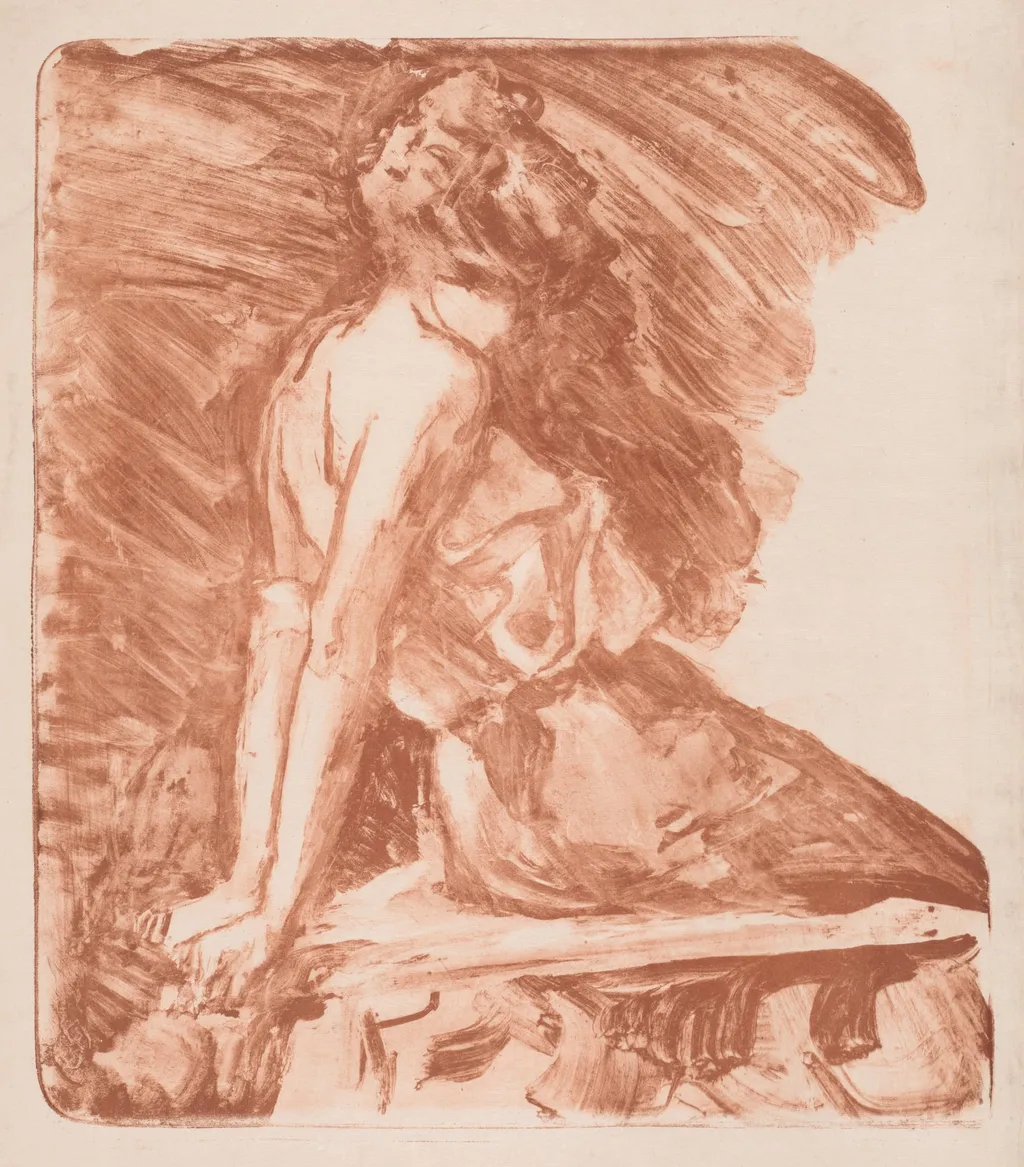
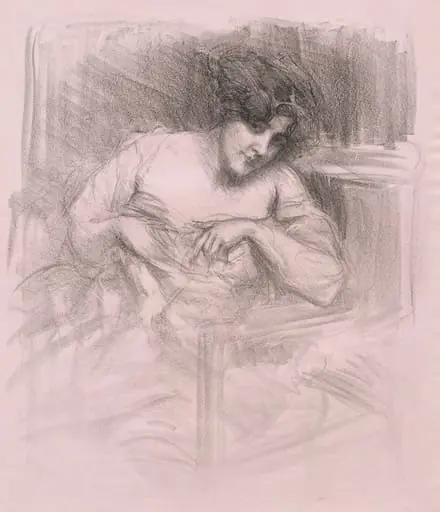
Woman with Hands behind Her Back is a print by Albert de Belleroche. It dates from 1913 and is held in the collection of the Cleveland Museum of Art.
About this work
The painting is a beautiful example of the artist's skill in capturing the subtleties of human emotion and expression.
The painting depicts a woman with her hands behind her back, her body turned slightly to the right. She is shown from the waist up, with her face tilted upwards and her eyes closed. The woman's body is rendered in a soft, gentle light, with subtle shading that suggests a sense of volume and depth.
The woman's pose is relaxed and introspective, with her arms wrapped around her back and her hands clasped together. Her face is serene and calm, with a subtle hint of a smile playing on her lips. The overall effect is one of quiet contemplation and introspection.
The painting is a beautiful example of the artist's skill in capturing the subtleties of human emotion and expression. To learn more about the artist's work, check out Albert de Belleroche (British, 1864–1944).
Overview
Albert de Belleroche, a Welsh-born artist active in Paris and London, produced this lithograph in 1913 as part of his later graphic work. Though trained as a painter, he gained recognition for his refined lithographic technique. The piece is held in the Cleveland Museum of Art’s collection, reflecting its significance within his oeuvre. De Belleroche received the Chevalier de l’Ordre de Léopold in 1933, acknowledging his contributions to printmaking.
Subject & Meaning
The portrait presents a woman in a quiet, inward-focused posture, her hands clasped behind her back and eyes gently closed. Her slightly upturned face and faintly curved lips suggest a moment of private reflection rather than outward expression. The absence of context or narrative detail invites contemplation of inner states, aligning with early 20th-century interests in psychological subtlety over dramatic storytelling.
Technique & Style
De Belleroche employed lithography to achieve soft tonal transitions and delicate modeling of form. The figure is rendered with minimal line, relying on graded shading to suggest volume and the gentle fall of light across the body. His approach merges the precision of graphic art with the atmospheric qualities of painting, resulting in a restrained yet emotionally resonant image.
History & Provenance
Created in 1913, the work entered the Cleveland Museum of Art’s collection at an unspecified date, likely through acquisition or donation in the mid-20th century. De Belleroche’s prints were circulated in European art circles, and this piece reflects his international presence. No documented exhibition history prior to its museum acquisition is publicly recorded.
Context
In the early 1910s, European artists increasingly turned to intimate, psychologically nuanced subjects, moving away from overt symbolism. De Belleroche’s lithographs aligned with this trend, sharing affinities with the quiet introspection found in the work of contemporaries like James McNeill Whistler and Edvard Munch. His focus on solitary figures resonated with broader cultural shifts toward interiority.
Legacy
Though not widely known today, de Belleroche’s prints are recognized for their technical finesse and emotional restraint. 'Woman with Hands behind Her Back' exemplifies his mature style and remains a representative work in institutional collections. It contributes to the understanding of early 20th-century printmaking as a medium for subtle psychological portraiture.
Artist & collection
Artist
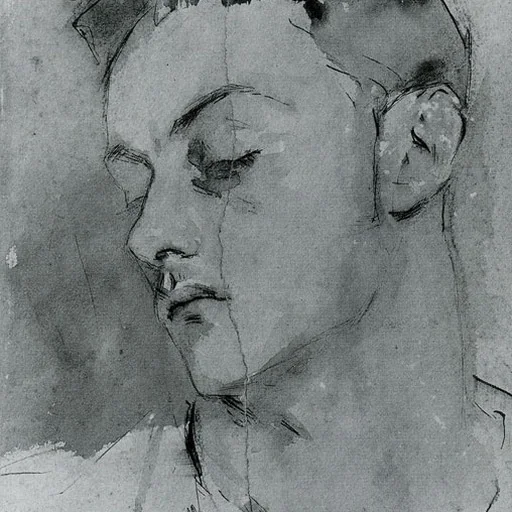
Count Albert Gustavus de Belleroche (22 October 1864 – 14 July 1944), also known as Albert Belleroche, was a Welsh painter and lithographer, who lived most of his childhood and his adulthood in Paris and England.

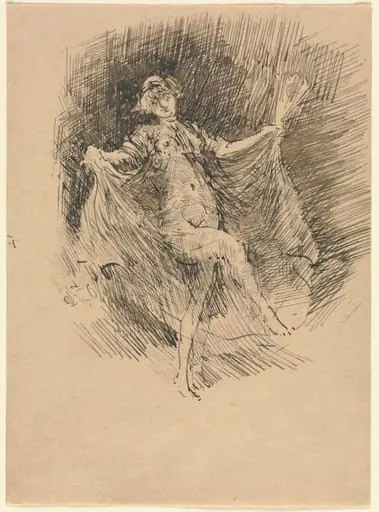 The Dancer, No. 1
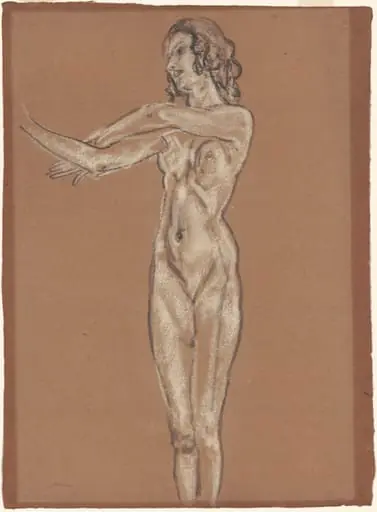 Female Nude
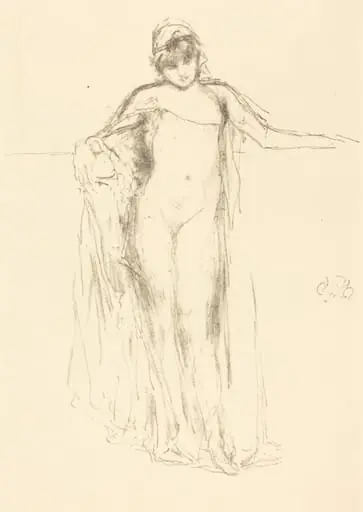 Draped Model, Standing
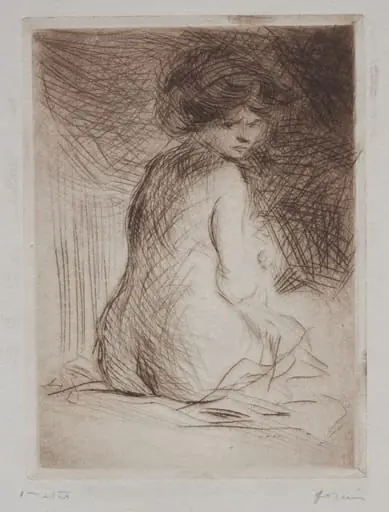 Seated Nude Woman from the Back
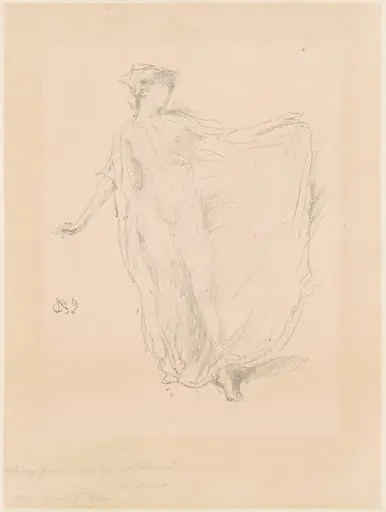 The Dancing Girl
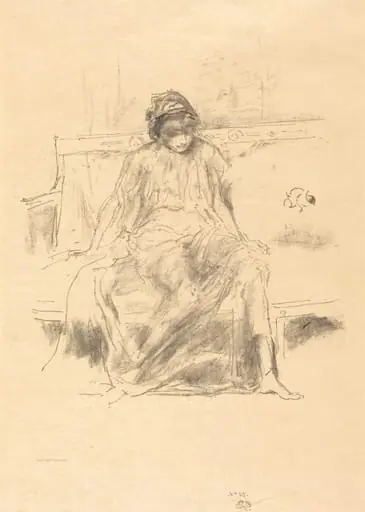 The Draped Figure, Seated
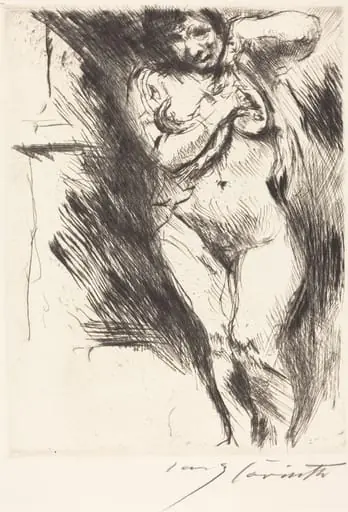 Akt mit hochgehobenem Hemd (Woman Undressing)
 Cameo, No.I
 Study for "Stars and Dews and Dreams of Night"
 Anna Held
 Etude
Etude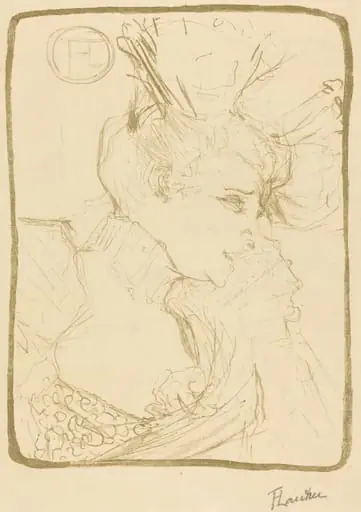 Bust of Mademoiselle Marcelle Lender (Mademoiselle Marcelle Lender, en buste)