Artwork
Gade i Stege
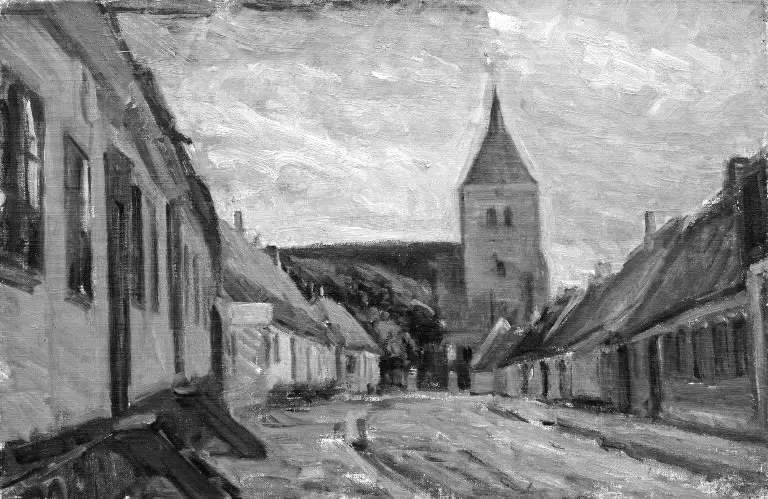
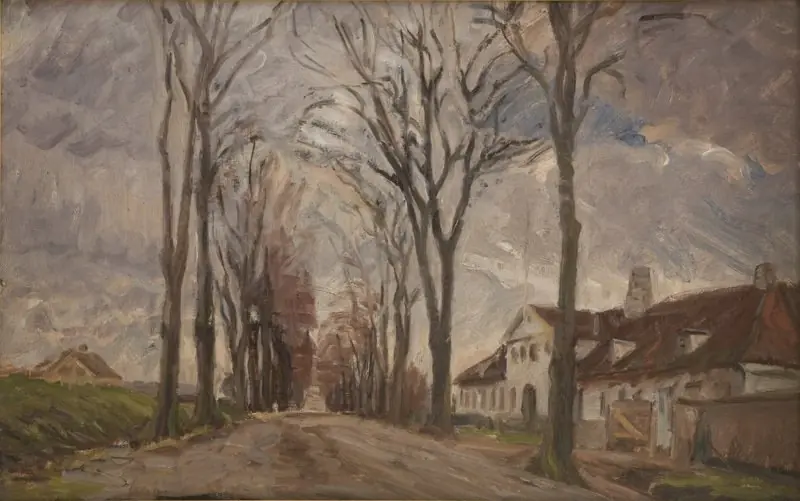
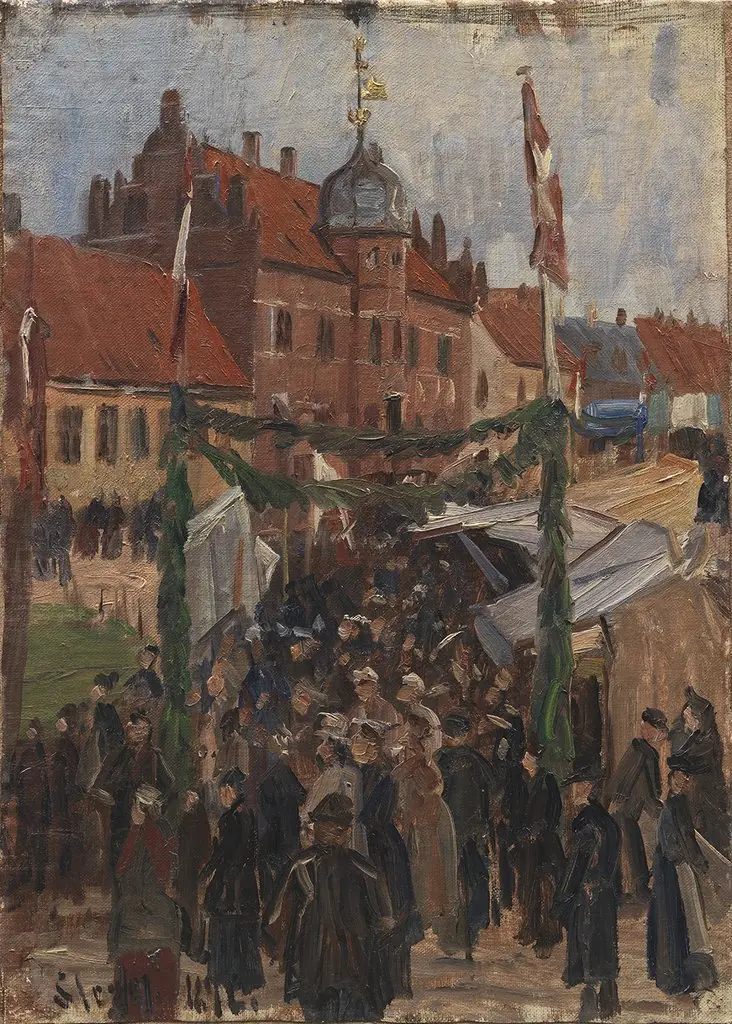
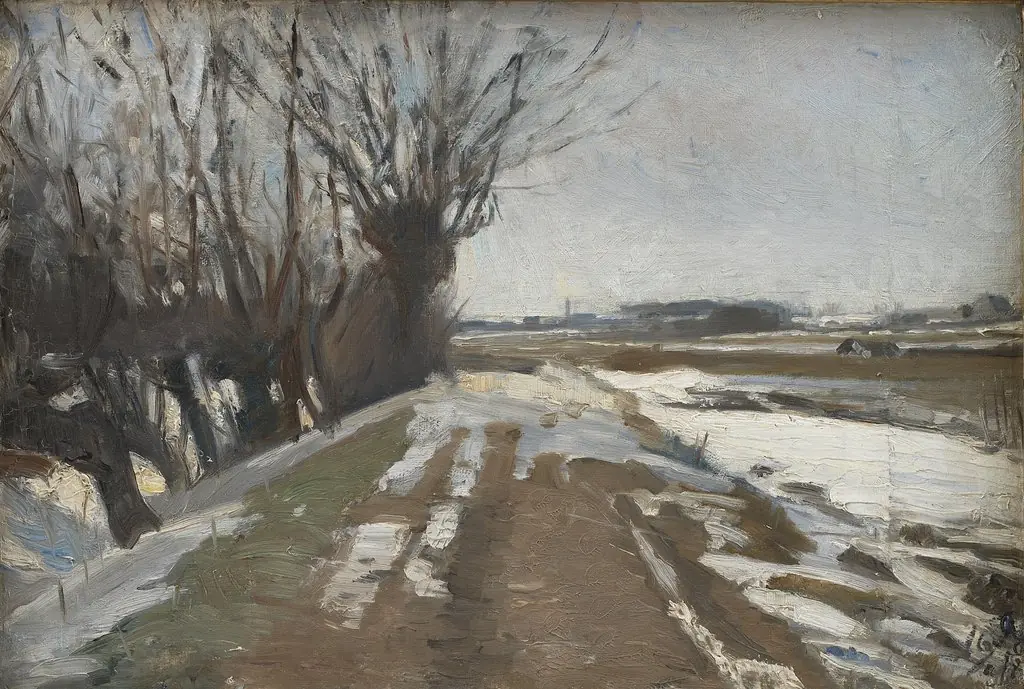
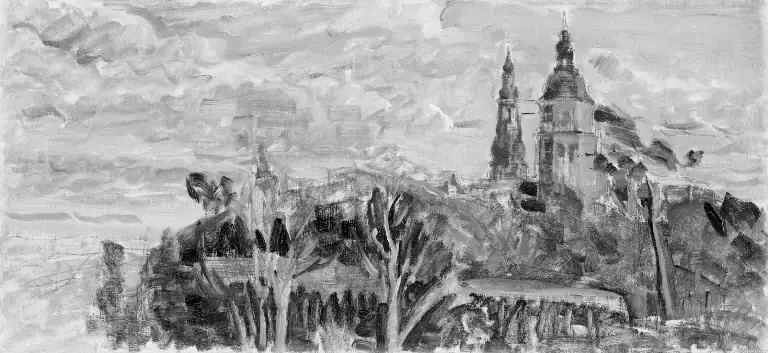
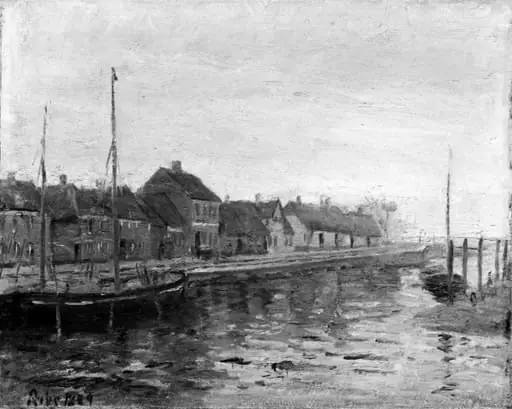
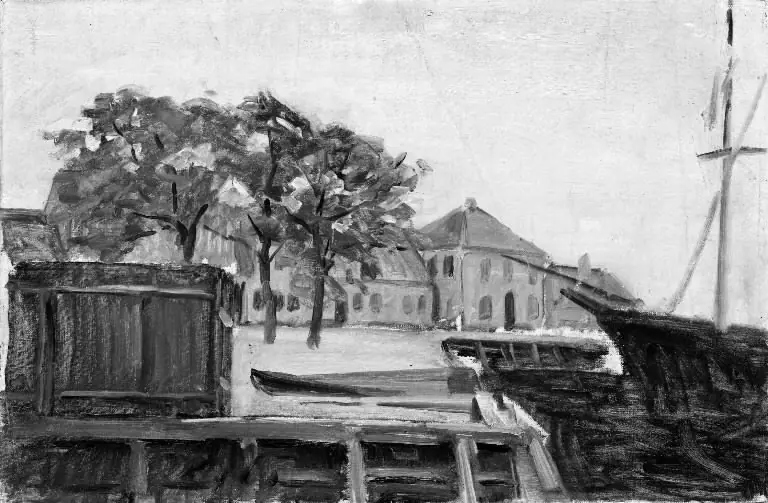
Gade i Stege is an oil painting by the Post-Impressionist artist Albert Gottschalk. It dates from 1903 and is held in the collection of the Statens Museum for Kunst.
About this work
Overview
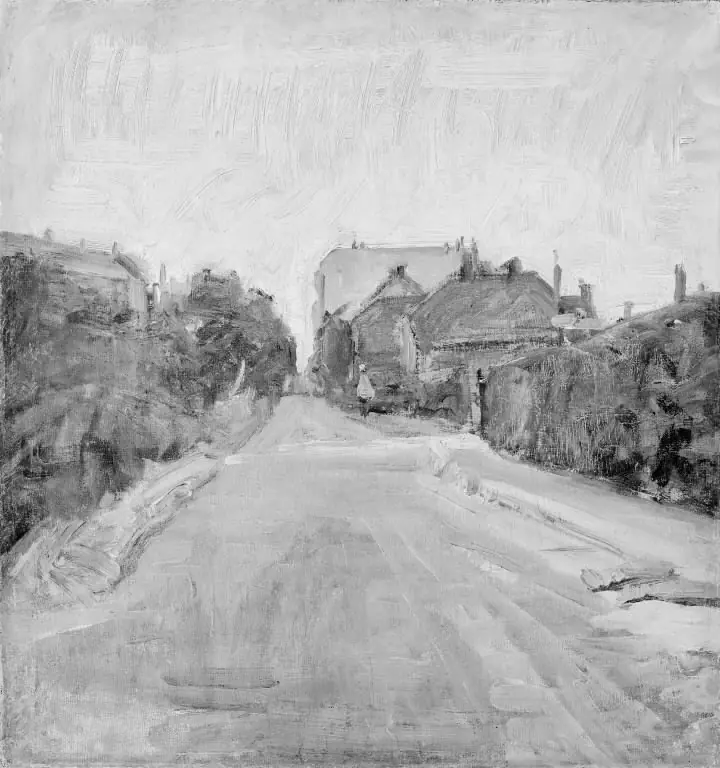
Albert Gottschalk’s 1903 oil painting *Gade i Stege* portrays a quiet street in the Danish town of Stege. A modest row of houses flanks the road, while a church with a prominent steeple rises in the distance. The sky is rendered in muted, cloudy grey, giving the scene a calm, atmospheric quality.
Subject & Meaning
The composition captures everyday life in a small coastal community, emphasizing the relationship between architecture and the surrounding landscape. By centering the church, Gottschalk highlights the town’s spiritual focal point, while the tranquil street suggests a sense of routine and peaceful coexistence among the residents.
Technique & Style
Executed in oil, the work employs layered brushwork that creates subtle depth and texture, especially in the rendering of the sky and building facades. Though not overtly dramatic, the handling of light and shadow reflects post‑impressionist concerns with atmosphere and tonal modulation, lending the scene a gentle volumetric presence.
History & Provenance
*Gade i Stege* entered the collection of Statens Museum for Kunst, Denmark’s national gallery, where it remains on display. The painting was produced during Gottschalk’s mature period, a time when he maintained close artistic relationships with contemporary poets such as Johannes Jørgensen, Viggo Stuckenberg, and Sophus Claussen.
Artist & collection
Artist
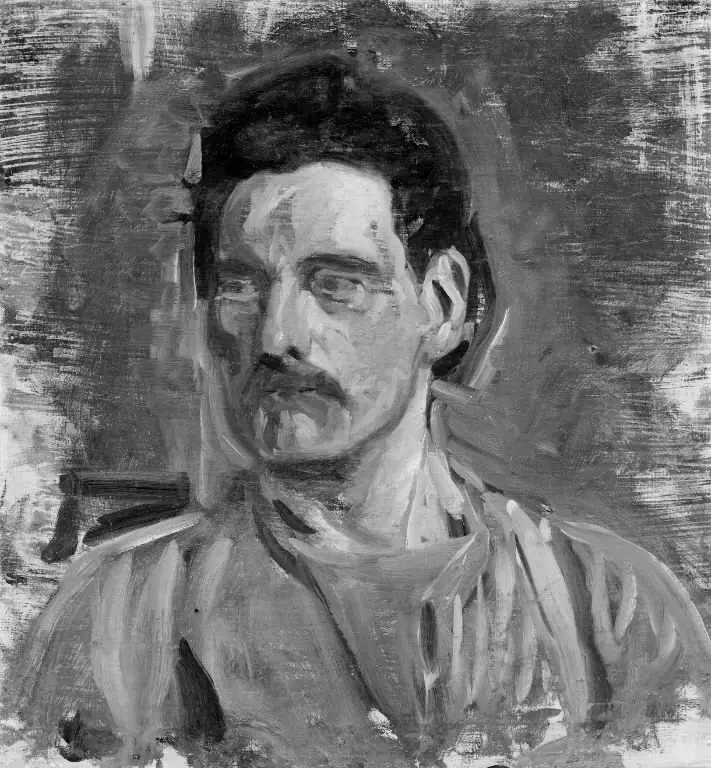
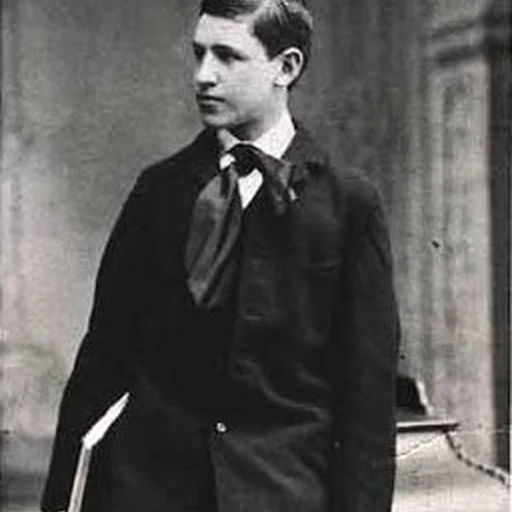
Albert Gottschalk (3 July 1866 – 13 February 1906) was a Danish painter. He had a close connection, personally and artistically, to the poets Johannes Jørgensen, Viggo Stuckenberg and Sophus Claussen.