Artwork
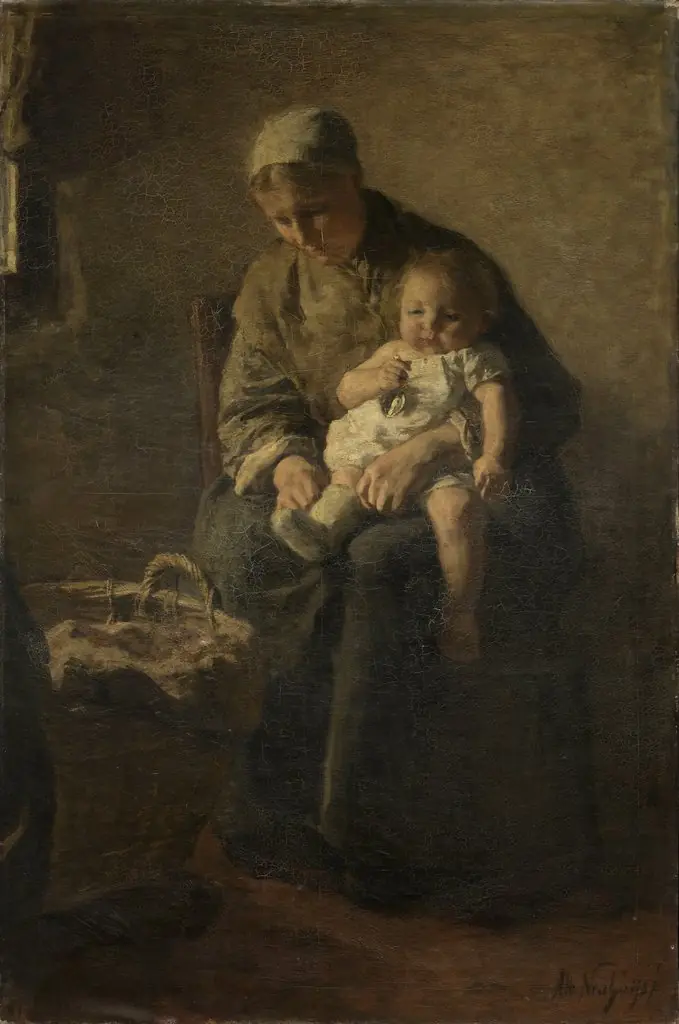
'Bij de wieg'
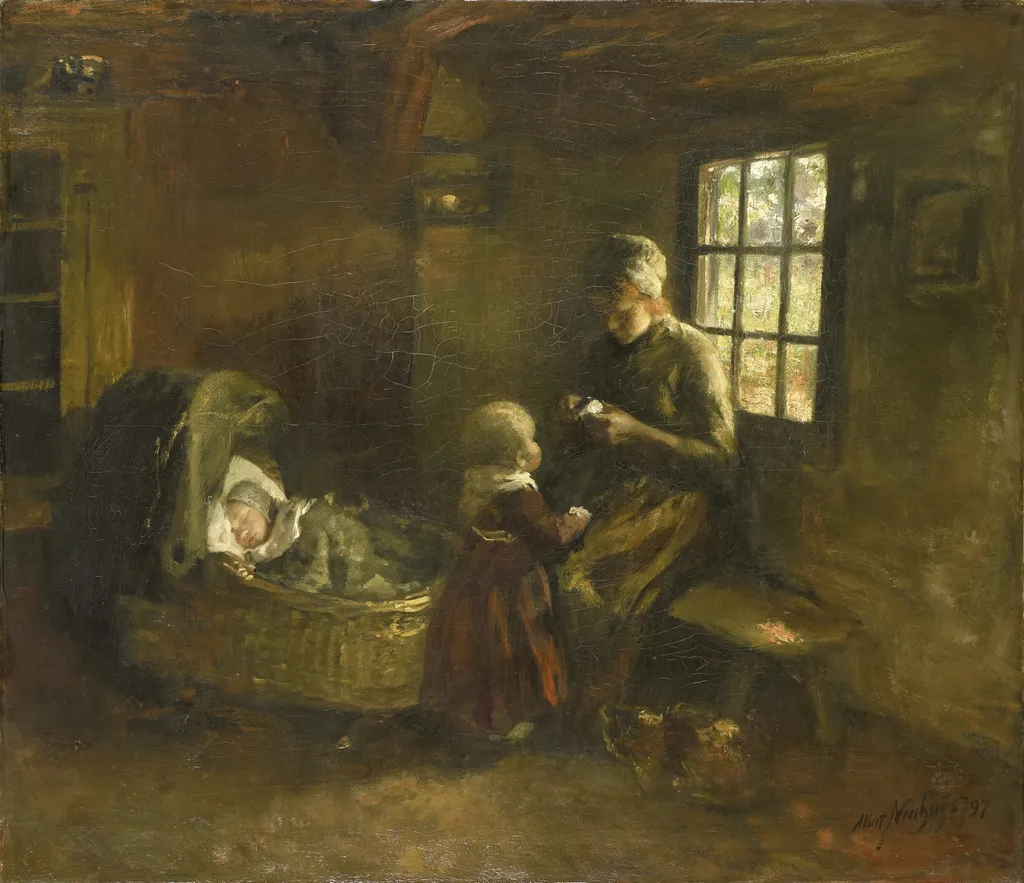
'Bij de wieg' is an oil painting by the Impressionist artist Albert Neuhuys. It dates from 1899 and is held in the collection of the Rijksmuseum.
About this work
Overview
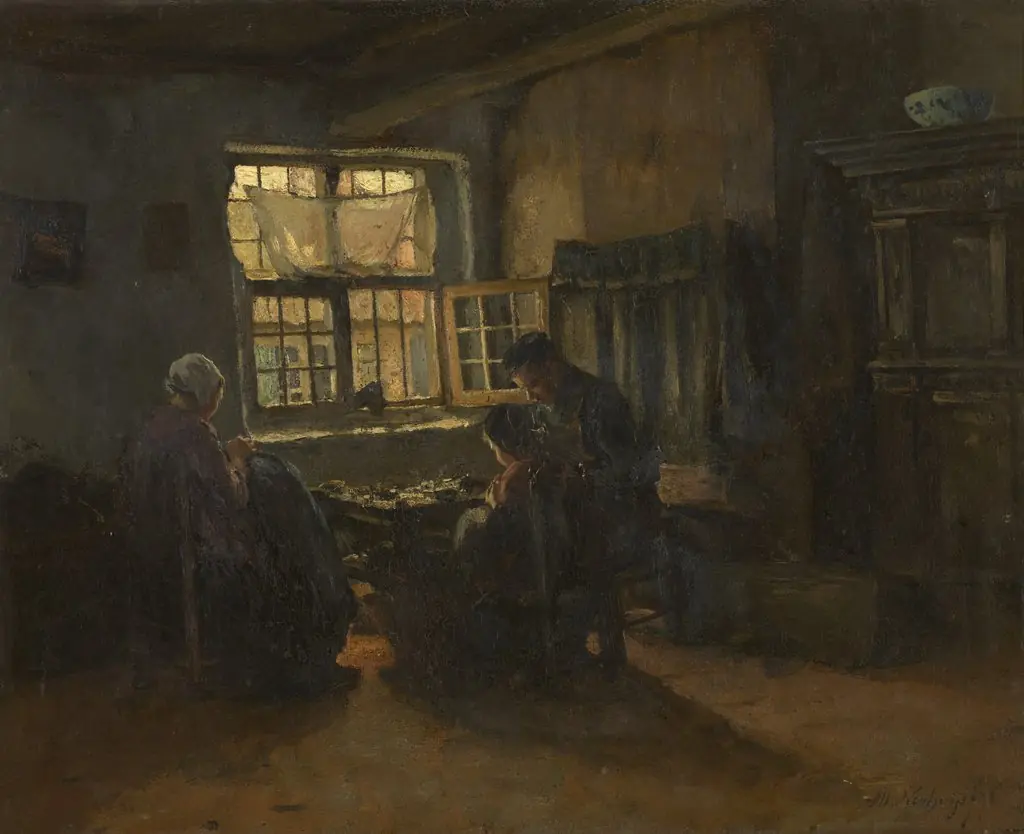
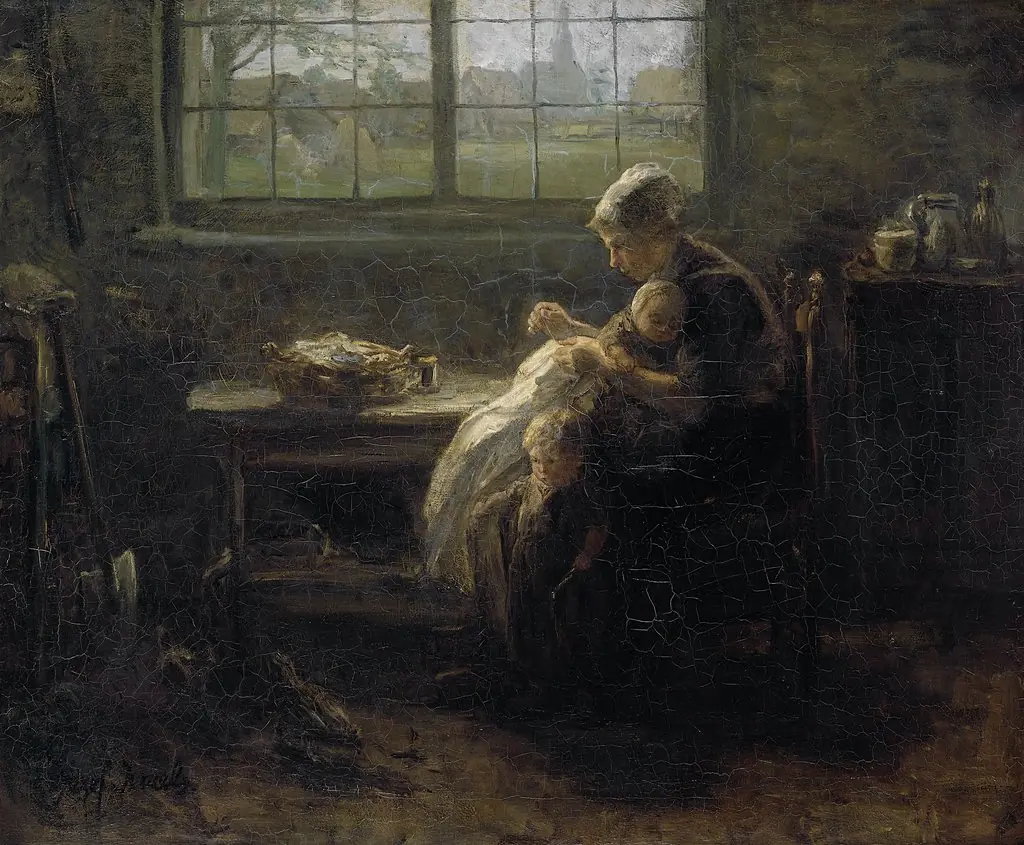
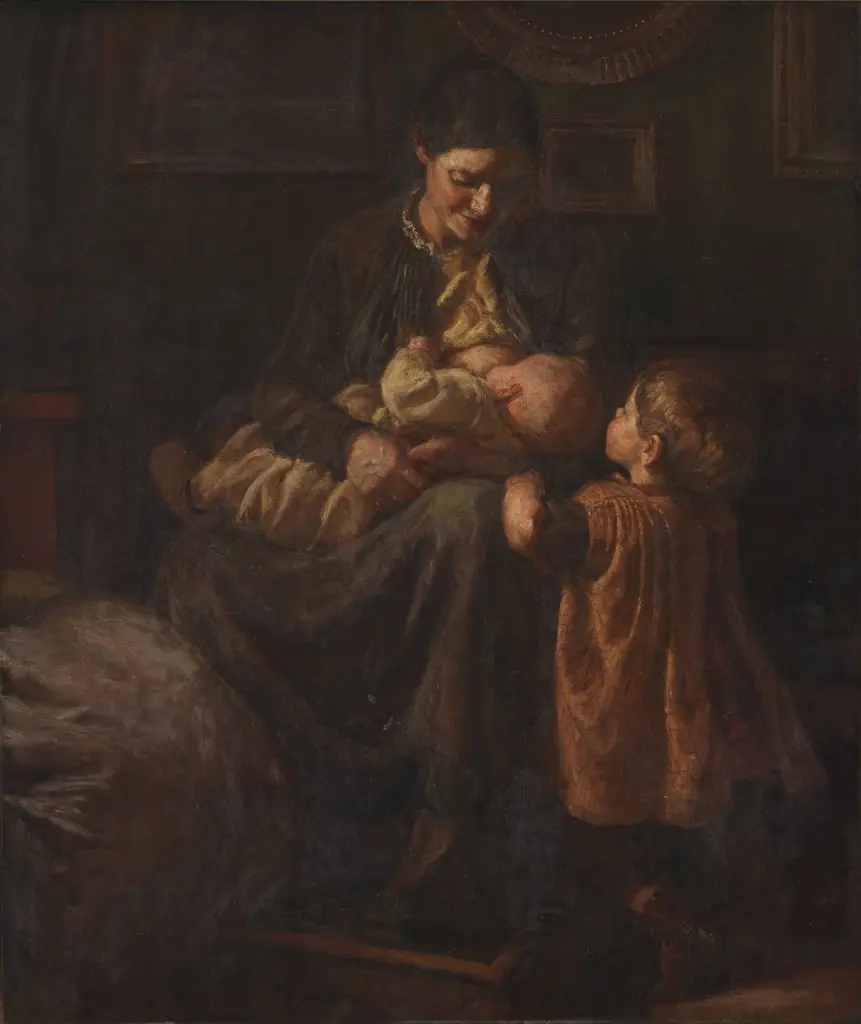
Bij de wieg is an oil painting created in 1899 by Albert Neuhuys, a key figure associated with both the Laren School and the Hague School. The work captures a quiet, intimate domestic scene.
Subject & Meaning
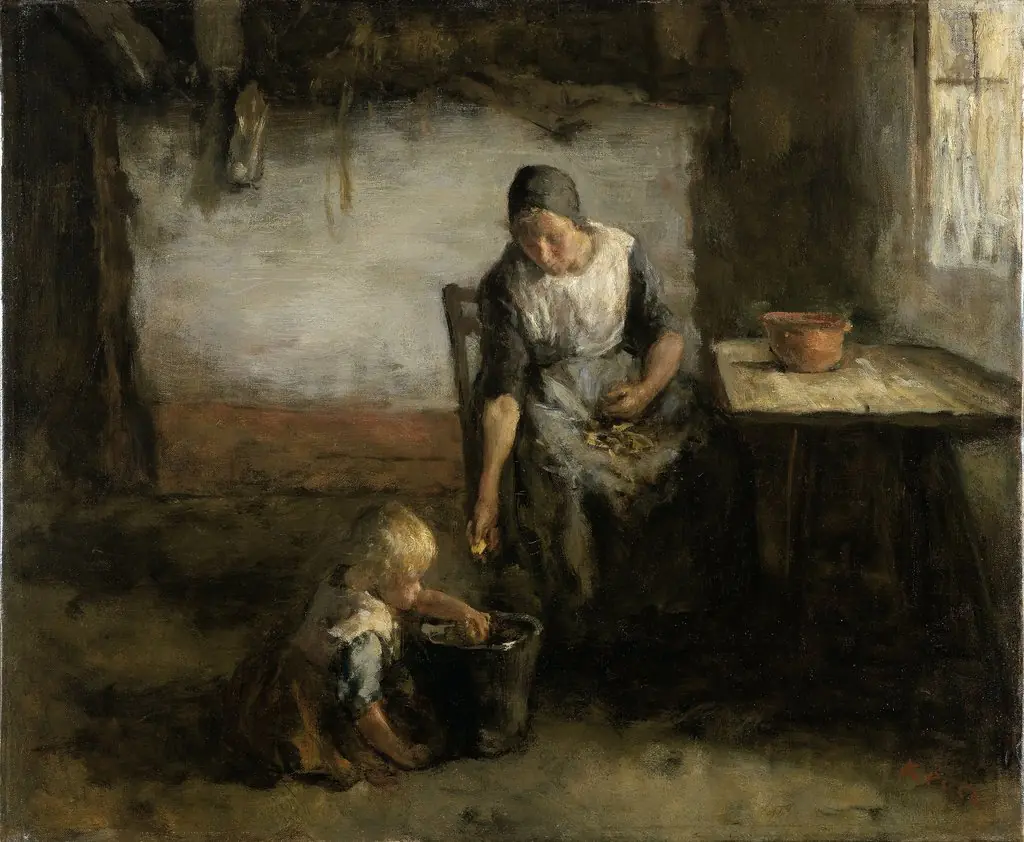
The painting depicts a serene, dimly lit room with three figures: a woman sewing by a window with a child beside her, and another person resting in a cradle. The scene conveys a sense of everyday, familial tranquility.
Technique & Style
Neuhuys employed thick, expressive brushstrokes and a pronounced use of chiaroscuro, where strong sunlight illuminating the woman’s face contrasts with the deep shadows of the rest of the room, adding depth and emotional resonance.
History & Provenance
Bij de wieg is part of the Rijksmuseum's collection, reflecting its significance within Dutch art history.
Own this work as a print
Artist & collection
Artist
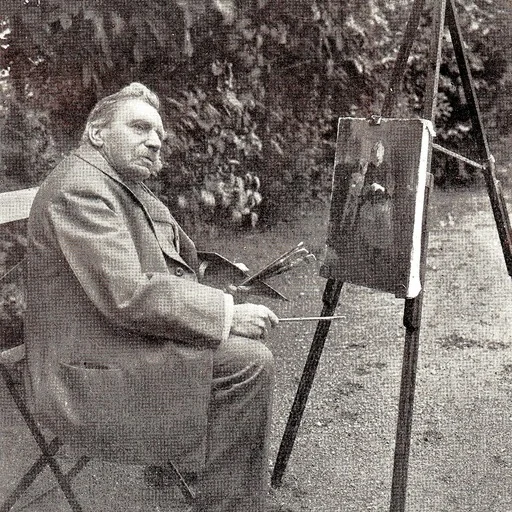
Johannes Albert Neuhuys (10 June 1844 – 6 February 1914) was one of the best-known painters of the Laren School and a friend of many of the Hague School painters.