Artwork
The Waste of Waters is Their Field
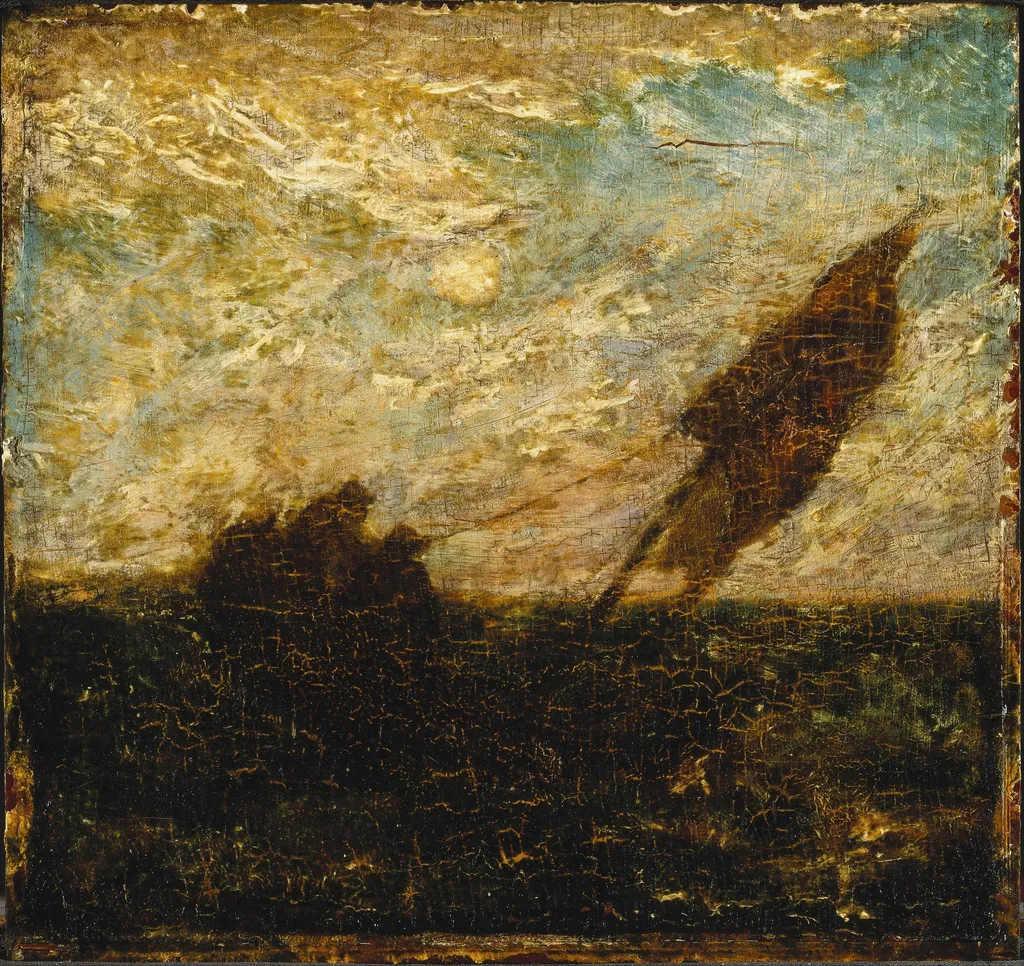
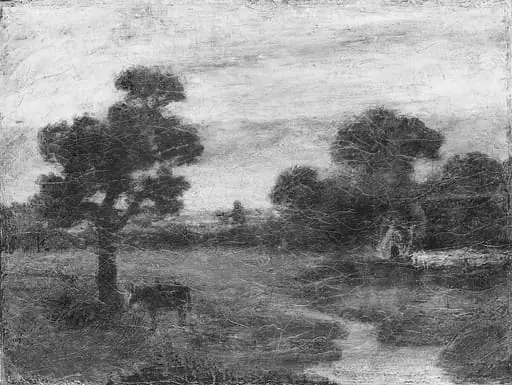
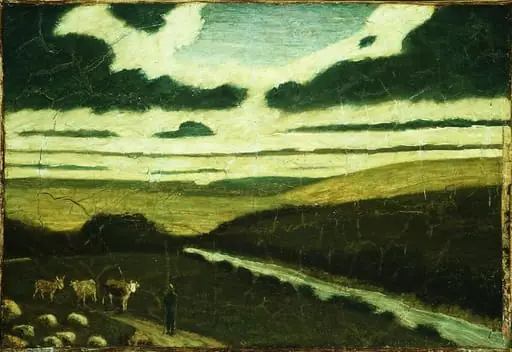
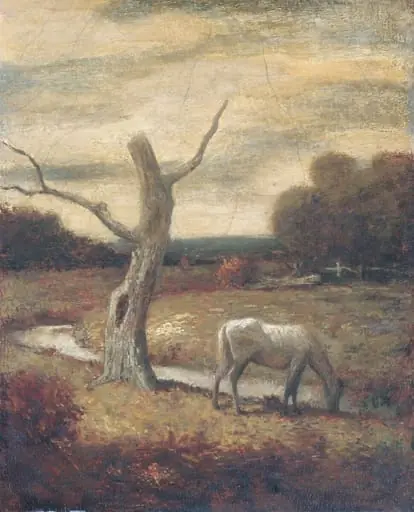
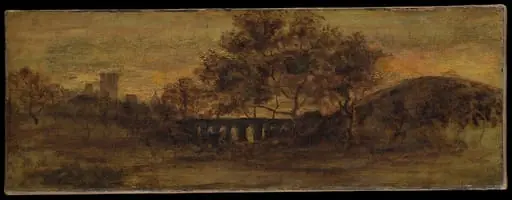
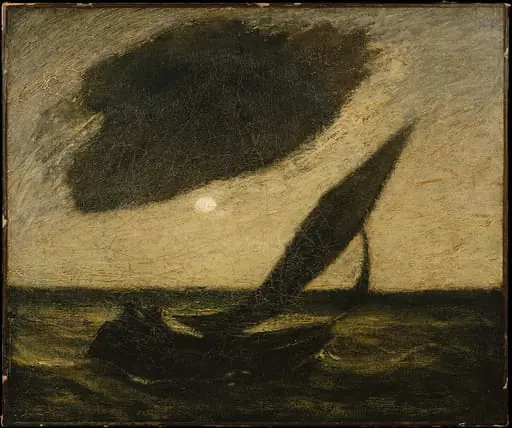
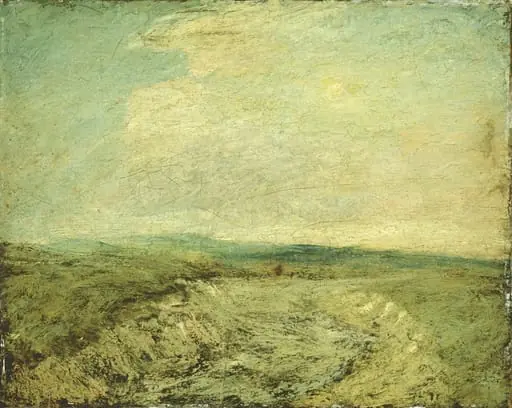
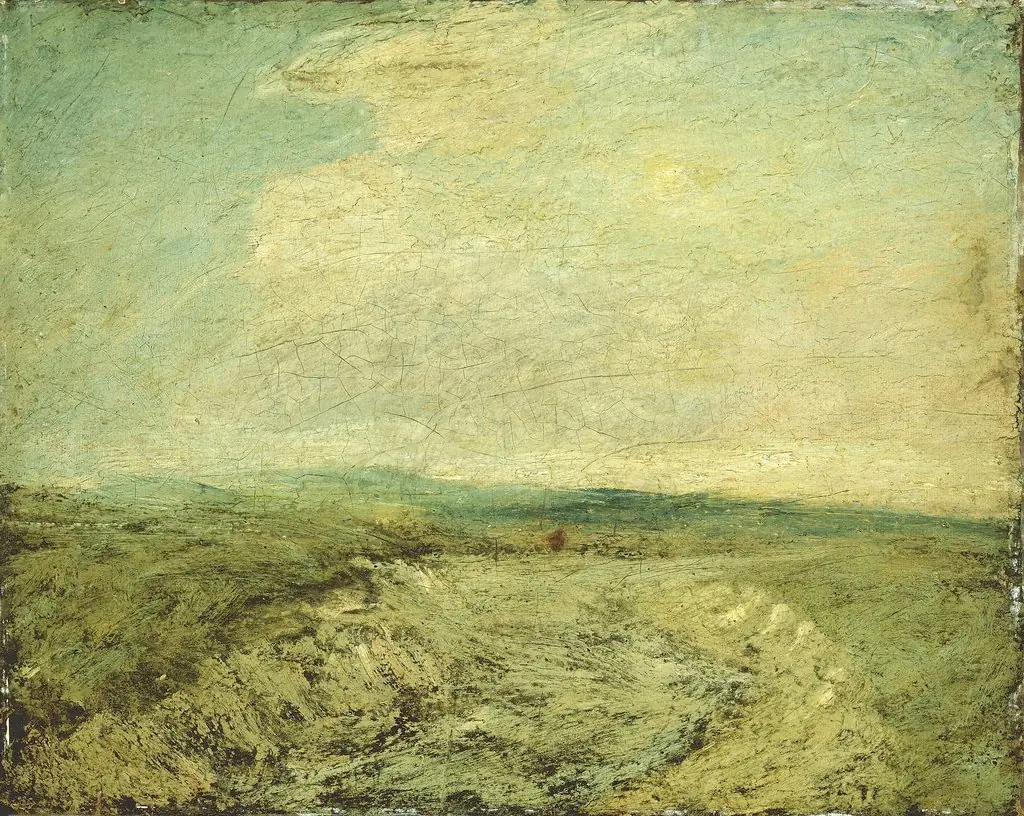
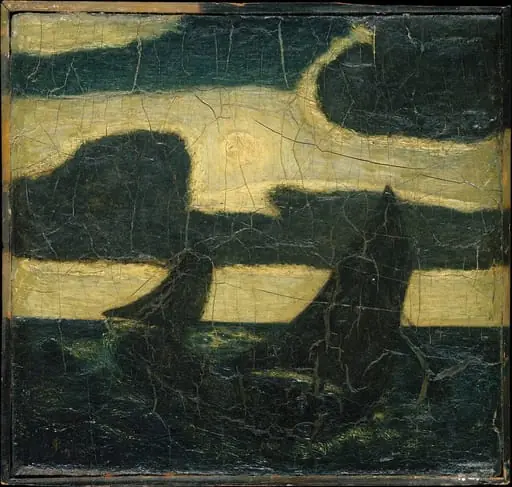
The Waste of Waters is Their Field is an oil painting by the American Impressionist artist Albert Pinkham Ryder. It dates from 1890 and is held in the collection of the Brooklyn Museum.
About this work
Overview
Painted in 1890, The Waste of Waters is Their Field is an oil work by Albert Pinkham Ryder, now in the collection of the Brooklyn Museum.
Painted in 1890, The Waste of Waters is Their Field is an oil work by Albert Pinkham Ryder, now in the collection of the Brooklyn Museum. It presents a subdued, non-narrative landscape where form dissolves into atmosphere. The composition resists clear definition, favoring emotional resonance over literal representation, and reflects Ryder’s tendency to explore inner states through ambiguous natural imagery.
Subject & Meaning
The painting evokes a liminal seascape, though no identifiable elements—ships, shore, or sky—are clearly rendered. The central shadowy mass suggests a presence or force, perhaps symbolic of nature’s indifference or the subconscious. Ryder’s titles often allude to poetic or biblical sources, and here, the phrase implies a barren, forgotten expanse, reinforcing themes of isolation and existential quiet.
Technique & Style
Ryder applied oil paint in thick, layered strokes, building surfaces that catch light unevenly. His palette is dominated by muted blues, ochres, and deep grays, with subtle shifts in tone creating spatial ambiguity. Brushwork is visible and deliberate, not for detail but to convey texture and movement. The effect is neither realistic nor purely abstract, but a meditative synthesis of both.
History & Provenance
The painting was completed during Ryder’s most introspective period, when he lived in relative seclusion in New York. It entered the Brooklyn Museum’s collection in the early 20th century, likely through direct acquisition or donation from a patron familiar with Ryder’s circle. Its preservation reflects early institutional recognition of his unconventional approach to American landscape painting.
Context
Created amid the rise of modernism, Ryder’s work stood apart from both academic realism and emerging Impressionism. While contemporaries pursued clarity and light, he pursued mood and memory. His paintings were influenced by Romantic poetry and spiritual symbolism, positioning him as a solitary figure bridging 19th-century introspection and 20th-century abstraction.
Legacy
Though little known in his lifetime, Ryder’s emphasis on emotional atmosphere over narrative influenced later American modernists, including Marsden Hartley and Georgia O’Keeffe. The Waste of Waters is Their Field exemplifies his unique contribution: a visual language of silence and suggestion that anticipated the psychological depth of 20th-century abstraction.
Artist & collection

Artist
Albert Pinkham Ryder was an American painter best known for his poetic and moody allegorical works and seascapes, as well as his eccentric personality.