Artwork
Truth and Justice
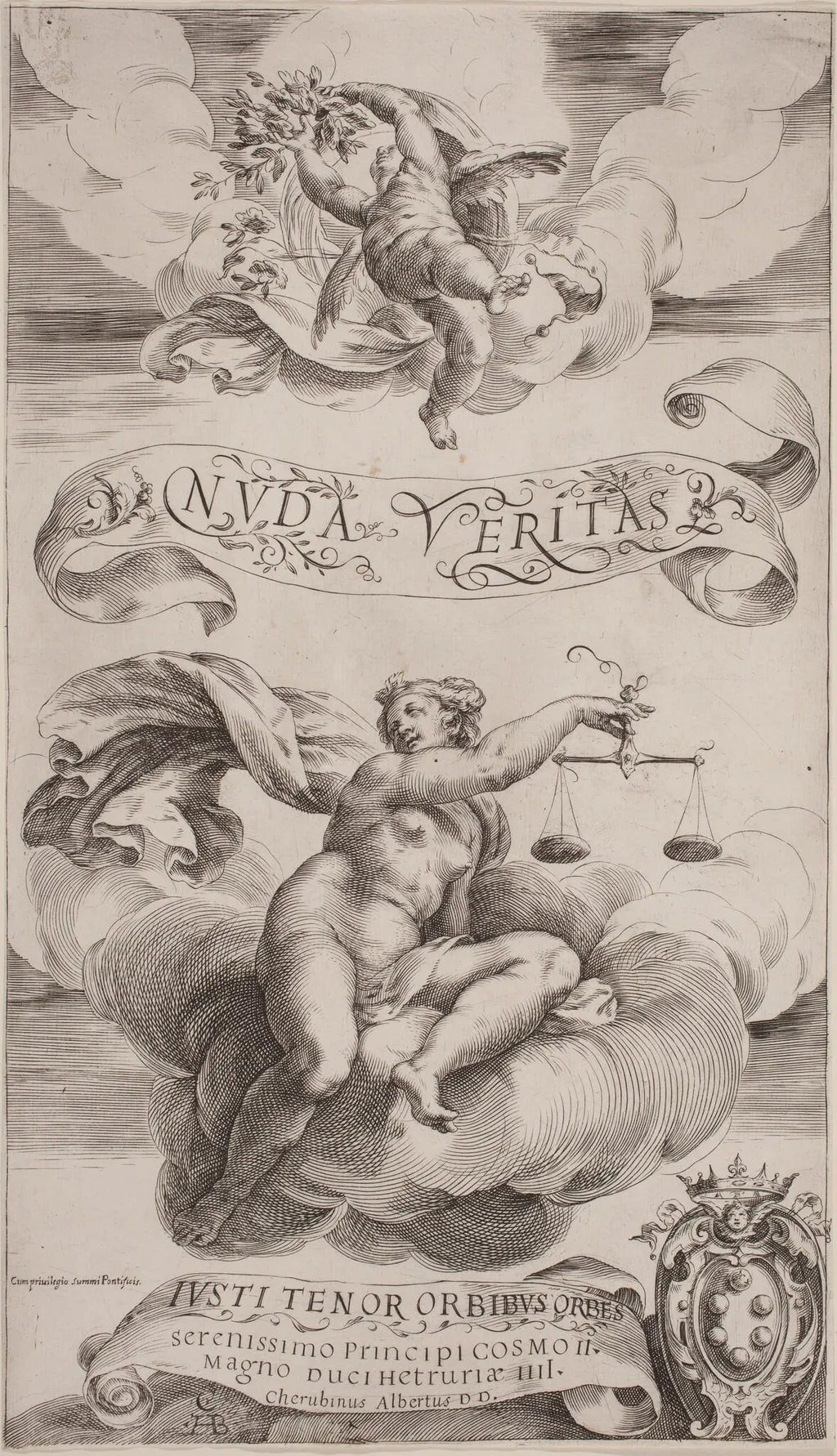
Truth and Justice is an ink print by the Renaissance artist Cherubino Alberti. It dates from 1584 and is held in the collection of the National Gallery of Art.
About this work
Overview
Rendered entirely in fine black lines on a pale ground, the composition conveys abstract ideals through symbolic forms rather than narrative action.
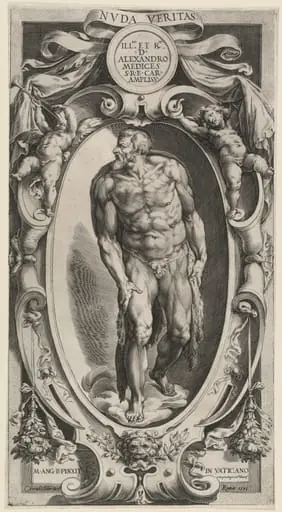
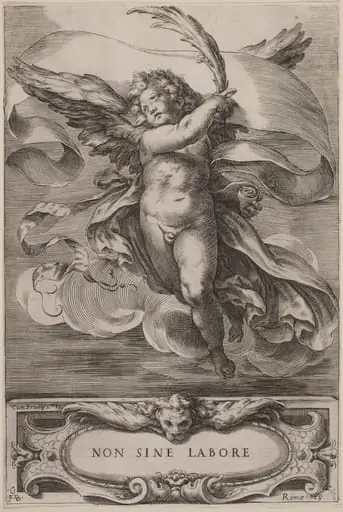
Created in 1584 by Cherubino Alberti, this etching is a monochrome print depicting two allegorical figures in a celestial setting. Rendered entirely in fine black lines on a pale ground, the composition conveys abstract ideals through symbolic forms rather than narrative action. The absence of color and the precision of line reflect the technical discipline of Renaissance printmaking, emphasizing clarity and intellectual weight over decorative flourish.
Subject & Meaning
The larger figure, holding balanced scales, represents Justice, her solemn expression and draped robes signaling authority and restraint. Above her, a smaller, winged child points skyward, embodying Truth—often depicted as youthful and unadorned in Renaissance iconography. The Latin banner 'Nuda Veritas' reinforces the theme: truth, stripped of ornament, is the foundation of justice. The pairing suggests that fairness depends on unvarnished honesty.
Technique & Style
Alberti employed etching to achieve delicate, continuous lines that define form and movement with minimal strokes. The swirling sky and flowing drapery are rendered through controlled incisions in a metal plate, inked and pressed onto paper. The lack of shading or tone directs focus to linear rhythm and symbolic clarity. This restrained aesthetic aligns with Mannerist tendencies, prioritizing intellectual expression over naturalistic detail.
History & Provenance
The print was produced during Alberti’s active years in Rome, where he worked under the patronage of the papal court and collaborated with other printmakers. Though no early ownership records are widely documented, the work circulated among educated circles familiar with humanist symbolism. Its survival in multiple institutional collections suggests it was valued for its moral clarity and technical refinement in the late 16th century.
Context
In the late 1500s, Catholic reformers and humanist scholars emphasized moral integrity and the pursuit of truth amid religious and political turmoil. Allegorical imagery like this served as visual propaganda for ethical governance. The depiction of Truth as naked and unadorned drew from classical sources, revived in Renaissance thought, and resonated with reformist ideals that called for transparency in institutions.
Legacy
Alberti’s etching contributed to a broader tradition of moral allegory in print culture, influencing later depictions of Justice and Truth in European art. Its concise visual language made it adaptable for educational and political use. While not widely known today, it remains a representative example of how Renaissance artists translated philosophical concepts into accessible, repeatable images for literate audiences.
Artist & collection


![Prudence [recto], by Cherubino Alberti](https://artifactworldgallery.com/img/cherubino-alberti--prudence-recto--3f44e6d72db5eb8c-w320.webp)