Artwork
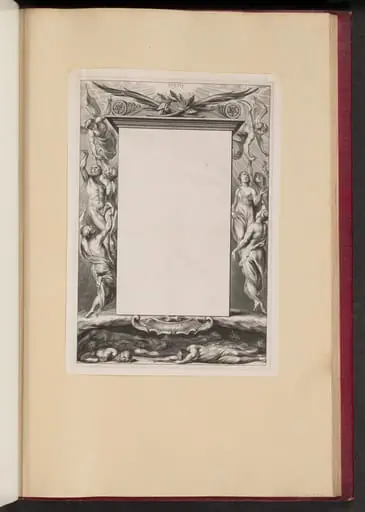
Title Page for Imperatorvm Romanorvm Nvmismata Avrea
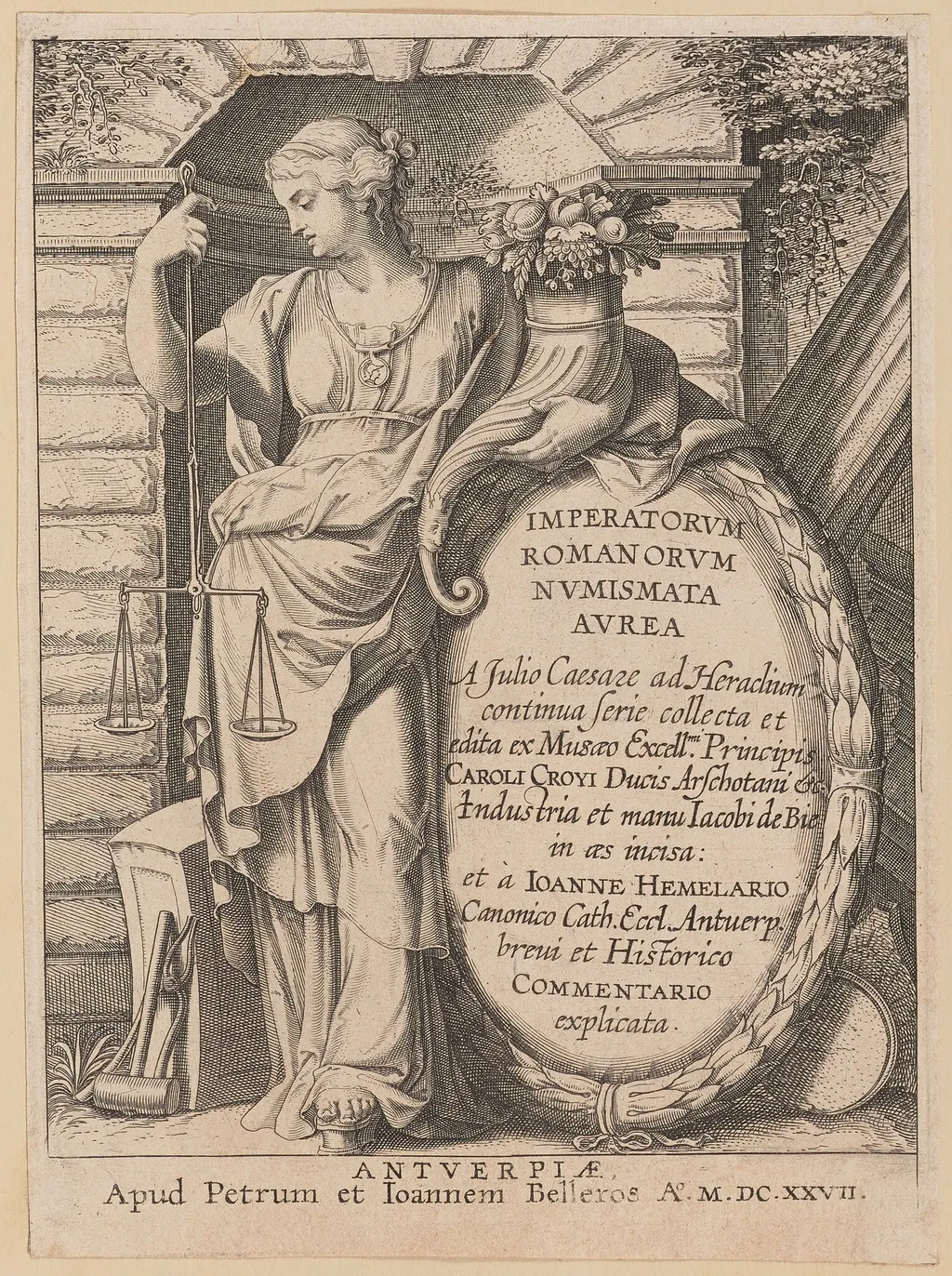
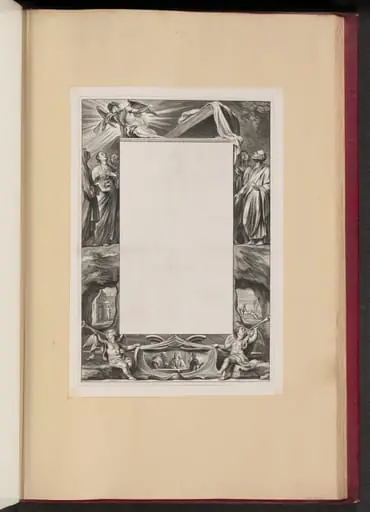
Title Page for Imperatorvm Romanorvm Nvmismata Avrea is an ink print by the Baroque artist Netherlandish 17th Century. It dates from 1627 and is held in the collection of the National Gallery of Art. This engraving serves as the title page for a collection of Roman gold coinage, titled 'Imperatorvm Romanorvm Nvmismata Avrea.
About this work
Overview
This engraving serves as the title page for a collection of Roman gold coinage, titled 'Imperatorvm Romanorvm Nvmismata Avrea.' Rendered on laid paper, it presents a central allegorical figure flanked by symbolic objects and an ornate Latin inscription. The composition is structured to convey authority and scholarly intent, framing the numismatic content that follows with visual gravitas.
Subject & Meaning
The central figure, robed and serene, holds a scale and a staff—tools traditionally associated with justice and measurement. The wreath and urn behind suggest commemoration and antiquity. Together, these elements personify the disciplined study of Roman imperial coinage, positioning the collector or scholar as a custodian of historical truth, not merely an accumulator of objects.
Technique & Style
Executed in fine-line engraving, the image relies on precise incisions to render texture and form. The background is densely filled with Latin text and scrolling ornamentation, contrasting with the calm, simplified silhouette of the central figure. This interplay of detail and restraint reflects the print’s function: to announce scholarly rigor through visual clarity and typographic discipline.
History & Provenance
Created in the late 16th or early 17th century, this print likely accompanied a catalog of Roman gold coins assembled by a European antiquarian. Such title pages were common in numismatic publications of the period, designed to lend intellectual prestige to private collections. Its survival suggests it was part of a well-preserved scholarly archive.
Context
During the Renaissance and early Baroque periods, Roman coinage became a focal point for humanist scholarship. Collectors and antiquarians sought to reconstruct imperial history through material evidence. This engraving reflects that trend, using classical iconography to elevate coin study from mere collecting to a disciplined, moral enterprise rooted in Roman virtue.
Legacy
Though not widely reproduced, this print exemplifies the visual language of early modern numismatics. Its symbolic framework influenced later catalogues and academic publications, embedding allegorical imagery into the presentation of historical artifacts. It remains a quiet testament to how scholarly pursuits were visually legitimized in an era before photography.
Artist & collection

Artist
This artist was born in the Netherlands in the early 1600s and made drawings and engravings.

 Title Page
 Justice
 Woman with Musical Instrument
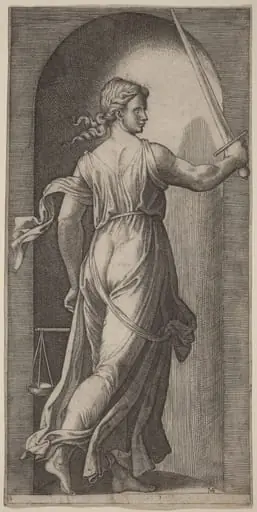 Justice
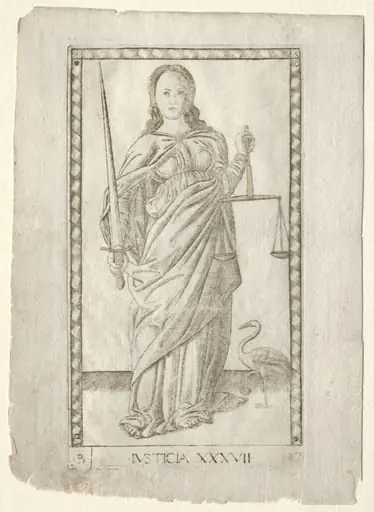 Justice (from the Tarocchi, series B: Cosmic Principles & Virtues, #37)
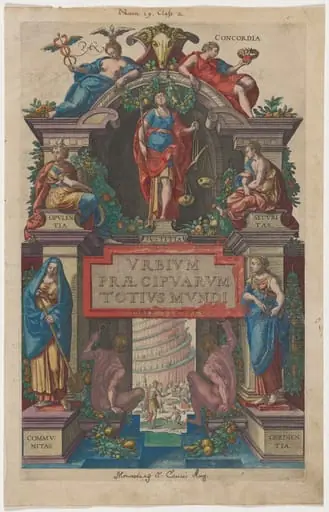 Title Page to Urbium Praecipuarum Totius Mundi
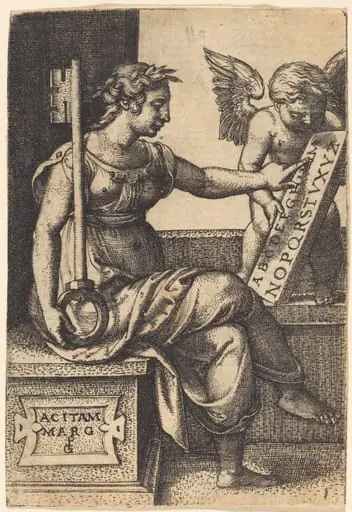 Grammar
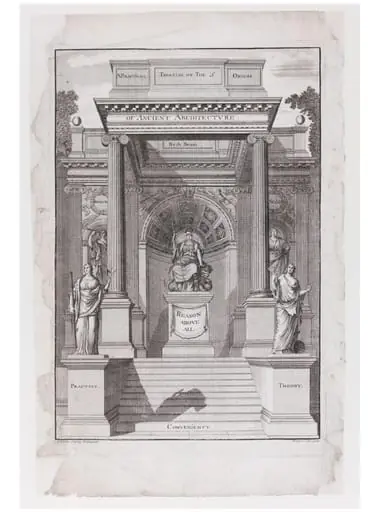 A Practical Treatise on the Five Orders of Ancient Architecture
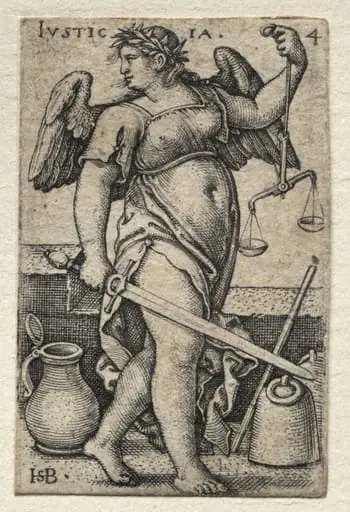 The Knowledge of God and the Seven Cardinal Virtues: Justice - Justicia
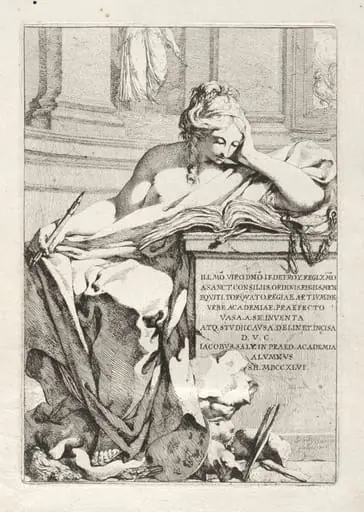 Suite of Vases
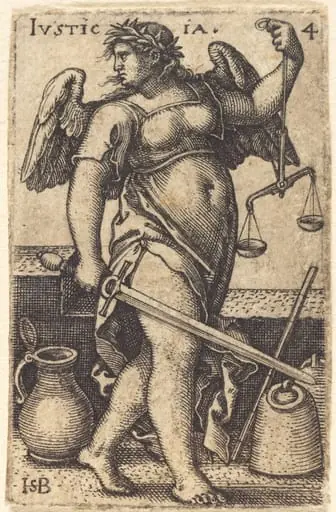 Justicia (Justice)
 Justicia (Justice)