Artwork
Saint John the Baptist
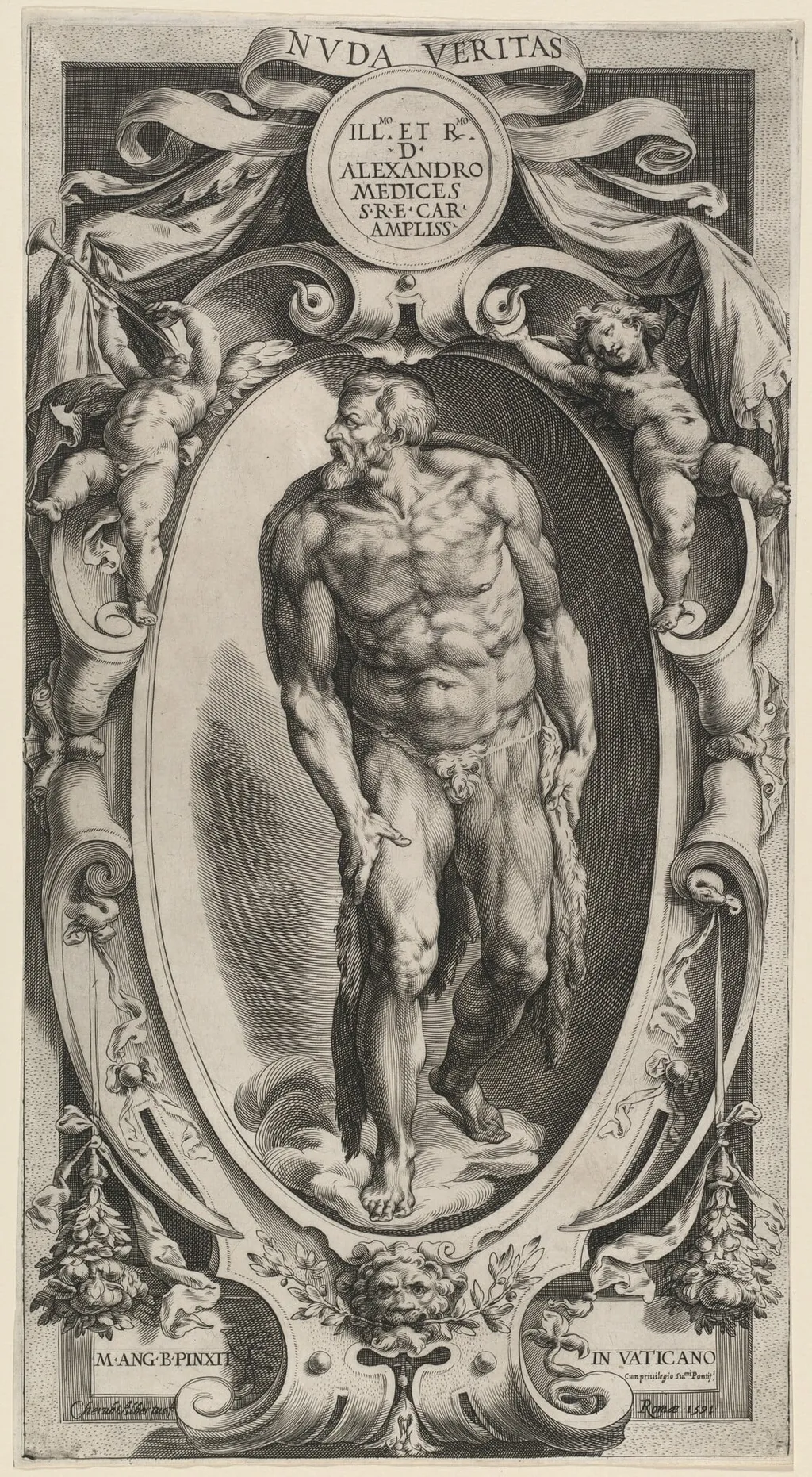
Saint John the Baptist is an ink print by the Renaissance artist Cherubino Alberti. It dates from 1591 and is held in the collection of the National Gallery of Art.
About this work
Overview
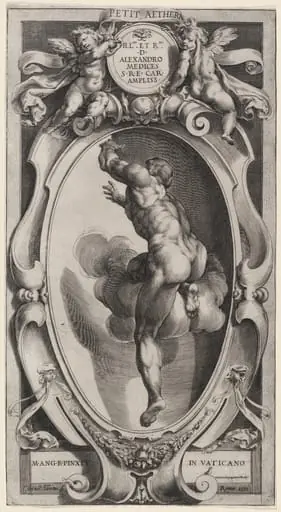
Cherubino Alberti's 'Saint John the Baptist' is a religious etching from 1591, characterized by a central figure within an ornate oval frame, blending classical and Renaissance elements.
Subject & Meaning
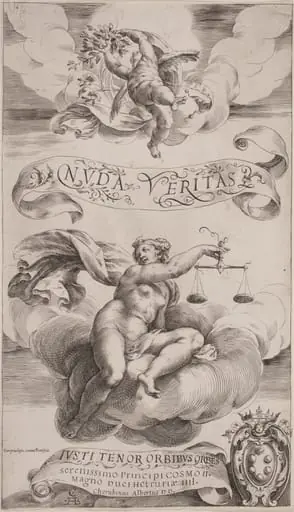
The etching depicts Saint John the Baptist in a state of partial nudity, with a waist cloth, beard, and long hair, symbolizing his asceticism and religious significance. The banner 'NVDA VERITAS' (Naked Truth) above him underscores his role as a truth-bearing figure.
Technique & Style
Executed in etching, a technique popularized by artists like Albrecht Dürer, the work showcases Alberti's mastery of line and detail. The frame's intricate designs, including cherubs and foliage, reflect Renaissance ornateness.
History & Provenance
Created in 1591, the etching bears an emblem with the inscription 'ILL ET R D ALEXANDRO MEDICES SRE CAR AMPLISS', suggesting a dedication or patronage link, possibly to the Medici family or a figure named Alexander, though the exact relationship is unclear.
Context
The piece aligns with the late Renaissance's revival of classical motifs and the prevalent use of etching for religious themes during this period.
Artist & collection


![Prudence [recto], by Cherubino Alberti](https://artifactworldgallery.com/img/cherubino-alberti--prudence-recto--3f44e6d72db5eb8c-w320.webp)
![The Farnese Hercules, three-quarter view turned to left [plate 3], by François Perrier](https://artifactworldgallery.com/img/francois-perrier--the-farnese-hercules-three-quarter-view-turned-to-left-plate--b0564bebaad016fa-w320.webp)
![The Farnese Hercules, front view [plate 2], by François Perrier](https://artifactworldgallery.com/img/francois-perrier--the-farnese-hercules-front-view-plate-2--cedb2cb031c3391b-w320.webp)