Artwork
Untitled
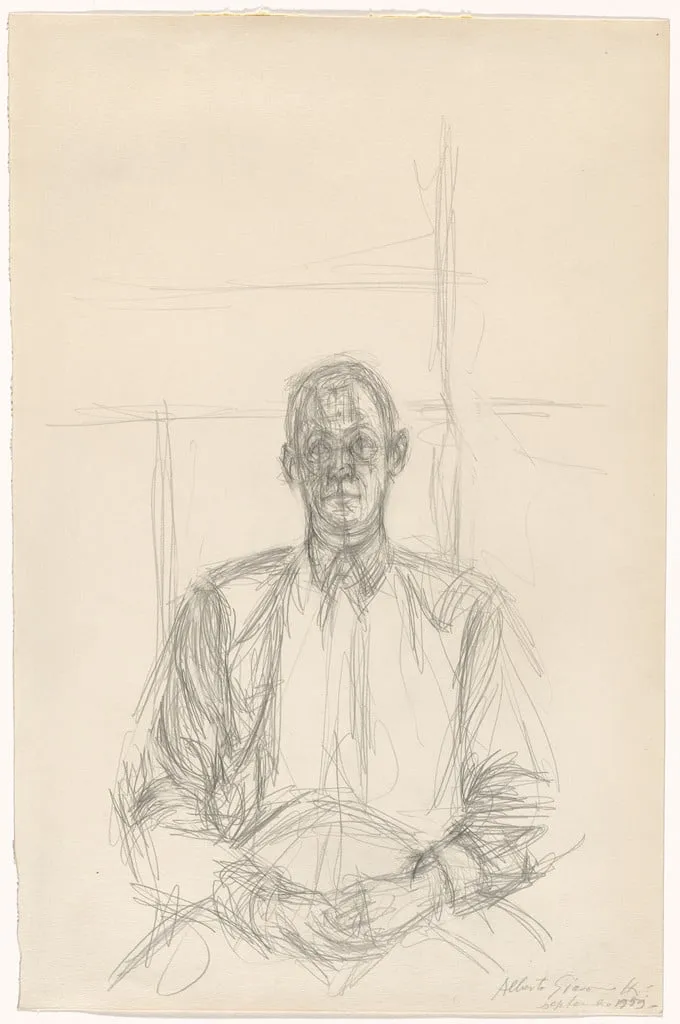
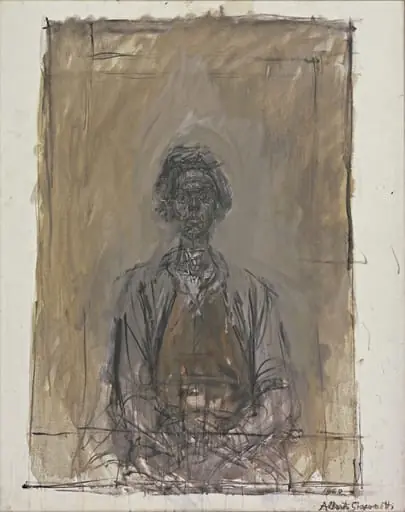
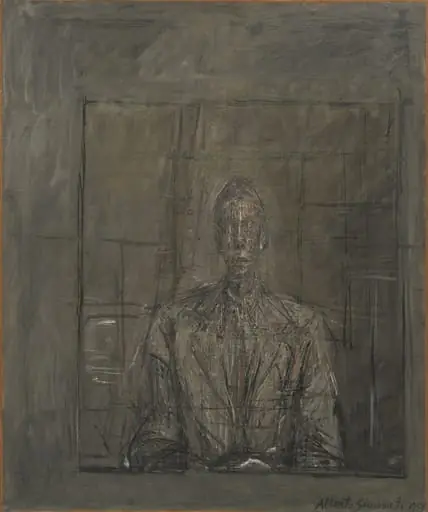
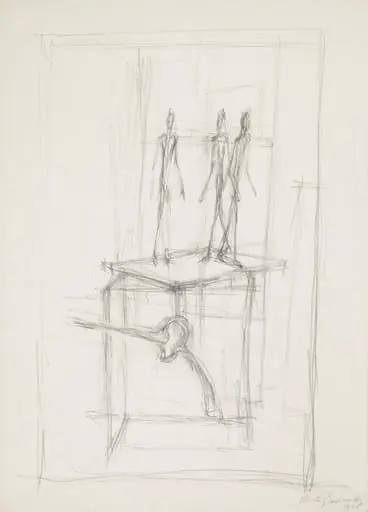
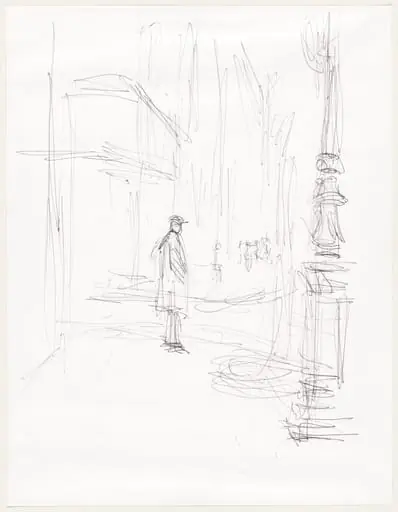
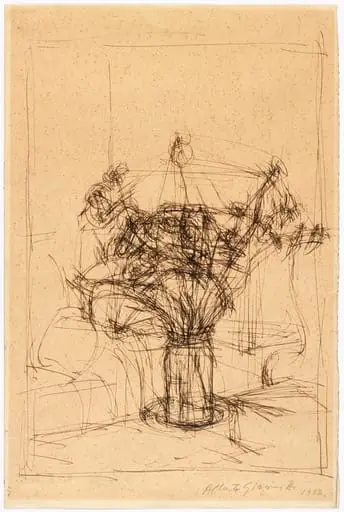
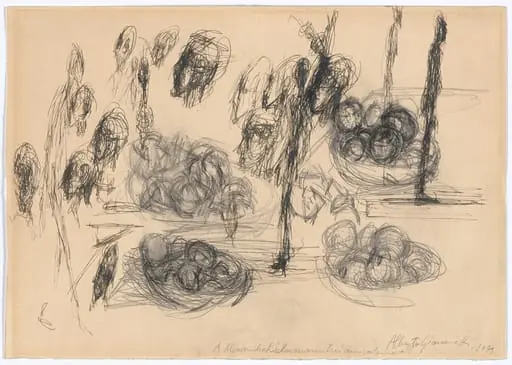
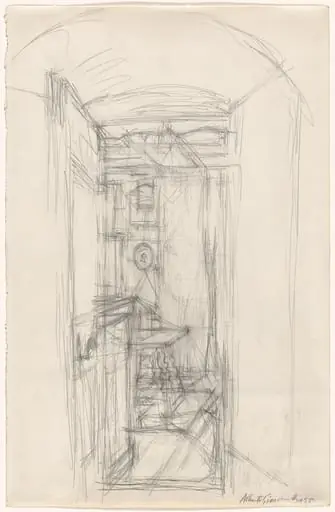
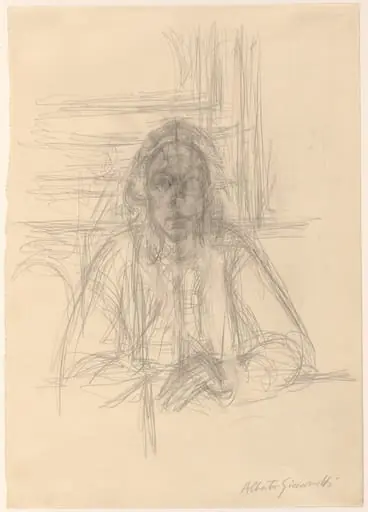
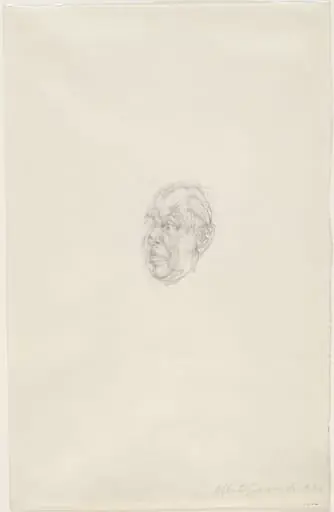
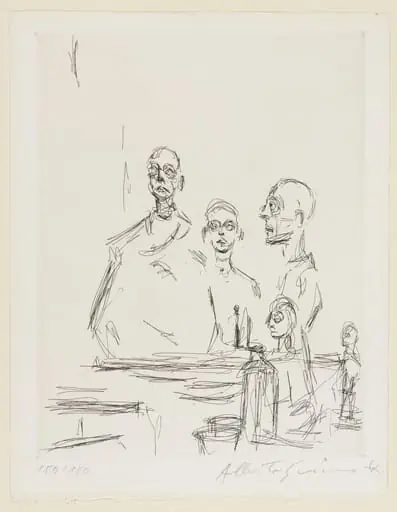
Untitled is a graphite drawing by Alberto Giacometti. It dates from 1959 and is held in the collection of the Museum of Modern Art.
About this work
Overview
This 1959 pencil drawing by Alberto Giacometti is part of The Museum of Modern Art’s collection.
This 1959 pencil drawing by Alberto Giacometti is part of The Museum of Modern Art’s collection. Executed on lightly yellowed paper, it captures a seated figure through rapid, layered strokes. The work exemplifies Giacometti’s sustained focus on the human form, rendered not as an idealized shape but as a presence emerging from tentative, accumulating marks. Its immediacy suggests a direct, unmediated observation.
Subject & Meaning
The figure is rendered in a state of quiet stillness, yet its form is fractured by agitated lines. The face is minimal, while the limbs collapse into tangled, overlapping contours—suggesting physical and psychological tension. Giacometti’s approach here reflects his interest in the fragility of perception: the figure is not fully resolved, as if caught between presence and dissolution, embodying a sense of existential isolation.
Technique & Style
Giacometti employed dense cross-hatching and variable pressure to build volume and shadow, avoiding clean outlines. The pencil lines range from heavy and dark to barely legible, creating a sense of atmospheric depth through accumulation rather than definition. The paper’s texture interacts with the strokes, enhancing the drawing’s raw, unfinished quality. This method prioritizes process over polish, emphasizing the act of seeing over the final image.
History & Provenance
Created in Paris during a period of intense artistic reflection, the drawing entered The Museum of Modern Art’s collection as part of its broader effort to document postwar European modernism. Giacometti’s work from this era, including this piece, was shaped by his return visits to his Swiss hometown and his decades-long engagement with existential philosophy. The drawing remains a quiet but significant artifact of his late career.
Context
In the late 1950s, Giacometti was refining his sculptural language into more attenuated forms, and this drawing mirrors that preoccupation with elongation and spatial ambiguity. Though influenced by earlier movements like Cubism and Surrealism, his work had moved beyond stylistic labels toward a personal vocabulary centered on presence and absence. The drawing aligns with contemporaneous explorations by writers and philosophers grappling with human isolation in the modern age.
Legacy
This drawing contributes to a body of work that redefined how the human figure could be represented in modern art—not as a static subject but as an elusive, perceptual phenomenon. Its emphasis on process and imperfection influenced later generations of artists who valued gesture and materiality over finish. It stands as a testament to Giacometti’s enduring inquiry into the limits of seeing and being seen.
Artist & collection

Artist
Alberto Giacometti (, US also , Italian: ; 10 October 1901 – 11 January 1966) was a Swiss sculptor, painter, draftsman and printmaker, who was one of the most important sculptors of the 20th century.