Artwork
Untitled
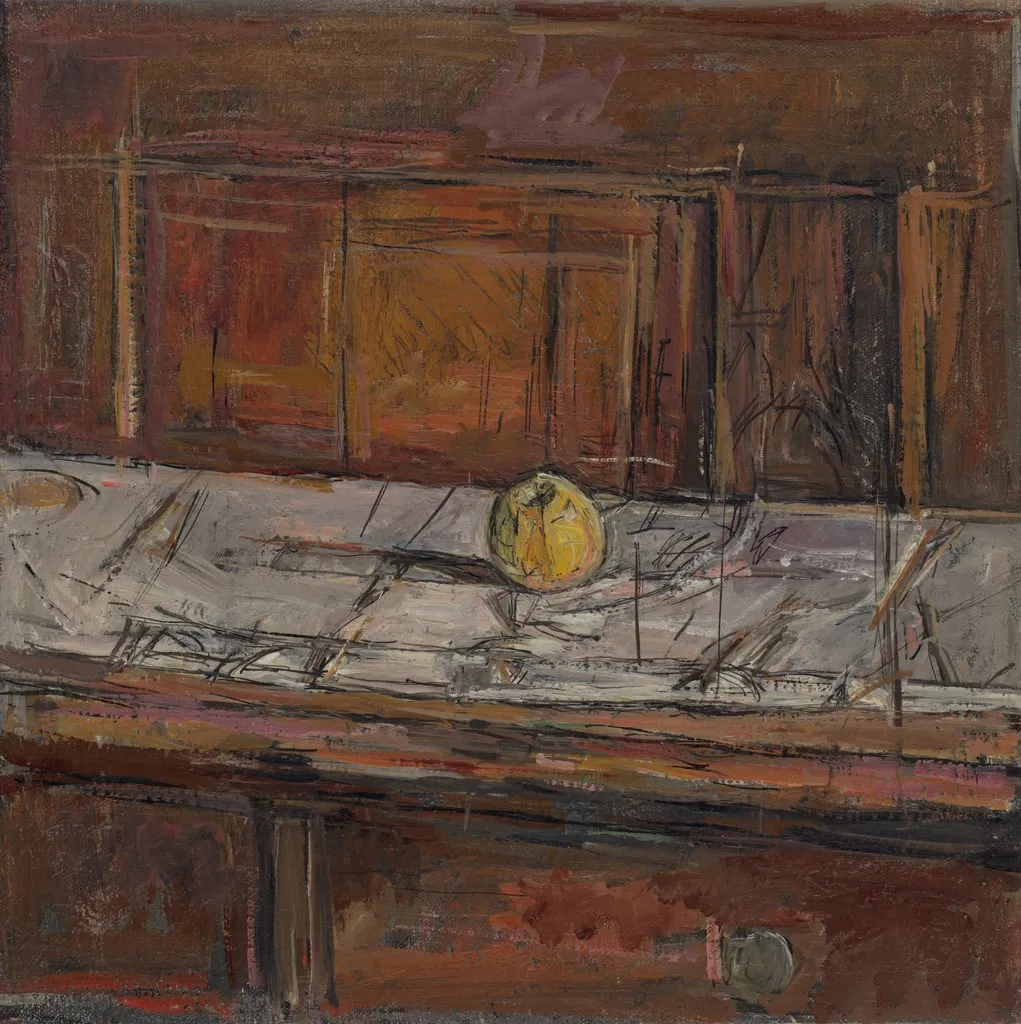
Untitled is an oil painting by the Surrealist artist Alberto Giacometti. It dates from 1937 and is held in the collection of the Museum of Modern Art.
About this work
Overview
Created in 1937, this oil-on-canvas-on-board painting by Alberto Giacometti is a quiet, introspective composition that aligns with his Surrealist period.
Created in 1937, this oil-on-canvas-on-board painting by Alberto Giacometti is a quiet, introspective composition that aligns with his Surrealist period. Unlike his later elongated figures, this work focuses on interior space and sparse objects, reflecting a transitional phase in his artistic development. The piece is part of The Museum of Modern Art’s collection, representing Giacometti’s exploration of form and atmosphere beyond sculpture.
Subject & Meaning
The painting depicts a sparse interior: a dark wall with a central lighter rectangle, and a low table bearing a single yellow sphere. The objects lack clear narrative function, suggesting an emphasis on presence rather than story. The isolation of the ball and the ambiguous spatial depth evoke a sense of solitude, consistent with Giacometti’s interest in existential emptiness and the fragility of perception.
Technique & Style
Giacometti applied oil paint with rapid, layered brushwork, building texture through subtle shifts in brown tones. The table and sphere are rendered with dense, overlapping lines that suggest both structure and instability. The surface feels worked and restless, rejecting smooth finish in favor of an almost sketchlike immediacy, characteristic of his Surrealist experiments with perception and materiality.
History & Provenance
Painted during Giacometti’s time in Paris, this work emerged from his engagement with Surrealist circles in the mid-1930s, before his return to figurative sculpture. It remained in private hands until acquired by The Museum of Modern Art, where it has been held since the mid-20th century. Its inclusion in the museum’s collection underscores its role in documenting his shift from Surrealism toward more existential themes.
Context
In 1937, Giacometti was moving away from overt Surrealist symbolism toward a more personal visual language. While contemporaries like Dalí emphasized dream imagery, Giacometti focused on spatial tension and minimal forms. This painting reflects broader interwar anxieties about isolation and the uncertainty of perception, aligning with philosophical currents of the time without literal illustration.
Legacy
Though less known than his sculptures, this work illustrates Giacometti’s consistent preoccupation with presence and absence. Its restrained palette and fragmented space prefigure the sparse environments of his later figures. The painting remains a quiet testament to his ability to convey psychological weight through minimal means, influencing postwar approaches to abstraction and existential representation.
Artist & collection

Artist
Alberto Giacometti (, US also , Italian: ; 10 October 1901 – 11 January 1966) was a Swiss sculptor, painter, draftsman and printmaker, who was one of the most important sculptors of the 20th century.

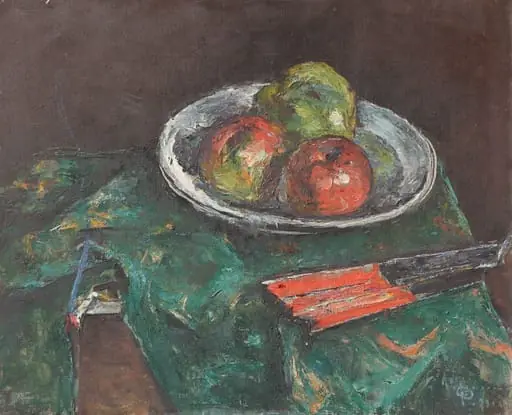 Mere și evantai
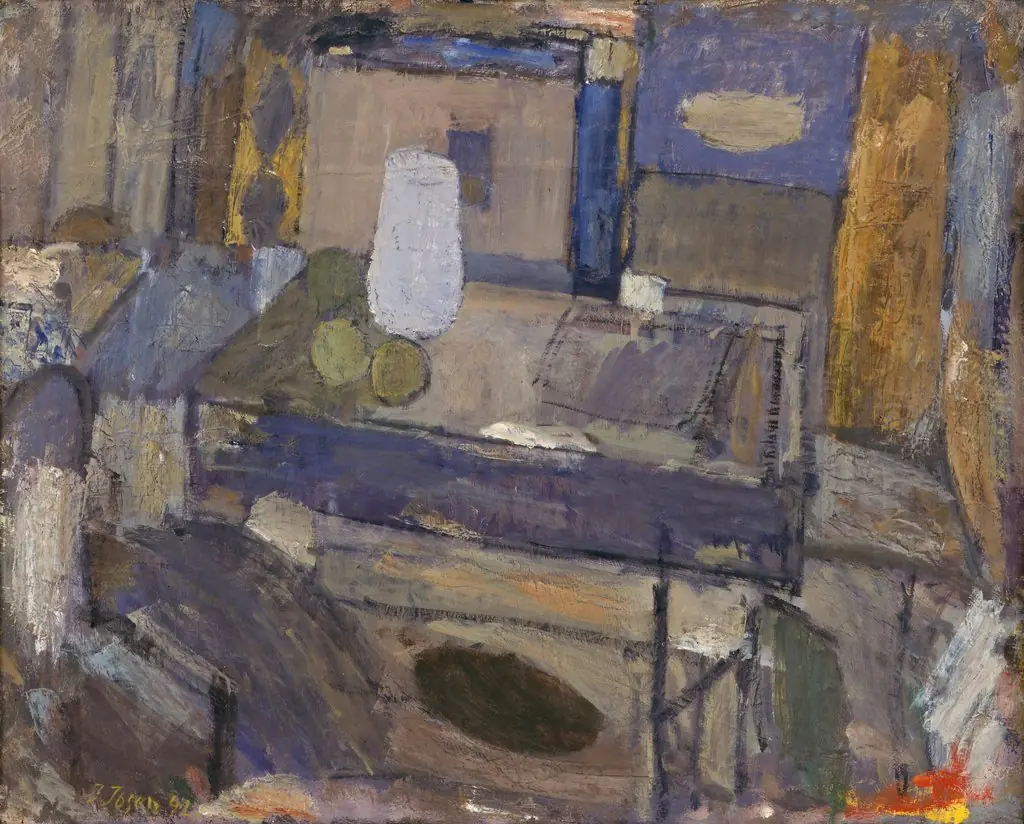 Still Life with Jar and Fruits
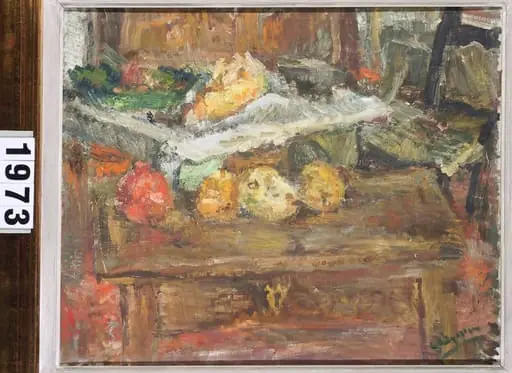 Natură moartă
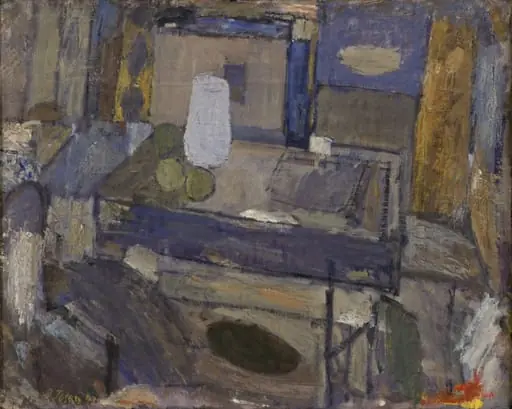 Still Life with Jar and Fruits
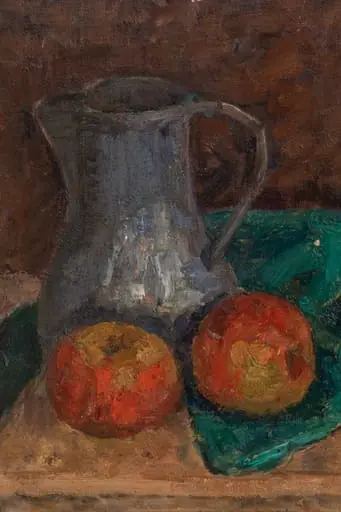 Natură statică cu mere și cană
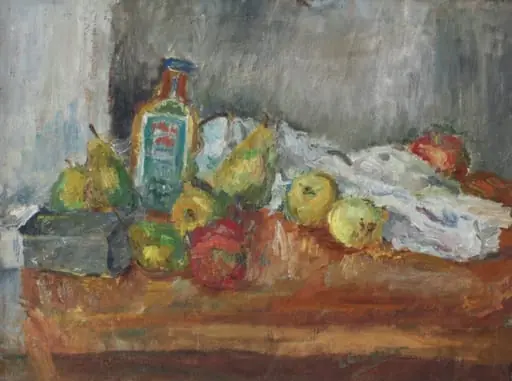 Natură moartă
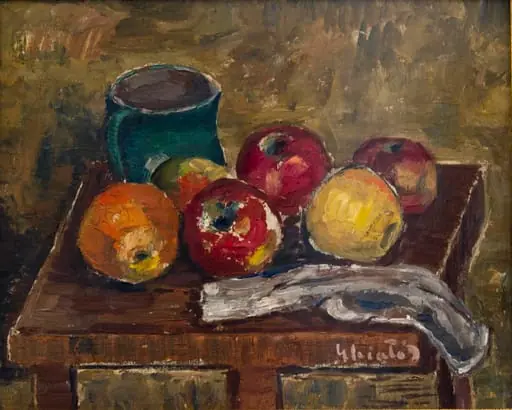 Natură statică cu cană și fructe
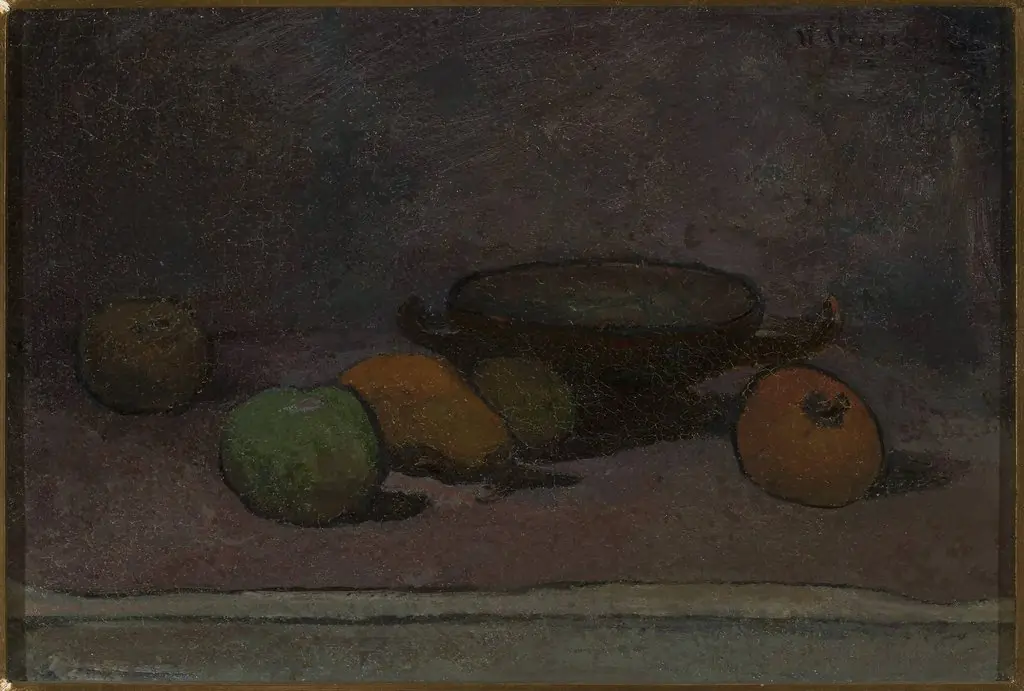 Fruits and bowl
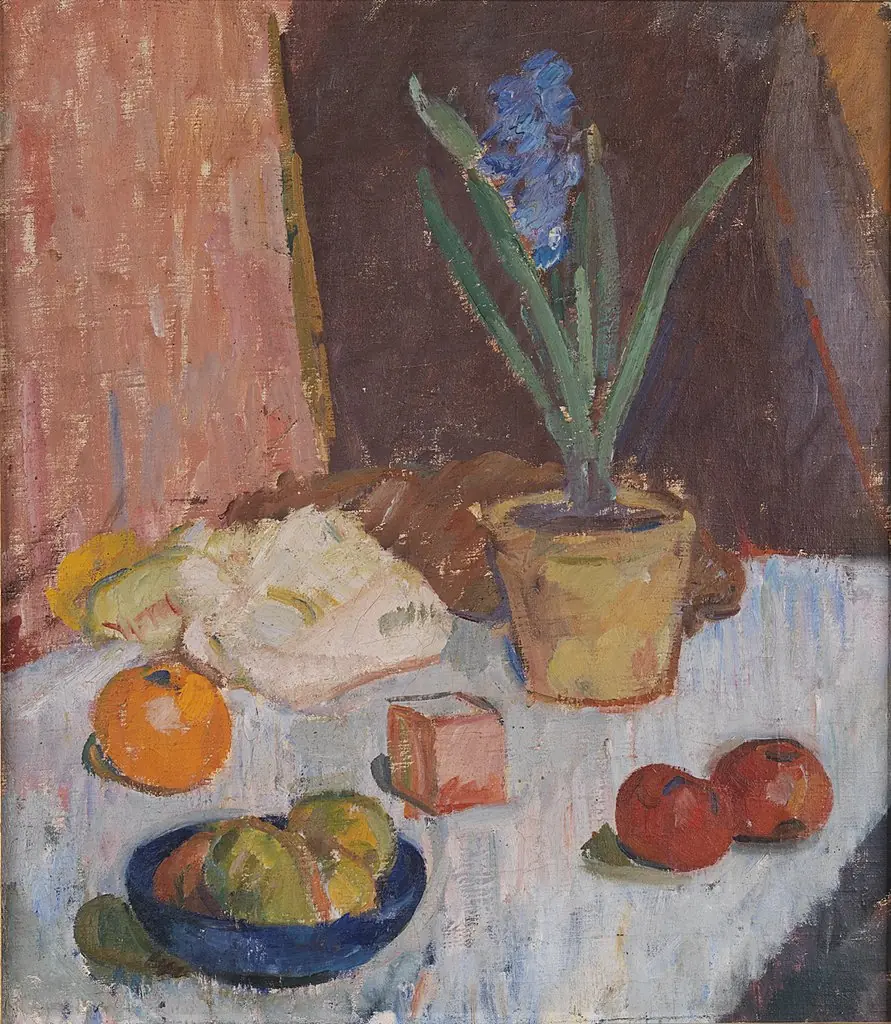 Composition with Hyacinth, Fruits and Blue Bowl
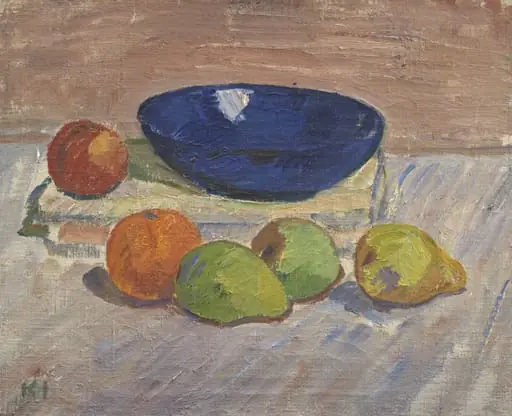 Still Life with Blue Bowl and Fruits
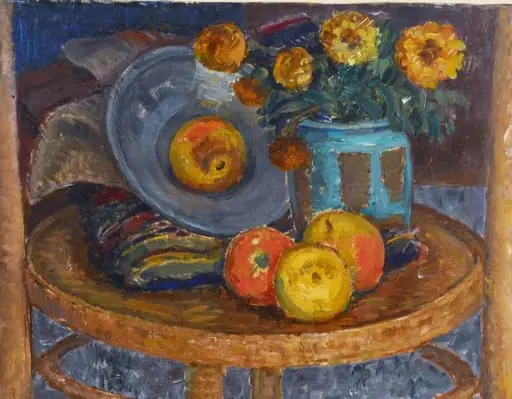 Natură statică (Masă rotundă cu fructe și flori)
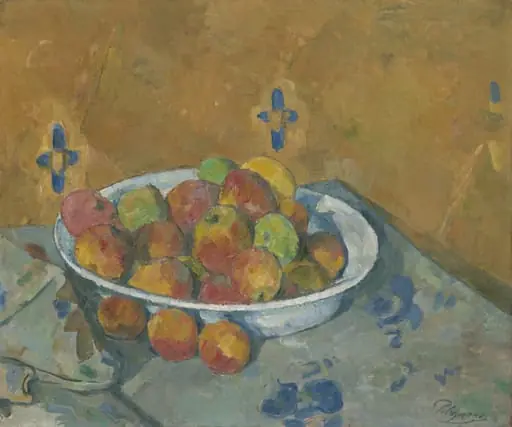 The Plate of Apples