Artwork
St. Christopher
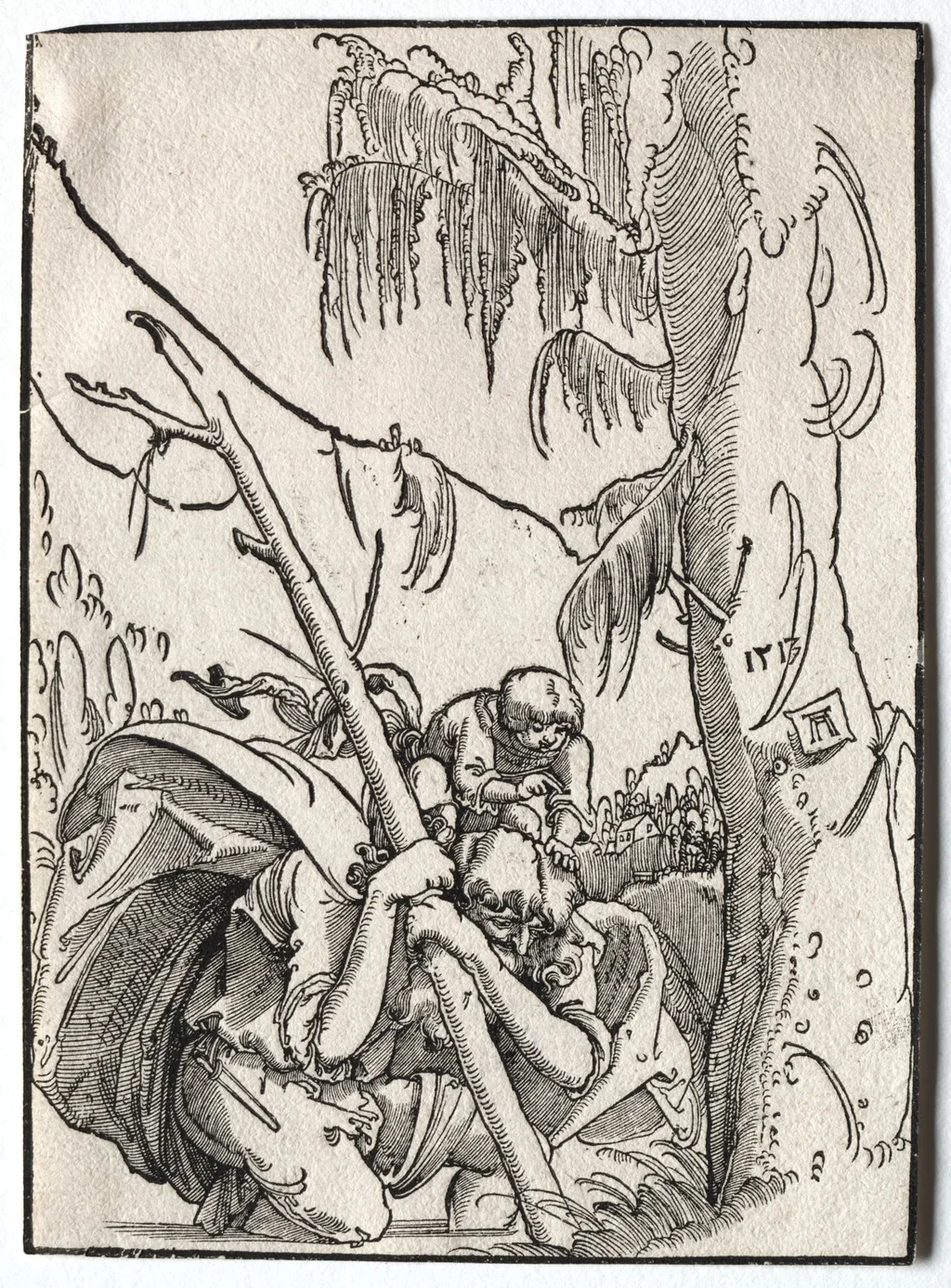
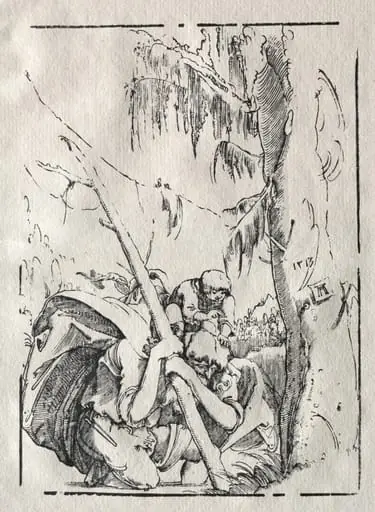
St. Christopher is a print by the Renaissance artist Albrecht Altdorfer. It dates from 1513 and is held in the collection of the Cleveland Museum of Art.
About this work
Overview
Altdorfer, based in Regensburg, was central to the Danube School, known for blending religious themes with naturalistic settings.
Created in 1513 by Albrecht Altdorfer, this print depicts Saint Christopher carrying the Christ Child across a river. Though executed in a small scale, it reflects the artist’s broader engagement with landscape and narrative intimacy. Altdorfer, based in Regensburg, was central to the Danube School, known for blending religious themes with naturalistic settings. This work exemplifies his shift toward detailed, atmospheric environments as more than mere backdrops.
Subject & Meaning
The image illustrates the legend of Saint Christopher, a giant who carried travelers across a dangerous river, one of whom was the Christ Child, revealing himself as the weight of the world. The child’s gaze downward and the saint’s bowed posture suggest a moment of quiet revelation. Their faces are rendered indistinct, emphasizing symbolic weight over individual identity, aligning with devotional traditions that prioritized spiritual presence over portraiture.
Technique & Style
Executed as a fine-line engraving, the work uses controlled hatching and subtle tonal gradations to model form and depth. The background’s muted beige field, softened by shadowed edges, isolates the figures without distracting detail. Altdorfer’s lines are deliberate and economical, creating a sense of stillness and reverence. The style echoes the precision of the Nuremberg Little Masters, though infused with the Danube School’s emotional gravity and spatial sensitivity.
History & Provenance
The print was produced during Altdorfer’s mature period in Regensburg, a center of artistic innovation in early 16th-century Germany. While no early ownership records are widely documented, its survival in multiple museum collections suggests it was circulated among collectors and religious patrons interested in devotional imagery. Its small size made it suitable for private contemplation, distinguishing it from large altarpieces of the era.
Context
In the early 1500s, German artists increasingly explored landscape as a vehicle for spiritual meaning. Altdorfer’s work emerged alongside the Reformation’s rise, when personal devotion and visual symbolism gained new importance. Unlike Italian Renaissance focus on classical harmony, Danube School artists like Altdorfer emphasized mood, atmosphere, and the sublime in nature—offering a distinctly Northern European response to religious narrative.
Legacy
This print contributed to the legitimization of landscape as a subject worthy of artistic attention in its own right. Altdorfer’s integration of natural elements into sacred scenes influenced later Northern artists who sought to convey inner experience through environment. Though not widely reproduced in his lifetime, the work’s quiet intensity has endured as a quiet milestone in the evolution of printmaking and devotional imagery in the German Renaissance.
Artist & collection
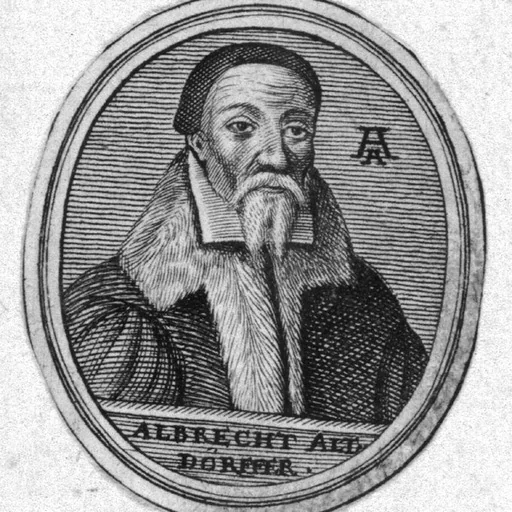
Artist
Albrecht Altdorfer (c. 1480 – 12 February 1538) was a German painter, engraver and architect of the Renaissance working in Regensburg. Along with Lucas Cranach the Elder and Wolf Huber he is regarded to be the main…

 St. Christopher Crossing the Water with Christ on his Shoulders
 The Prodigal Son, 4th plate (L'enfant prodigue)
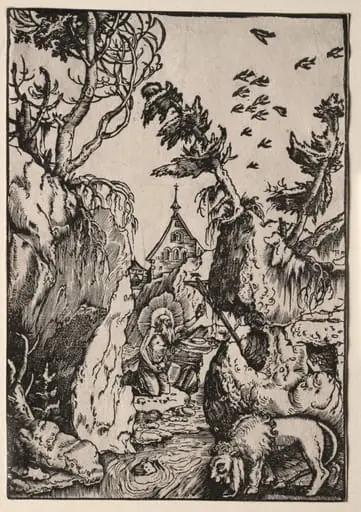 St. Jerome in the Wilderness
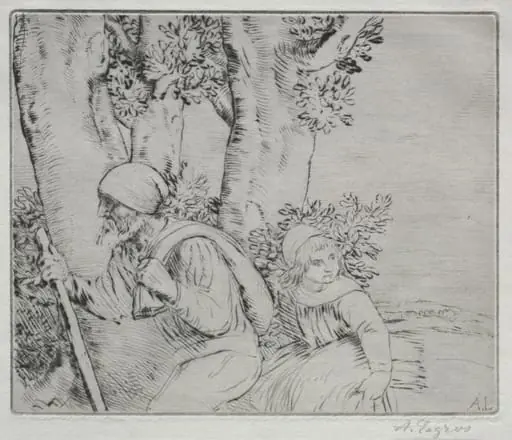 Return from the Field (2nd plate)
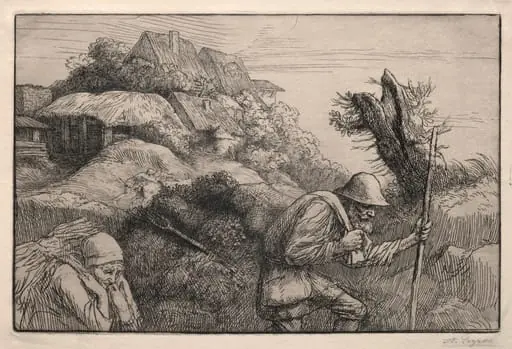 Return from the Woods
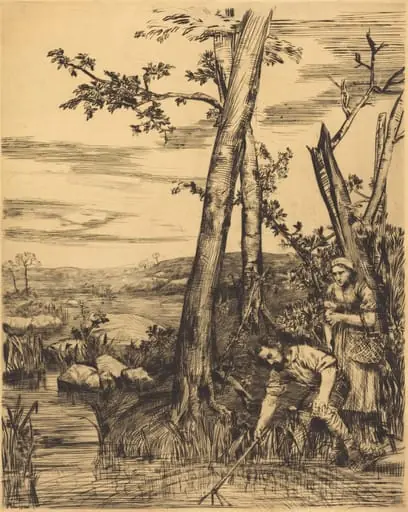 Fishing for Crayfish (Les pecheurs d'ecrevisses)
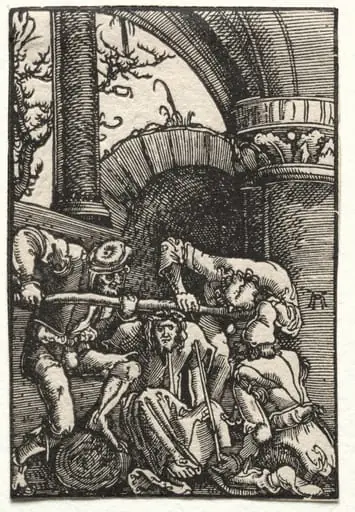 The Fall and Redemption of Man: Christ Crowned with Thorns
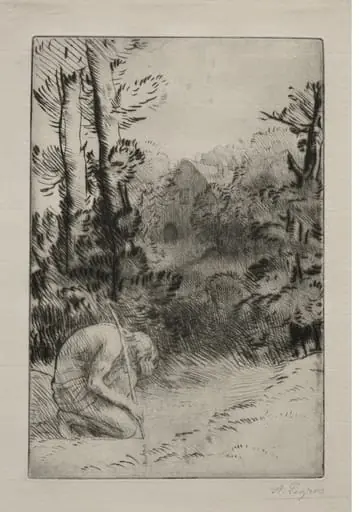 The Prodigal Son (2nd Plate)
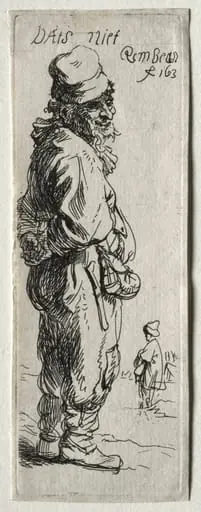 A Peasant Replying: "that's nothing"
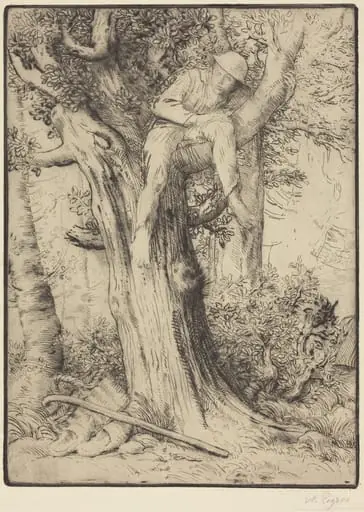 Landscape with a Boy in a Tree (Paysage avec un garcon grimpe sur un arbre, dite "Le denicheur d'oiseaux")