Artwork
St. Jerome in the Wilderness
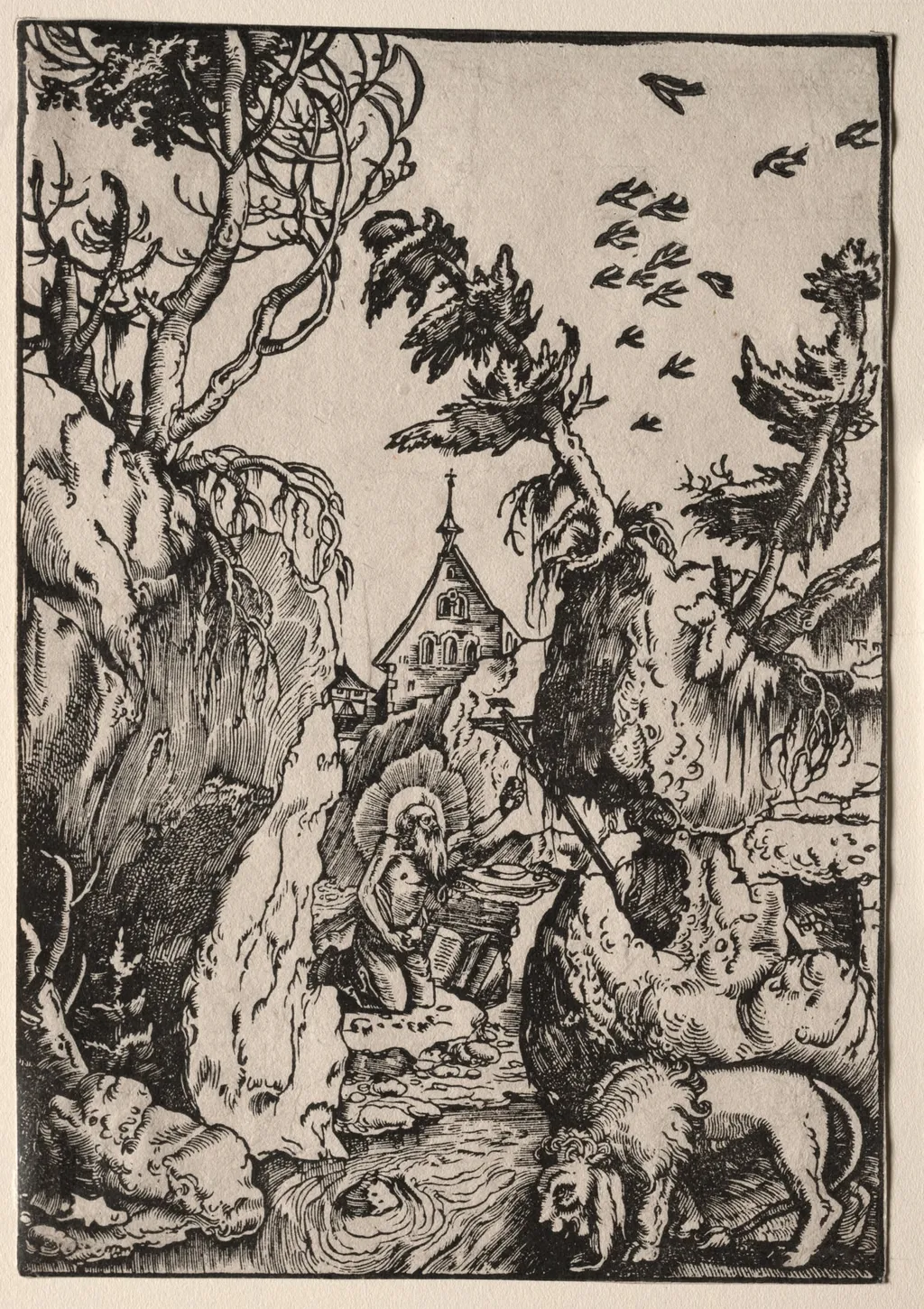
St. Jerome in the Wilderness is a print by the Renaissance artist Hans Baldung Grien. It dates from 1511 and is held in the collection of the Cleveland Museum of Art. Created around 1511, this woodcut by Hans Baldung depicts St.
About this work
Overview
The work reflects Baldung’s technical training under Albrecht Dürer and his interest in the expressive potential of printmaking.
Created around 1511, this woodcut by Hans Baldung depicts St. Jerome in a desolate natural setting. The work reflects Baldung’s technical training under Albrecht Dürer and his interest in the expressive potential of printmaking. Unlike traditional depictions of the saint in scholarly settings, this version emphasizes isolation and physical hardship, rendered through intricate line work and dramatic tonal contrasts.
Subject & Meaning
The figure, clad in a coarse robe and wide-brimmed hat, kneels in prayer amid a tangled wilderness, evoking St. Jerome’s years as a hermit in the Syrian desert. The distant chapel with a cross suggests spiritual refuge amid chaos. The scene underscores themes of penance and devotion, common in late medieval and early Renaissance religious imagery, where nature becomes a mirror for inner struggle.
Technique & Style
Baldung employed sharp, incised lines and bold chiaroscuro to model form and depth. The contrast between dark, dense foliage and areas of open sky creates a sense of spatial tension. The gnarled trees and swirling branches convey movement, while the figure’s stillness anchors the composition. This approach blends Northern Renaissance precision with emerging Mannerist tendencies toward emotional intensity.
History & Provenance
The print entered the collection of the Cleveland Museum of Art in the 20th century, though its earlier ownership history is not fully documented. It was likely produced during Baldung’s early career in Strasbourg, when he was developing his distinctive graphic style. As a print, it would have circulated among educated patrons and clergy, reinforcing devotional themes through accessible imagery.
Context
In early 16th-century Germany, depictions of St. Jerome were popular among humanist circles for his scholarly translation of the Bible and ascetic life. Baldung’s version diverges from idealized portrayals, instead embracing a raw, almost unsettling naturalism. This reflects broader shifts in religious art, where personal piety and the physicality of spiritual experience gained prominence over formal grandeur.
Legacy
Baldung’s interpretation of St. Jerome influenced later Northern printmakers who sought to convey psychological depth through landscape and light. The work stands as an example of how religious subjects were reimagined through individual artistic vision, bridging the devotional traditions of the late Middle Ages with the emerging expressive language of the Reformation era.
Artist & collection
Artist
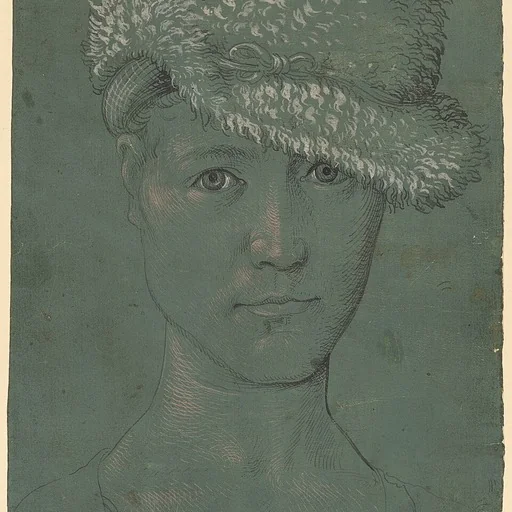
Hans Baldung (1484 or 1485 – September 1545), called Hans Baldung Grien, (being an early nickname, because of his predilection for the colour green), was a painter, printer, engraver, draftsman, and stained glass…

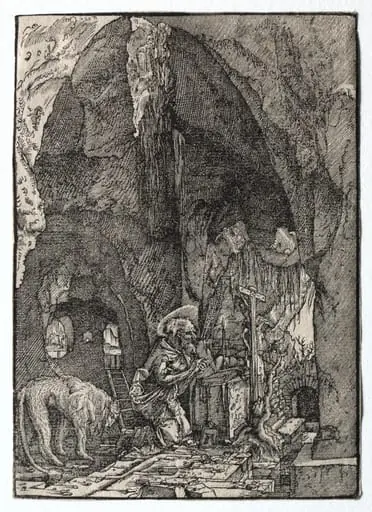 St. Jerome in the Cave
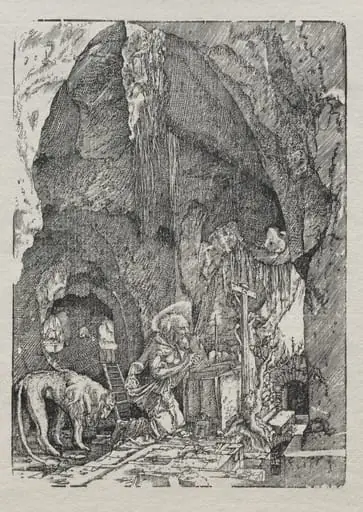 St. Jerome in the Cave
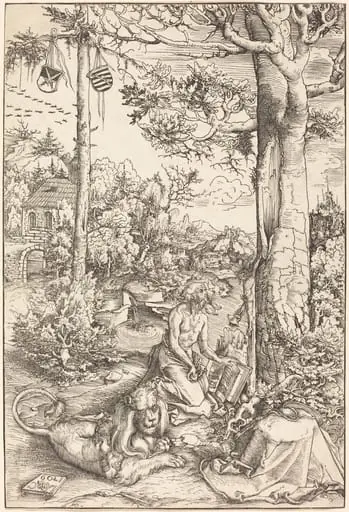 The Penitence of Saint Jerome
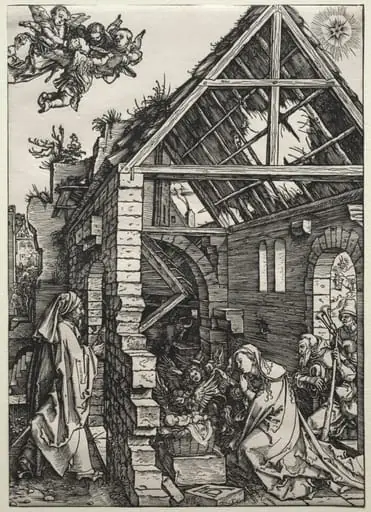 The Nativity
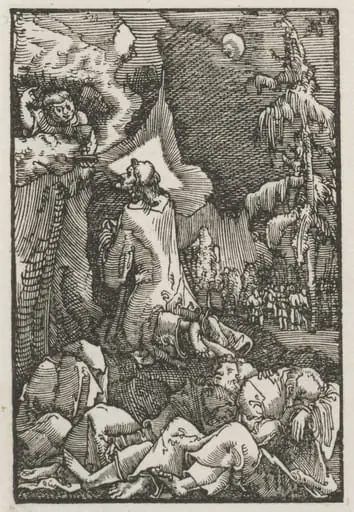 The Fall and Redemption of Man: Christ on the Mount of Olives
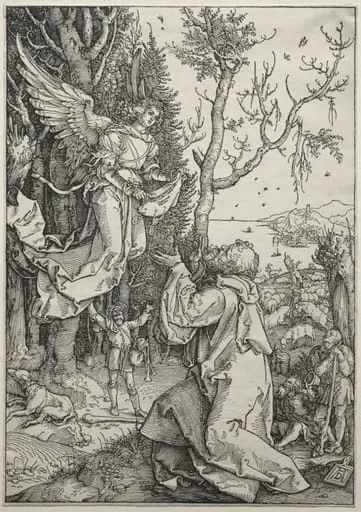 The Life of the Virgin: Joachim and the Angel
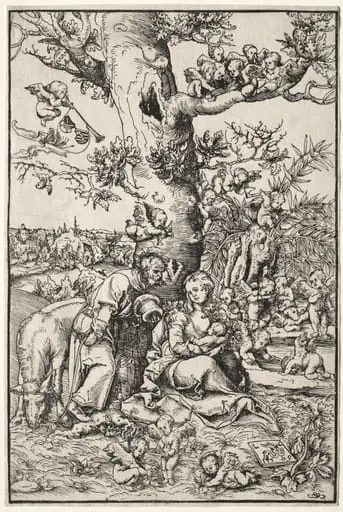 Rest on the Flight into Egypt
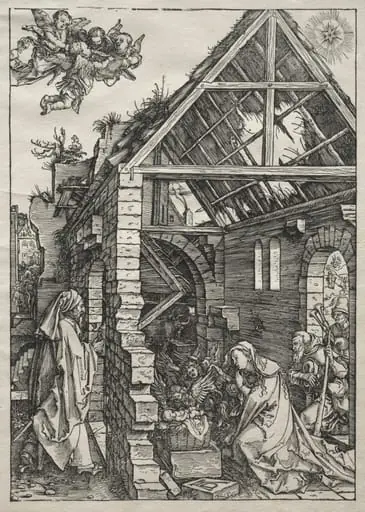 Life of the Virgin: The Nativity
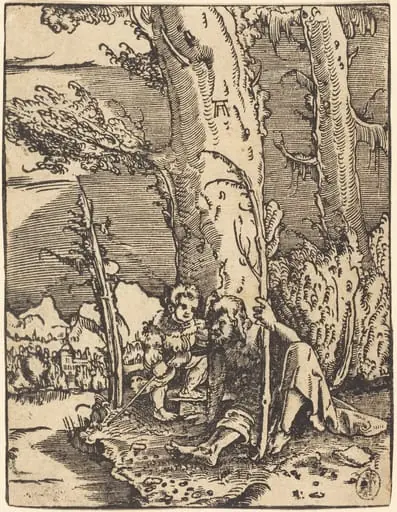 Saint Christopher Seated by a River Bank
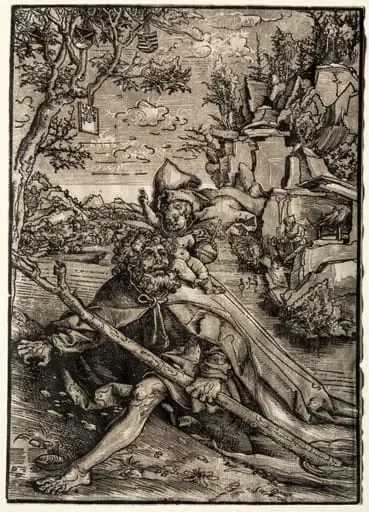 St. Christopher
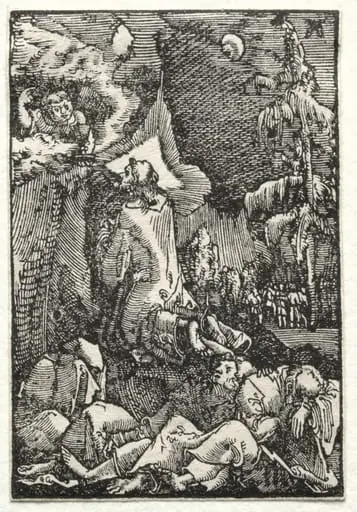 The Fall and Redemption of Man: Chirst on the Mount of Olives
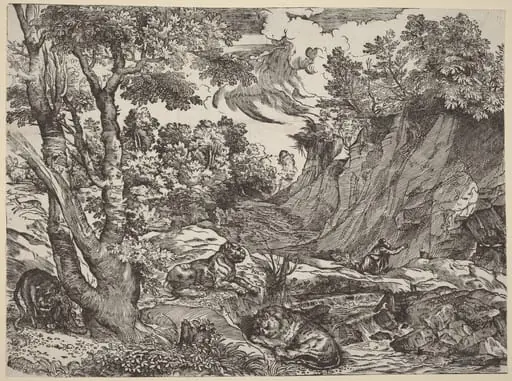 Saint Jerome in the Wilderness