Artwork
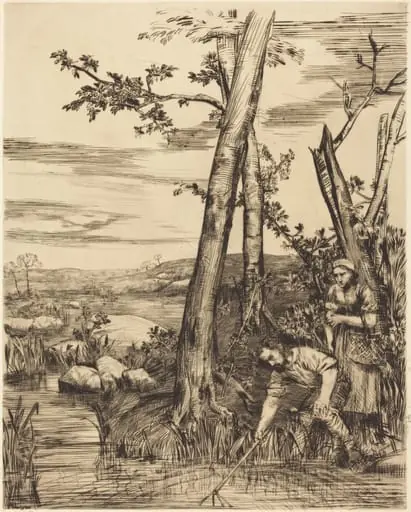
Fishing for Crayfish (Les pecheurs d'ecrevisses)
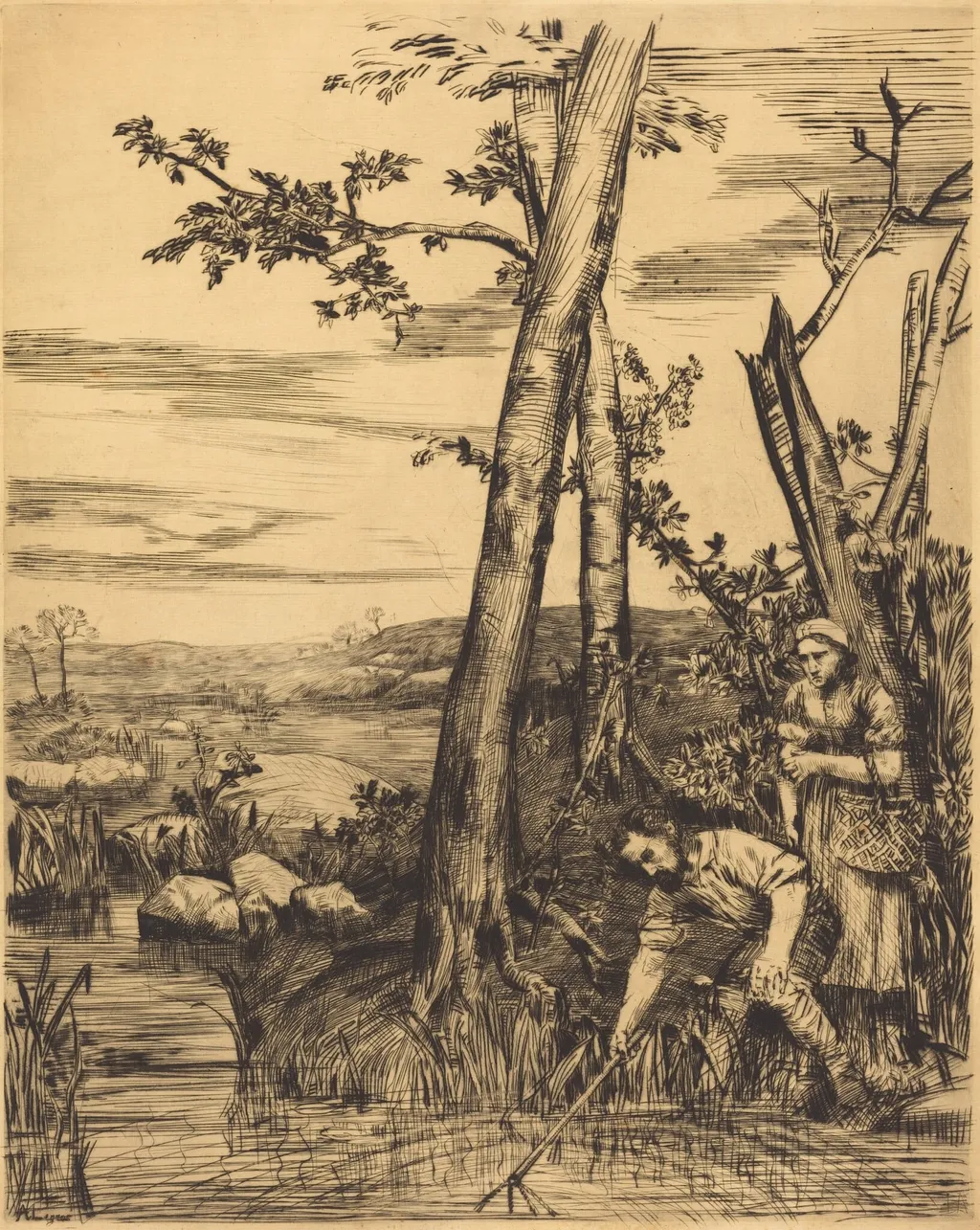
Fishing for Crayfish (Les pecheurs d'ecrevisses) is an ink print by the Romanticist artist Alphonse Legros. It dates from 1874 and is held in the collection of the National Gallery of Art.
About this work
Overview
Unlike oil painting, drypoint allowed him to achieve intimate, tactile effects through direct incision into copper, emphasizing texture over color.
Created in 1874, *Fishing for Crayfish* is a drypoint print by Alphonse Legros, a French artist who moved to London in 1863 and became influential in British printmaking. The work belongs to a body of graphic art in which Legros revived the expressive potential of etching techniques. Unlike oil painting, drypoint allowed him to achieve intimate, tactile effects through direct incision into copper, emphasizing texture over color.
Subject & Meaning
The scene portrays two figures engaged in the quiet labor of crayfish fishing beside a body of water. One figure leans forward, focused on the task, while the other stands nearby, observing. The composition avoids theatricality, instead conveying a sense of routine rural life. There is no overt narrative or symbolism; the emphasis lies in the dignity of manual work and the stillness of the natural setting.
Technique & Style
Legros employed drypoint, a method in which a sharp needle scratches lines directly into a metal plate, creating a burr that holds ink and yields soft, velvety blacks. The resulting lines are dense and uneven, enhancing the texture of foliage, water, and clothing. The tonal gradations are achieved through hatching and cross-hatching, not wash or color, giving the image a somber, intimate character consistent with his graphic aesthetic.
History & Provenance
Produced during Legros’s early years in Britain, the print reflects his efforts to elevate printmaking as a serious art form in a country dominated by painting. It was likely made for private circulation among artists and collectors rather than mass reproduction. Legros taught at the Slade School and influenced a generation of British printmakers, helping to reestablish etching as a respected medium in the late 19th century.
Context
While often associated with Realism, Legros’s work diverges from the social commentary of contemporaries like Millet. His focus on quiet, unidealized labor aligns with broader 19th-century European interest in rural life, but without romanticizing hardship. The print’s subdued palette and restrained composition reflect a shift away from Romantic drama toward a more observational, almost documentary approach to nature and human activity.
Legacy
Legros’s drypoints, including this work, contributed to the revival of etching as a fine art medium in Britain. His technical precision and emphasis on line influenced later artists such as James McNeill Whistler and the members of the Royal Society of Painter-Printmakers. Though less known today, his prints remain important for their role in bridging French and British graphic traditions in the post-Romantic era.
Artist & collection

Artist
Alphonse Legros (French pronunciation: ; 8 May 1837 – 8 December 1911) was a French, later British, painter, etcher, sculptor, and medallist.

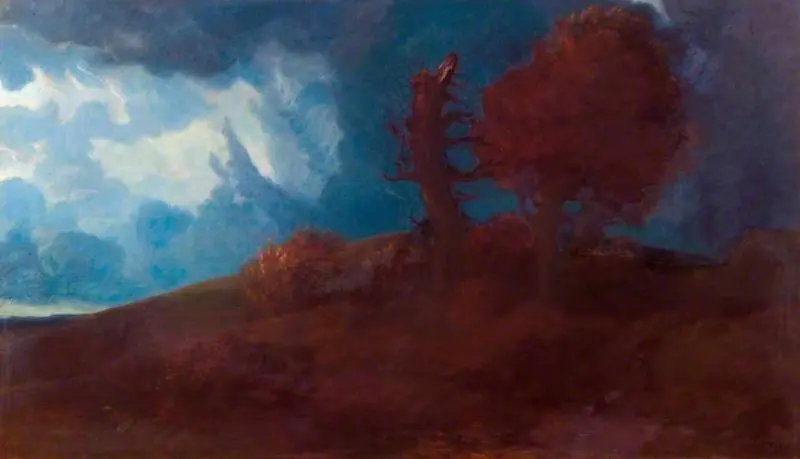
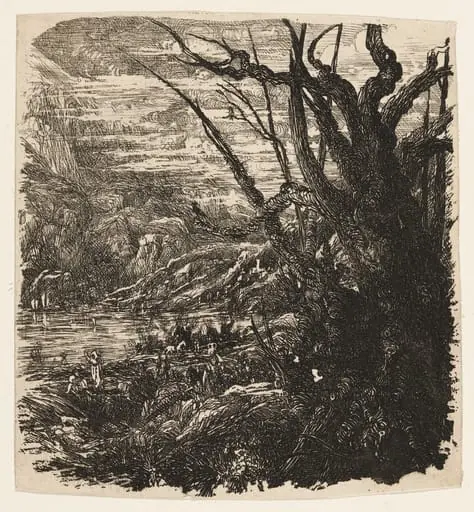 Untitled
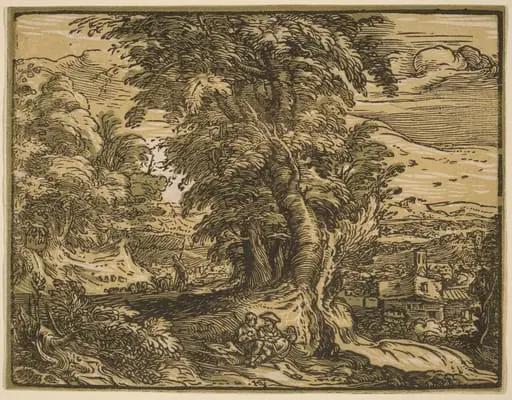 Landscape with a Shepherd Couple
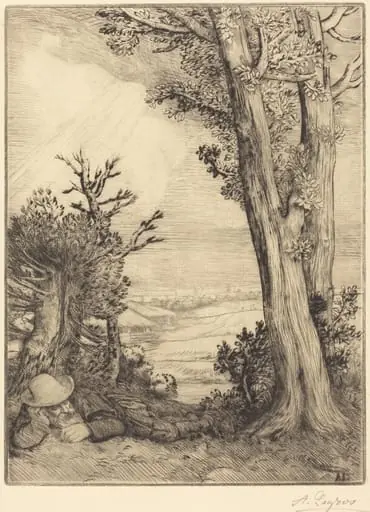 Siesta in the Country (Sieste dans la campagne)
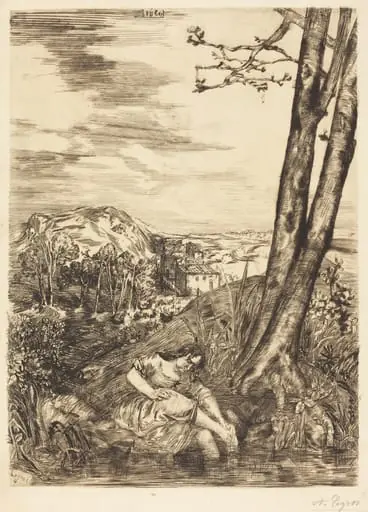 Peasant Washing Her Feet (Paysanne se lavant les pieds)
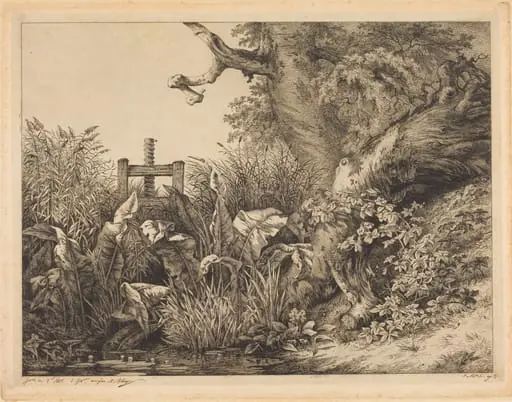 Water Dock and Brambles at a Sluice
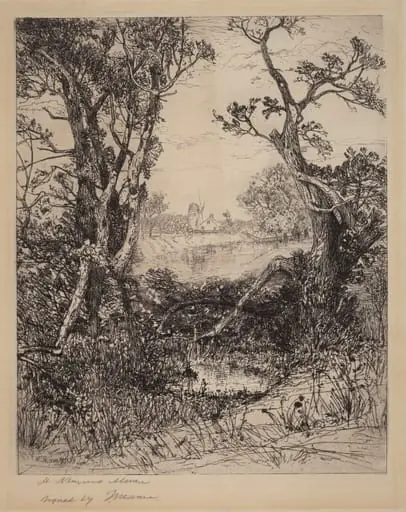 Summer—Easthampton
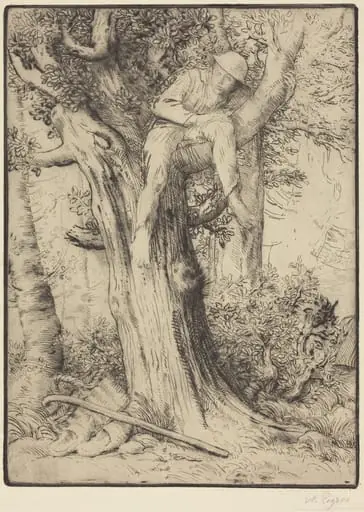 Landscape with a Boy in a Tree (Paysage avec un garcon grimpe sur un arbre, dite "Le denicheur d'oiseaux")
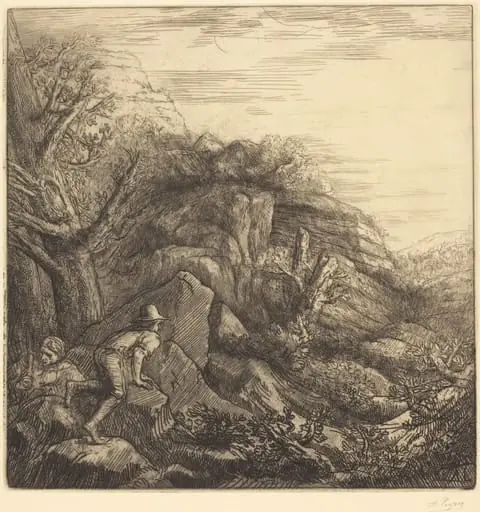 Sunrise (Un lever de soleil)
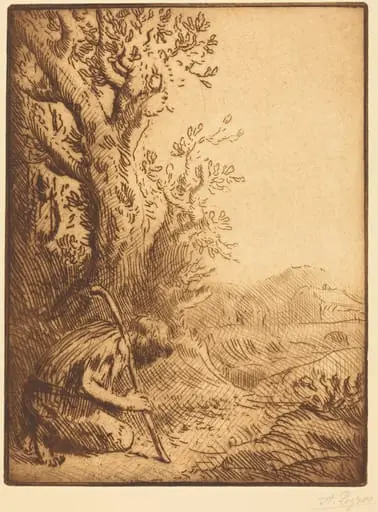 The Prodigal Son, 4th plate (L'enfant prodigue)
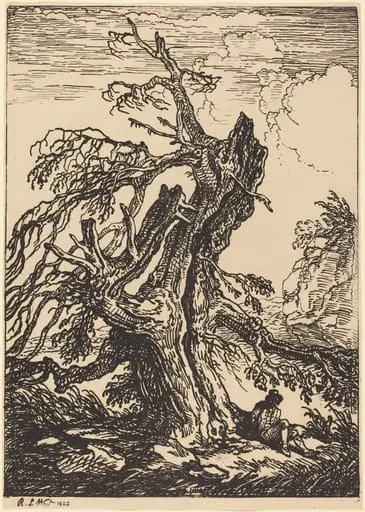 Study of a Tree
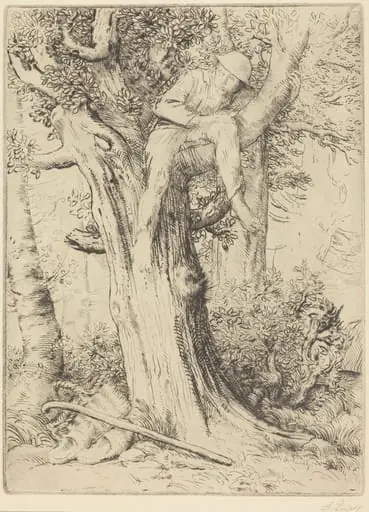 Landscape with a Boy in a Tree (Paysage avec un garcon gimpe sur un arbre dite "Le denicher d'oiseaux)
 Fishing for Crayfish (Les pecheurs d'ecrevisses)