Artwork
St. Jerome in the Cave
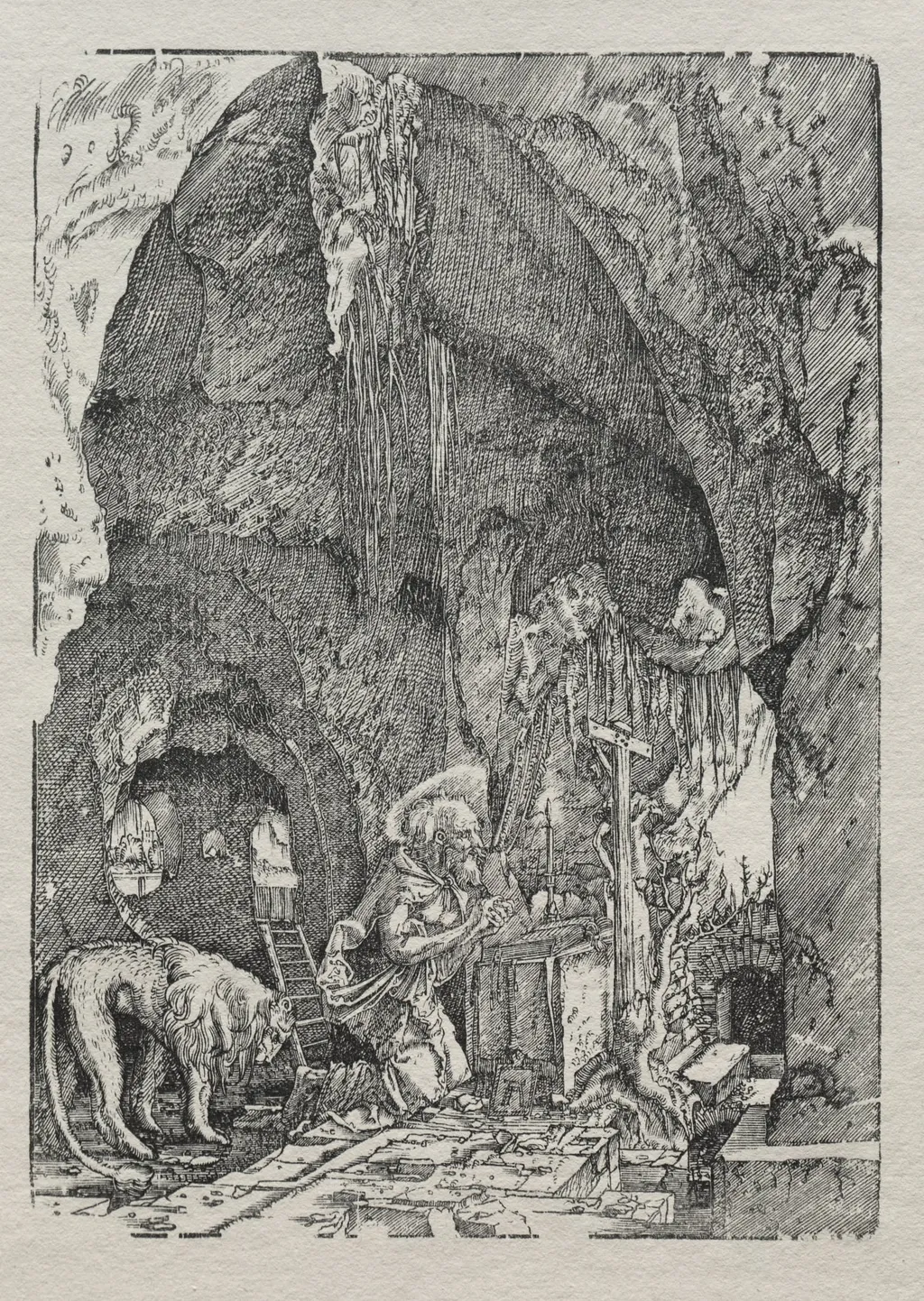
St. Jerome in the Cave is a print by the Renaissance artist Albrecht Altdorfer. It dates from 1514 and is held in the collection of the Cleveland Museum of Art.
About this work
Overview
Though often associated with color paintings, Altdorfer also produced detailed monochromatic works that reveal his mastery of light, texture, and spatial depth.
Created around 1514, this black-and-white drawing is attributed to Albrecht Altdorfer, a key artist of the Danube School. Though often associated with color paintings, Altdorfer also produced detailed monochromatic works that reveal his mastery of light, texture, and spatial depth. This sketch captures St. Jerome in solitude, framed by a rugged cave interior, reflecting the artist’s interest in introspective religious themes rendered through naturalistic environments.
Subject & Meaning
The image depicts St. Jerome, the scholar-saint who translated the Bible into Latin, kneeling in prayer before a cross while holding a book—likely the Scriptures. His halo signifies sanctity, and the lion, traditionally his companion from the legend of removing a thorn from its paw, rests quietly nearby. The cave setting evokes Jerome’s years of ascetic retreat in the Syrian desert, symbolizing spiritual withdrawal and devotion to divine study.
Technique & Style
Rendered in fine linear strokes, the drawing emphasizes texture through hatching and cross-contour lines that define the rough cave walls, the lion’s fur, and the folds of Jerome’s robe. The composition directs attention to the figure through contrast between the dark interior and the narrow beam of light entering from above. Altdorfer’s precise draftsmanship reveals his training in engraving and his sensitivity to atmospheric detail, even in monochrome.
History & Provenance
The drawing likely originated as a preparatory study or independent work from Altdorfer’s time in Regensburg, where he served as a city architect and artist. While its early ownership is undocumented, its stylistic alignment with his known sketches and prints suggests it was produced during his mature period, possibly for private devotion or as a model for later compositions. It entered institutional collections in the 19th century.
Context
In early 16th-century Germany, religious subjects were increasingly depicted with heightened naturalism and psychological depth. Altdorfer’s integration of Jerome into a tangible, rocky landscape aligns with broader humanist interests in biblical authenticity and the spiritual significance of nature. His work diverged from idealized Italian models, favoring northern European sensibilities rooted in local topography and emotional resonance.
Legacy
This drawing exemplifies Altdorfer’s role in elevating landscape as more than backdrop—it became a vessel for spiritual atmosphere. His monochromatic studies influenced later German draftsmen and contributed to the development of printmaking traditions. Though less known than his color paintings, such works underscore his technical range and enduring impact on Northern Renaissance visual culture.
Artist & collection

Artist
Albrecht Altdorfer (c. 1480 – 12 February 1538) was a German painter, engraver and architect of the Renaissance working in Regensburg. Along with Lucas Cranach the Elder and Wolf Huber he is regarded to be the main…

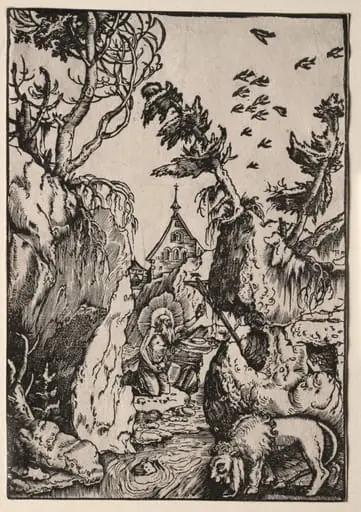 St. Jerome in the Wilderness
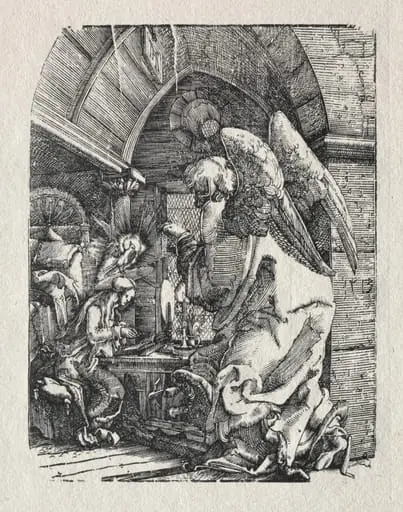 The Annunciation
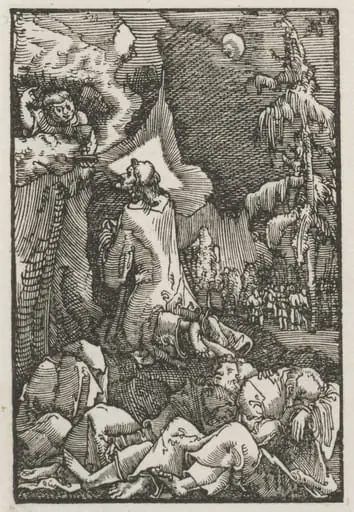 The Fall and Redemption of Man: Christ on the Mount of Olives
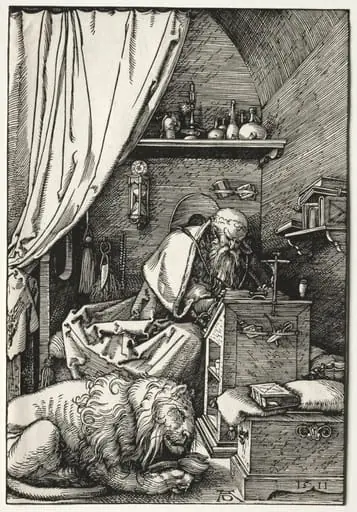 St. Jerome in His Cell
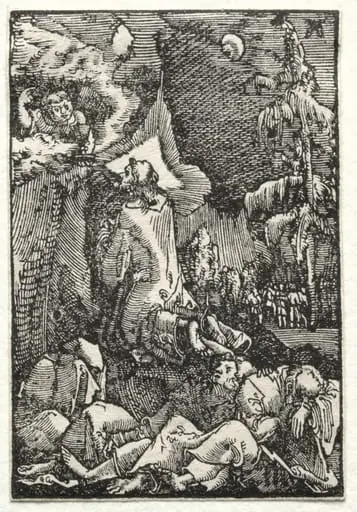 The Fall and Redemption of Man: Chirst on the Mount of Olives
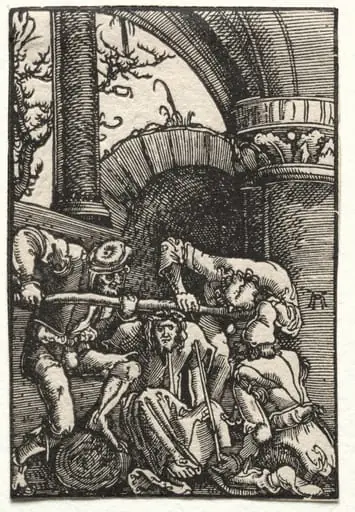 The Fall and Redemption of Man: Christ Crowned with Thorns
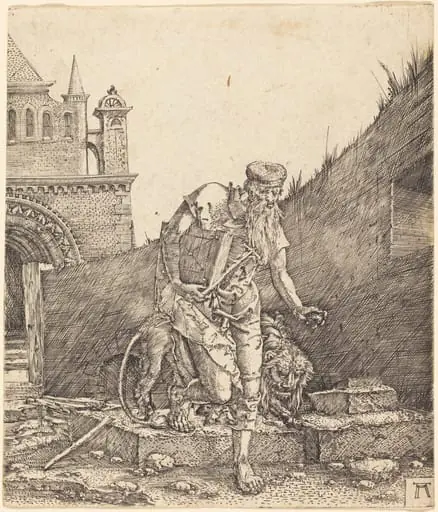 Saint Jerome in a Courtyard
![The Site of the Bed and Oratory of Saint Francis (Luogo del 'letto' e dell'oratorio di San Francesco) [plate R], by Jacopo Ligozzi](https://artifactworldgallery.com/img/jacopo-ligozzi--the-site-of-the-bed-and-oratory-of-saint-francis-luogo-del-l--d2d91b10bc78c845-w320.webp) The Site of the Bed and Oratory of Saint Francis (Luogo del 'letto' e dell'oratorio di San Francesco) [plate R]
The Site of the Bed and Oratory of Saint Francis (Luogo del 'letto' e dell'oratorio di San Francesco) [plate R]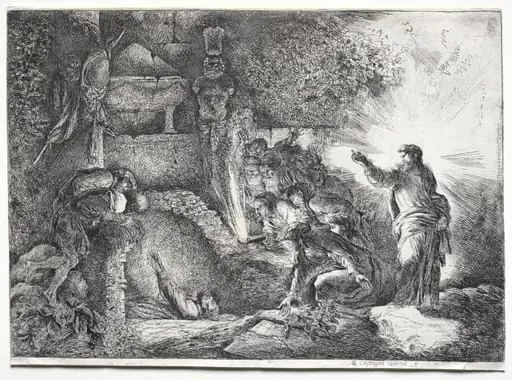 The Resurrection of Lazarus