Artwork
The Fall and Redemption of Man: The Annunciation
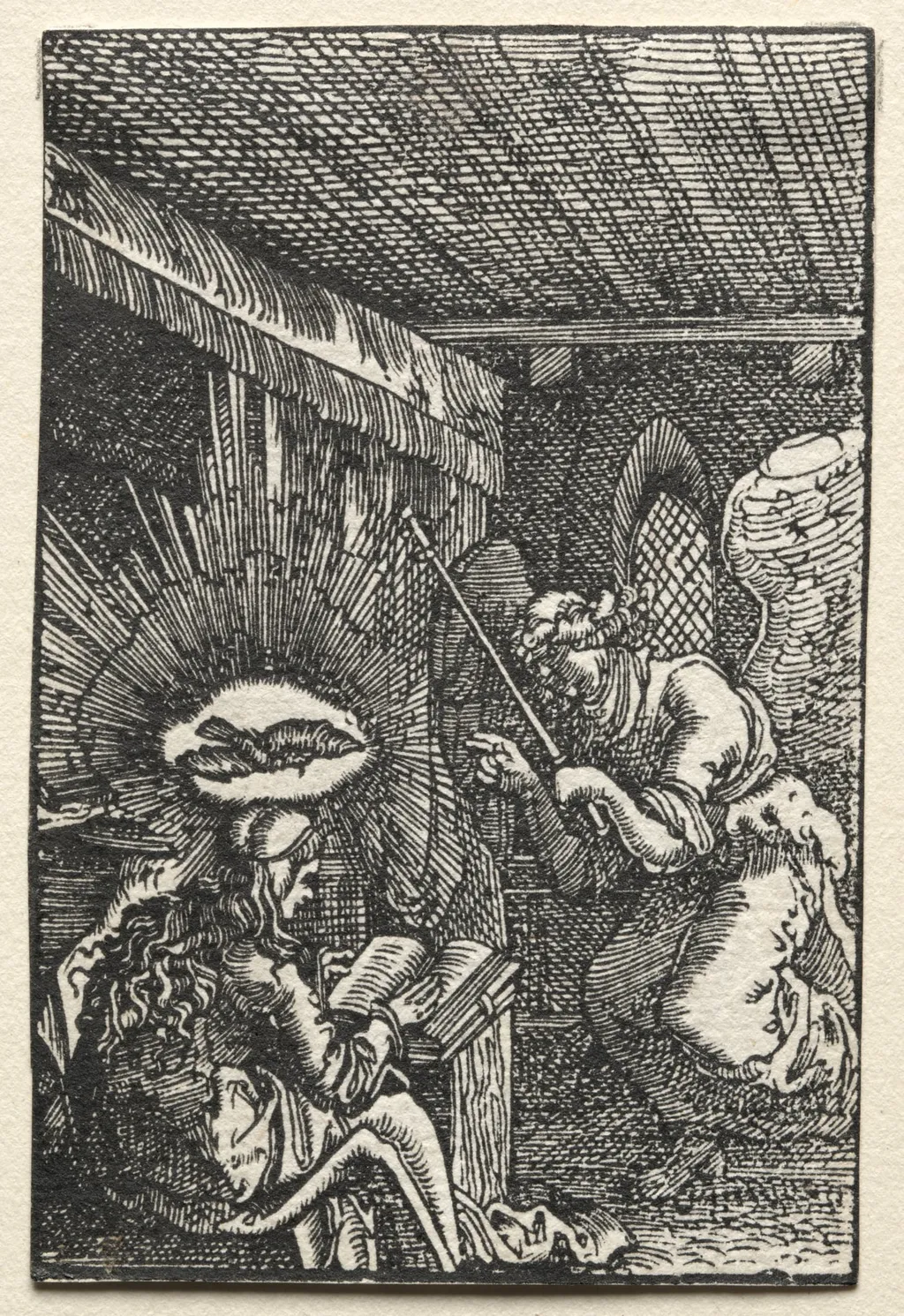
The Fall and Redemption of Man: The Annunciation is a print by the Renaissance artist Albrecht Altdorfer. It dates from 1515 and is held in the collection of the Cleveland Museum of Art.
About this work
Overview
Created around 1515 by Albrecht Altdorfer, this print merges two biblical narratives—the Annunciation and the Fall of Man—within a single composition.
Created around 1515 by Albrecht Altdorfer, this print merges two biblical narratives—the Annunciation and the Fall of Man—within a single composition. Executed in engraving, it reflects Altdorfer’s role in the Danube School, where landscape and spiritual themes intertwined. The work resides in the Cleveland Museum of Art, representing his distinctive approach to religious subjects through atmospheric, emotionally charged environments.
Subject & Meaning
The scene juxtaposes the Annunciation, with the kneeling figure receiving divine light, against the presence of a hunched, staff-bearing figure symbolizing Adam’s fallen state. The dual imagery suggests a theological narrative of sin and grace unfolding simultaneously. The composition invites contemplation of human frailty and divine intervention, without literal depiction of angels or the Virgin, relying instead on symbolic gesture and light.
Technique & Style
Altdorfer employed fine, dense cross-hatching to model form and generate deep shadows, enhancing the chiaroscuro effect. The stark contrast between the illuminated figures and the dark, textured background directs visual focus. A curved tree branch spans the upper edge, framing the scene and reinforcing the natural world’s active role in the spiritual moment. Lines are precise, yet the surface retains a tactile, almost turbulent quality.
History & Provenance
The print was produced during Altdorfer’s tenure in Regensburg, where he served as a civic artist and developed a reputation for innovative printmaking. It entered the Cleveland Museum of Art’s collection in the 20th century, following earlier ownership by European collectors. Its survival in good condition reflects its significance within early 16th-century German graphic arts.
Context
In early 16th-century Germany, religious imagery was evolving alongside humanist thought and Reformation debates. Altdorfer’s integration of landscape as more than backdrop—imbuing it with symbolic weight—aligned with broader Northern Renaissance trends. His work responded to a growing interest in personal devotion and the natural world as a reflection of divine order.
Legacy
Altdorfer’s synthesis of spiritual narrative and environmental expression influenced later generations of printmakers and landscape artists. His use of chiaroscuro and atmospheric depth in engraving expanded the expressive potential of the medium. Though less widely known than contemporaries like Dürer, his approach to integrating nature and theology left a distinct mark on Northern European art.
Artist & collection
Artist
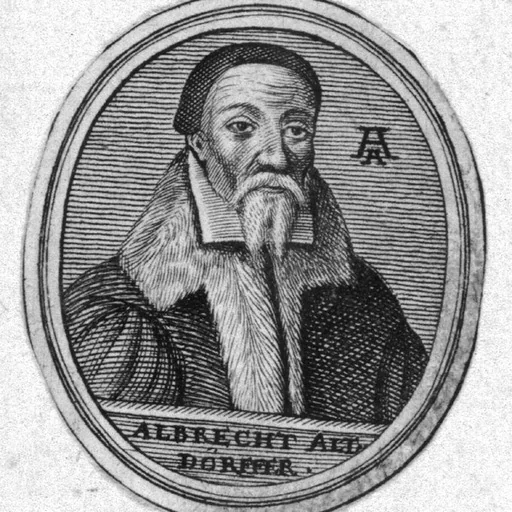
Albrecht Altdorfer (c. 1480 – 12 February 1538) was a German painter, engraver and architect of the Renaissance working in Regensburg. Along with Lucas Cranach the Elder and Wolf Huber he is regarded to be the main…

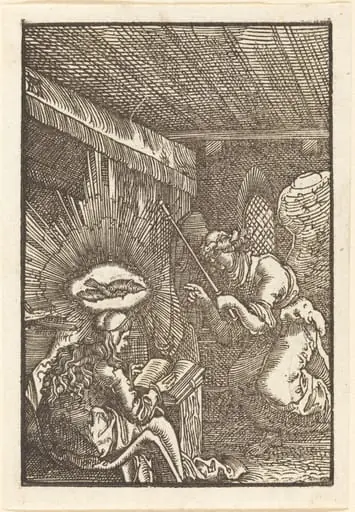 The Annunciation
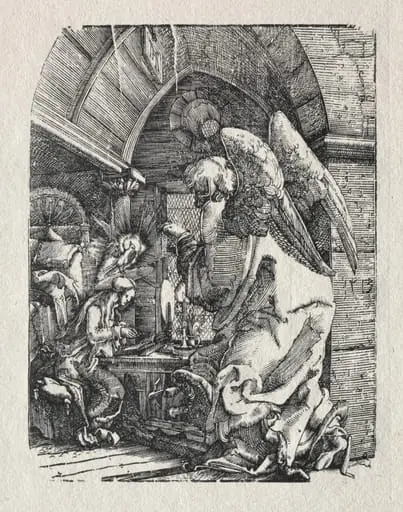 The Annunciation
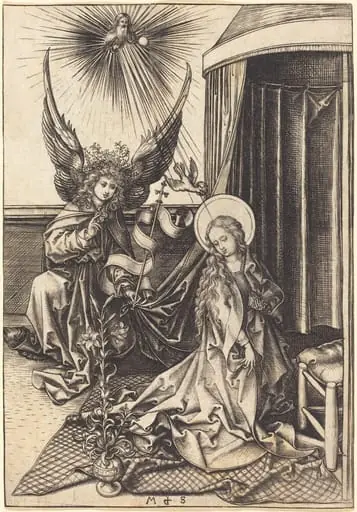 The Annunciation
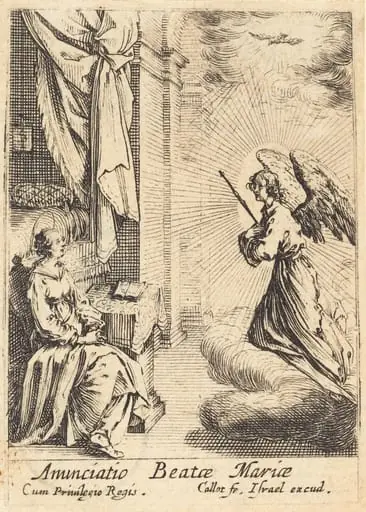 The Annunciation
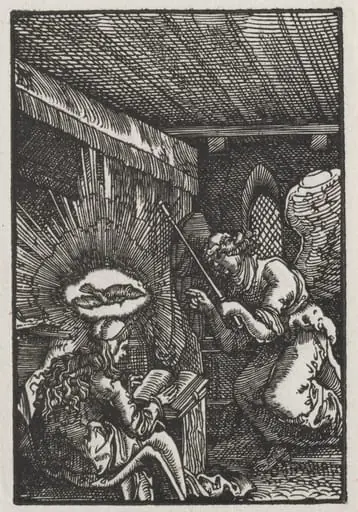 The Fall and Redemption of Man: The Annunciation
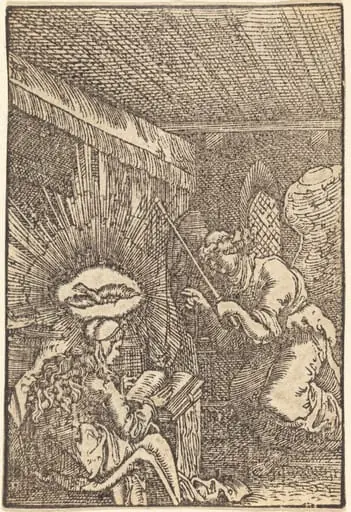 The Annunciation
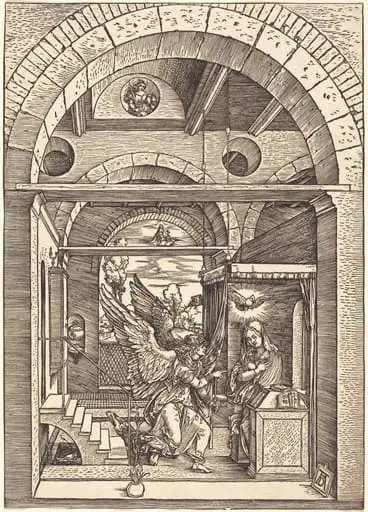 The Annunciation
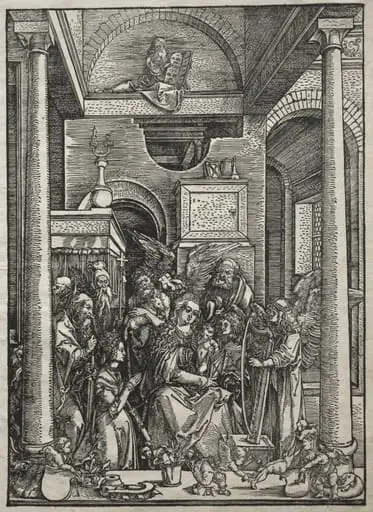 Life of the Virgin: Adoration of the Virgin and Child by Saints and Angels
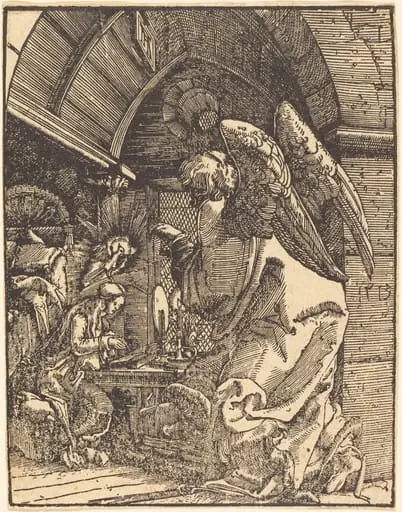 The Annunciation
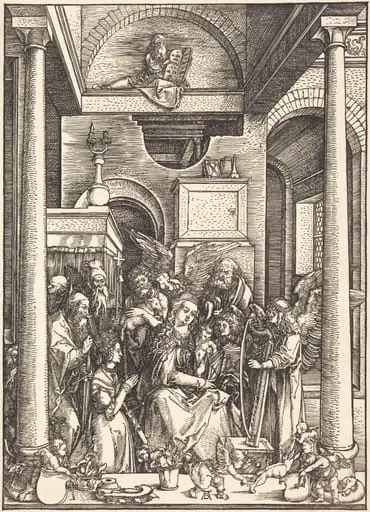 The Glorification of the Virgin
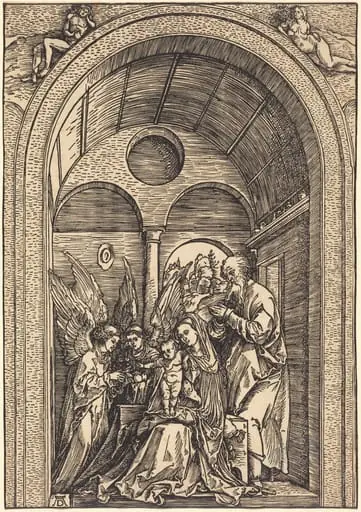 The Holy Family with Two Angels in a Vaulted Hall
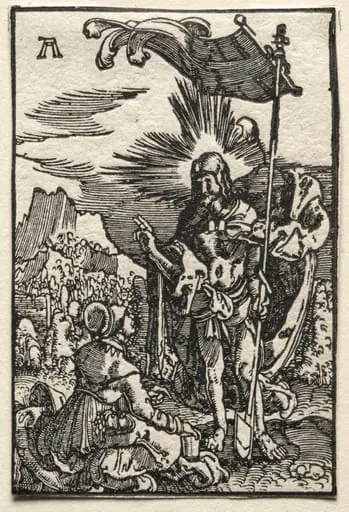 The Fall and Redemption of Man: Christ Appearing to St. Mary Magdalen