Artwork
The Annunciation
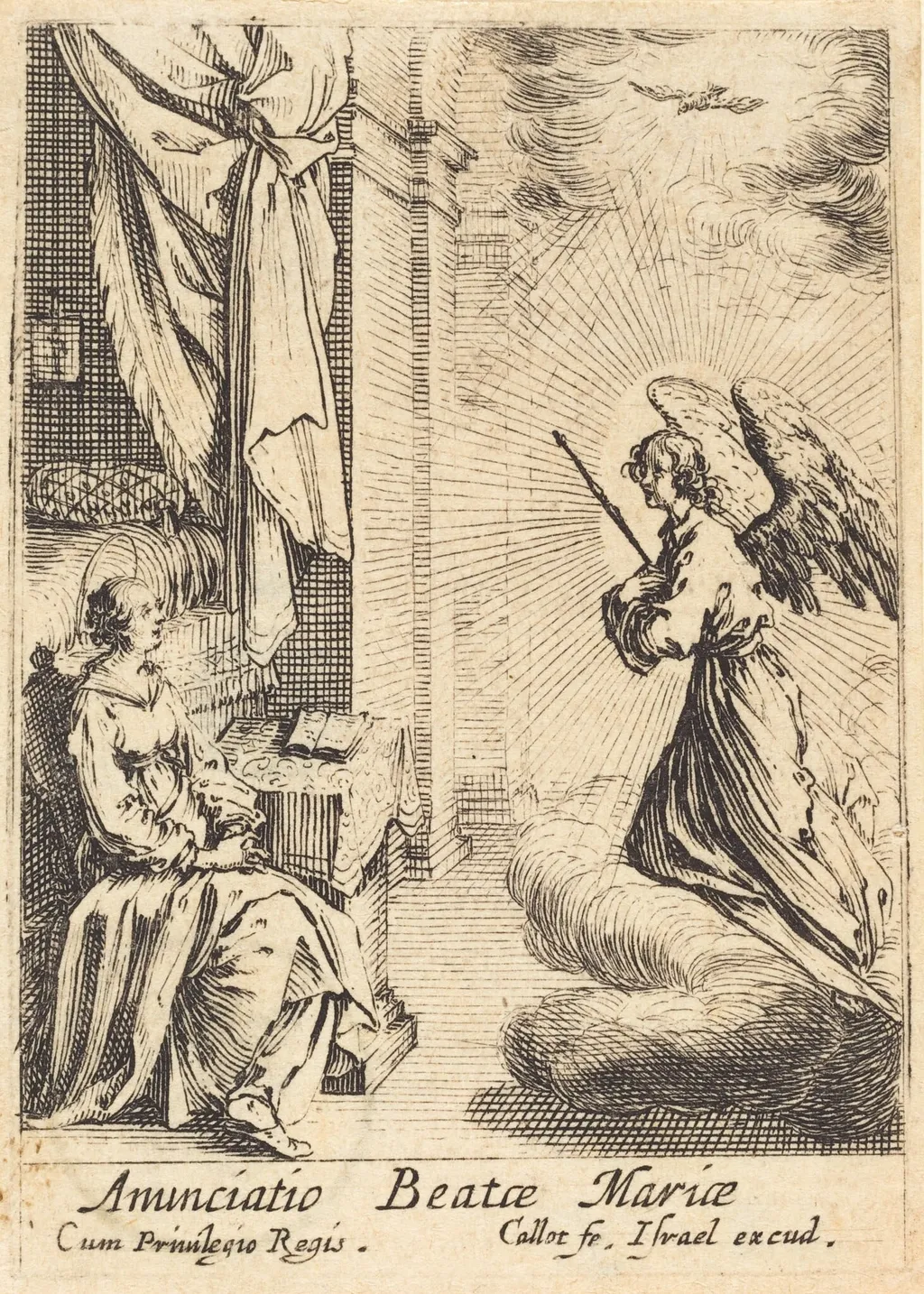
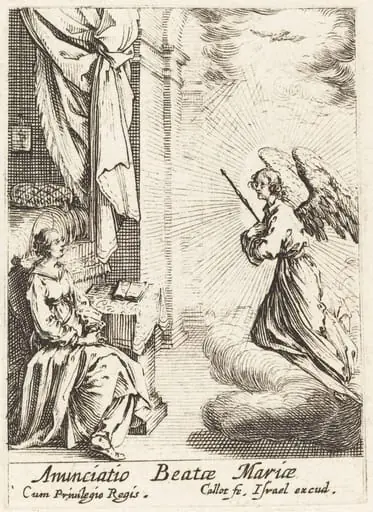
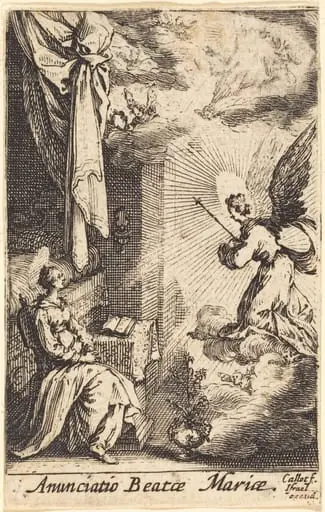
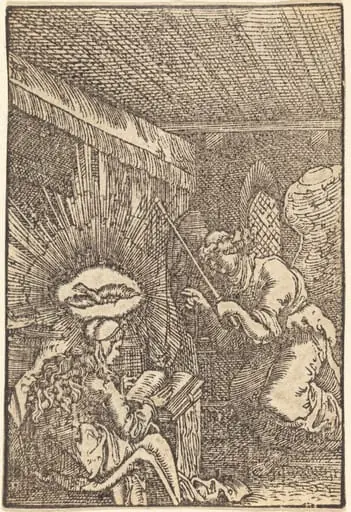
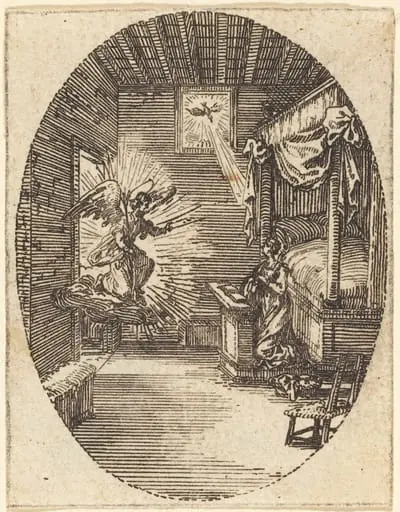
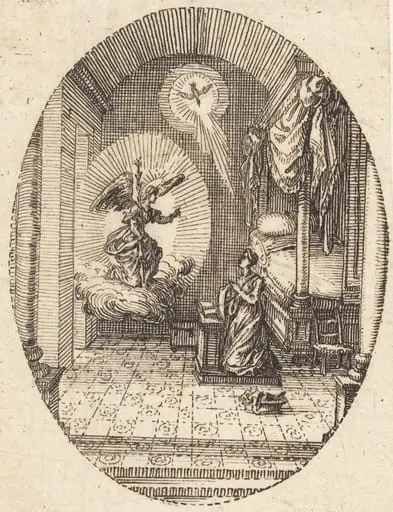
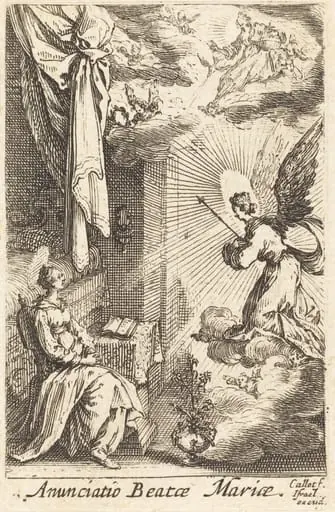
The Annunciation is an ink print by the Baroque artist Jacques Callot. It dates from 1634 and is held in the collection of the National Gallery of Art.
About this work
Overview
Jacques Callot, a 17th-century printmaker from Lorraine, produced this etching around 1634 as part of his extensive series of religious subjects.
Jacques Callot, a 17th-century printmaker from Lorraine, produced this etching around 1634 as part of his extensive series of religious subjects. Executed on laid paper, the work reflects his mastery of fine-line technique and his interest in conveying spiritual narratives through detailed, intimate compositions. With over 1,400 known etchings, Callot’s output was both prolific and varied, but this piece exemplifies his quieter, devotional mode.
Subject & Meaning
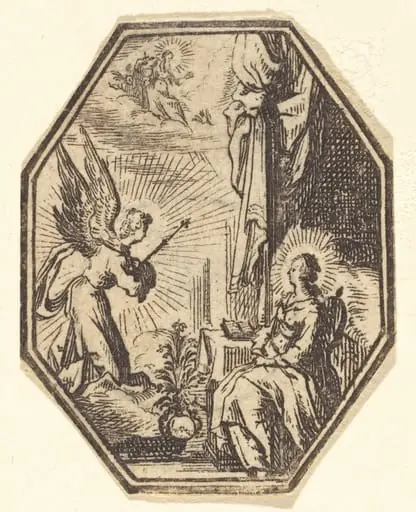
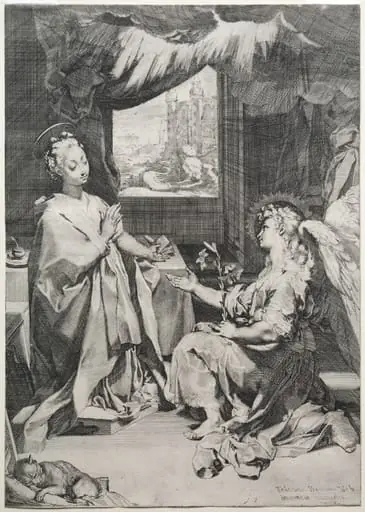
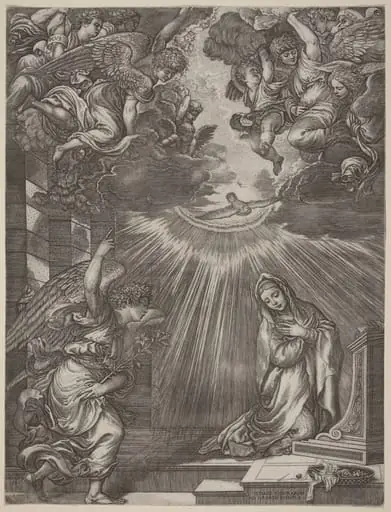
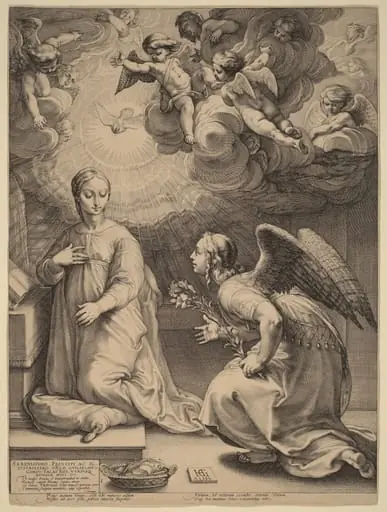
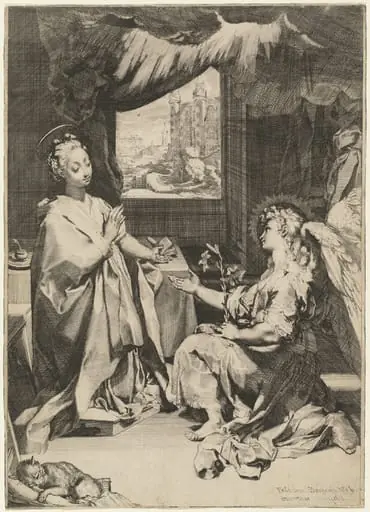
The scene depicts the moment the Archangel Gabriel announces to the Virgin Mary that she will bear the Son of God. Mary, seated indoors beside a book, listens with quiet receptivity, while Gabriel, framed by radiant lines and drifting clouds, gestures toward her. The composition emphasizes divine communication through stillness and gesture rather than dramatic action, aligning with contemplative devotional practices of the era.
Technique & Style
Callot employed fine etching lines to render delicate textures: the folds of Mary’s robe, the weave of the curtain, the softness of clouds. The use of laid paper, with its visible chain lines, enhances the tactile quality of the print. His precise control over line weight and spacing creates depth and luminosity, particularly in the angel’s radiant form, achieved without color or heavy shading.
History & Provenance
The etching was made during Callot’s mature period in Nancy, after his time in Florence and Paris. It likely circulated among collectors and religious institutions in Lorraine and beyond, as his prints were widely distributed. No specific early ownership records are documented, but its survival in multiple institutional collections suggests consistent appreciation among connoisseurs of printmaking.
Context
In early 17th-century Europe, religious imagery remained central to print culture, especially in Catholic regions like Lorraine. Callot’s Annunciation reflects Counter-Reformation ideals, favoring clarity, emotional restraint, and devotional focus. His approach diverged from grand Baroque drama, instead offering a personal, domesticated vision of sacred events suited to private meditation.
Legacy
Callot’s etchings, including this one, influenced later generations of printmakers through their technical precision and narrative subtlety. Though less celebrated than his battle scenes or grotesques, works like The Annunciation demonstrate his range and his ability to infuse spiritual themes with quiet humanity. His handling of light and line helped define the expressive potential of etching beyond mere reproduction.
Artist & collection

Artist
Jacques Callot was a baroque printmaker and draftsman from the Duchy of Lorraine.

 Holy Family at supper
 Restoration of the Aqueduct at Pisa
 Restoration of the Aqueduct at Pisa
 Square in Paris with Many Figures
 Square in Paris with Many Figures
 Horsemen Attacked by Robbers
 HOW WILL A COVERED PART BE CORRECTED?HOW WIKA A COVERED HEART DEED CORRECTED?
![Christ Walking on the Water [second plate], by Jacques Callot](https://artifactworldgallery.com/img/jacques-callot--christ-walking-on-the-water-second-plate--2069f3bfe4cb2126-w320.webp) Christ Walking on the Water [second plate]
Christ Walking on the Water [second plate]