Artwork
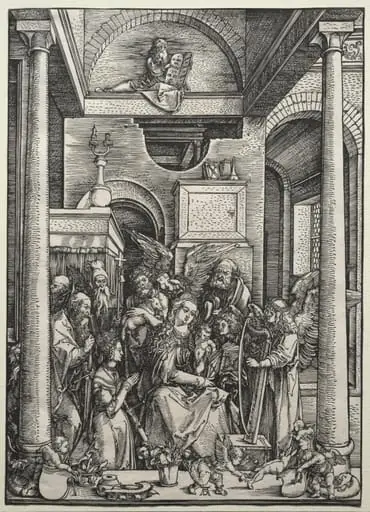
The Glorification of the Virgin
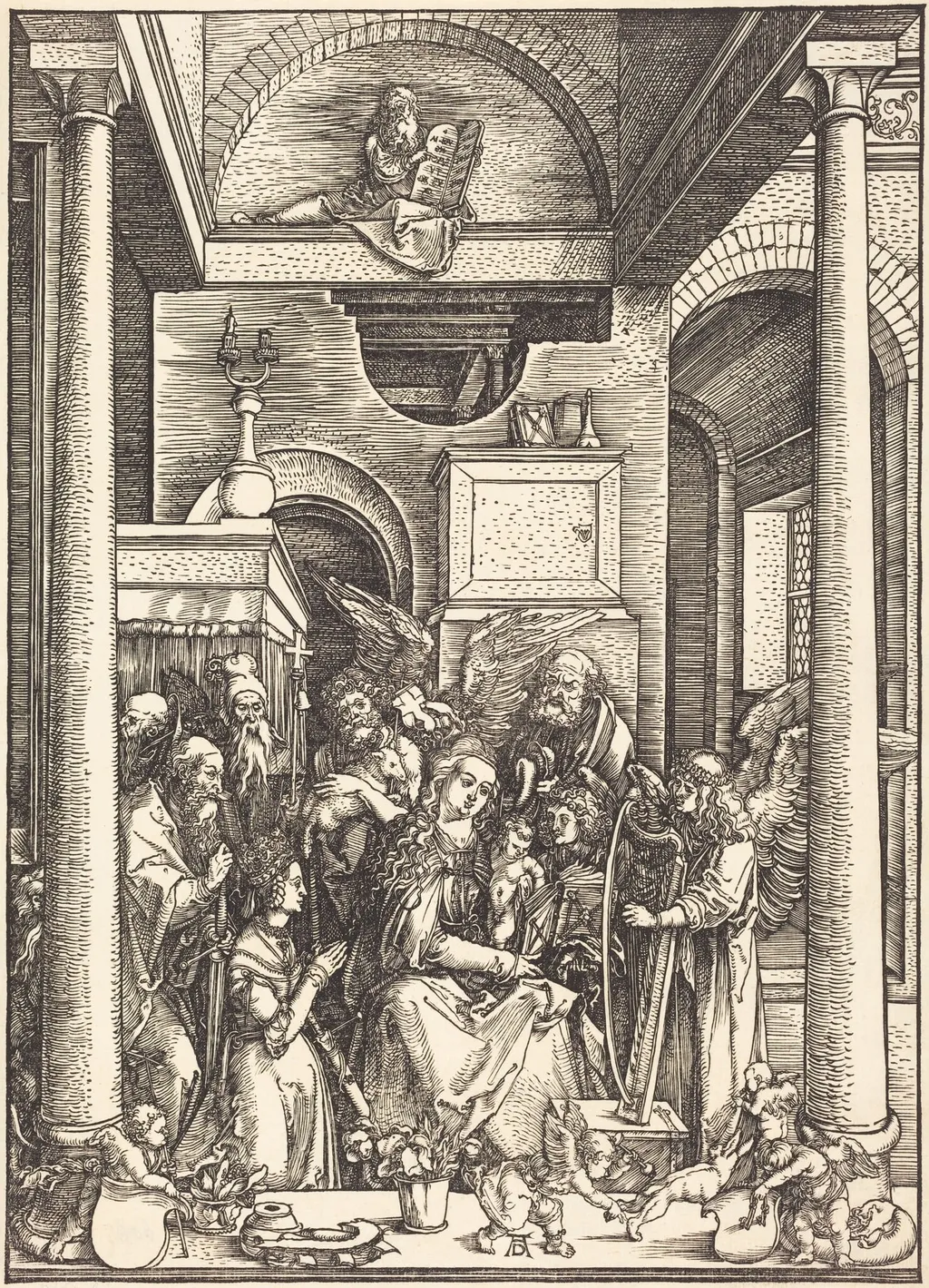
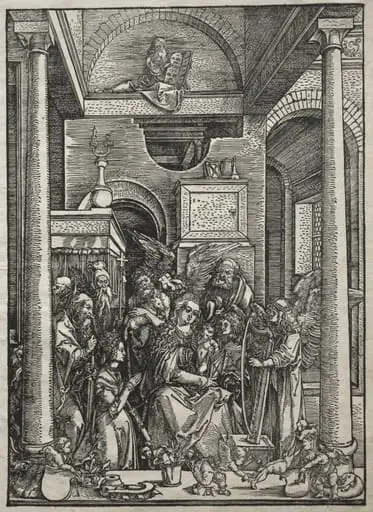
The Glorification of the Virgin is an ink print by the Northern Renaissance artist Albrecht Dürer. It dates from 1504 and is held in the collection of the Metropolitan Museum of Art.
About this work
Overview
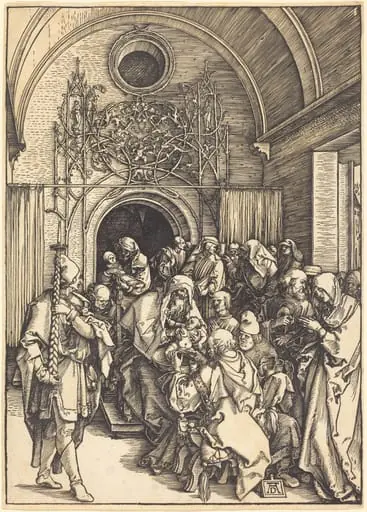
Albrecht Dürer’s woodcut titled *The Glorification of the Virgin* dates from around 1504. Executed in the early phase of his career, the print presents a devotional scene centered on the Virgin Mary, surrounded by a host of saints and celestial figures, rendered with the precision characteristic of Dürer’s emerging style.
Subject & Meaning
The composition places the Virgin at its core, emphasizing her elevated status within Christian iconography. Encircling her are various saints and angels, whose presence underscores the theological concept of Mary’s intercessory role and the reverence afforded to her in late medieval devotional practice.
Technique & Style
Created as a woodcut, the work relies on carved wooden blocks to produce bold lines and intricate textures. Dürer’s handling of the medium demonstrates a sophisticated control of contrast and detail, allowing him to delineate fine ornamental patterns and the delicate gestures of the figures despite the limitations of the print process.
History & Provenance
The print emerged during a period when Dürer was establishing his reputation across Europe. Although specific ownership records are sparse, the work was circulated among collectors of religious prints, contributing to the spread of his reputation as a master of both engraving and woodcut techniques.
Artist & collection
Artist
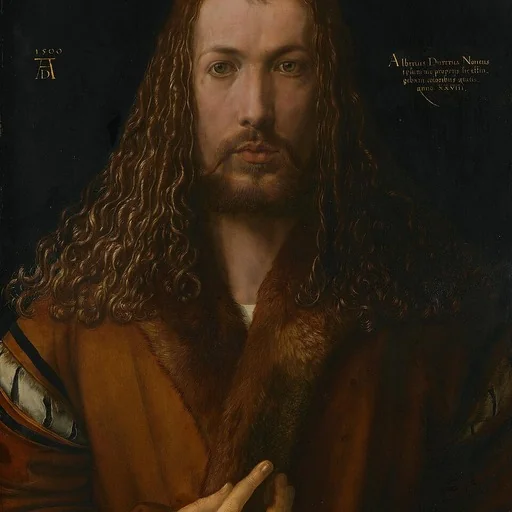
Albrecht Dürer spent his life in Nuremberg, a busy German city where artists traded prints like currency.

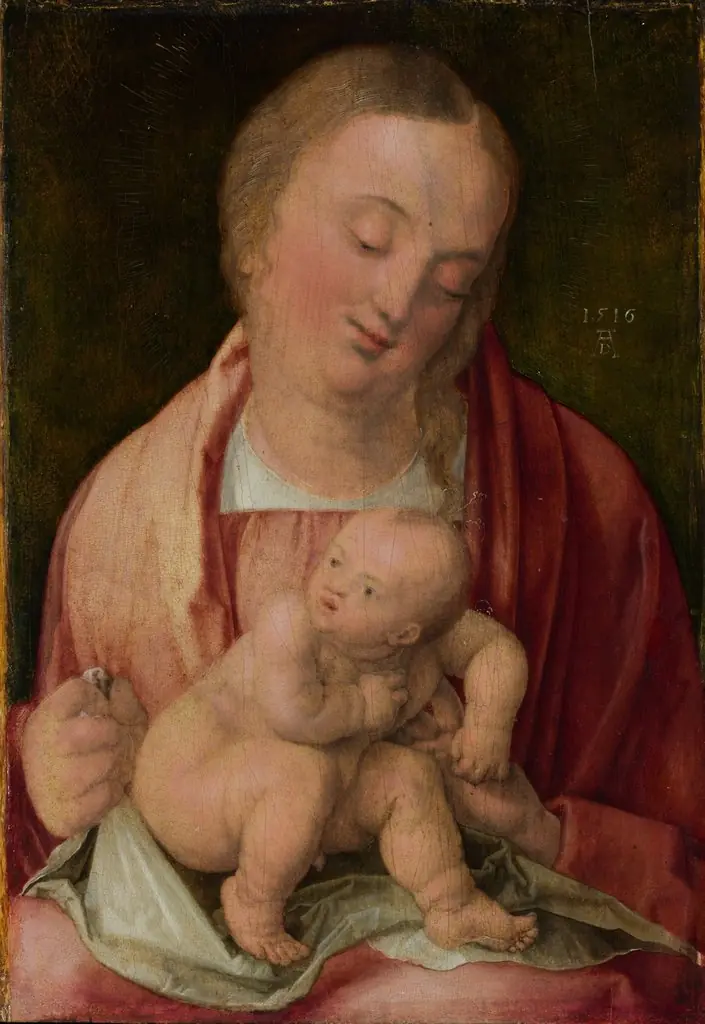
![Madonna and Child [obverse], by Albrecht Dürer](https://artifactworldgallery.com/img/albrecht-durer--madonna-and-child-obverse--d7b8ebf05d22ebe5-w320.webp)
![Lot and His Daughters [reverse], by Albrecht Dürer](https://artifactworldgallery.com/img/albrecht-durer--lot-and-his-daughters-reverse--b4ebf9b282faa17a-w320.webp)