Artwork
The Fall and Redemption of Man: Christ Bearing the Cross
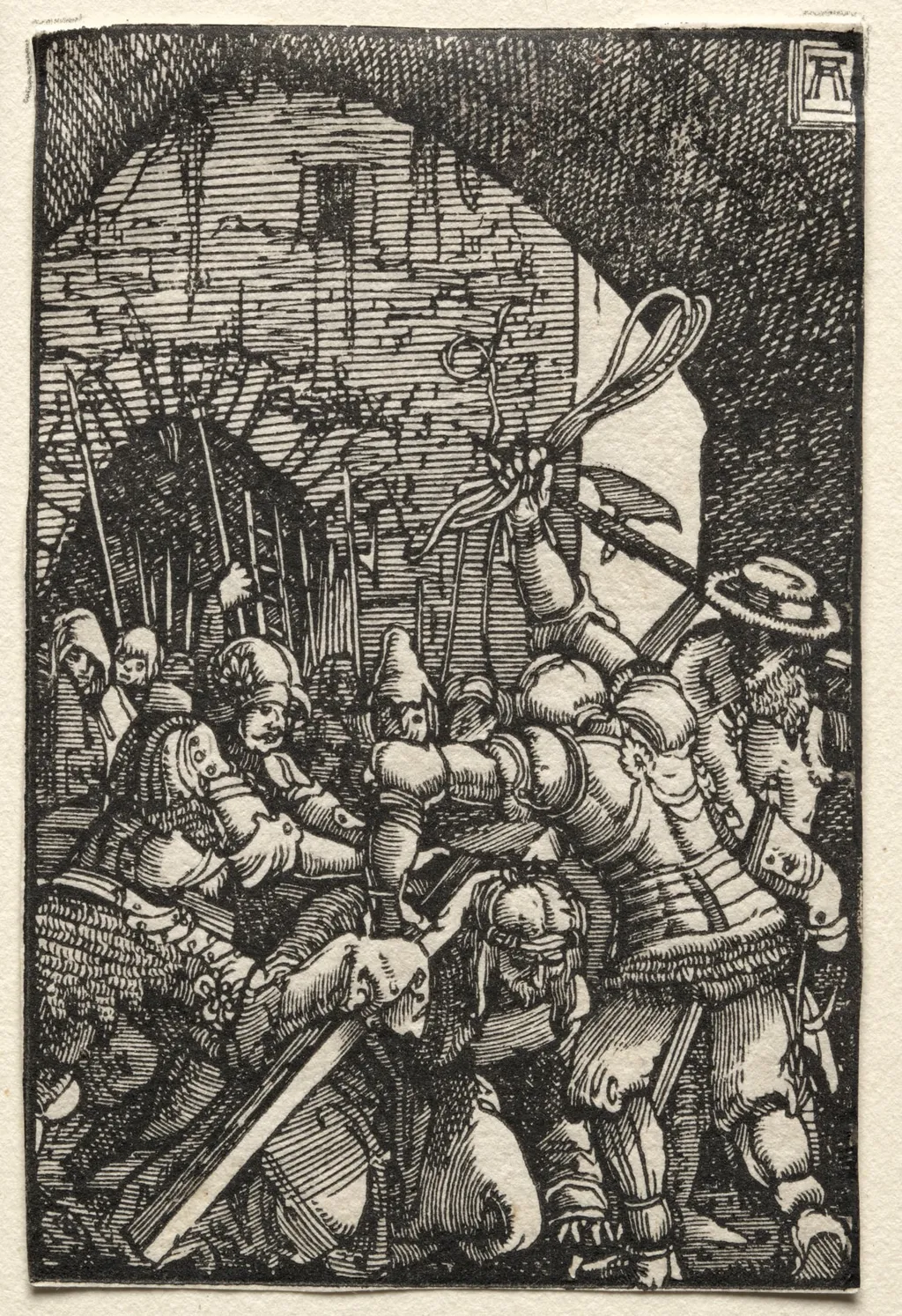
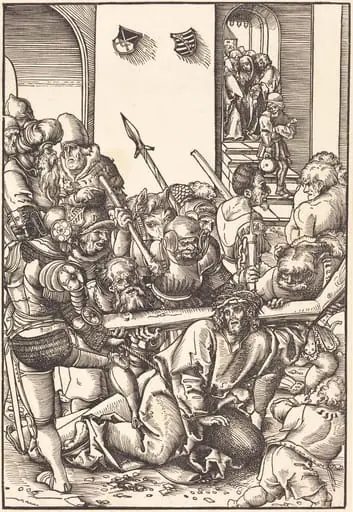
The Fall and Redemption of Man: Christ Bearing the Cross is a print by the Renaissance artist Albrecht Altdorfer. It dates from 1515 and is held in the collection of the Cleveland Museum of Art.
About this work
Overview
Created circa 1515 by Albrecht Altdorfer, this black-and-white print captures Christ carrying the cross through a densely packed urban setting.
Created circa 1515 by Albrecht Altdorfer, this black-and-white print captures Christ carrying the cross through a densely packed urban setting. Altdorfer, based in Regensburg, was known for integrating biblical narratives into richly detailed landscapes. Though rendered in monochrome, the work conveys motion and tension through precise line work and contrasting tones, reflecting his skill in printmaking and his association with the Danube School's expressive style.
Subject & Meaning
The scene illustrates Christ’s procession to Calvary, a moment of suffering central to Christian theology. The crowded, chaotic procession underscores human complicity in the event, while the cross, centrally positioned, serves as both physical burden and spiritual anchor. The lack of divine intervention in the composition emphasizes human agency and the weight of earthly suffering, aligning with devotional themes of the early 16th century.
Technique & Style
Altdorfer employed sharp, incised lines and deep chiaroscuro to model figures and architecture, creating a sense of compression and urgency. The tightly packed crowd and angular buildings amplify the claustrophobic atmosphere. Unlike many contemporaries who favored idealized forms, he prioritized dynamic composition and textural detail, using the print medium to enhance emotional intensity rather than decorative refinement.
History & Provenance
The print emerged during Altdorfer’s mature period, when he was active in Regensburg and engaged with both painting and printmaking. While its early ownership is undocumented, its stylistic ties to the Nuremberg Little Masters suggest circulation among collectors of fine prints. It survives as part of a broader body of work that bridges religious narrative with landscape innovation in early German print culture.
Context
Produced during the early Reformation, the image reflects a period when religious imagery was being reevaluated across Europe. Altdorfer’s focus on naturalistic detail and emotional immediacy diverged from classical ideals, aligning with northern European tendencies toward psychological depth. His landscapes, though not yet fully autonomous, signaled a shift toward nature as a carrier of spiritual meaning.
Legacy
Altdorfer’s integration of dramatic landscape with sacred narrative influenced later generations of northern printmakers. Though less widely known than Dürer, his work contributed to the development of expressive printmaking in Germany. This print exemplifies his unique ability to merge architectural precision with emotional turbulence, leaving a mark on the evolution of religious imagery in print.
Artist & collection
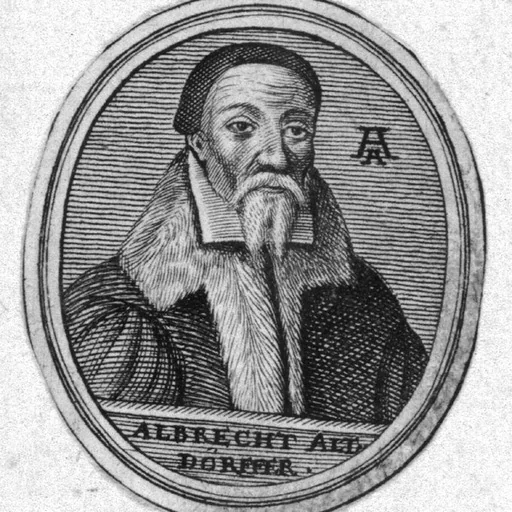
Artist
Albrecht Altdorfer (c. 1480 – 12 February 1538) was a German painter, engraver and architect of the Renaissance working in Regensburg. Along with Lucas Cranach the Elder and Wolf Huber he is regarded to be the main…

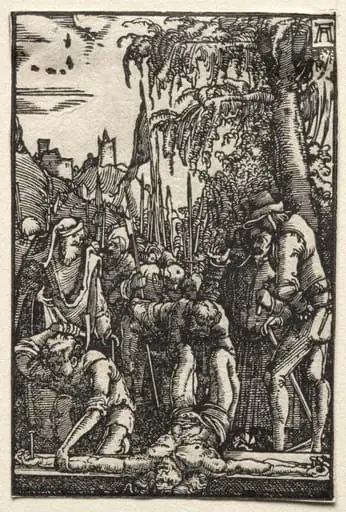 The Fall and Redemption of Man: Christ Nailed to the Cross
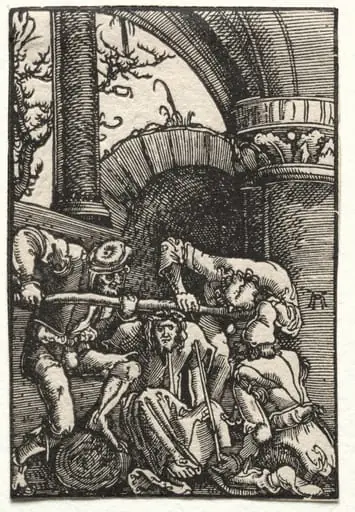 The Fall and Redemption of Man: Christ Crowned with Thorns
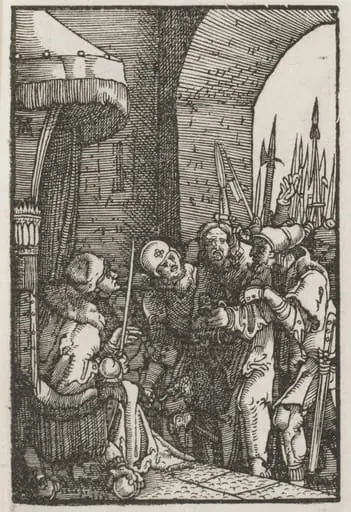 The Fall and Redemption of Man: Christ before Pilate
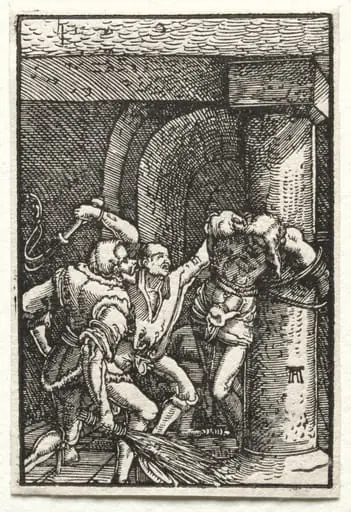 The Fall and Redemption of Man: Flagellation of Christ
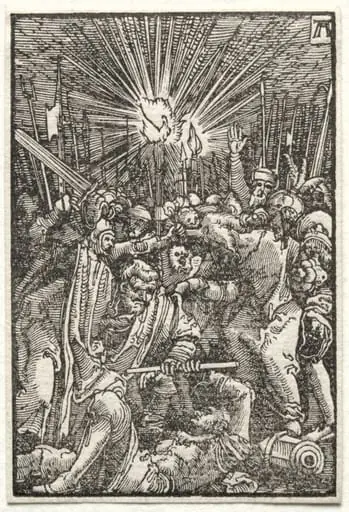 The Fall and Redemption of Man: Christ taken captive
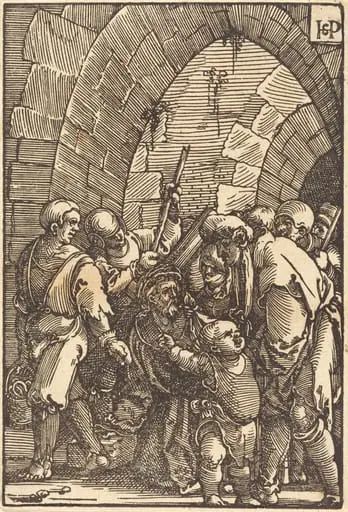 Christ Bearing the Cross
 Christ Bearing the Cross