Artwork
Christ Bearing the Cross
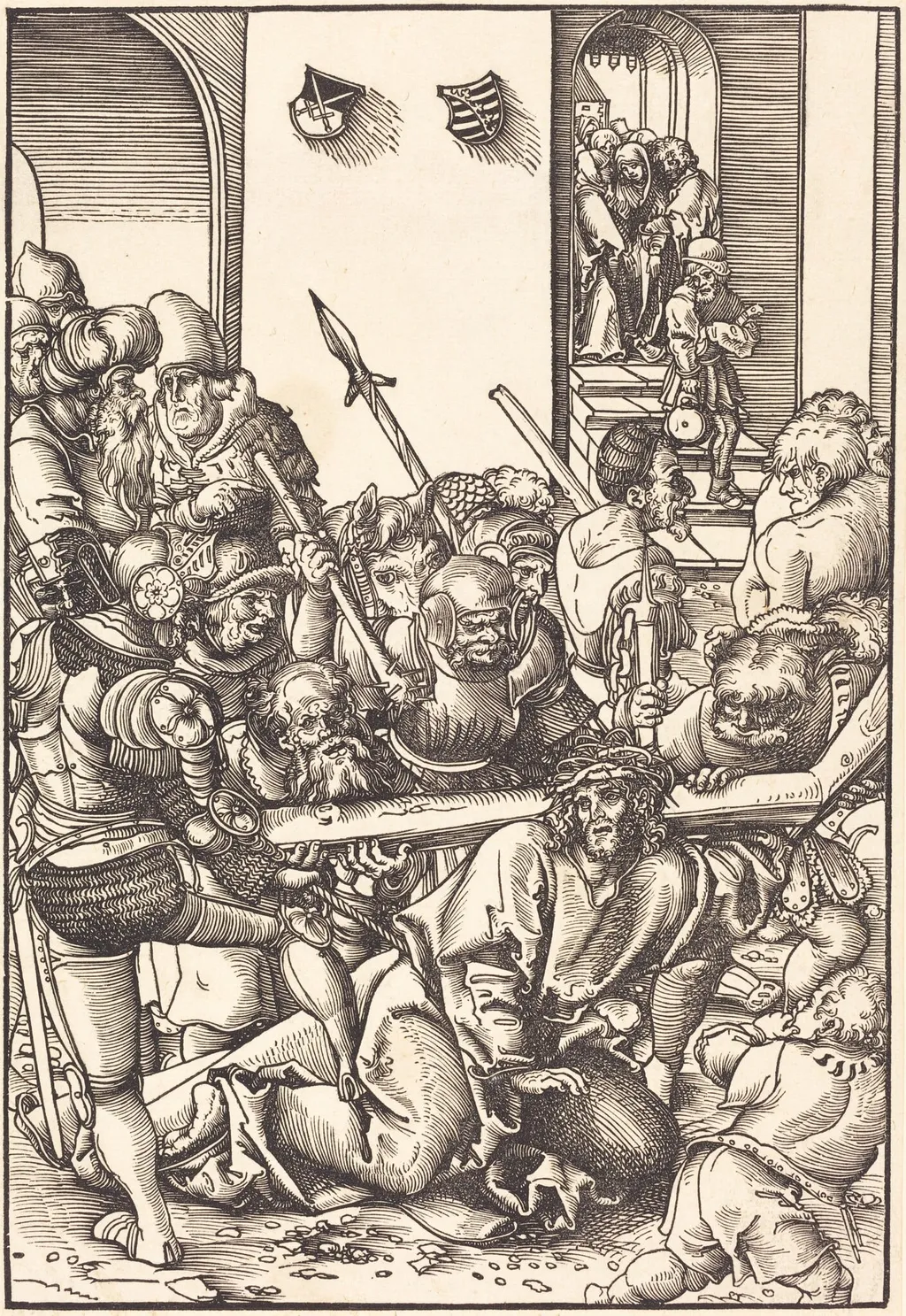
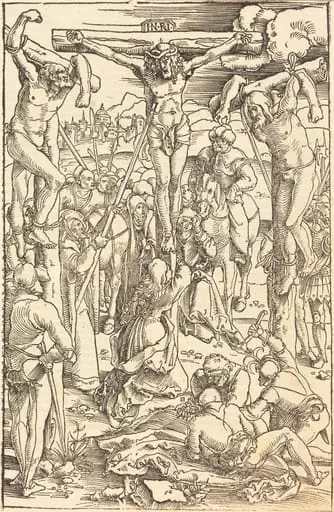
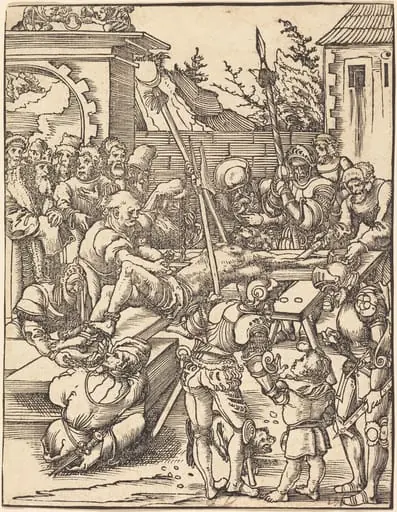
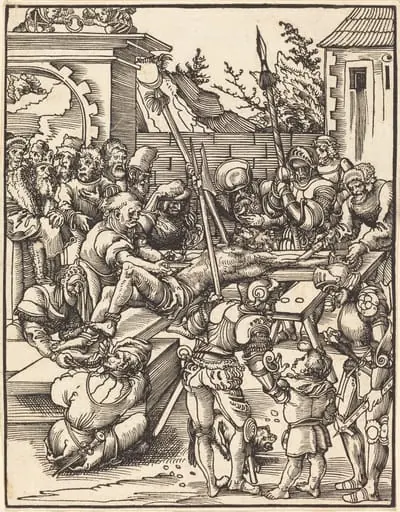
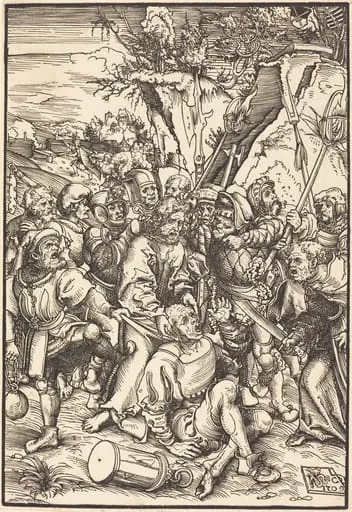
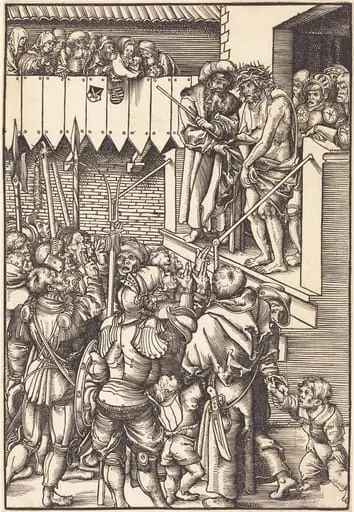
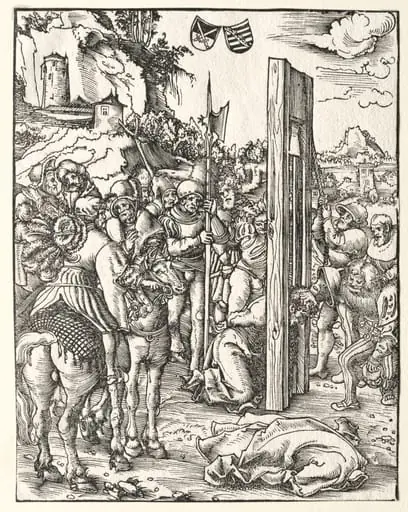
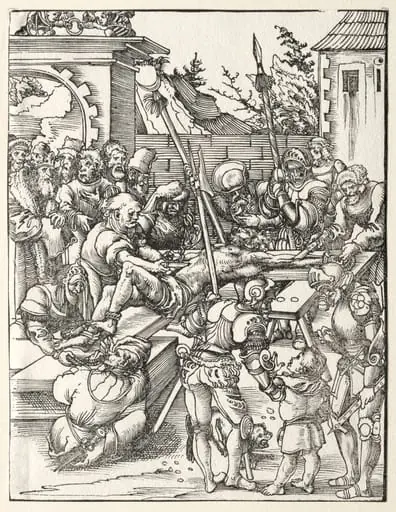
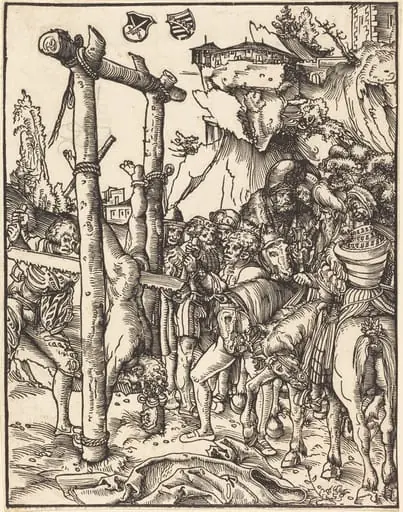
Christ Bearing the Cross is an ink print by the Renaissance artist Lucas Cranach the Elder. It dates from 1509 and is held in the collection of the National Gallery of Art.
About this work
Overview
Executed in the German Renaissance tradition, it reflects the artist’s skill in printmaking and his early focus on devotional imagery.
Created in 1509, Lucas Cranach the Elder’s woodcut *Christ Bearing the Cross* is a black-and-white print from the early phase of his career, before his full engagement with Protestant reform. Executed in the German Renaissance tradition, it reflects the artist’s skill in printmaking and his early focus on devotional imagery. The composition captures a moment of physical and spiritual strain, rendered through the stark contrasts and linear precision characteristic of woodcut technique.
Subject & Meaning
The image portrays Christ struggling beneath the weight of the cross, surrounded by a dense, agitated crowd of onlookers and tormentors. His isolation amid the chaos underscores the theological theme of suffering and sacrifice. The figures, rendered with exaggerated gestures and angular forms, convey moral ambiguity—some jeer, others watch indifferently—inviting contemplation of human complicity in divine suffering.
Technique & Style
Cranach employed the woodcut medium to achieve sharp, high-contrast lines, carving directly into the woodblock to create bold outlines and dense shadow areas. Forms are simplified into angular shapes, with no modeling or gradation. The lack of soft edges heightens emotional intensity, while the tightly packed composition amplifies the sense of turmoil. This approach prioritizes expressive clarity over naturalism, typical of Northern European printmaking of the period.
History & Provenance
The print was made during Cranach’s tenure as court artist to the Electors of Saxony, when he produced numerous religious images for both Catholic and emerging Protestant audiences. Though created before his public alignment with Lutheranism, the work’s emotional directness foreshadowed Reformation ideals of accessible, impactful religious imagery. Its survival in multiple impressions suggests wide circulation among devotional collectors.
Context
In early 16th-century Germany, woodcuts were a primary medium for disseminating religious imagery to a broad public. Cranach’s work emerged amid shifting theological landscapes, where traditional Catholic iconography was being reinterpreted. His use of dramatic, crowded scenes aligned with popular Passion narratives, while the starkness of the print format made it suitable for private devotion and educational use in a time of religious upheaval.
Legacy
Cranach’s *Christ Bearing the Cross* exemplifies how printmaking expanded access to religious themes beyond painted altarpieces. Its influence extended through later Protestant visual culture, where clarity and emotional immediacy became valued. Though not widely copied in form, its compositional intensity and linear economy contributed to the broader development of narrative printmaking in Northern Europe during the Reformation era.
Artist & collection
Artist
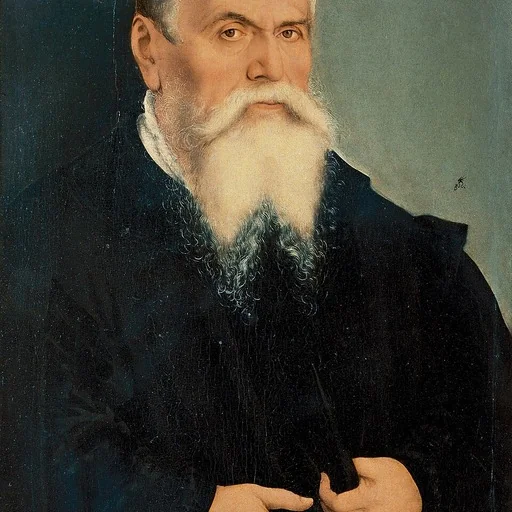
Lucas Cranach the Elder was a German Renaissance painter and printmaker in woodcut and engraving.