Artwork
The Fall and Redemption of Man: Descent into Hell
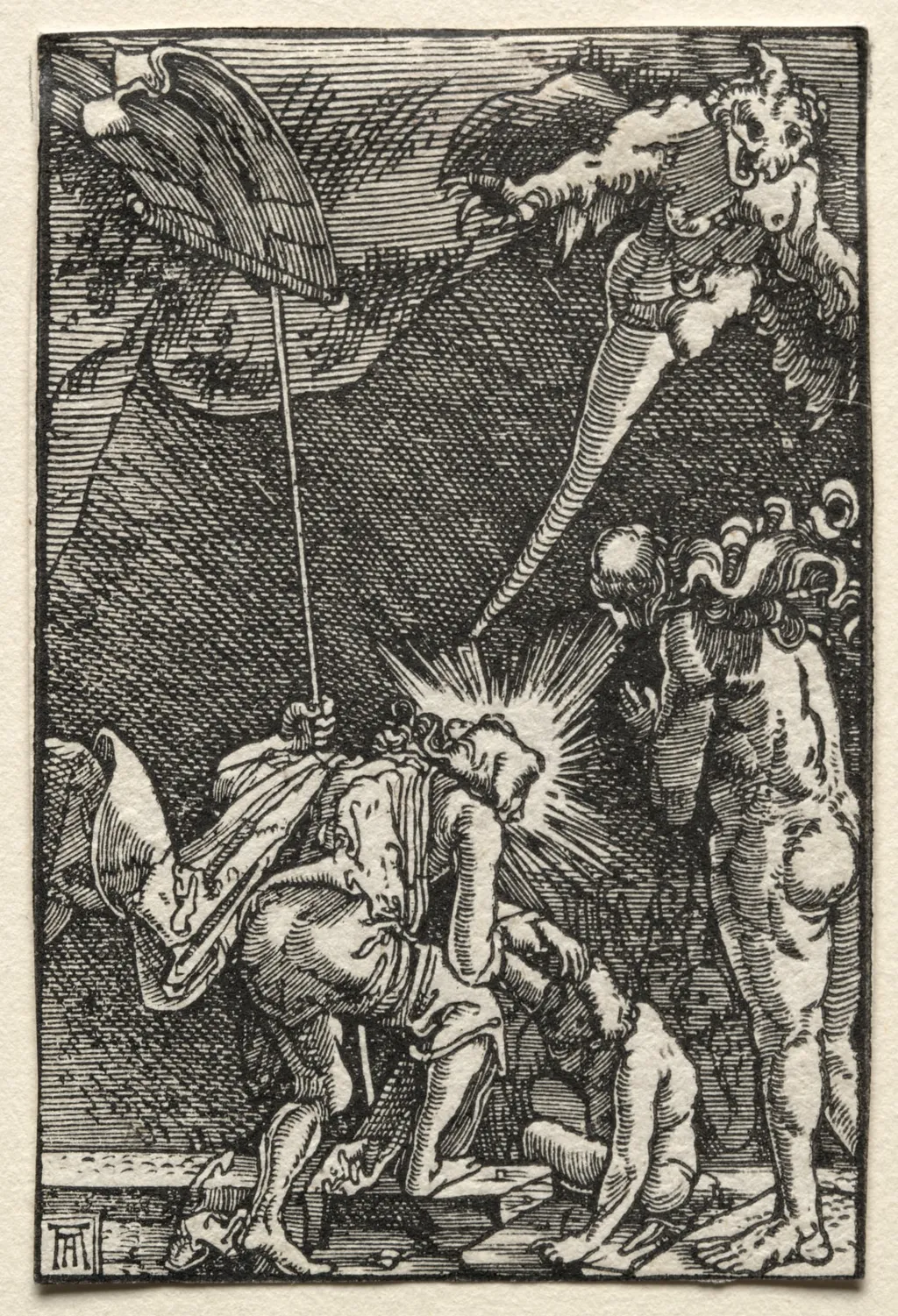
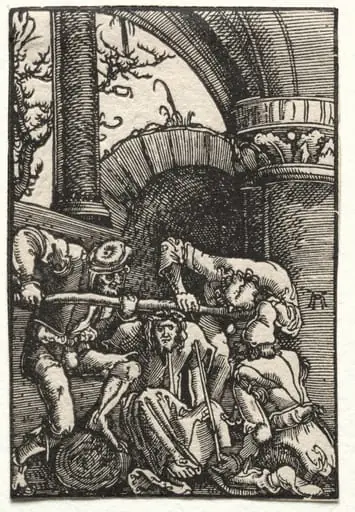
The Fall and Redemption of Man: Descent into Hell is a print by the Renaissance artist Albrecht Altdorfer. It dates from 1515 and is held in the collection of the Cleveland Museum of Art.
About this work
Overview
Altdorfer, based in Regensburg, was known for his intricate engravings and distinctive integration of figures within dynamic natural settings.
Created around 1515 by Albrecht Altdorfer, this black-and-white print is part of a larger thematic series on human sin and divine redemption. Altdorfer, based in Regensburg, was known for his intricate engravings and distinctive integration of figures within dynamic natural settings. This work exemplifies his engagement with religious narrative through graphic intensity rather than color, relying on line and contrast to convey spiritual tension.
Subject & Meaning
The scene illustrates the descent into hell as a moment of spiritual conflict, where human souls are caught between salvation and damnation. A central figure kneels, reaching upward as if drawn by a divine force, while skeletal hands and spectral forms surround them. The haloed figure above suggests Christ’s intervention, framing the composition as a visual allegory of redemption amid chaos, rooted in medieval Christian eschatology.
Technique & Style
Altdorfer employed sharp, angular lines and dense hatching to generate movement and emotional weight. The contrast between light and dark areas heightens the sense of struggle, while the swirling, overcrowded background—composed of jagged clouds and tangled forms—creates a vortex of spiritual turmoil. His technique avoids naturalistic space, instead favoring expressive distortion to amplify the psychological and theological drama.
History & Provenance
The print was produced during Altdorfer’s mature period in Regensburg, a center of artistic innovation in early 16th-century Germany. Though the original print run is undocumented, surviving impressions suggest it circulated among educated patrons familiar with biblical symbolism. It was likely part of a series intended for private devotion or scholarly contemplation, reflecting the era’s interest in moral allegory.
Context
Emerging alongside the Protestant Reformation, the work reflects a broader cultural preoccupation with sin, judgment, and grace. Altdorfer’s Danube School contemporaries similarly fused religious themes with emotionally charged landscapes, but his use of abstracted, almost surreal forms in this print distinguishes it from more literal depictions of hell. The imagery resonates with late medieval visions of the afterlife, filtered through Renaissance humanist concerns.
Legacy
Though not widely reproduced in his lifetime, this print contributed to Altdorfer’s reputation for psychological depth in graphic art. Later artists studying Northern Renaissance printmaking noted his bold compositional density and symbolic intensity. His approach influenced how spiritual themes were rendered in print, prioritizing emotional resonance over doctrinal clarity, and remains a reference in studies of early modern visual theology.
Own this work as a print
Artist & collection
Artist
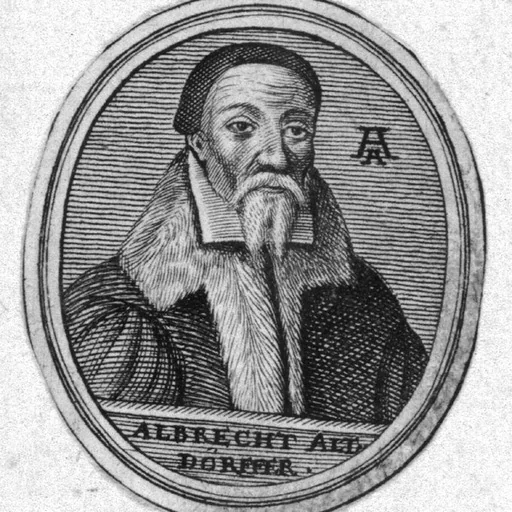
Albrecht Altdorfer (c. 1480 – 12 February 1538) was a German painter, engraver and architect of the Renaissance working in Regensburg. Along with Lucas Cranach the Elder and Wolf Huber he is regarded to be the main…

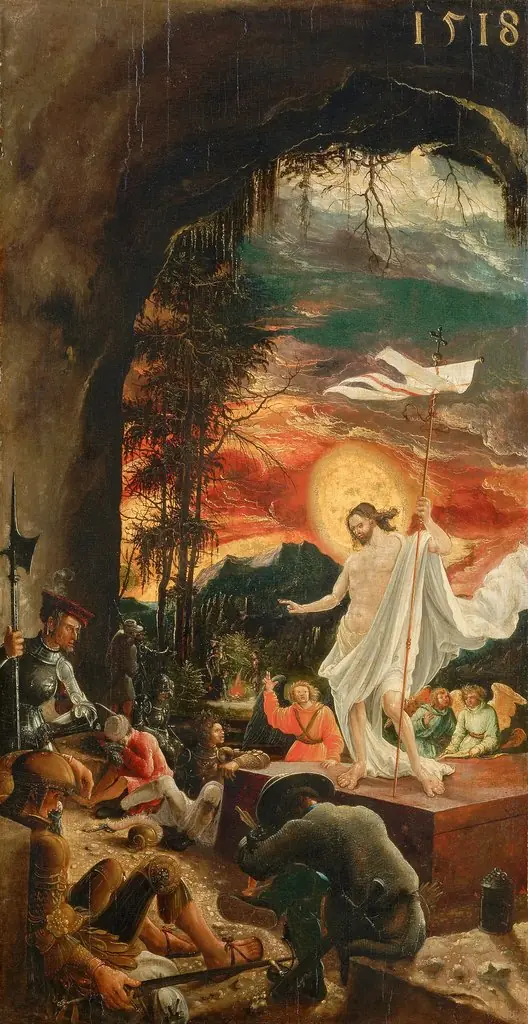
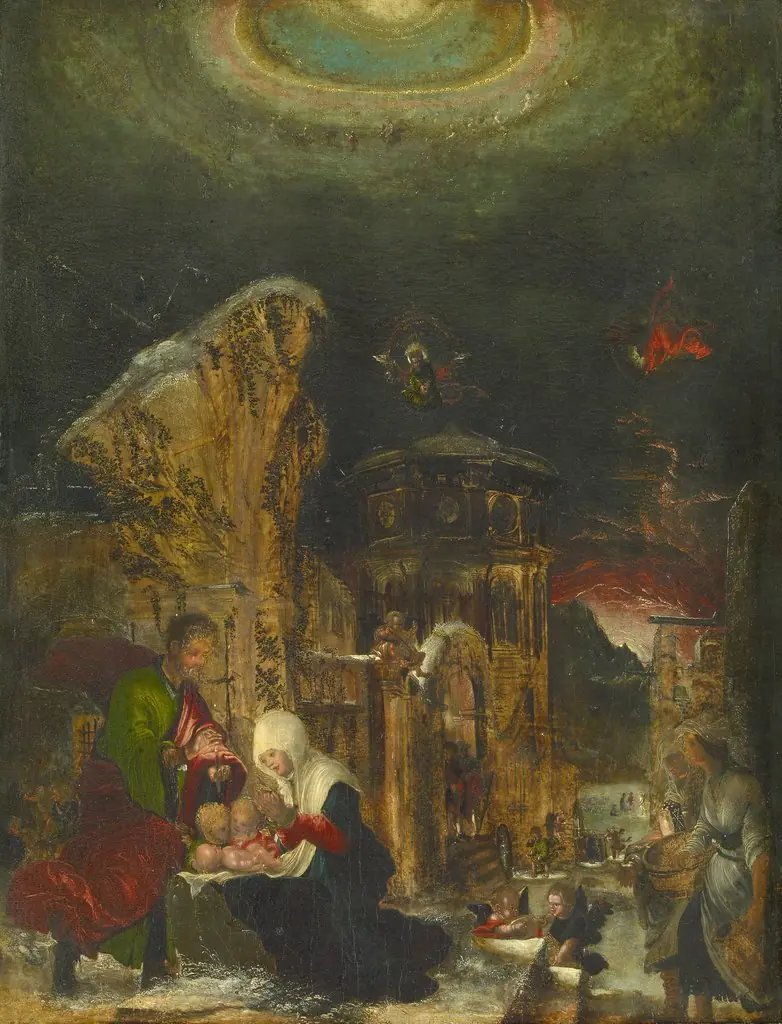
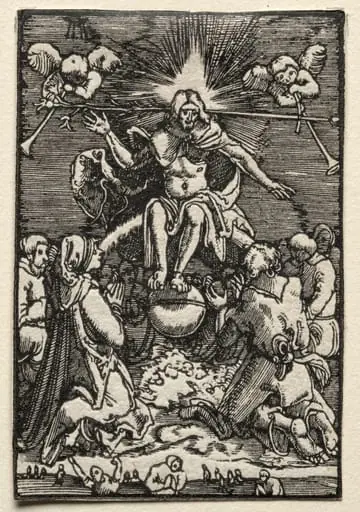 The Fall and Redemption of Man: The Last Judgment
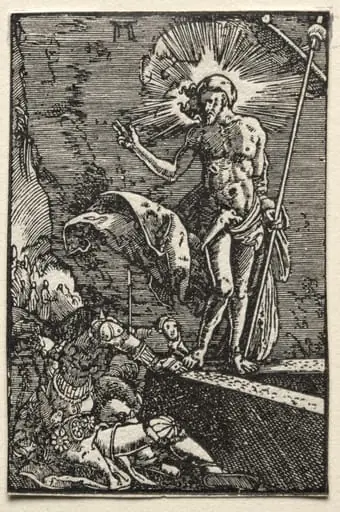 The Fall and Redemption of Man: The Resurrection
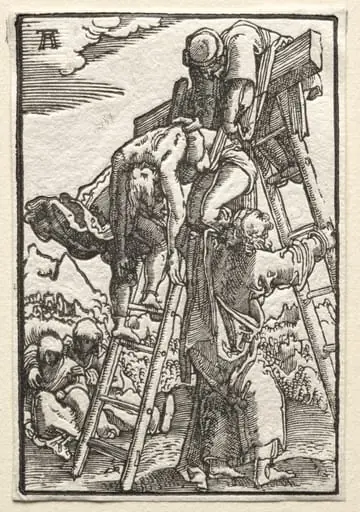 The Fall and Redemption of Man: Descent from the Cross
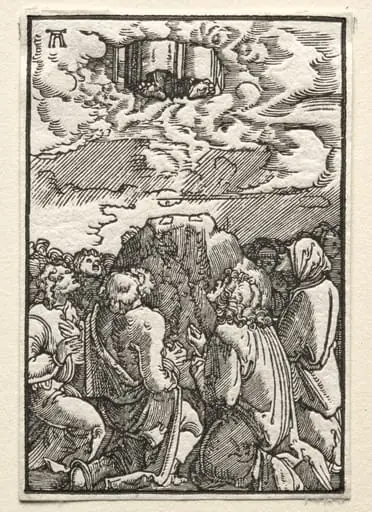 The Fall and Redemption of Man: The Ascension
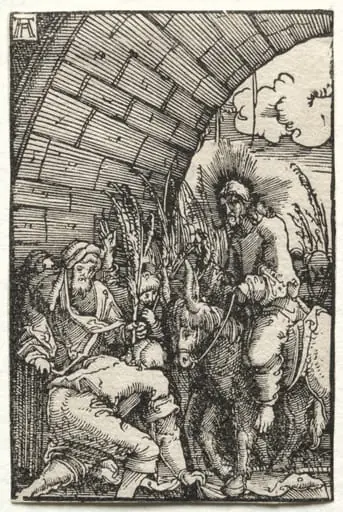 The Fall and Redemption of Man: The Entry into Jerusalem
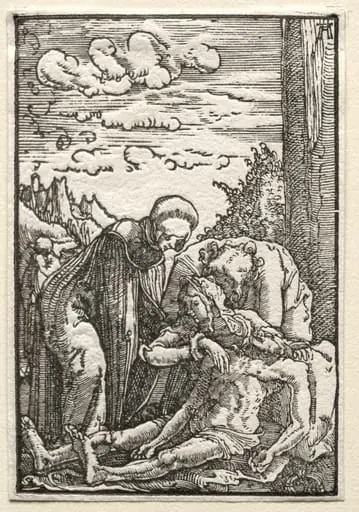 The Fall and Redemption of Man: The Lamentation beneath the Cross
 The Fall and Redemption of Man: Christ Crowned with Thorns