Artwork
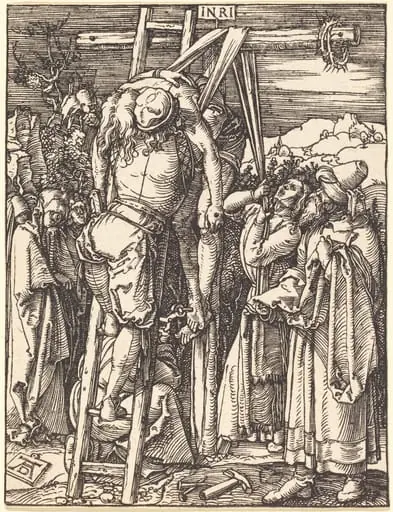
The Fall and Redemption of Man: Descent from the Cross
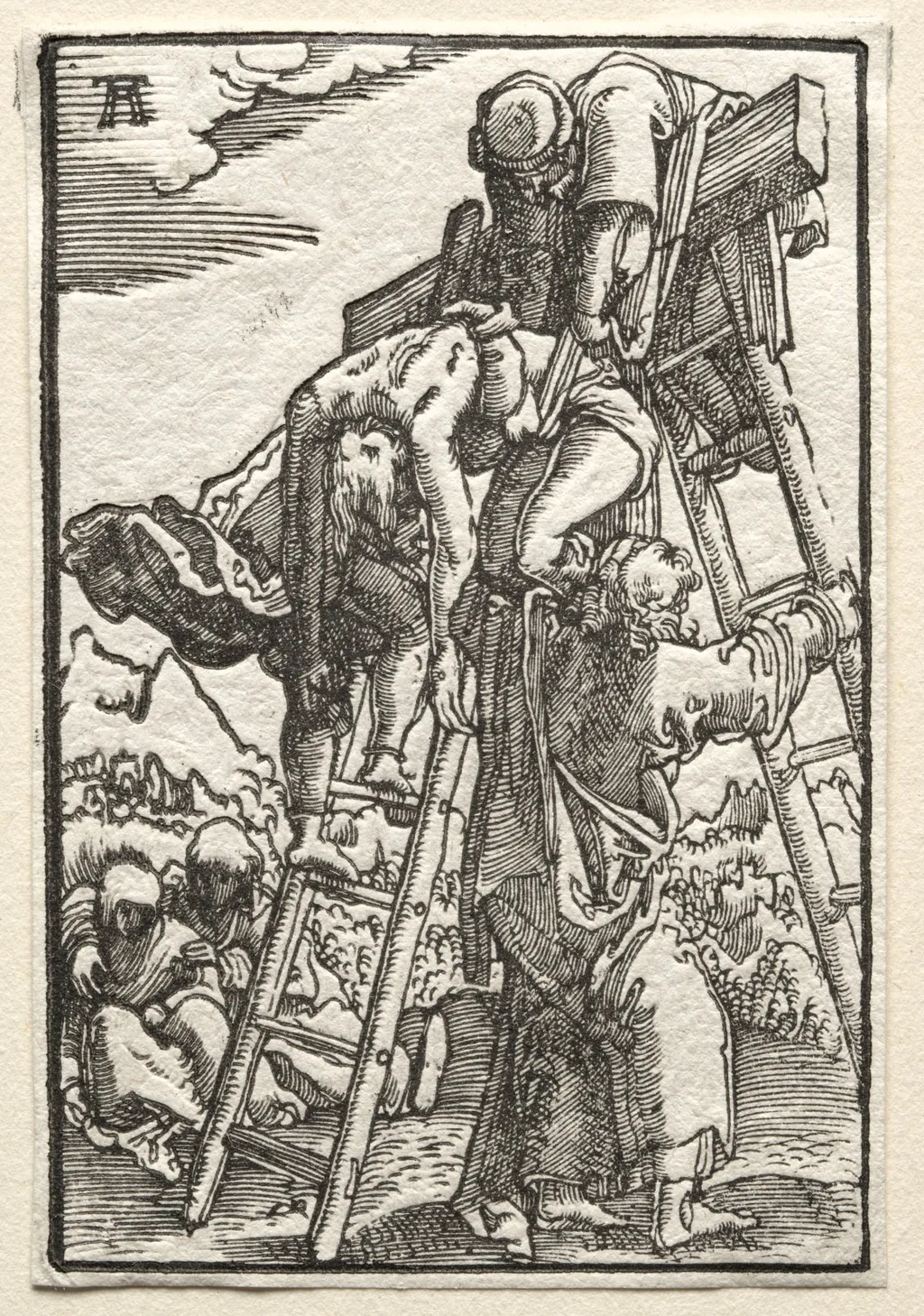
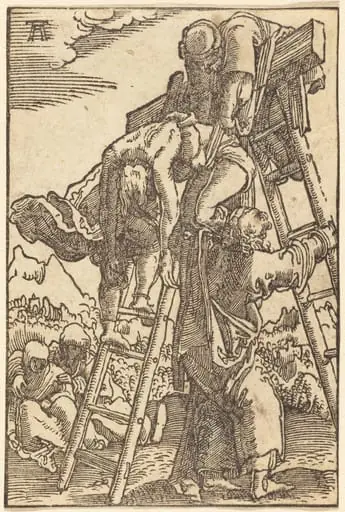
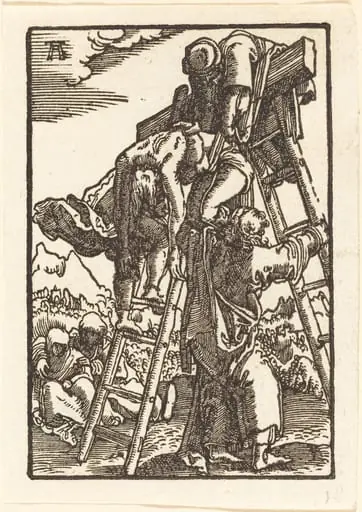
The Fall and Redemption of Man: Descent from the Cross is a print by the Renaissance artist Albrecht Altdorfer. It dates from 1515 and is held in the collection of the Cleveland Museum of Art.
About this work
Overview
Though primarily a painter, he also produced detailed engravings that reflected the technical precision favored by Northern Renaissance printmakers.
Created around 1515 by Albrecht Altdorfer, this black-and-white print depicts the Descent from the Cross as part of a broader narrative on human sin and salvation. Altdorfer, based in Regensburg, was known for integrating biblical themes with vivid natural settings. Though primarily a painter, he also produced detailed engravings that reflected the technical precision favored by Northern Renaissance printmakers.
Subject & Meaning
The scene captures the moment Christ’s body is lowered from the cross, framed within a larger theological context of humanity’s fall and redemption. Figures strain in physical and emotional exertion, their gestures emphasizing the weight of both the corpse and the moral burden it represents. The chaotic composition suggests the disruption of divine order, while the landscape hints at nature’s response to sacred suffering.
Technique & Style
Altdorfer employed sharp, incised lines and strong contrasts of light and shadow to convey motion and tension. The print’s dense, rocky terrain and swirling sky are rendered with meticulous detail, demonstrating his skill as an engraver. Unlike contemporaries who prioritized idealized forms, he favored dynamic, almost turbulent compositions that heightened emotional immediacy through texture and spatial complexity.
History & Provenance
The print emerged during Altdorfer’s mature period, when he was active in Regensburg’s artistic and civic circles. While few records detail its early ownership, it aligns with the production of small-scale prints circulating among educated patrons in southern Germany. Its survival reflects the growing market for devotional imagery in print form during the early 16th century.
Context
Altdorfer worked within the Danube School, a regional movement that emphasized expressive landscapes and emotional intensity over classical harmony. His integration of nature as an active element in sacred scenes diverged from Italian Renaissance norms, reflecting a Northern European preoccupation with atmosphere and spiritual unease. This print also coincides with rising religious tensions preceding the Reformation.
Legacy
Though less widely known than his paintings, this engraving exemplifies Altdorfer’s influence on the development of landscape as a carrier of meaning in Northern art. His approach to emotional drama and environmental detail informed later printmakers and contributed to the evolution of expressive graphic styles in the decades following the Reformation.
Artist & collection
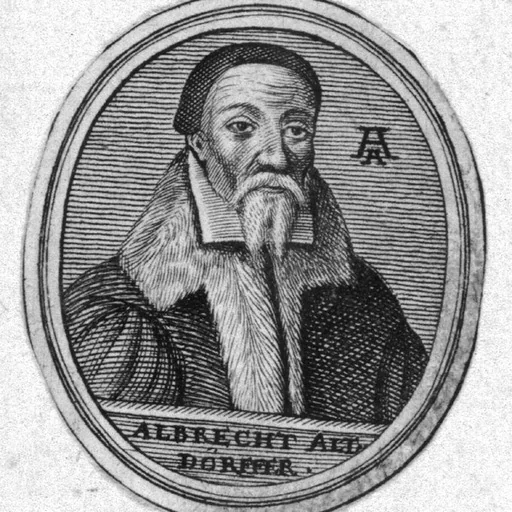
Artist
Albrecht Altdorfer (c. 1480 – 12 February 1538) was a German painter, engraver and architect of the Renaissance working in Regensburg. Along with Lucas Cranach the Elder and Wolf Huber he is regarded to be the main…

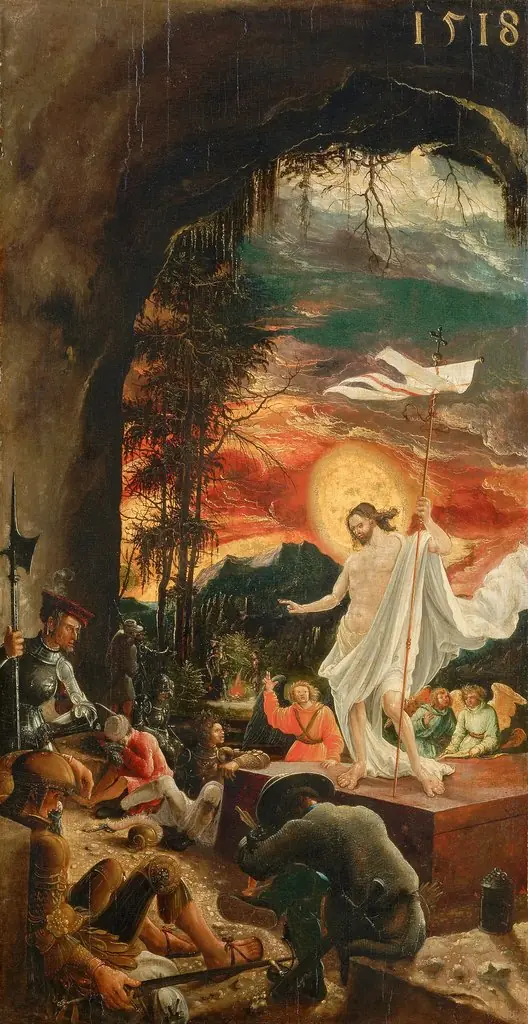
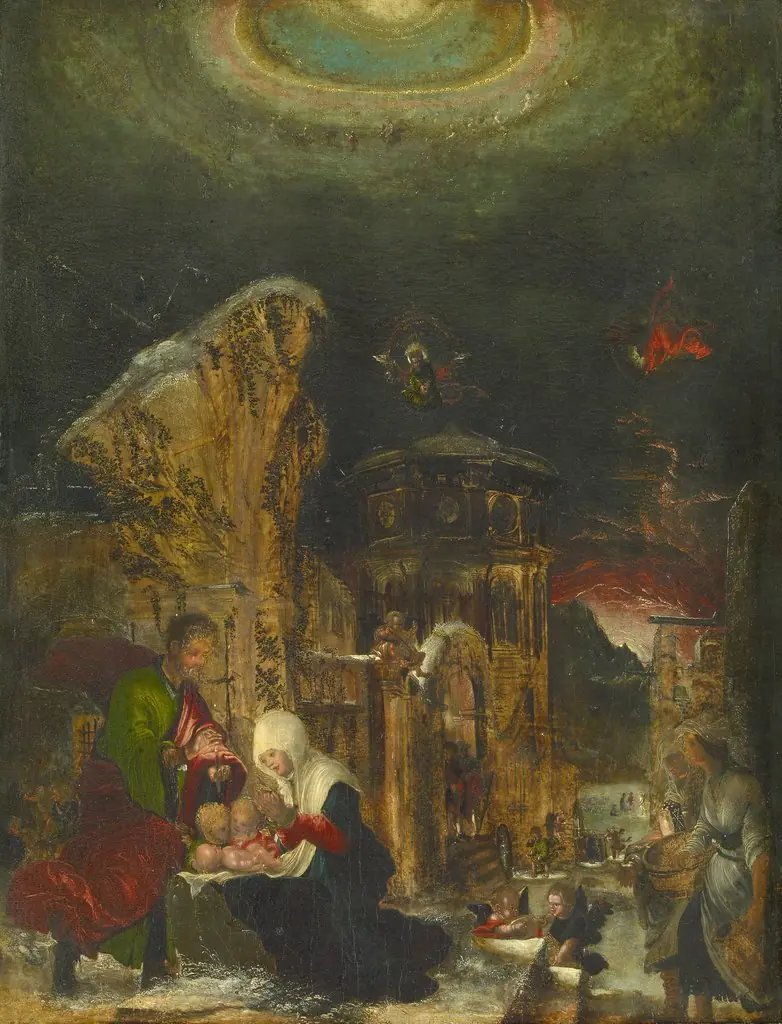
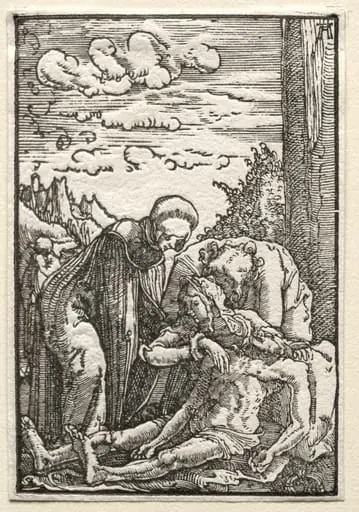 The Fall and Redemption of Man: The Lamentation beneath the Cross
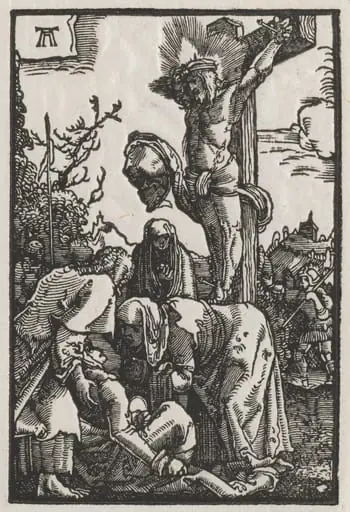 The Fall and Redemption of Man: Christ on the Cross
 The Descent from the Cross
 The Descent from the Cross
 The Fall and Redemption of Man: Christ Nailed to the Cross
 The Fall and Redemption of Man: The Raising of the Cross
 The Descent from the Cross