Artwork
Knight, Death, and the Devil
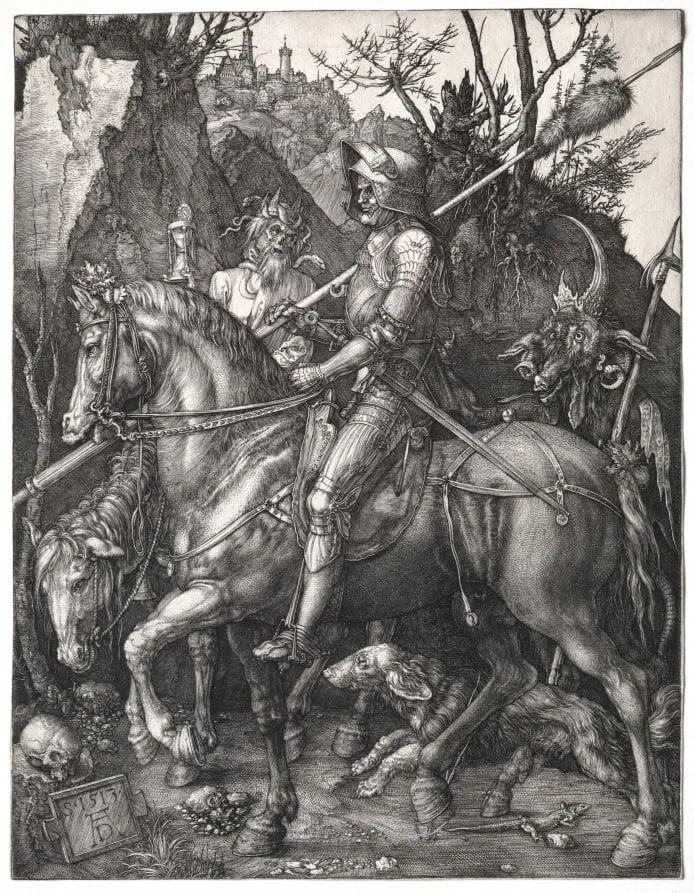
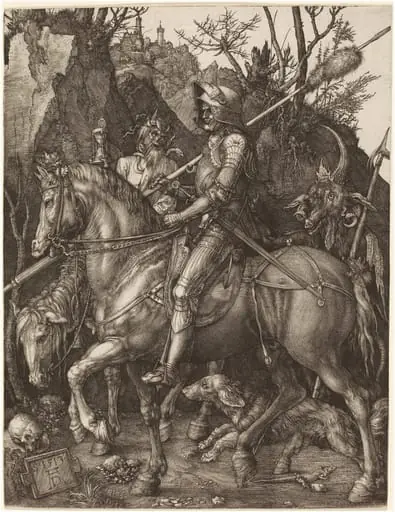
Knight, Death, and the Devil is a print by the Renaissance artist Albrecht Dürer. It dates from 1513 and is held in the collection of the Cleveland Museum of Art.
About this work
Overview
Albrecht Dürer’s 1513 engraving *Knight, Death, and the Devil* presents a lone rider charging through a shadowy valley. Flanked by a horned figure and a skeletal Death clutching an hourglass, the scene is framed by a crumbling skull and a faithful dog at the knight’s heels, while a distant citadel looms on a distant ridge.
Subject & Meaning
The central figure, a resolute knight, embodies moral fortitude as he presses onward despite the presence of Death, crowned with serpents, and a demonic adversary. The skull beneath his horse suggests the fate of those who lack such resolve, while the distant city symbolizes the ultimate, perhaps spiritual, destination attainable only through perseverance.
Technique & Style
Executed in the early era of printmaking, Dürer employed intricate, fine lines to render a dramatic chiaroscuro effect, creating deep shadows that model the landscape and figures. The engraving’s texture and tonal gradations convey a three‑dimensional space within the flat medium, showcasing Dürer’s mastery of line and contrast.
History & Provenance
Created in 1513, the work belongs to a trio of Dürer’s most celebrated engravings, alongside *Melencolia I* and *Saint Jerome in His Study*. Original impressions circulated among collectors in the 16th century, and the print has since been held in major European and American museum collections.
Context
The composition reflects contemporary pre‑Reformation concerns with mortality, virtue, and the human struggle against sin. Dürer’s integration of symbolic elements—hourglass, serpents, and the looming citadel—draws on medieval allegory while employing Renaissance attention to anatomical precision and perspective.
Legacy
*Knight, Death, and the Devil* has long served as a reference point for the expressive potential of engraving, influencing later artists’ treatment of allegorical subjects and the use of stark light‑dark contrasts to convey psychological tension.
Artist & collection
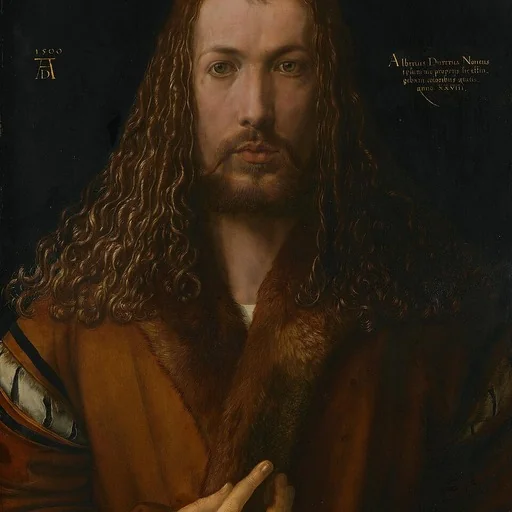
Artist
Albrecht Dürer spent his life in Nuremberg, a busy German city where artists traded prints like currency.

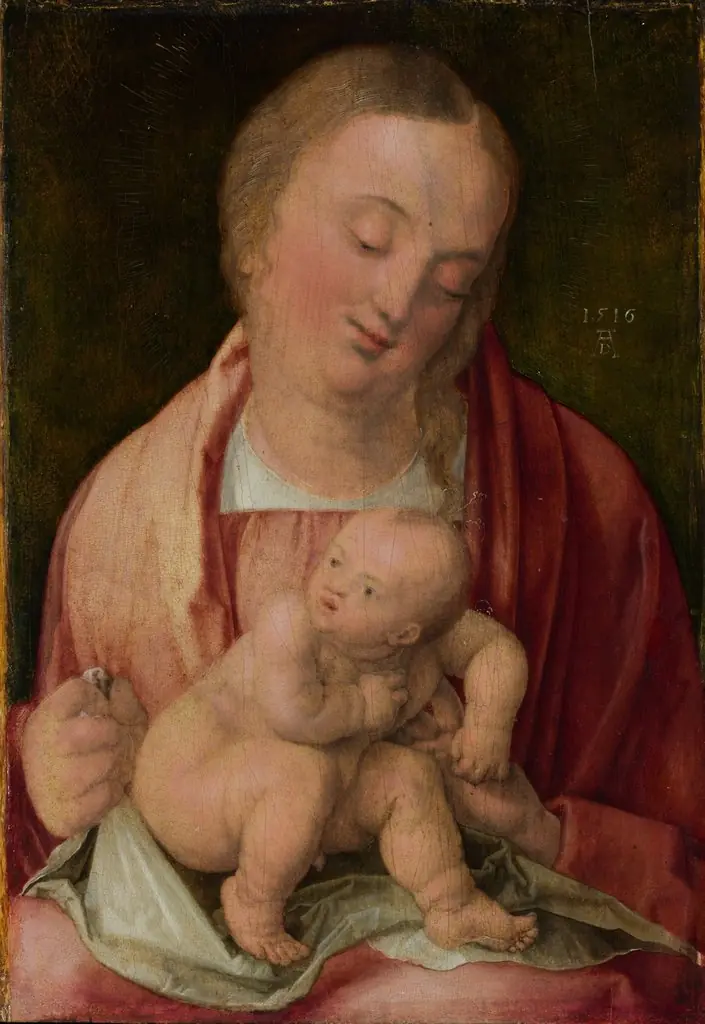
![Madonna and Child [obverse], by Albrecht Dürer](https://artifactworldgallery.com/img/albrecht-durer--madonna-and-child-obverse--d7b8ebf05d22ebe5-w320.webp)
![Lot and His Daughters [reverse], by Albrecht Dürer](https://artifactworldgallery.com/img/albrecht-durer--lot-and-his-daughters-reverse--b4ebf9b282faa17a-w320.webp)