Artwork
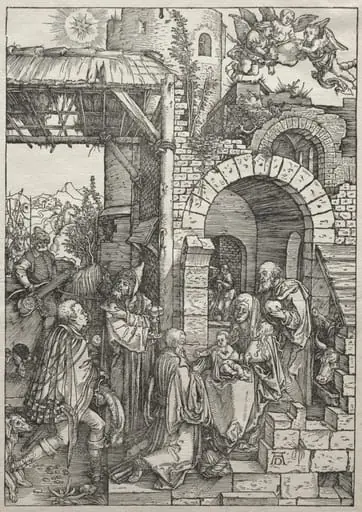
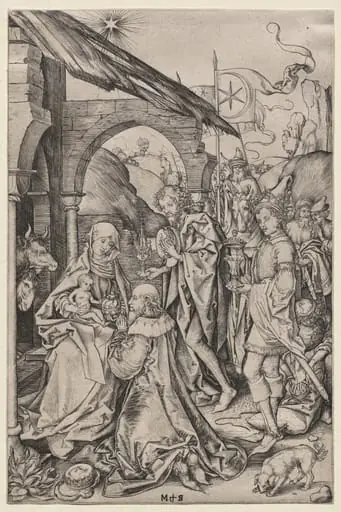
The Adoration of the Magi
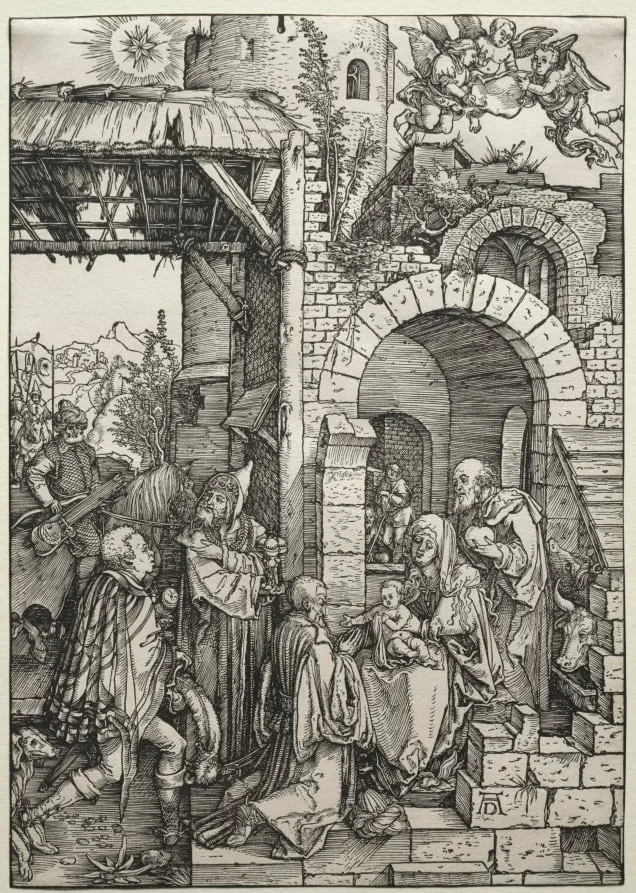
The Adoration of the Magi is a print by the Renaissance artist Albrecht Dürer. It dates from 1502 and is held in the collection of the Cleveland Museum of Art. This series of eight woodcut prints, created in 1959, narrates key episodes from the Annunciation through the Holy Family’s exile in Egypt.
About this work
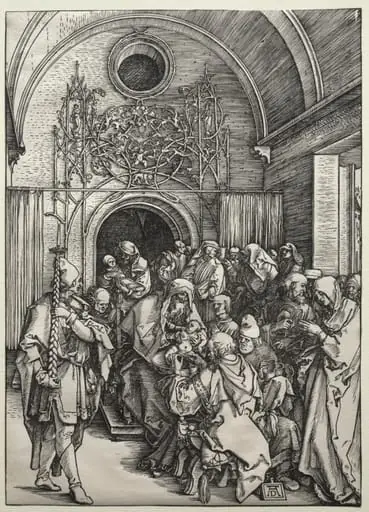
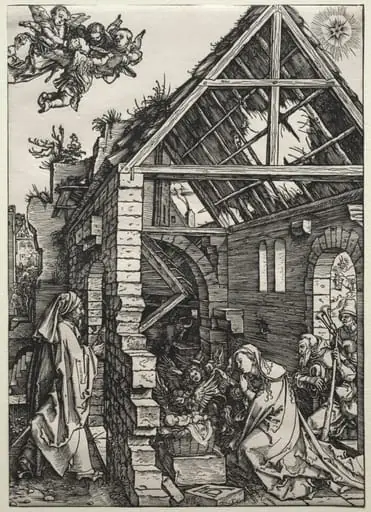
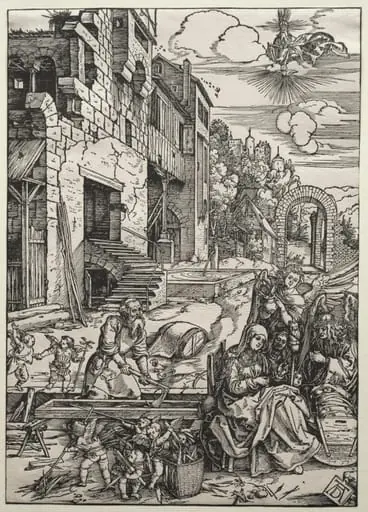
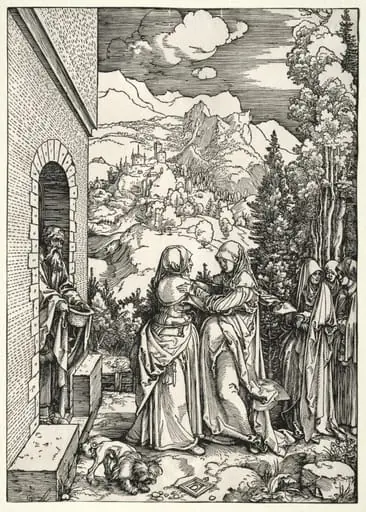
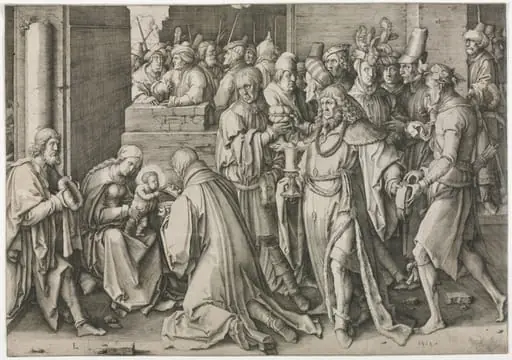
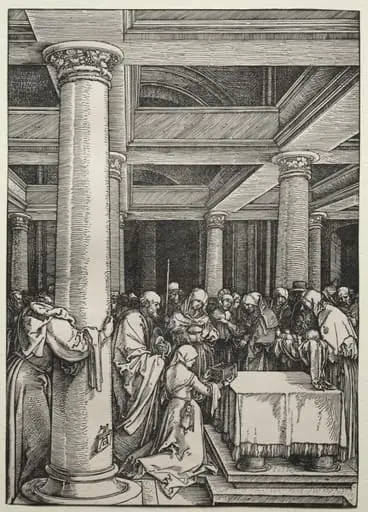
This woodcut shows eight scenes in a row. The first shows an angel talking to Mary. Later scenes show Jesus’ birth, the magi visiting, and the Holy Family hiding in Egypt.
Dürer made these cuts around 1501. They were printed on paper, not painted. Each small picture tells part of a Bible story.
Want to see more prints like this? Look up Albrecht Dürer (German, 1471–1528).
Overview
This series of eight woodcut prints, created in 1959, narrates key episodes from the Annunciation through the Holy Family’s exile in Egypt.
This series of eight woodcut prints, created in 1959, narrates key episodes from the Annunciation through the Holy Family’s exile in Egypt. The sequence begins with the angel Gabriel informing Mary of her divine pregnancy, moves through the birth of Jesus, the visit of the Magi, and concludes with a domestic scene of Joseph’s carpentry and Mary’s spinning, all under the watchful presence of celestial figures.
Subject & Meaning
The prints trace the theological arc of early Christology, emphasizing both the miraculous and the human dimensions of the narrative. By juxtaposing the sacred events of the Nativity and the Magi’s homage with the ordinary labor of the family in Egypt, the work underscores themes of divine providence, protection, and the integration of holy purpose within everyday life.
Technique & Style
Executed as woodcuts, each image is incised on a single block of wood and printed on paper, allowing for fine line work and stark contrast. The artist employs a clear, linear composition typical of early 16th‑century German printmaking, with recurring motifs of angels and putti that frame the central figures and guide the viewer’s eye across the narrative sequence.
History & Provenance
The series was produced in 1959, though it draws on the visual language of Albrecht Dürer’s early 1500s woodcuts. The prints were issued as a set (catalogue numbers 1959.99.8‑15) and have been preserved in paper collections, reflecting the continued interest in Dürer’s influence on later printmakers.
Context
During the Renaissance, woodcutting served both devotional and didactic purposes, making biblical stories accessible to a broad audience. This series aligns with that tradition, offering a portable visual retelling of the Nativity and its aftermath, and reflects the enduring popularity of Dürer’s compositional models in later centuries.
Artist & collection
Artist
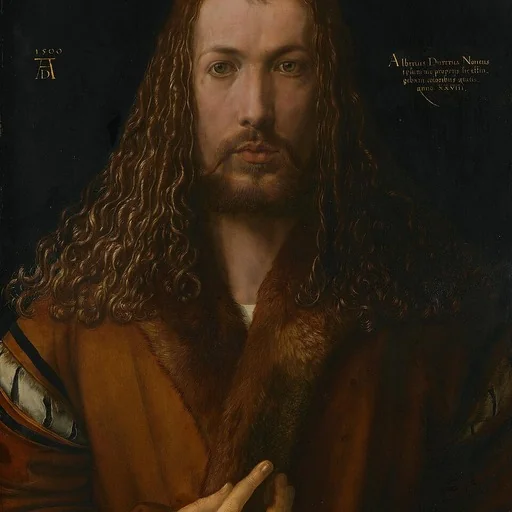
Albrecht Dürer spent his life in Nuremberg, a busy German city where artists traded prints like currency.

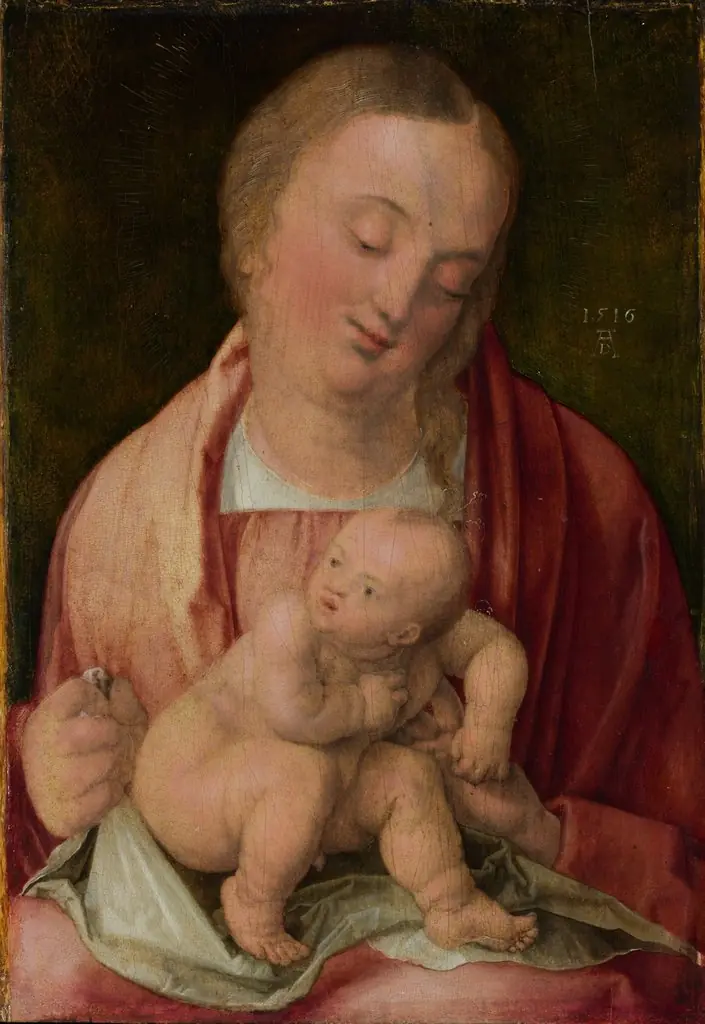
![Madonna and Child [obverse], by Albrecht Dürer](https://artifactworldgallery.com/img/albrecht-durer--madonna-and-child-obverse--d7b8ebf05d22ebe5-w320.webp)
![Lot and His Daughters [reverse], by Albrecht Dürer](https://artifactworldgallery.com/img/albrecht-durer--lot-and-his-daughters-reverse--b4ebf9b282faa17a-w320.webp)