Artwork
Life of the Virgin: The Death of the Virgin
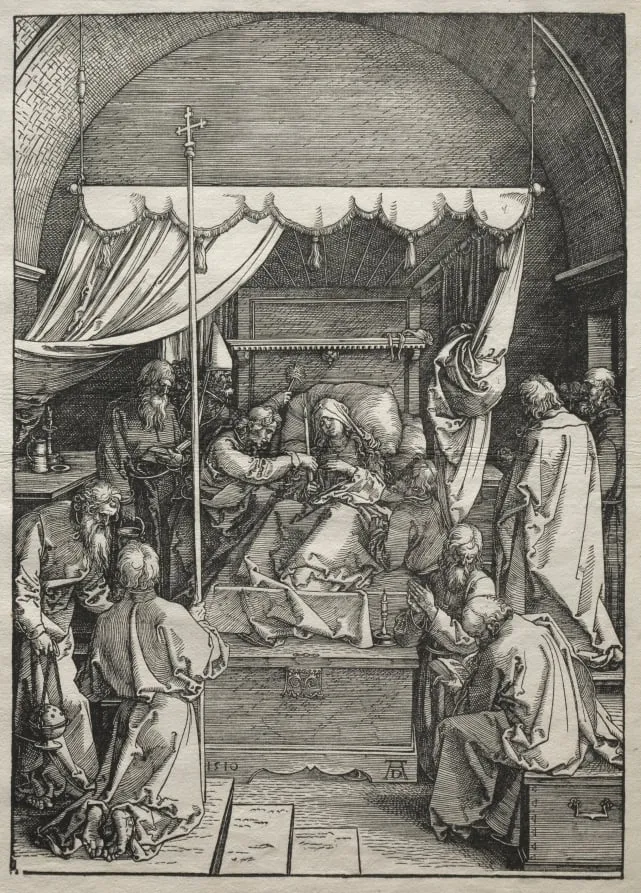
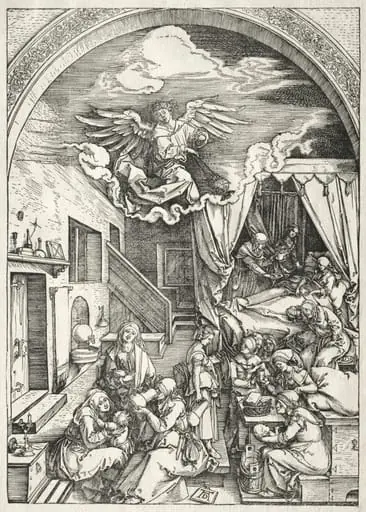
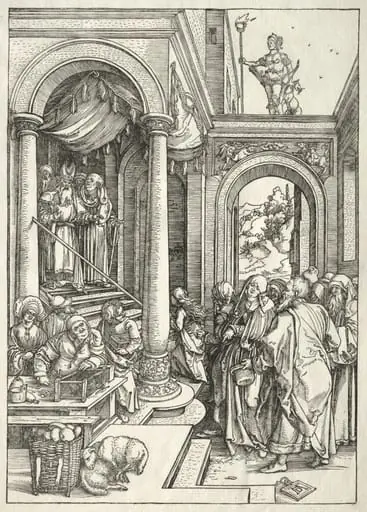
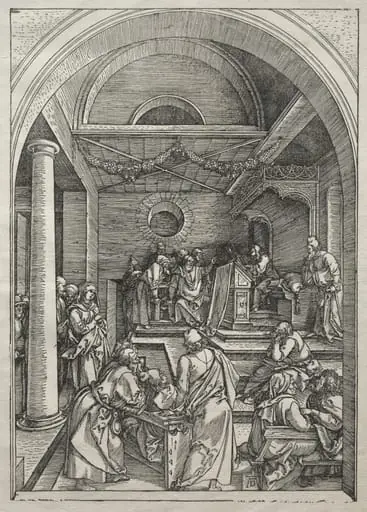
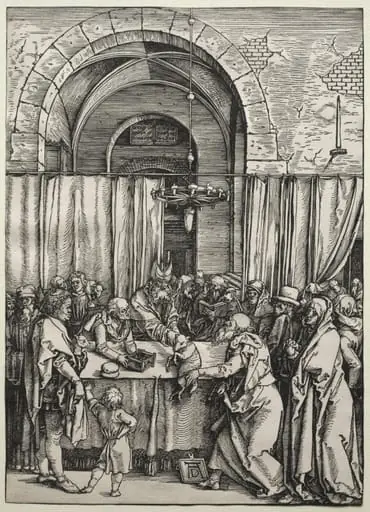
Life of the Virgin: The Death of the Virgin is a print by the Renaissance artist Albrecht Dürer. It dates from 1504 and is held in the collection of the Cleveland Museum of Art.
About this work
Overview
Executed with fine linework and subtle tonal gradations, it reflects Dürer’s mastery of printmaking and his deep engagement with religious narrative.
Created in 1504, this black-and-white engraving by Albrecht Dürer is part of a series illustrating key moments in the life of the Virgin Mary. Executed with fine linework and subtle tonal gradations, it reflects Dürer’s mastery of printmaking and his deep engagement with religious narrative. The work belongs to a period when he was synthesizing Northern European detail with Italian compositional principles, marking a pivotal phase in his artistic development.
Subject & Meaning
The scene portrays the Dormition of the Virgin, her passing surrounded by the apostles who have gathered to witness her death. The stillness of the moment, the bowed heads, and the presence of a priest holding a cross emphasize reverence and spiritual transition. The Virgin, wrapped in cloth, lies peacefully, her mortality framed not as tragedy but as a sacred passage, consistent with medieval and early Renaissance devotional traditions.
Technique & Style
Dürer employed precise engraving techniques to render texture, volume, and emotion through line alone. Shading is achieved through carefully controlled cross-hatching, creating a sense of three-dimensionality without color. The figures are arranged in a compact, intimate space, with individual gestures—clutching a book, holding a candle—adding narrative nuance. The style retains Northern attention to detail while adopting Italianate spatial harmony.
History & Provenance
The print was produced during Dürer’s second journey to Italy, a time when he was actively studying classical forms and human anatomy. It was likely made for private devotion or scholarly circulation, as engravings were widely distributed among educated patrons. No early ownership records are definitive, but the work entered major collections by the 18th century and is now held in institutions such as the Albertina and the British Museum.
Context
In early 16th-century Germany, religious imagery remained central to artistic production, even as humanist ideals spread from Italy. Dürer’s depiction aligns with devotional practices that emphasized the Virgin’s purity and the apostles’ witness, while his technical precision responded to growing demand for high-quality prints. The work reflects a cultural moment where Northern artists sought to elevate printmaking to the status of fine art.
Legacy
This engraving helped establish Dürer as a leading figure in the Northern Renaissance and demonstrated the expressive potential of printmaking beyond mere reproduction. Its influence extended to later artists who adopted his tonal techniques and narrative clarity. The work remains a touchstone for understanding how religious themes were reinterpreted through technical innovation in early modern Europe.
Artist & collection
Artist
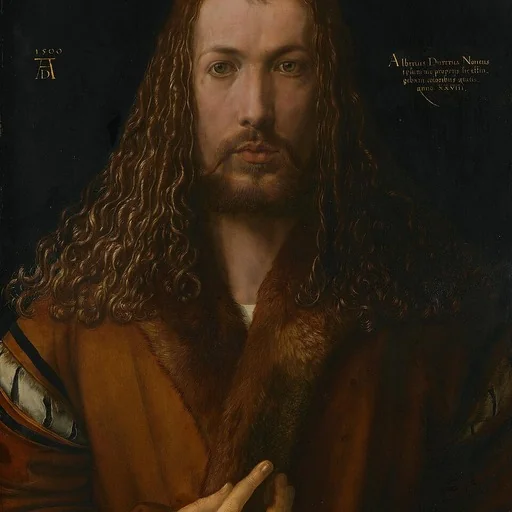
Albrecht Dürer spent his life in Nuremberg, a busy German city where artists traded prints like currency.

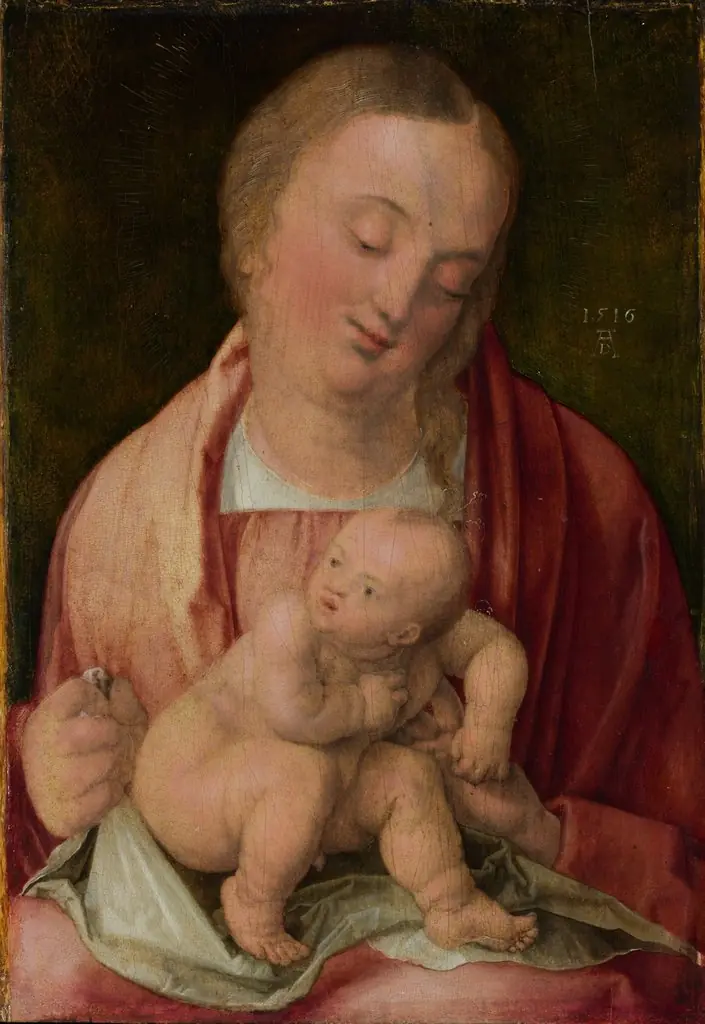
![Madonna and Child [obverse], by Albrecht Dürer](https://artifactworldgallery.com/img/albrecht-durer--madonna-and-child-obverse--d7b8ebf05d22ebe5-w320.webp)
![Lot and His Daughters [reverse], by Albrecht Dürer](https://artifactworldgallery.com/img/albrecht-durer--lot-and-his-daughters-reverse--b4ebf9b282faa17a-w320.webp)