Artwork
Life of the Virgin: The Nativity
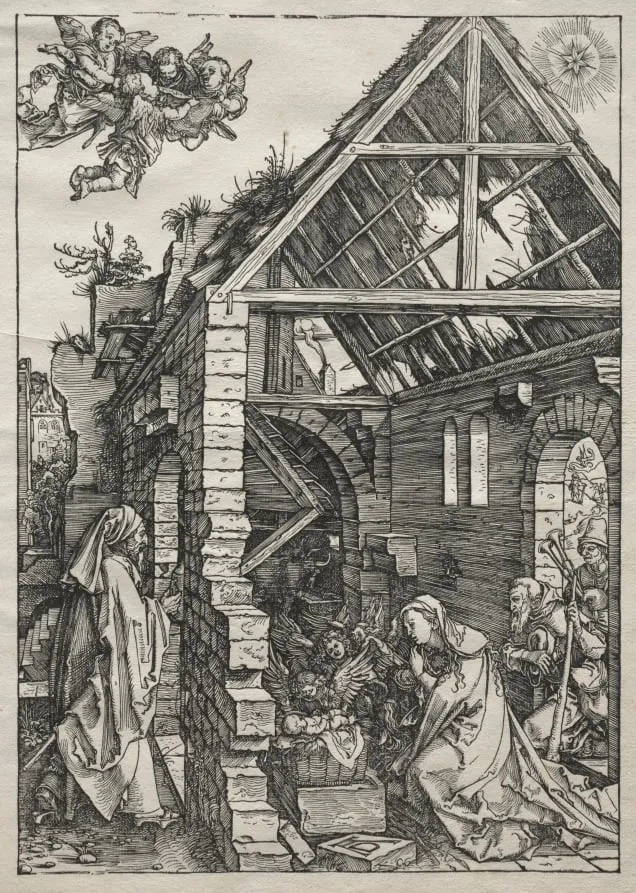
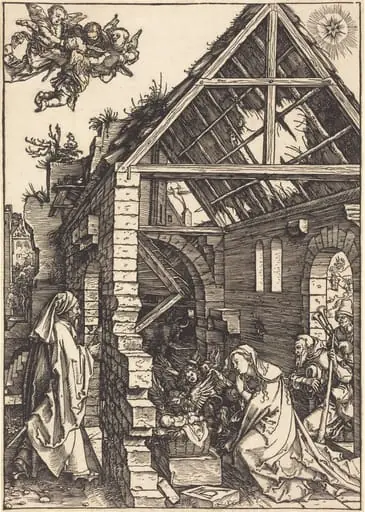
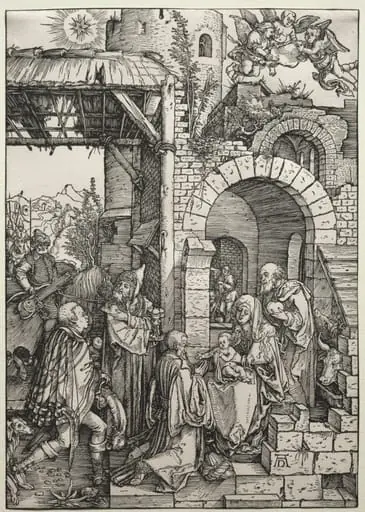
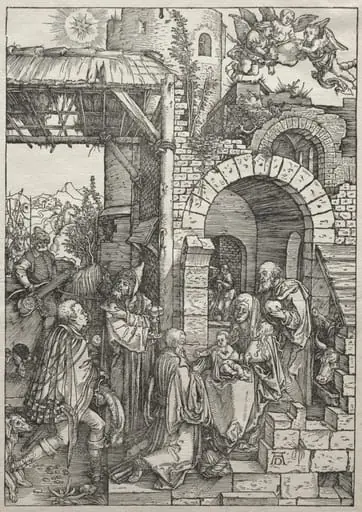
Life of the Virgin: The Nativity is a print by the Renaissance artist Albrecht Dürer. It dates from 1504 and is held in the collection of the Cleveland Museum of Art.
About this work
Dürer used fine lines to show folds in Mary’s dress and wood grain in the manger.
This woodcut shows Mary kneeling beside baby Jesus in a wooden stable. A cow and donkey stand behind her. The scene feels real, not like a fairy tale.
Dürer used fine lines to show folds in Mary’s dress and wood grain in the manger. His skill made Bible stories clear to people who couldn’t read. He turned simple prints into rich stories.
The woodcuts feel almost like paintings. Look up Albrecht Dürer (German, 1471–1528).
Overview
Albrecht Dürer’s woodcut entitled *Life of the Virgin: The Nativity* is part of a larger series of religious prints created by the German artist in the early sixteenth century. The image presents the birth of Christ in a modest stable, with the Virgin Mary kneeling beside the infant and a cow and donkey positioned behind her. The composition is rendered with a level of naturalism that distinguishes it from more stylised medieval depictions.
Subject & Meaning
The scene concentrates on the human aspects of the biblical narrative, emphasizing Mary’s humility and the ordinary setting of the stable. By portraying the figures in a realistic manner, Dürer invites viewers to contemplate the incarnation as an event rooted in everyday life, rather than as a distant, idealised miracle.
Technique & Style
Executed in woodcut, the print demonstrates Dürer’s innovative use of fine, intersecting lines to render textures such as the folds of Mary’s robe, the grain of the manger, and the animal hides. The careful handling of perspective creates a convincing spatial depth, allowing the image to approach the visual richness of a painting while retaining the graphic clarity of the medium.
History & Provenance
The Nativity woodcut was produced as part of Dürer’s *Life of the Virgin* series, which circulated widely across Europe in the early 1500s. Copies were distributed in both single‑print and bound formats, reaching a broad audience that included those unable to read the accompanying biblical texts.
Context
During Dürer’s career, woodcut was primarily a vehicle for book illustration. His work on this series expanded the possibilities of the medium, demonstrating that a single print could convey a complete narrative without reliance on explanatory captions. This approach reflected the broader Renaissance interest in visual storytelling and the spread of devotional imagery.
Legacy
Dürer’s advancements in line work, texture, and spatial organization set new standards for printmaking, influencing subsequent generations of artists in Germany and beyond. The *Nativity* woodcut remains a reference point for scholars studying the evolution of narrative illustration in early modern Europe.
Artist & collection
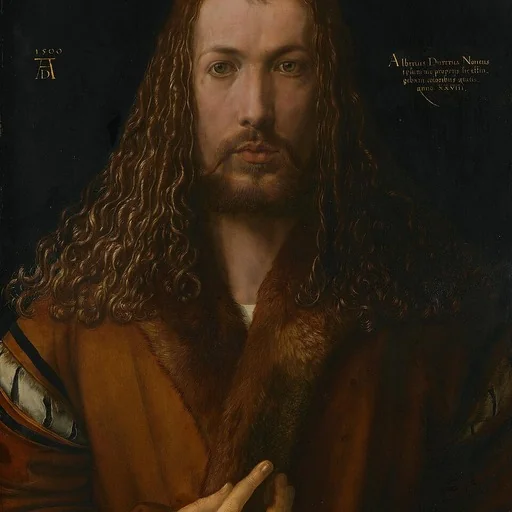
Artist
Albrecht Dürer spent his life in Nuremberg, a busy German city where artists traded prints like currency.

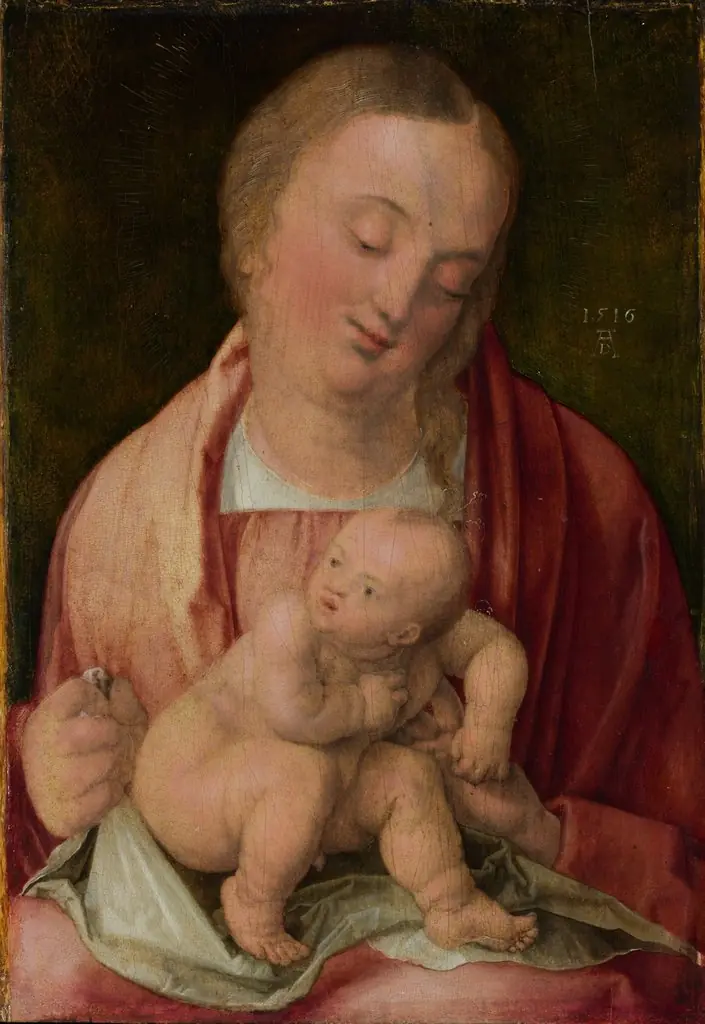
![Madonna and Child [obverse], by Albrecht Dürer](https://artifactworldgallery.com/img/albrecht-durer--madonna-and-child-obverse--d7b8ebf05d22ebe5-w320.webp)
![Lot and His Daughters [reverse], by Albrecht Dürer](https://artifactworldgallery.com/img/albrecht-durer--lot-and-his-daughters-reverse--b4ebf9b282faa17a-w320.webp)