Artwork
Man of Sorrows by the Column
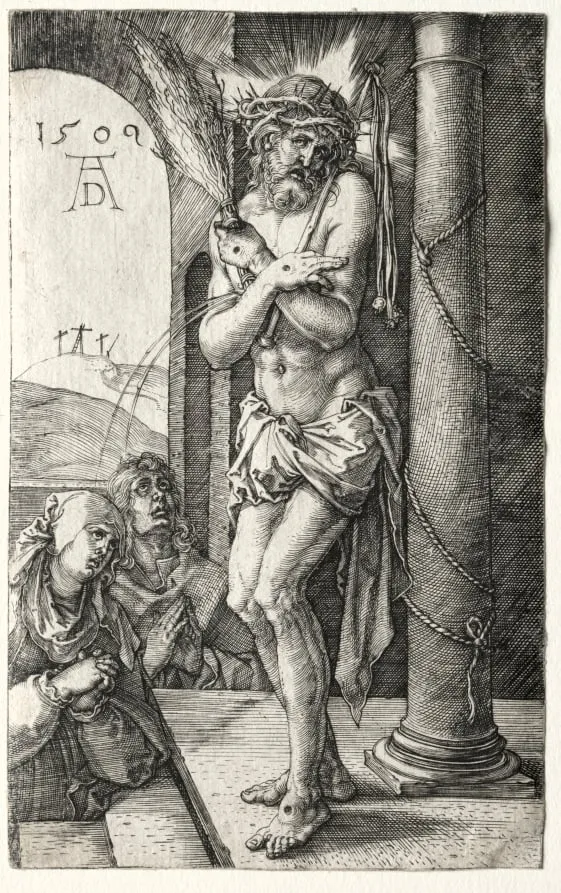
Man of Sorrows by the Column is a print by the Renaissance artist Albrecht Dürer. It dates from 1509 and is held in the collection of the Cleveland Museum of Art.
About this work
The man’s bare feet and rough ropes suggest suffering, while the woman’s gesture might be prayer or grief.
This black-and-white print shows a muscular man standing with his arms tied behind his back. He’s wearing a crown of thorns and a cloth wrapped around his waist. To his left, a woman kneels, looking up at him with a sad face. Behind them, a tall column and a half-open doorway with the year "1509" carved into the stone.
The man’s bare feet and rough ropes suggest suffering, while the woman’s gesture might be prayer or grief. The scene feels tense, with light falling sharply on their faces.
Next, look up chiaroscuro to see how artists use light and shadow like this.
Overview
Created in 1509, Albrecht Dürer’s *Man of Sorrows by the Column* is a black-and-white engraving that presents Christ in a moment of quiet anguish after his scourging. Rendered with precise linework, the image isolates the figure against a stark architectural setting, emphasizing physical and emotional weight. The work reflects Dürer’s mastery of printmaking and his deep engagement with devotional imagery during the German Renaissance.
Subject & Meaning
Christ stands bound before a column, crowned with thorns and draped in a loincloth, his posture conveying both endurance and resignation. A woman kneels to his left, her hands clasped in supplication, possibly representing Mary or a penitent believer. The scene evokes contemplation of Christ’s suffering, inviting viewers into a meditative space. The absence of overt violence focuses attention on inner torment and spiritual solitude.
Technique & Style
Dürer employed fine, controlled engraving lines to model form and texture, using chiaroscuro to heighten emotional intensity. Light falls sharply across Christ’s torso and face, contrasting with deep shadows that recede the background. The column and doorway are rendered with architectural precision, while the folds of fabric and the roughness of ropes are meticulously detailed. The technique reflects Italian influences absorbed during Dürer’s travels.
History & Provenance
The print was produced in Nuremberg during a period when Dürer was refining his graphic work under imperial patronage. Signed and dated 1509, it aligns with his broader exploration of religious themes following his second journey to Italy. While its early ownership is undocumented, it entered major collections in the 18th and 19th centuries, recognized for its technical rigor and spiritual gravity.
Context
In early 16th-century Germany, devotional prints like this served both private piety and public instruction. Dürer’s engagement with Italian humanism and anatomical study informed his depiction of Christ’s body, blending Northern attention to detail with classical ideals. The image resonated amid rising religious tensions, offering a contemplative counterpoint to the era’s doctrinal conflicts.
Legacy
The engraving became a reference point for later Northern artists exploring Christ’s humanity through restrained emotion and precise draftsmanship. Its influence extended beyond religious art, shaping how suffering and dignity were visually articulated in print culture. Dürer’s integration of psychological depth and technical control set a standard for the medium well into the Baroque period.
Artist & collection
Artist
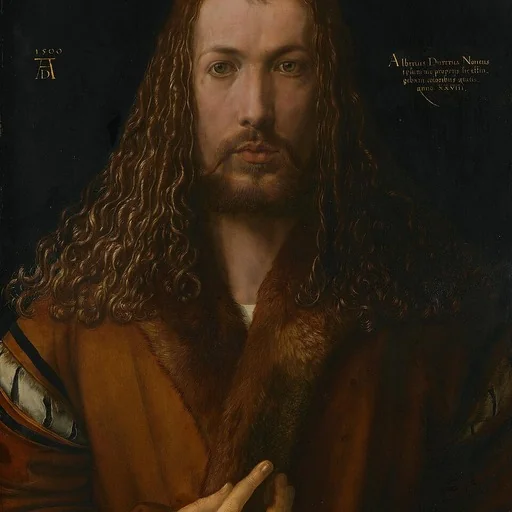
Albrecht Dürer spent his life in Nuremberg, a busy German city where artists traded prints like currency.

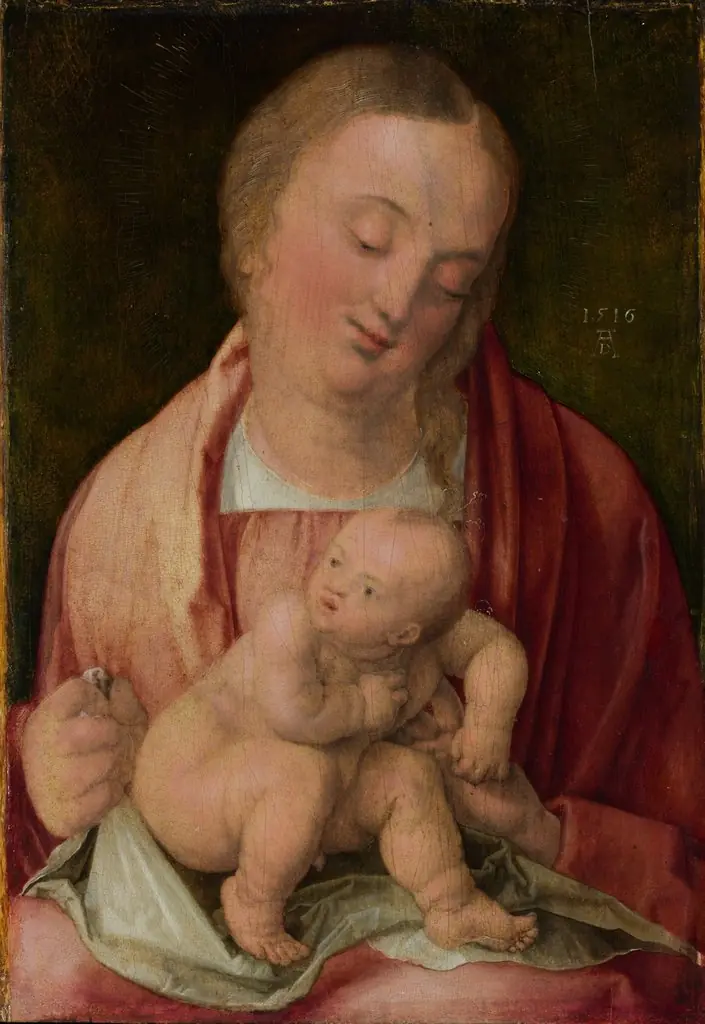
![Madonna and Child [obverse], by Albrecht Dürer](https://artifactworldgallery.com/img/albrecht-durer--madonna-and-child-obverse--d7b8ebf05d22ebe5-w320.webp)
![Lot and His Daughters [reverse], by Albrecht Dürer](https://artifactworldgallery.com/img/albrecht-durer--lot-and-his-daughters-reverse--b4ebf9b282faa17a-w320.webp)